Cats scratch walls for the same broad reasons they scratch other surfaces: to leave scent and visible marks, stretch, exercise, and maintain their claws. A wall alone does not reveal which reason applies to your cat. The practical fix is to put a stable scratcher beside the chosen spot, match its orientation and material to your cat’s preferences, and redirect rather than punish.
Why cats scratch walls
Scratching is a normal feline behavior, not automatically a sign of a problem. The explanations below are possibilities, not diagnoses: the target alone cannot tell you what your cat intends, and the available sources do not establish how often each reason accounts for wall scratching.
As an Amazon Associate I earn from qualifying purchases.
1. Scent marking
Glands in a cat’s paws leave scent cues during scratching. A cat may scratch a prominent spot such as a wall or doorway as part of marking. That does not mean every episode signals territorial conflict.
PC Slower Than It Used to Be?
A free scan shows the junk files, broken settings and background clutter dragging Windows down - then fixes them in one click.Free scan · Windows 10 & 11Outdated Drivers Are Slowing You Down
One free scan finds every outdated or missing driver and matches the right update for your exact hardware.Free scan · exact hardware match2. Visible marking
Scratching also leaves visible marks. UC Davis describes scratch marks as one way cats mark territory, but marks on a wall do not by themselves prove that your cat feels threatened or is responding to another animal.
#1 Best Overall
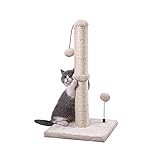
- Premium Quality Materials - This product is made of 100% natural sisal hemp.The base and top is a weighted MDF covering the carpet.Nature High Quality Sisal Safe Plush Long Lasting Usage Stable basement, never tip over easily.
- Protect your furniture - Grab sticks and plush toys combine to attract cats to play and grab, natural sisal is suitable for cats to grab, effectively preventing cats from grabbing furniture
- Designed for indoor use - Neutral colors work well with existing decor in your home.ideal for any living room, bedroom, or home office
- 22"Tall Cat Scratching Post -11.8 x 11.8 x 22 Inches,design for kitties or smaller cats.
- Easy Assemble - ust screw all parts together,Assemble needed, all tools and instructions included.Please contact us if you have any further questions.
3. Stretching and exercise
Scratching can provide pleasurable exercise and a chance to stretch. A vertical wall may let a cat extend its body, but the orientation alone cannot establish that this is the reason for a particular bout of scratching.
4. Claw maintenance
Scratching helps cats maintain their claws as old outer layers peel away. It is more accurate to describe this as claw maintenance than to say cats scratch only to sharpen their claws.
Rank #2
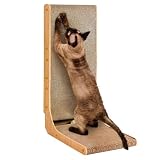
- HIGH QUALITY MATERIALS: The surface of the cat scratching board is made of non-toxic and high-density corrugated paper, which is durable enough to withstand cat scratching.
- INNOVATIVE DESIGN: Our cat scratcher for indoor cats features an L-shaped design. Please place it against wall and sofa to protect your furniture. The L-shaped cat scratcher provides more scratching area for cats to scratch in a variety of positions.
- MULTIFUNCTIONAL USE: Cats can scratch, relax and stretch on our cardboard cat scratcher. Our cat scratch pad also comes with a toy ball to play with. It provides a safe and comfortable environment for cats.
- MULTIPLE SIZES: We offer three sizes of cat scratching pad for you to choose from. The smallest size is specially for kittens. No matter what size your cat is, it enables your cat to scratch and play to its heart's content!
- EASY INSTALLATION: Our cat scratching board adopts a simple installation method and comes with instructions and necessary tools. We also provide an installation video so that you can install it quickly and easily.
5. A preferred surface, height, or direction
Cats can have individual preferences for texture, height, stability, and whether they scratch vertically or horizontally. A wall may simply offer the kind of surface or position your cat prefers. Cornell recommends observing the cat’s chosen direction and material; the Merck Veterinary Manual also emphasizes suitable alternatives’ location, height, and stability.
Recommended Free Tools
6. Boredom or unmet activity needs
Boredom may contribute to destructive behavior, and play and acceptable toys can help meet a cat’s activity needs. It is one possible contributor, not a proven explanation for every cat that scratches a wall.
Rank #3

- Scratching post provides a place for cats to sharpen their claws and keep nails healthy
- Includes a single pillar scratching post in neutral colors with a replaceable dangle toy
- Natural jute fiber provides an optimal scratching surface
- Sturdy wood base helps prevent the post from tipping
- Ideal for redirecting cats away from scratching household carpet or furniture; spot clean as needed
How to redirect wall scratching
- Watch what your cat does. Note the spot, whether the cat scratches vertically or horizontally, what surface it seems to seek, and whether it uses its claws or only paws at the wall.
- Place a stable scratcher right beside the target. For a cat that reaches up the wall, try a sturdy vertical post or wall-mounted scratcher tall enough to allow a full stretch. If your cat scratches near floor level or works horizontally, try a horizontal pad.
- Match the material to your cat’s preference. Consider sisal or another rope-like surface, wood, carpet, or cardboard. No single material or scratcher style is established as best for every cat.
- Keep the alternative in place while your cat learns. Leave it near the established wall spot. If needed, temporarily make the wall less accessible or appealing while keeping the acceptable scratcher easy to reach.
- Offer play and enrichment. Provide dedicated play and acceptable toys, particularly if your cat may lack activity. Redirect your cat to the scratcher rather than punishing a normal behavior.
Scratching is an innate behavior and can be difficult to stop, as Cornell’s Feline Health Center notes in its guide to destructive behavior. The goal is to direct it toward an appropriate surface.
How to tell scratching from urine spraying
Claw scratching leaves marks and may leave scent from the paws. Urine spraying is a separate behavior. Cornell describes a spraying cat as standing, raising and quivering its tail, and depositing small amounts of urine at repeated vertical locations. If you find urine, do not treat it as scratching: consult Cornell’s house-soiling guidance and discuss persistent or new marking with a veterinarian.
Rank #4

- Scratching post provides a place for cats to sharpen their claws and keep nails healthy
- Includes a single pillar scratching post with a replaceable dangle toy
- Natural jute fiber offers an optimal scratching surface
- Sturdy base helps prevent the post from tipping
- Ideal for redirecting cats away from scratching household carpet or furniture; spot clean as needed
When to seek professional advice
Ask a veterinarian or a qualified behavior professional for help if the scratching is persistent, difficult to manage, or occurs alongside other concerning changes. The Merck Veterinary Manual notes that cats have physical and behavioral needs to scratch surfaces, and identifies scratching-related destruction as a common owner concern in its overview of cat social behavior. A professional can help assess the behavior and a suitable plan without assuming that the wall itself reveals its cause.
Quick Recap
Best Value
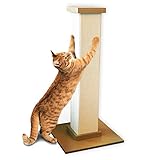
- 32″ height allows cats to stretch fully and tone muscles
- Sturdy 16″ by 16″ base eliminates tipping and wobbling
- Fibrous and durable woven sisal naturally inspires scratching
- Superior to carpeted posts that may snag nail
- Assembles with two included screws
Product prices and availability are accurate as of the date/time indicated and are subject to change. Any price and availability information displayed on Amazon at the time of purchase will apply.




