There is no single vaccine schedule or price that fits every cat. The right timing depends on age, vaccination history, health, lifestyle and exposure, where you live, local rabies law, and the labeled use of the vaccine product. Cost depends on the clinic and, for low-cost programs, on eligibility. This guide explains the framework that veterinary guidelines use, the schedules they publish, and how to read a cost quote, so you can have a more useful conversation with your veterinarian.
Which guidance this article follows
The core schedule discussion draws on the 2020 AAHA/AAFP feline vaccination guidelines (Stone et al., 2020) and the AAHA general-practice schedule based on them. The adult-cat guidance comes from the 2024 WSAVA vaccination guidelines, an international document. The guidance is strongest for the United States context. Your local veterinarian and local rabies rules have the final say for your cat.


How vaccines are grouped: core and non-core
The AAHA/AAFP guideline divides feline vaccines into two categories.
Core vaccines
- Feline herpesvirus-1 (FHV-1)
- Feline calicivirus (FCV)
- Feline panleukopenia virus (FPV)
- Rabies
- Feline leukemia virus (FeLV), core for cats younger than one year
Non-core vaccines
Non-core vaccines are not recommended for every cat. The decision rests on an individual risk-benefit assessment. The guideline asks the veterinarian to weigh life stage, lifestyle, health status and history, and environmental or epidemiological risk. Its authors stress that no single protocol suits every feline patient, so two cats of the same age can reasonably receive different plans.
What’s actually slowing this PC down?
Pick the symptom - the matching free tool is one click away.
#1 Best Overall

- Impressive Quantity and Appropriate Size: the package includes 25 cat health records, offering a generous quantity for pet owners with multiple cats or veterinary practices; The unfolded size measures 7.87 x 10.63 inches/ 20 x 27 cm, and the folded size is 7.87 x 3.54 inches/ 20 x 9 cm, making it ideally suited for easy storage and convenient access of your pet's vital health information
- Distinctive Color and Reliable Material: presented in aesthetically pleasing shades of blue and white, these cat shot record booklets ensure that your pet's health data stands out; Crafted from durable 120 g offset paper, these records offer long lasting quality, ensuring the preservation of critical information for an extended period
- Ideal for Multiple Users and Various Occasions: from individual pet owners to professional veterinarians, these cat vaccine record books cater to a wide range of users; Their practicality makes them equally suited for various occasions, ranging from regular vet appointments to emergency visits
- Meaningful Gift for Pet Lovers: a thoughtful gift for any cat owner, these kitten health records not only indicate care for the pet but also understanding of the owner's responsibility; Gift these records to promote responsible pet ownership and foster better pet health
- Tri Fold Design for Enhanced Convenience: with a practical tri fold design, these animal health records provide an organized structure, making it easy for users to track the health history and vaccination records of their pets
A vaccine being labeled “core” does not mean every antigen is repeated on the same interval for every cat. Timing depends on the vaccine type and label, prior doses, risk, and local law.
Kitten vaccination schedule
Kitten protection is built around FVRCP, the combination injectable that covers FHV-1, FCV and FPV. The AAHA general-practice schedule, based on the 2020 guideline, lays out the series as follows.
Rank #2
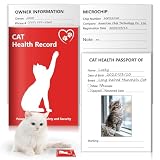
- 1.You’ll Get:When you choose our cat vaccines records tracker, you'll receive one notebook.This 12-page Kitty health journal has 8 dedicated pages for tracking your pup’s health, vet visits, and key details, with 4 blank pages at the end for jotting down extra notes, pet cat-related info, or anything else you want to record.
- 2.Ideal Size for Record Keeping:Each cat vaccine record book measures 5x3.5 inches folded; 5x7 inches unfolded, allowing for easy portability and storage.These handy health records notebook for cats with double sided printing, featuring enough space for all your pets important information,plus, it has dedicated spots for sticking on vaccine stickers and adding cute kitten photos.They offer a stylish and organized approach to pet health documentation, a must have addition to your pet supplies.
- 3.Premium Quality: The cat health record tracker’s cover features 300gsm coated paper with vibrant full-color printing and a protective laminate finish. Inside, 80gsm high-quality offset paper pages are durable and ink-resistant, ensuring no bleeding from pens or markers—so your records stay neat and easy to read.
- 4.Essential for cat owners: This kitten health record book is designed for vet clinics & owners. Track key health info (vaccines, exams, treatments) easily. When you’re away, pet sitters/family can quickly check medical history for seamless care. Kitten record book with photo, vital signs & ID sections, it helps in emergencies—even if your kitten gets lost.
- 5.Effortlessly Track Vaccinations and More:The cat canine health record booklets pages include:owner and cat information,medical history and hospitalizations,vaccination record and sticker,cat service providers,fecal examinations and de-worming,heartworm screening, prevention and treatment etc.This record keeping tool will ensure every important detail is accounted for and make this task easy, organized, and straightforward.Add this essential tool to your pet supplies for a happier, healthier pet.
| Stage | What the AAHA general-practice schedule describes |
|---|---|
| First FVRCP dose | No earlier than 6 weeks of age |
| Repeat FVRCP doses | Every 3–4 weeks |
| Final kitten-series FVRCP dose | Through 16–20 weeks of age |
| Additional dose | At 6 months of age |
| Later boosters | Follow the schedule your veterinarian sets for the specific product and your cat’s risk |
The vaccine route and product can change the timing, so treat the chart as a framework rather than a calendar to copy onto your fridge. Your veterinarian will confirm the dates for your kitten and record each dose.
Cats first vaccinated after 16 weeks, and adults with unknown history
Many owners arrive with an older cat, a rescue, or a cat with no reliable record. A kitten schedule should not be assumed for these cats.
Recommended Free Tools
Rank #3

- COMPLETE HEALTH RECORDS FOR CATS & SMALL PETS: Comprehensive veterinary record booklets designed to track vaccinations, exams, deworming, and treatments. Perfect for maintaining organized, up-to-date medical histories for cats, kittens, and small animals."
- 25 INDIVIDUAL BOOKLETS PER PACK: Includes 25 separate records—ideal for multi-pet households, shelters, rescues, breeders, or veterinary clinics that manage multiple animals. Each booklet provides structured documentation for easy organization."
- CLEAR, CUSTOMIZABLE FORMAT FOR EASY RECORDING: Each page features clearly labeled sections for vaccines, dates, treatment details, and veterinarian notes. The user-friendly layout allows for quick, legible recordkeeping at home, during exams, or on the go."
- PORTABLE AND CONVENIENT DESIGN: Compact and lightweight, these cat health record booklets fit easily into folders, travel bags, or adoption packets. Keep vital health information accessible during vet appointments, travel, or transfers."
- IDEAL FOR PET OWNERS, BREEDERS & PROFESSIONALS: Perfect for breeders, shelters, veterinarians, and pet owners who want a professional way to document a cat’s medical care. Simplifies communication between caregivers, adopters, and clinics."
Cats first vaccinated after 16 weeks of age
The AAHA/AAFP guideline describes one or two doses of the combination vaccine for these cats. Whether one or two are needed depends on the product and the circumstances. This is a veterinary decision, not a do-it-yourself catch-up rule.
Adult cats that may never have been vaccinated
The 2024 WSAVA guideline addresses adult cats with no known vaccination history. It states that such a cat can receive two core modified live virus (MLV) doses given 2–4 weeks apart, plus a rabies vaccine in areas where rabies is endemic. This is a starting framework, not a standing order. The veterinarian adjusts the plan for the vaccine product, the cat’s health, its exposure, and the diseases circulating locally.
Rabies: follow local law and the vaccine label
Rabies timing depends on jurisdiction and on the specific vaccine product. Local law may require particular intervals, certificates, or tags, and the product label sets the duration of protection. Do not assume every cat, everywhere, receives rabies boosters on one universal interval. If you move, travel, or board your cat, check the requirements for the new location.
Independent reader supportYour contribution helps us test, update, and keep practical guides available for everyone.Does an indoor cat need vaccines?
Indoor status is one input into the risk assessment, not a yes-or-no answer. The AAHA/AAFP approach looks at lifestyle and environmental or epidemiological risk. Core vaccines remain part of the discussion for most cats, and non-core vaccines are decided case by case. Ask your veterinarian which non-core vaccines, if any, match your cat’s real exposure, such as outdoor access, contact with other cats, or travel.
Quick wins for a faster PC:
Clear out junk files and repair common Windows errorsFree Scan →Scan for outdated or missing drivers - takes under a minuteDriver Scan →What cat vaccinations cost
No national average or typical total for a kitten series was found in the sources behind this guide, so a reliable total depends on your location and a clinic quote. The only published prices available are from specific ASPCA programs, and they are subsidized and eligibility-based.
| Provider | Location | Listed price for vaccinations | Eligibility |
|---|---|---|---|
| ASPCA Liberty City clinic | Miami-Dade, Florida | $20–25 | Eligible clients only |
| Certain ASPCA Community Veterinary Clinics | New York City | Free | Eligible clients only |
| Ordinary private veterinary practice | Any location | Not stated; no comparable published figure was found | Not applicable |
These listings were posted on the ASPCA Community Medicine clinic pages and are volatile. Clinics can change prices, and eligibility criteria differ. They do not establish what a private practice charges, and they should not be compared directly with a full private-clinic estimate, since the services and eligibility rules are not the same.
How to read a cost quote
A useful quote shows the full visit, not just a per-vaccine figure. When you call or visit a clinic, ask:
- Which vaccine doses are included, and how many visits the schedule requires for your cat
- Whether an exam or consultation fee is added, and whether a physical exam is part of the visit
- Whether any testing or record review is required before vaccination
- Whether a low-cost clinic requires eligibility proof, an appointment, or proof of prior vaccination
- Which non-core vaccines are recommended for your cat, and why
- How the clinic documents rabies vaccination
Keep vaccination records with you
The ASPCA advises owners to bring vaccination records to the veterinarian so that doses can be timed correctly. Clinic records and any rabies certificate required by local law are the authoritative documents. A cat vaccination record booklet can be a helpful way to track dates between visits, but it does not replace veterinary records or official rabies documentation.
Taking a complete record to each visit is the simplest way to avoid repeating doses or missing a timing window.
Quick Recap
Product prices and availability are accurate as of the date/time indicated and are subject to change. Any price and availability information displayed on Amazon at the time of purchase will apply.




