
Quick wins for a faster PC:
Scan for outdated or missing drivers - takes under a minuteDriver Scan →Repair Windows errors before they cause bigger problemsFix Now →Some links on this page are affiliate links: if you buy through them we may earn a commission, at no extra cost to you.
Microchipping a cat usually causes only a moment of injection-like discomfort. The needle is a little larger than a routine vaccine needle, but implantation is normally quick and does not require surgery or anesthesia. Veterinary guidance describes microchips as having an excellent safety record, with complications uncommon.
A trained veterinary professional places the chip under the skin, usually between the shoulder blades, then checks it with a scanner. The important follow-through is to register the chip’s unique number and keep your contact details current; an unregistered chip cannot reliably help a finder contact you.
As an Amazon Associate I earn from qualifying purchases.
The Tool Desk
Outbyte Driver Updater FREEFix the driver behind crashes, sound loss and screen glitchesFind Drivers →Outbyte PC Repair FREERepair Windows errors before they cause bigger problemsFix Now →How much does microchipping hurt?
The sensation is comparable to a normal injection: your cat may react to the needle entering, flinch, vocalize, or try to move, but the discomfort should be brief. The American Veterinary Medical Association (AVMA) says the process is no more painful than a typical injection, while noting that the microchip needle is slightly larger than needles used for vaccines or medication. The AVMA’s owner FAQ describes the expected experience in those terms.
Cats Protection also describes possible short-lived discomfort as the needle enters. Once the chip is under the skin, the insertion pain stops. Individual cats vary: a nervous cat may appear more upset by restraint or the unfamiliar clinic than by the needle itself. Your veterinarian can explain how the clinic minimizes stress and whether the chip can be placed during another appointment your cat already needs.
Popular on Amazon

- 【Support Multipe Microchip Formats】Universal microchip scanner supports EMID / ISO11784 / ISO11785 / FDX-B(15 digit microchips). Please note, the microchip reader CAN NOT read Avid chips, and the 9-digit ID can not be recognized. Only the 15-digit international standard protocol can be recognized. Please check the format of the microchip before purchasing.
- 【Easy To Operate & Fast Scan】Our pet microchip scanner is easy to operate, one button to read. Our microchip scanner adopt advanced RFID technology, responsive and fast scanning, it can better improve the efficiency of work. Please note, if no label is scanned, the device will automatically turn off after 180 seconds, or you can press and hold the button for 3 seconds to turn off the device.
- 【 Large Data Storage】Our pet microchip scanner can save 128 animal chips. It can be transferred to a computer or mobile phone via a USB cable connection. Our pet chip scanner also features a data-erase function, refer to the user manual for instructions.
- 【Rechargeable Battery】Our pet chip scanner supports USB charging, eliminating the need for frequent battery replacements, it can last for more than one year after being fully charged.
- 【Easy To Carry】Our scanners are lightweight and compact, making them easy to carry and ideal for both indoor and outdoor use. The package includes one scanner, a USB cable, and a user manual.
Because implantation is performed through the skin with a preloaded syringe, it is not ordinarily an operation. Routine placement does not require a surgical incision, stitches, or general anesthesia. Cats Protection’s guidance and the AVMA both describe it as a quick procedure suitable for a routine veterinary visit.
What happens at the appointment?
Understanding the sequence helps you distinguish a normal injection from a problem that needs attention. Exact clinic routines differ, but the core steps are consistent.
Recommended Free Tools
1. The professional confirms the cat and the chip
The clinic should identify your cat and prepare a sterile, preloaded syringe containing the microchip. Ask which registry will hold the number and how you will receive the registration instructions. The chip itself stores a unique identification number, not your name, address, or telephone number.
2. The chip is inserted under the skin
A trained professional places the needle under the skin, typically in the area between the shoulder blades, and releases the tiny chip. Your cat may feel a sharp pinch or pressure for a moment. The AVMA says correct depth and placement require training and technique, which is why implantation should be done by, or under the supervision of, a veterinarian. See the AVMA’s placement guidance.
3. The clinic scans the site
A handheld scanner can check that the chip is present and readable immediately after implantation. Ask the staff to show you the identification number on the scanner or paperwork and make sure the number is recorded accurately before you leave.
4. You receive aftercare and registration information
The clinic should tell you what local soreness or swelling to watch for, whom to call with concerns, and how to register the chip. Keep those instructions with your cat’s medical records.
Also popular on Amazon

- ❤ Supports Multiple Protocols – Compatible with ISO 11784/11785, FDX-B microchips for seamless reading with one-button operation. Does NOT support FDX-A or AVID chips. The 9-digit ID CANNOT be recognized. Only the 15-digit international standard protocol can be recognized.
- ❤ Efficient Data Management – Built-in storage holds up to 128 tags, eliminating redundant scanning and improving efficiency. The USB transfer feature allows seamless data upload to computers or mobile devices for backup, analysis, and sharing, making it ideal for pet owners, farms, and research institutions.
- ❤ Portable & Durable Design – Lightweight and easy to carry, suitable for both indoor and outdoor use. The robust casing provides strong impact resistance, ensuring stable performance in farms, field research, and rescue operations, even in harsh conditions.
- ❤ Built-in Rechargeable Battery – Eliminates the need for frequent battery replacements, with USB charging for convenience. Includes an auto-shutdown function after 180 seconds of inactivity or manual shutdown with a 3-second press.
- ❤ Support turn on/off the pet reader prompt sound. The pet reader is equipped with a speaker, when you scan successfully, the pet reader will "di" to indicate that the scan is successful. If your pet is afraid of the sound of the card reader, please check the instructions in the package and follow the instructions to turn off the sound.
| Stage | What your cat may experience | What you should verify |
|---|---|---|
| Preparation | Handling or restraint in the exam room | Chip number, registry instructions, and sterile equipment |
| Insertion | A brief pinch or pressure from a needle slightly larger than a vaccine needle | That a veterinarian or appropriately supervised trained professional performs the placement |
| Scan | Usually no additional discomfort | That a scanner detects the chip and the number matches your paperwork |
| Aftercare | Possible small, temporary swelling at the needle site | Which symptoms are expected and which require a call to the clinic |
Is a microchip safe for cats?
Available veterinary guidance characterizes microchips as having an excellent safety record and says complications are uncommon. That does not mean a complication is impossible, so monitor the insertion area and follow the clinic’s instructions. The AVMA summarizes the known issues for pet owners.
Migration
Migration is the most frequently reported issue identified by the AVMA. A chip can move from its original position under the skin. Migration usually does not affect a pet’s health, but it can make the chip harder to find if someone scans only one area. A complete scan by a trained professional is therefore important when a lost cat is presented for identification.
Local swelling, hair loss, or infection
Uncommon local reactions include hair loss, infection, or swelling near the insertion site. Cats Protection notes that a small swelling caused by the needle can occur and usually settles on its own within a few days. A reaction that is worsening, persistent, painful, warm, draining, or otherwise abnormal deserves veterinary advice rather than home treatment.
Chip failure
Rarely, a chip may fail to read. Failure is different from an empty registry record: a scanner may detect no usable number, or the number may be present but not linked to current owner details. If a scan does not produce a number, ask the veterinarian to check the scanner and scan method and to advise whether further evaluation is needed.
Reports of tumors
Tumors near or around implantation sites have been reported in a very small number of dogs and cats. The AVMA says these reports are extremely rare and do not establish a cause-and-effect relationship between microchips and the tumors. No responsible guidance can describe cancer risk as zero, but the available information also does not show that microchips cause cancer. If you notice a persistent lump, have your veterinarian examine it instead of assuming what caused it.
What is normal after implantation?
For most cats, the immediate issue is a short period of tenderness or a small lump where the needle entered. Cats Protection says this type of swelling generally resolves within a few days. Your cat may also be unsettled by the appointment itself and then return to normal behavior.
Also popular on Amazon

- Stores lost pets chip numbers
- Alerts the user that a pet is missing
- Rechargeable by plugging into a pc
- Reads most microchips in pets, dogs, cats
Do not squeeze, massage, puncture, or apply medication to the site unless your veterinarian specifically instructs you to do so. Check the area visually, avoid repeatedly pressing it, and keep the clinic’s contact number available.
Call the veterinarian promptly if you see:
- Swelling that is increasing, unusually large, painful, or not improving as expected.
- Drainage, pus, bleeding that does not stop, marked redness, heat, or an open wound.
- A firm or persistent lump, hair loss that concerns you, or any other change your veterinarian described as abnormal.
- Any behavior or physical change that worries you after the procedure.
The AVMA advises contacting a veterinarian when the implantation site has abnormalities such as swelling or drainage. Cats Protection likewise recommends getting veterinary help if you are concerned. Cats Protection’s aftercare advice is written for cat owners and can help you know when to seek help.
PC Slower Than It Used to Be?
A free scan shows the junk files, broken settings and background clutter dragging Windows down - then fixes them in one click.Free scan · Windows 10 & 11Outdated Drivers Are Slowing You Down
One free scan finds every outdated or missing driver and matches the right update for your exact hardware.Free scan · exact hardware matchWho should implant the chip?
Use a veterinarian or an appropriately supervised trained professional. Proper placement depends on knowing the correct location, depth, sterile technique, and scanning procedure. The AVMA specifically warns owners not to buy a chip and attempt implantation themselves: incorrect placement can make the chip difficult to locate and may cause injury or other complications. Read the AVMA’s recommendation on professional implantation.
A shelter, rescue, or other organization may offer microchipping, but ask who performs the procedure and whether a veterinarian supervises it. You should be told the chip number, the registry used, and the process for updating your details. If the provider cannot answer those questions, arrange the procedure through your veterinary clinic instead.
Registration is as important as the injection
A microchip is an identification number, not a contact card. It does not automatically contain your phone number or address. After implantation, register that number with the appropriate registry and enter the details the registry requests. Update the record whenever you move, change telephone numbers, change email addresses, or transfer the cat to a new owner.
In the United States, there is no single centralized microchip database. Different registries maintain their own records, so you need to know which registry holds your cat’s number and how a finder or shelter can access it. The AVMA explains the registry and contact-information requirements.
What’s actually slowing this PC down?
Pick the symptom - the matching free tool is one click away.
Also popular on Amazon
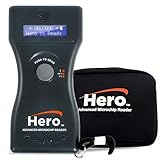
- UNIVERSAL MICROCHIP COMPATIBILITY: Reads all ISO microchips plus 9-, 10-, and 15-digit chips from any brand. Ideal for scanning horses, livestock, pets, and other animals in clinics, shelters, barns, or field settings.
- BLUETOOTH CONNECTIVITY FOR FAST, ACCURATE DATA TRANSFER: Easily sends scanned chip numbers to Bluetooth-enabled devices within a 25-foot range for quick syncing to computers, tablets, or shelter management software. Reduces manual data entry errors and speeds up check-in and intake processes—perfect for busy clinics or multi-pet facilities.
- BACKLIT LCD SCREEN WITH 15-MINUTE DISPLAY HOLD: Features a bright blue backlit LCD screen with bold white text displaying the full chip number on one line for easy reading—day or night. The 15-minute display hold gives ample time to record the scan without rushing, ideal for high-volume or field settings.
- RECHARGEABLE BATTERY WITH AUTO POWER-SAVE MODE: Includes a rechargeable 9V battery and charging unit for long-lasting performance. The auto shut-off function conserves power between uses—great for mobile vets, rescue teams, or animal control officers who need dependable scanning during long sessions.
- LIGHTWEIGHT, DURABLE DESIGN WITH PROTECTIVE CASE: This 7-inch handheld microchip scanner is compact, ergonomic, and easy to carry. Includes a protective carrying case to guard the reader during storage and transport. Built for dependable use in clinics, shelters, barns, or field settings.
Registration checklist
- Write down the full chip number exactly as shown by the scanner or on the paperwork.
- Confirm the registry’s name, website, telephone number, and account details.
- Enter at least one reliable telephone number and an email address you check.
- Add an alternate contact if the registry allows it and that person agrees to help.
- Save the registry confirmation with vaccination and medical records.
- Review the record after any move, phone change, email change, or ownership change.
Registration cannot prevent every lost-pet situation, and a chip must be scanned to be useful. Its practical value depends on a readable number being connected to current contact information.
Independent reader supportYour contribution helps us test, update, and keep practical guides available for everyone.Should you delay microchipping because your cat is nervous?
Nervousness alone does not make the procedure unsafe, but it is worth discussing handling with the veterinary team. Tell the clinic in advance if your cat becomes frightened in carriers or exam rooms. The team can plan the visit, reduce unnecessary handling, and explain whether implantation can be combined with another routine appointment.
If your cat is ill, has a skin problem near the proposed implantation area, or has previously reacted badly to injections, ask the veterinarian whether the timing or site should be adjusted. Do not make that decision by trying to implant a chip at home.
Questions to ask before you leave the clinic
- What is my cat’s complete microchip number?
- Which registry stores the number, and how do I register it today?
- Was the chip detected by a scanner after placement?
- Where exactly was it implanted?
- What amount of swelling or tenderness is expected, and for how many days?
- Which signs mean I should call immediately, and which telephone number should I use after hours?
These questions create a clear record of the procedure and reduce the chance that a correct implantation becomes ineffective because the number was never registered or the contact details later became outdated.
How to weigh the brief pain against the risks
The decision involves a short, predictable injection-like discomfort versus uncommon medical complications. The available guidance does not provide a useful cat-specific percentage for those complications, so a precise numerical risk cannot be responsibly stated. What can be said is that migration is the most frequently reported issue, while infection, swelling, hair loss, and chip failure are uncommon; tumor reports are extremely rare and do not prove that a chip caused the tumor.
For a cat that is not yet chipped, discuss the procedure with your veterinarian, confirm professional placement, and complete registration. For a cat that already has a chip, ask the clinic to scan it during routine visits and verify that your registry details are still current. If you notice an abnormal site or simply remain worried, contact the veterinarian rather than attempting to investigate or remove the chip yourself.





Leave a Reply