
Some links on this page are affiliate links: if you buy through them we may earn a commission, at no extra cost to you.
For ordinary seasonal or breed-related shedding, neither fish oil nor a multi-ingredient shedding supplement has been shown to stop the process. Fish oil provides the omega-3 fatty acids EPA and DHA and may offer a small benefit for dogs with inflammatory skin disease such as canine atopic dermatitis. That evidence does not show that it reduces a healthy dog’s normal coat cycling. A skin-and-coat chew may contain useful nutrients, but its ingredient list and marketing claim do not establish that it works better than fish oil—or that it treats routine shedding at all.
The sensible choice depends first on why your dog is losing hair, then on the product’s actual EPA and DHA content, the rest of the diet, and your veterinarian’s assessment of safety.
As an Amazon Associate I earn from qualifying purchases.
What’s actually slowing this PC down?
Pick the symptom - the matching free tool is one click away.
Start with the problem, not the bottle
Dogs shed because old hairs are replaced. The amount and timing vary with breed, coat type, season, indoor temperature, hormones and individual biology. Shedding alone is not evidence of a nutritional deficiency or a need for a supplement.
The strongest guidance available for fatty acids concerns canine atopic dermatitis, an inflammatory skin condition. Those guidelines describe essential fatty acids as safe and mildly effective in that clinical setting, while also noting limited evidence for using fatty acids or an enriched diet by themselves. They do not establish a particular fatty-acid product, dose, ratio or formulation as superior. Applying those findings to an otherwise healthy dog that is simply shedding more in spring or autumn would overstate what has been shown.
Popular on Amazon
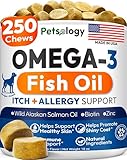
- Promotes Healthy Skin & Coat: Our dog fish oil supplements deeply nourish dry, flaky skin while reducing excessive shedding, helping your dog maintain a soft, glossy coat and overall skin health.
- Itch & Allergy Relief with Omega 3 for Dogs: Made with pure fish oil for dogs skin and coat, these chews help ease itching, redness, and seasonal allergies for healthier skin and comfort.
- Supports Hip, Joint & Heart Health: Rich in dog omega 3 fish oil, our supplement helps improve mobility, supports heart function, and enhances overall well-being for puppies, adult and senior dogs.
- Made in the USA in an FDA-Registered Facility: Our dog omega 3 supplement is carefully crafted with premium ingredients under strict safety, purity, and potency standards for the best results.
- Premium & Natural Ingredients Formulated by Veterinarians: This advanced EPA & DHA blend ensures superior absorption, supporting skin, coat, joint, and immune health for all dog breeds.
Before choosing a product, look for clues that the issue may be diseased skin rather than normal coat turnover:
- Persistent or intense itching, licking, chewing or rubbing.
- Redness, odor, scabs, recurrent ear trouble or visibly inflamed skin.
- Bare patches, broken hairs or hair loss that is not following your dog’s usual pattern.
- Changes in appetite, weight, energy or drinking alongside the coat change.
These signs do not identify a diagnosis. They do indicate that a veterinary examination is more important than experimenting with a supplement.
Free tools Windows power users keep installed
One-click scans. No signup required.
Fish oil and shedding chews: what the evidence actually compares
| Question | Dog-formulated fish oil | Multi-ingredient skin-and-coat chew |
|---|---|---|
| Primary contents | EPA and DHA supplied by fish oil; products may be capsules or liquid. | May combine ingredients such as biotin, omega 3, 6 and 9 fatty acids, amino acids and antioxidants. |
| Evidence relevant to skin disease | ICADA’s canine atopic dermatitis guidance describes essential fatty acids as mildly effective in that condition, with limited evidence for supplements or enriched diets alone. | The presence of several ingredients does not establish clinical effectiveness or superiority. |
| Evidence for normal shedding | No demonstrated reduction in ordinary seasonal or breed-related shedding. | No independent evidence here that it stops routine shedding; a 2025 manufacturer guide describes a marketing claim about unseasonal or excessive shedding. |
| What must be compared | The labelled amounts of EPA and DHA, not the total milligrams of oil. | The complete ingredient and nutrient label, serving size and the amount of any EPA or DHA supplied. |
| Key cautions | Gastrointestinal effects, weight gain, oxidation, contamination and possible interactions are relevant considerations. | The same concerns can apply, plus the difficulty of evaluating a formula containing many ingredients. |
This is not a head-to-head clinical trial. It is a way to separate a defined active component from a broad category whose formulas and claims differ by product.
What fish oil can—and cannot—do
EPA and DHA are the relevant numbers
Fish oil is a source of the long-chain omega-3 fatty acids eicosapentaenoic acid (EPA) and docosahexaenoic acid (DHA). The bottle’s total oil weight is not the same as the amount of either fatty acid. Two products can each contain 1,000 mg of fish oil while supplying very different quantities of EPA and DHA.
When a veterinarian is considering fish oil, use the product information that states the EPA and DHA amounts per capsule, pump, millilitre or measured serving. Bring those figures, the serving size and the dog’s current food label to the appointment. A dose cannot be selected safely from the oil weight alone, and this guidance does not establish an owner-administered dose.
Where the clinical benefit has been observed
In dogs with atopic dermatitis, essential fatty acids may provide a limited, generally mild improvement as part of a broader management plan. The updated ICADA guidance says the evidence is limited and does not show that any particular combination, ratio, dose or formulation is better than another.
That finding is different from proving that fish oil reduces hair released by a healthy coat. It also does not make fish oil a cure for itch, infection, parasites, allergy or another cause of hair loss. If the skin is inflamed, the underlying condition still needs diagnosis and treatment.
Also popular on Amazon

- Dull Coat, Dry Skin: Does your itchy dog scratch, shed or have flaky skin? This dog salmon oil for cats and dogs is a simple source of omega 3 for pets. This Omega 3 for cats and dogs contains healthy fats that help support soft, shiny fur.
- Three Simple Ingredients: This dog fish oil for cats contains just wild Alaskan salmon oil, pollock oil and mixed tocopherols, a vitamin E preservative that keeps it fresh. These dog supplements with omega-3 oil is formulated for dogs and cats of all ages, including puppies and kittens.
- Easy Daily Dosing: Pump this dog fish oil supplements omega oil for dogs and cats onto food every day: 1/4 tsp for 5-15 lbs up to 2 tsp for 75+ lbs, per the label chart. Refridgerate after opening.
- Mealtime Topper Pets Love: This dog omega 3 supplement adds EPA and DHA, omega-3s that support skin and coat, to every meal. The salmon-flavored oil mixes into wet or dry food; picky cats and dogs love the delicious taste.
- Less Shedding, Softer Coat: Fur all over the couch and dry, flaky skin? This wild alaskan salmon oil for dogs and cats adds omega-3s from wild Alaskan salmon and pollock oil, cat and dog skin and coat supplement that supports skin moisture and a silky coat.
Forms and practical handling
Veterinary information describes fish oil for dogs in oral capsule and liquid forms. Whichever form is used, follow the product directions and your veterinarian’s instructions rather than treating a larger serving as a faster solution. Cornell’s veterinary guidance advises checking for heavy-metal contamination and notes that excessive amounts can cause loose stools.
What a shedding supplement chew adds
A longer ingredient list is not proof of a stronger result
A skin-and-coat chew can include biotin, omega-3, omega-6 and omega-9 fatty acids, amino acids and antioxidants. Those ingredients may sound more comprehensive than fish oil, but the list does not show how much of each nutrient the dog receives, whether the amounts are biologically useful, or whether the combination changes normal shedding.
A 2025 VetriScience reference guide describes a chew in this category and includes a marketing claim about unseasonal or excessive shedding. That is evidence that the product category and claim exist; it is not an independent efficacy study and does not demonstrate that the chew outperforms fish oil or controls routine coat cycling.
The Tool Desk
Outbyte Driver Updater FREEFix the driver behind crashes, sound loss and screen glitchesFind Drivers →Outbyte PC Repair FREERepair Windows errors before they cause bigger problemsFix Now →Read the full formula before assuming it covers EPA and DHA
Some chews list “omega” nutrients without clearly stating EPA and DHA. Others may provide those fatty acids in amounts that are small relative to a therapeutic plan. Check whether the label gives actual EPA and DHA values, the amount per chew and the recommended number of chews. If those numbers are absent, a veterinarian cannot make the same precise intake comparison that is possible with a clearly specified fish-oil product.
How to compare labels and total intake
Start by writing down every source of fat and omega-3 in the dog’s routine: the main food, treats, prescription or veterinary diet, fish oil, joint products and skin chews. A food may already contribute EPA and DHA, and adding a second product changes the total. The relevant question is not “How many milligrams are in this bottle?” but “How much EPA and DHA does my dog receive from all sources each day?”
Read the serving definition carefully. A liquid may be measured by millilitre or pump, a capsule by the contents of one capsule, and a chew by one or more pieces. Concentration can differ substantially between products that look similar on a shelf. Record the amount per serving, the number of servings recommended, and whether the label identifies EPA and DHA separately or only gives a total oil or “omega” figure.
Do not fill in missing numbers by guessing from the product name, front-label artwork or a generic fish-oil specification. If the product does not disclose usable EPA and DHA amounts, take the entire label to the veterinarian and ask whether it can be evaluated. The veterinarian can also determine whether the calories, fat load and other ingredients fit the dog’s body condition and medical history.
PC Slower Than It Used to Be?
A free scan shows the junk files, broken settings and background clutter dragging Windows down - then fixes them in one click.Free scan · Windows 10 & 11Crashes, No Sound, or Screen Glitches?
Random freezes, missing sound and display glitches usually trace back to one bad driver. Find and replace yours safely.Free scan · under a minuteAlso popular on Amazon

- Dull Coat, Dry Skin: Does your itchy dog scratch, shed or have flaky skin? This dog salmon oil for cats and dogs is a simple source of omega 3 for pets. This Omega 3 for cats and dogs contains healthy fats that help support soft, shiny fur.
- Three Simple Ingredients: This dog fish oil for cats contains just wild Alaskan salmon oil, pollock oil and mixed tocopherols, a vitamin E preservative that keeps it fresh. These dog supplements with omega-3 oil is formulated for dogs and cats of all ages, including puppies and kittens.
- Easy Daily Dosing: Pump this dog fish oil supplements omega oil for dogs and cats onto food every day: 1/4 tsp for 5-15 lbs up to 2 tsp for 75+ lbs, per the label chart. Refridgerate after opening.
- Mealtime Topper Pets Love: This dog omega 3 supplement adds EPA and DHA, omega-3s that support skin and coat, to every meal. The salmon-flavored oil mixes into wet or dry food; picky cats and dogs love the delicious taste.
- Less Shedding, Softer Coat: Fur all over the couch and dry, flaky skin? This wild alaskan salmon oil for dogs and cats adds omega-3s from wild Alaskan salmon and pollock oil, cat and dog skin and coat supplement that supports skin moisture and a silky coat.
Choose by target problem
Normal seasonal or breed-related shedding
Neither option has established evidence for stopping this normal process. A supplement may still be considered for a separate nutritional or medical reason, but shedding by itself is not a reason to assume that a dog needs concentrated fatty acids or a multi-ingredient chew.
Itchy or inflamed skin
Arrange a veterinary assessment. Fish oil may be discussed as one modest-support option for atopic dermatitis, but the guideline evidence does not support presenting it as a stand-alone cure. A chew’s marketing language should not substitute for diagnosis, especially when infection, parasites or other disease could be involved.
Unexplained or rapidly worsening hair loss
Use the appointment to identify the cause before adding a supplement. A product aimed at “shedding” can delay attention to a condition that needs a different treatment, and adding several ingredients at once makes it harder to tell what helped or caused an adverse effect.
How to assess a product before giving it
- Define the goal. Write down whether you are addressing ordinary coat turnover, itching, diagnosed atopic dermatitis or another veterinary recommendation. A product marketed for shedding is not automatically appropriate for any of these problems.
- Record the whole diet. Include the main food, treats, prescription or veterinary diet, fish oil, joint products and every other supplement. The total EPA and DHA intake matters, not just the newest product.
- Locate EPA and DHA on the label. Record each amount per serving. Do not use total fish-oil milligrams as a substitute for those figures.
- Check the serving instructions and concentration. Note whether the serving is one capsule, a pump, a millilitre or one chew. Concentrated products can deliver substantially different amounts in similar-looking portions.
- Review suitability with your veterinarian. Discuss the dog’s body condition, gastrointestinal history, medications, planned procedures and any condition requiring a low-fat diet. The ICADA guidance specifically cautions that supplements are not suitable for every dog.
- Inspect quality and storage information. Confirm that the product is intended for dogs, check its freshness and storage directions, and ask how the manufacturer addresses contamination and oxidation. Do not assume that a sealed container guarantees that the oil has remained stable under poor storage conditions.
- Introduce only the agreed product. Following veterinary instructions, avoid starting several new supplements simultaneously. Keep a record of the amount given, stool quality, appetite, weight and skin changes so an adverse response can be recognized.
Safety issues that change the decision
Digestive effects and body weight
Loose stools and other gastrointestinal effects are possible, particularly when too much is given. Added calories can also contribute to weight gain. These are reasons to reassess the amount and the dog’s total diet rather than automatically increasing a serving because shedding continues.
Fat restrictions and existing disease
Some dogs need a low-fat diet. Concentrated fish oil or a fatty chew may be inappropriate in that setting unless the veterinarian specifically includes it in the plan. The fact that an ingredient is sold without a prescription does not make it suitable for every medical condition.
Bleeding, healing and interactions
A 2013 veterinary review summarizes possible omega-3 concerns that include altered platelet function, impaired wound healing, lipid peroxidation, nutrient excess or toxin exposure, weight gain and interactions with other treatments. These are potential risks, not predictions that every dog will experience them. They matter when a dog takes medication, has a bleeding concern, is approaching surgery or has another condition that changes the risk–benefit balance.
Oxidation and contamination
Fatty acids can oxidize. In a 2020 web-based survey of veterinary dermatology contacts and veterinary social-media groups, 46.3% of respondents who used essential fatty acids said they were aware of that oxidation potential. The figure describes awareness among respondents, not proof that a particular product was oxidized. Still, freshness, storage and a manufacturer’s quality controls deserve attention.
Also popular on Amazon

- Chew + Heal's Norwegian salmon oil for dog food is packed with omega-3 fatty acids to promote healthy and happy fur for your dog.
- Salmon oil is good for dogs with itchy skin as well as dry skin and coat. The omega-3 fatty acids help to aid overall skin and coat health for soft and luscious locks.
- Vitamin E has a host of benefits such as heart, immune, cell, skin and coat health, and more. It is also an antioxidant making it a vital component to dog health.
- This Heal's 8 oz. omega 3 Fish Oil for dogs comes in liquid form, making it easy to add to your dog's meals, enhancing it not only with a great taste but giving it a nutritional boost as well!
- Our liquid fish oil for dogs is made in the USA and is good for breeds of all sizes.
Cornell advises checking that fish-oil products do not contain heavy-metal contamination. Ask for product-specific quality information when it is available, and follow storage directions closely.
Quick wins for a faster PC:
Repair Windows errors before they cause bigger problemsFix Now →Fix the driver behind crashes, sound loss and screen glitchesFind Drivers →Clear out junk files and repair common Windows errorsFree Scan →Regulatory limits
VCA explains that, in the United States, the Food and Drug Administration does not review non-drug supplements for safety or effectiveness before sale. Product status and applicable rules can change, so confirm current requirements and do not treat a supplement label as equivalent to evidence from a controlled veterinary trial.
What veterinarians actually use these products for
A 2020 survey by Martinez, McDonald and Martínez-Taboada in The Veterinary Record received 309 responses from 32 countries. Of those respondents, 92.2% reported using essential-fatty-acid supplements. Those figures describe reported practice among people reached through a web survey of veterinary dermatology contacts and veterinary social-media groups; they are not estimates for all veterinarians and do not compare one product’s effectiveness with another.
The survey is useful context: fatty-acid supplements are familiar in veterinary dermatology. It is not evidence that they reduce normal shedding, nor does it identify a best dose, ratio or commercial formula.
Independent reader supportYour contribution helps us test, update, and keep practical guides available for everyone.When neither product is the right first step
A dog with a new bald area, broken hairs, marked itch, odor, scabs or recurrent ear disease needs an explanation for those signs. Starting a chew and fish oil together can obscure whether a reaction came from one ingredient, both products or an unrelated change. It also adds calories and makes the dog’s total intake harder to calculate.
Likewise, a dog already on a veterinary diet or a low-fat plan should not be given a concentrated oil simply because the product is marketed as natural. The diet’s purpose, the dog’s body condition and any planned procedure all belong in the decision. A veterinarian may recommend no supplement, a different formulation, or treatment directed at the underlying skin disease.
Questions to take to the veterinary appointment
- Is this amount of shedding normal for my dog’s breed, season and coat?
- Do the itching, redness, odor or hair pattern suggest atopic dermatitis or another skin problem?
- What EPA and DHA intake is appropriate after counting the current food and supplements?
- Does my dog’s medical history require a low-fat diet or make concentrated oil unsuitable?
- Could the product interact with medication or affect an upcoming procedure?
- Which signs—such as persistent diarrhea, worsening itch, bleeding or continued hair loss—should prompt me to stop and call?
A practical decision
If your dog is healthy and experiencing predictable seasonal or breed-related shedding, there is no evidence-based reason to prefer a fish-oil product over a shedding chew for the purpose of stopping that shedding. Focus the conversation on whether any supplement is needed at all.
Also popular on Amazon

- Salmon Oil for Dogs Skin & Coat Support: This wild Alaskan fish oil for dogs delivers EPA and DHA omega-3 fatty acids to help maintain healthy skin moisture, support normal shedding, and promote a soft, shiny coat with consistent daily use.
- Daily Dog Supplement for Wellness: Add simple omega 3 for dogs to your pup’s daily routine with a liquid dog supplement that supports skin, coat, joint, heart, immune, and whole-body wellness across breeds and life stages.
- Salmon Oil Dog Food Topper: This salmon and pollock oil food topper pumps directly onto meals to add omega 3 fish oil nutrition and natural flavor. A simple choice for picky eaters, kibble routines, and daily mealtime support.
- Wild Alaskan Salmon & Pollock Oil: Made with a balanced blend of wild-caught Alaskan salmon and pollock oil for dogs, this omega fish oil for dogs provides naturally occurring EPA and DHA without fillers or artificial additives.
- Seasonal Skin & Coat Comfort: Formulated to help maintain the skin’s natural barrier during seasonal changes, this skin and coat supplement for dogs supports everyday comfort, coat softness, and healthy-looking skin.
If a veterinarian is managing itchy, inflamed skin or diagnosed atopic dermatitis, a clearly labelled fish oil can be considered as a modest-support option, with EPA and DHA totals calculated across the entire diet. A multi-ingredient chew can be discussed in the same way, but its broader ingredient list and marketing claim do not establish superior results.
In either case, the safest choice is the one that matches a defined medical goal, has transparent amounts, fits the dog’s dietary restrictions and is monitored for digestive, weight, skin and interaction-related problems. Supplements should support a veterinary plan—not replace an explanation for abnormal hair loss.
Recommended Free Tools
Frequently Asked Questions
Does fish oil reduce normal shedding in dogs?
There is no demonstrated reduction in ordinary seasonal or breed-related shedding. Fish oil may provide a limited, generally mild benefit for some dogs with inflammatory skin disease, but that evidence should not be presented as proof that it changes a healthy coat’s normal cycle.
Is a shedding chew better than fish oil?
No comparative evidence establishes that a multi-ingredient chew is better. Chews may contain biotin, omega-3, omega-6 and omega-9 fatty acids, amino acids and antioxidants, but the ingredient list and marketing claim do not prove effectiveness or superiority.
What should I compare on a fish-oil label?
Compare the actual EPA and DHA amounts per capsule, pump, millilitre or serving—not the total milligrams of fish oil. Add the amounts supplied by the dog’s food and any other supplements before discussing suitability and dose with a veterinarian.
Can every dog take fish oil or a skin supplement?
No. Possible concerns include gastrointestinal upset, weight gain, oxidation, contamination, altered platelet function, impaired wound healing, interactions and excess fat. Dogs requiring low-fat diets, taking medication, facing surgery or having other medical conditions need veterinary review first.
How should fish oil be stored and selected?
Use a dog-formulated product with clear EPA and DHA information, check freshness and storage directions, and ask about heavy-metal contamination and quality controls. Fatty acids can oxidize, so do not assume a sealed container remained stable if it was stored improperly.
When should shedding prompt a veterinary visit?
Arrange an examination for persistent or intense itching, redness, odor, scabs, recurrent ear trouble, bare patches, broken hairs, rapidly worsening loss or appetite, weight, energy or drinking changes. These signs can indicate diseased skin rather than routine coat turnover.
The Bottom Line
For normal shedding, neither fish oil nor a shedding chew is proven to stop the process. If skin disease is suspected, ask your veterinarian whether a clearly labelled EPA/DHA product has a limited role, then account for total intake, dietary restrictions, quality and potential interactions before starting it.





Leave a Reply