
Some links on this page are affiliate links: if you buy through them we may earn a commission, at no extra cost to you.
A secure, well-designed fenced run is generally the safer and more welfare-friendly choice because it lets a dog move without being attached to an anchor. A tie-out can provide temporary outdoor access when fencing is unavailable or unsuitable, but it adds risks of entanglement, choking, tether or collar injury, restricted movement and isolation. The right choice depends on the individual dog, enclosure or tether design, weather and hazards, local law, and how much supervision and off-tether exercise you can provide.
What is the difference between a tie-out and a fenced run?
A tie-out attaches a dog to a fixed anchor or to a running line such as a cable, pulley or trolley. The dog can move only within the tether’s radius or along the line. A tie-out may be useful for a short, controlled period outdoors, but the attachment remains part of the dog’s environment until someone removes it.
As an Amazon Associate I earn from qualifying purchases.
Windows Errors? Fix Them Before They Spread
Repair common Windows errors and clear accumulated junk for a smoother, more stable PC - no reinstall needed.Free scan · no reinstallOutdated Drivers Are Slowing You Down
One free scan finds every outdated or missing driver and matches the right update for your exact hardware.Free scan · exact hardware matchA fenced run is an enclosed outdoor area with a physical barrier on all sides. The dog is not connected to a line, so movement is limited by the enclosure rather than by a collar or harness attachment. A run can be a narrow exercise corridor, a larger pen or another securely fenced space. Its safety depends on construction, gates, footing, shade, shelter and whether the individual dog can climb, dig under or otherwise defeat it.
A running tie-out may offer more room than a short stationary chain, but it is still a tether. The Ontario Ministry of the Solicitor General lists cable, pulley and trolley systems as alternatives that can provide more space for natural movement while warning that tethering still requires equipment checks, hazard control and supervision.
Popular on Amazon
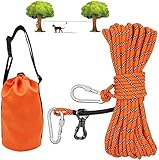
- Easy Setup and Teardown: XiaZ dog trolley system is specially desinged for dog outdoor events. Set up anywhere you want your dogs to enjoy more room to roam, between two trees or other anchor points. And you can finish it within 5 minutes. Now you can take your pets with you on all kinds of adventures.
- Keep Dog Safe: Compared to typical dog tie out, Dog zip line minimize the chances of your pooch getting strangled or wrapped around trees or picnic tables, and increases your pet's free roaming range. Glow-in-the-dark, reflective dog line will make sure to improve your dog's visibility at night.
- Super Lightweight: The dog overhead cable is only 1.3 lb and comes with a carrying bags, There is no burden for you to take it out for camping, park, yard, garden and other outdoor activities, and provide great mobility for your pets, while ensuring that they are in a safe sight range.
- High Quality: The dog runner for yard is made of reflective kernmantle rope and heavy duty steel clasp, durable and rugged, and can be used for all seasons and outdoor use, whether the park, froest, moutain or your own yard.
- Package Contents: Dog trolley runner includes: 50ft dog cable, 2 steel buckles, 1 360°tangle free clip and instruction sheet. The pictured leash attached to the dog is not included. If you have any questions about product set up, please feel free to contact us, any problems will be resolved in time.
Is a fenced run safer than a dog tie-out?
When both are properly designed and maintained, a secure fenced run usually avoids several hazards created by a tether. It does not place tension on a collar or harness, leave a line that can wrap around objects, or restrict a dog to a fixed radius. It can also make it easier for a dog to reach shelter, water and a resting area without dragging equipment.
That is a general safety advantage, not a guarantee. A weak gate, climbable panel, gap under the fence, toxic plant, exposed wire or overheated surface can make a run dangerous. Some dogs are persistent climbers, diggers or jumpers. A run is only the safer option if it is secure for that dog and located away from traffic, predators and other hazards.
Do these 3 things before closing this tab:
1Scan for outdated or missing drivers - takes under a minute2Repair Windows errors before they cause bigger problems3Fix the driver behind crashes, sound loss and screen glitches| Safety or welfare question | Secure fenced run | Tie-out | What to assess |
|---|---|---|---|
| Freedom of movement | Usually allows unrestricted movement within the enclosure, including turning, walking and exploring. | Movement is limited by line length, anchor position and the line’s ability to slide; a stationary anchor offers the least range. | Whether the dog can walk, turn, lie down, investigate and reach all resources without tension. |
| Entanglement and injury | No tether line to wrap around the dog or objects, but fencing, gates and surfaces can still cause injuries. | Introduces risks of wrapping, snagging, choking, strangulation and tether- or collar-related injury. | Objects within reach, line routing, swivels, hardware, collar or harness fit and the dog’s behavior. |
| Escape containment | Effective only when panels, gates, footing and height match the dog’s climbing, jumping and digging ability. | May prevent a dog from leaving a defined radius, but a broken anchor, line or attachment can result in escape. | How the dog has escaped or attempted escape before, and whether the barrier or anchor can withstand that behavior. |
| Shelter and weather | Can include shade, a dry shelter and water within easy reach. | The line may leave the dog unable to reach shelter or may expose it to heat, cold, storms or flooding. | Whether the dog can move to protection from climatic extremes at every point in the allowed area. |
| Exercise and exploration | Provides room for movement but may still be too small for a dog’s daily exercise needs. | Often restricts exploration and can encourage repetitive movement or frustration. | Separate walks, play, training and enrichment; neither setup replaces those activities. |
| Social contact | Allows easier interaction with people or compatible animals, if the area is safe and supervised. | Can isolate a dog or prevent it from moving away from frightening stimuli. | Temperament, reactivity, the presence of children or animals and the ability to intervene quickly. |
| Inspection burden | Requires checks of fences, gates, ground, shade, water and objects in the run. | Requires all of those checks plus frequent inspection of the dog, line, attachment, swivels and anchor. | How often a responsible person can watch and physically check the dog and equipment. |
The available professional guidance does not establish a universal injury rate or a numerical ranking between the two options. The comparison is based on the hazards each arrangement creates and on whether the specific installation meets the dog’s needs.
What risks does a tie-out create?
Entanglement, choking and strangulation
A line can loop around a leg, neck, tree, post, furniture or another object. If the dog pulls, spins or tries to retreat, the loop can tighten. A line that crosses itself or passes through a narrow gap can become a trap. The Ontario guidance specifically warns that tethering can cause injury or strangulation and recommends frequent checks.
Neck and attachment injuries
A dog that lunges at a person, animal or distraction can transfer substantial force to its neck and attachment point. The Ontario guidance says a properly fitted harness may reduce the possibility of neck injury compared with attaching a tether to a collar. A harness is not automatically safe: it must fit correctly, be compatible with the tether hardware and be checked for rubbing, slipping or damage.
Also popular on Amazon

- PACKAGE INCLUDES: There are three things in the package. Two tree protectors, One 50ft dog tie out cable with 2 zinc alloy climbing buckles, 2 stainless steel buckles and 2 stainless steel pulleys on it, and a storage bag. Please check the product carefully after receiving and contact us asap if any component is missing or damaged. (Attention: The package does not contain the pet leash.)
- HEAVY DUTY DOG TIE OUT CABLE: The dog cable is made of high quality and stainless steel rope, which can withstand very big force. The Trolley System comes with a 50 ft dog tie out cable , which are PVC Coating covered to protect from rain and rust, durable and long lasting for large dogs up to 200lbs.
- ZINC ALLOY HIKING BUCKLE: The 360°tangle free zinc alloy hiking buckle is made of high quality zinc alloy and it could give your dog more convenience, but is also durable enough to withstand the most intense pulling. Free your hand, without the fear of your dog running off when camping.
- ECO-FRIENDLY DESIGN: Compared to traditional dog run cable , our dog run cable are more environmentally friendly and easier to install. You only need to wrap the cable around the tree and secure it. And we have added two tree protection sleeves to both protect the tree and better prevent the wire rope from slipping.
- EASY TO INSTALL: Our package contains all components needed for a fast and easy 1 person set up, also a detailed installation instructions. You can also follow our video to install it. If you have any questions you can contact us and we will help you to solve your problem.
Restricted movement and frustration
A tether prevents a dog from choosing its distance from noise, strangers, other dogs, sun or rain. A dog may pace at the end of the line, bark, pull continuously or become more frustrated. Agriculture Victoria identifies inadequate exercise, stress and isolation among the welfare risks of tethering. New Zealand’s welfare rules also treat excessive frustration as a possible sign of prolonged tethering.
Quick wins for a faster PC:
Repair Windows errors before they cause bigger problemsFix Now →Scan for outdated or missing drivers - takes under a minuteDriver Scan →Environmental hazards within the tether radius
The dog can reach anything inside the line’s arc: chemicals, sharp tools, toxic plants, hot surfaces, pools, steps, low branches or openings in a fence. Before attaching the dog, walk the entire reachable area and remove or block every hazard. Recheck after moving the anchor or changing the line length.
Predators, traffic and inability to retreat
A tether may keep a dog in a yard but still leave it exposed to wildlife, unfamiliar dogs, people or vehicles. A tethered dog cannot run behind a barrier or move away from a threat. Ontario guidance notes that containing a dog within a larger secure area can reduce escape and predator risks compared with tethering in an open space.
Weather and shelter failures
Heat, cold, storms and flooding can turn a tolerable location into an emergency. The line must allow the dog to reach shade, dry shelter and water without wrapping around an obstacle. Agriculture Victoria warns that tethering can prevent access to shelter from climatic extremes. If conditions are changing or no one can check the dog, do not use a tie-out.
When can a tie-out be a reasonable temporary option?
Professional guidance treats tethering as a limited tool, not a substitute for a secure enclosure or daily care. The BC SPCA lists situations in which a tether may help provide outdoor access, contain a dog that escapes a fence, keep a dog away from a specific yard hazard, or manage a dog while camping or traveling. Those situations still require supervision, safe equipment and a plan to remove the tether.
The Tool Desk
Outbyte Driver Updater FREEFix the driver behind crashes, sound loss and screen glitchesFind Drivers →Outbyte PC Repair FREEClear out junk files and repair common Windows errorsFree Scan →Also popular on Amazon
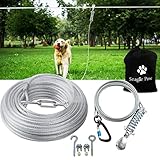
- HEAVY DUTY DOG TIE OUT CABLE: The Aerial Run Trolley System comes with a 50 ft dog tie out cable and a 10ft dog runner zipline, which are vinyl covered to protect from rain and rust, durability and long lasting for large dogs up to 250 lbs. Turnbuckle is included to avoid sagging and help pulley run smoothly along the cable
- ANTI-SHOCK DOG RUNNER LINE:The shock absorbing spring is located on the tie out cable instead of the long run cable, help your dog reduce the tension more directly to avoid injury, give your pet more freedom and security to run in the yard
- AVIATION ALUMINUM CARABINER CLIPS:The 360°tangle free clips is made of top quality rust-free aviation aluminum, which is very lightweight, give dogs more ease, but also durability enough to withstand the most intense pulling . The rotation tightening technology prevent loosing off when dog running and playing
- KEEP YOUR DOG SAFE:This dog aerial tie out cable is sturdy with how well its holding up to dogs running and pulling to keep them safely in sight. Free your hand, without the fear of them running off when camping
- EASY TO INSTALL: Our Snagle Paw dog trolley zipline tie out cable comes with all components needed for a fast and easy 1 person set up, also a detailed Installation Instructions, if you have any concerns just feel free to contact us, we will help you to solve your problem within 24 hours
- A secure fence is genuinely unavailable or cannot be used for a short period.
- The dog has been assessed as physically and behaviorally compatible with the system.
- A responsible person can stay close enough to inspect and release the dog promptly.
- The area has reliable shade or shelter, water, safe footing and no reachable hazards.
- The tether is part of a broader routine that includes walks, play, training, enrichment and social contact off tether.
Do not use a tie-out as a default solution for a dog that panics, repeatedly lunges, chews equipment, tangles itself, shows neck or skin injury, or becomes highly frustrated. A dog under six months old, in heat, whelping or nursing is prohibited from outdoor tethering under Ontario’s standards; other jurisdictions may have different rules.
How to set up and use a tie-out as safely as possible
- Check the legal requirements first. Tethering rules vary by jurisdiction. Confirm permitted tether types, minimum space, weather restrictions, supervision and age or reproductive-status rules before installation.
- Evaluate the individual dog. Consider age, health, mobility, respiratory or neck problems, anxiety, reactivity, escape history, chewing and entanglement behavior. Ontario guidance says tethering is not a universal solution and that compatibility with the system should be considered.
- Choose the safest attachment point. Use a stable, purpose-suitable anchor or correctly installed running system. Keep the line away from stairs, ponds, roads, fences, branches and objects that can create loops. A running system can increase range but does not remove tether hazards.
- Select suitable equipment. Use a tether whose material and weight suit the dog and the installation. Ontario guidance gives a best-practice limit of no more than 10% of the dog’s body weight for the tether itself; this is guidance, not Ontario’s legal tether-length rule. Check every clasp, swivel and connection for corrosion, sharp edges and wear.
- Fit the collar or harness carefully. The dog must not be able to back out, and the equipment must not rub, constrict or interfere with breathing. A harness may reduce possible neck injury, but only when correctly fitted and compatible with the line.
- Clear the entire reachable zone. Remove cords, tools, chemicals, plants, debris, low branches and anything the line can wrap around. Confirm that the dog can reach water, shade and shelter without the line becoming taut around an obstacle.
- Introduce the system gradually. Start for a short period while you remain beside the dog. Reward calm behavior, observe how the dog moves and stop if it pulls, panics, chews, tangles or shows distress. Increase duration only when the dog remains comfortable.
- Stay available and inspect frequently. Do not treat a tethered dog as unattended property. Look at the dog as well as the line, attachment, swivels and surrounding area. Recheck after wind, rain, landscaping, moved furniture or any change in the dog’s behavior.
- Provide off-tether activity. Schedule walks, play, sniffing, training and social contact. A tether should never replace exercise, enrichment, companionship, water or shelter.
- Have an emergency release plan. Keep a way to free the dog quickly if the line wraps, hardware fails, another animal approaches, weather changes or the dog is injured. Remove the dog immediately for coughing, limping, skin damage, breathing difficulty, panic or persistent frustration.
How to design a safer fenced run
Build for the dog’s actual escape behavior
Inspect the perimeter from the dog’s perspective. Close gaps at the ground, reinforce corners and gates, and account for jumping, climbing, digging and squeezing. A run that contains one dog may not contain another of the same size. Test latches and inspect after storms, frost, digging or impact.
Keep resources inside the enclosure
Provide water, shade and a dry shelter that the dog can reach from every part of the run. Use safe, non-slip footing and remove sharp edges, exposed wire, toxic plants and standing water. Place the shelter so rain runoff, heat reflection and flooding do not create new hazards.
Plan for exercise and social needs
Space to move is valuable, but a run does not automatically provide adequate physical or mental exercise. Continue daily walks, interactive play, training, scent work and appropriate social contact. If the dog spends time alone in the run, vary enrichment and check for boredom, pacing or fence-focused behavior.
Control outside stimuli
Dogs may become distressed when they can see a busy road, unfamiliar dogs or wildlife but cannot retreat. Use the layout, screening or supervised access to reduce chronic barking, lunging and frustration. Never assume a fence prevents contact through gaps or openings.
Also popular on Amazon

- 【Knot-a-Hitch Dog Hitching System】: Specially designed for upgrading the dog cart, so that you can more easily tighten and store the rope. The dog run cable trolley system is very suitable for large, medium and small dogs.
- 🐶Safety and no tangles】: The rope is woven from a reinforced parachute rope, which is bright in color to improve the dog's visibility and ensure its safety. The rope can be used in all seasons and is not easily tangled. It is rainproof and durable, and can safely withstand large dogs up to 250 pound.
- 🐶Easy to install and disassemble】: Our dog stroller system can be quickly installed by one person in 3 minutes. You can set it between two trees or other solid objects, and your dog will have a good place to train and play. At the same time, you can relax yourself without worrying about your pet.
- 🐶Portable dog leash】: The dog overhead cable has its own portable storage bag. Compact and easy to carry. The package also includes a carrying bag for carrying and storage. When you walk your dog in camping, parks, yards, gardens and other places, you can also hang your handbag on the rope to release your hands.
- 🐶Super long size】: There are two sizes of 70 feet and 100 feet for you to choose. The 100-foot safety rope dog leash has two 360° rotating carabiner connected to the dog leash, making it easier to be tied between 3 trees or other objects, and is suitable for families with two dogs or more. The product does not include a dog leash, but it can match almost all dog leashes you are using.
Exercise, welfare and supervision: neither option is self-sufficient
The Australian Veterinary Association describes tethering as a temporary method of restraint rather than suitable long-term confinement. Its guidance calls for frequent inspections, appropriate training and avoidance of tethering where welfare may be compromised. The same principle applies to a run: an enclosure is a management space, not a replacement for human care.
Dogs need opportunities to move at different speeds, investigate smells, rest away from stimulation, interact safely and choose where to position their bodies. A tether can remove those choices; a small or barren run can also fail to meet them. Watch for changes such as persistent pacing, fence running, barking, withdrawal, destructive behavior, repeated escape attempts, loss of appetite or reluctance to move. Treat these as reasons to change the setup and seek veterinary or qualified behavior advice, not as disobedience to punish.
Supervision means more than being somewhere on the property. The responsible person must be able to see or promptly reach the dog, recognize a problem and release or move the dog. If work, sleep, travel or weather means those checks cannot happen, bring the dog indoors or use another managed option.
Ontario rules and other jurisdiction-specific guidance
Ontario’s outdoor-dog standards are legal requirements for that province, not universal rules. They require at least three metres of horizontal tether movement and swivels that turn 360 degrees at both ends. They prohibit tethering an outdoor dog under six months old, in heat, whelping or nursing. When a dog is tethered for 23 hours in a 24-hour period, it must be off tether for at least 60 continuous minutes for exercise and enrichment, subject to the regulation’s exceptions. Check the current Ontario standards before relying on any dimension or exception.
Ontario’s 2022 ministry guidance also recommends considering a large fenced yard, large pen or running tether as alternatives that allow more natural movement. Its 10% body-weight figure for tether weight is a best practice, not the legal three-metre requirement.
Also popular on Amazon
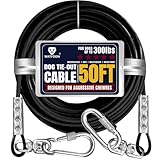
- Extra Strong Stainless Steel Cable --- 50 feet size long, made of stainless steel wire 5mm in diameter with PVC coating, high tensile strength, impact toughness, corrosion resistance, Double crimp for stronger ends, WATFOON heavy duty dog cable has break strength of 1000 pounds. Chew proof tie-out cable provide more space for freely movement while ensuring your pets safety
- Stainless Steel Heavy Duty 360° Rotating Buckle --- WATFOON dog tie out cable design 360° swivel clips and clasp, The stainless steel hooks which can withstand 300 pounds of pulling force, no matter how vigorous your pet is, the clip will not break. This 50ft dog leash wire cable ultra durable and lightweight, allows 360°rotate, more strong and anti-rust than others, on both ends can be easily attached to a spiral stake or ground post
- Heavy Duty Metal Ring Reinforcement --- The metal reinforcement ring at both ends of the leash prevents excessive wear and tear and breakage of the dog tether.
- Convenient and Practical Dog Leads for Yard --- The length for dog run cable is 50ft, easy to carry, This dog tie-out leash/long wire cable for dogs is suitable for yard, camping, park, Beach, garden and other outdoor activities to provide great mobility for your dogs, easy to carry and store by a tote bag
- Designed for Daily Adventures --- The dog lead gives your pet more freedom in outdoor, providing more space to run or recall training, free your hands to do what you want to do. 15/25/35/40/50/65/75/100/120/150/200 foot, various sizes dog cable wire can meet different occasions
Rules elsewhere differ. New Zealand has a provision effective 25 September 2025 that prohibits tethering when two or more listed signs of prolonged tethering are evident, except in a limited supervised veterinary-handling circumstance or where the written veterinary-advice defense applies. The listed signs include tether-related injury and excessive frustration. New Zealand’s dog welfare code warns that prolonged containment or tethering can harm physical and mental health. These provisions apply in New Zealand and should not be presented as a worldwide standard.
Choosing between a tie-out, fenced run and other alternatives
Choose a fenced run when
- You can build a barrier that the dog cannot climb, jump, dig under or push through.
- You can include shelter, shade, water and safe footing inside the enclosure.
- You want to avoid tether-specific risks and can still provide walks and social contact.
Consider a temporary tie-out only when
- Fencing is unavailable or unsuitable for a defined, short-term need.
- The dog remains calm and physically comfortable on the equipment.
- A person can supervise closely and perform frequent checks.
- The entire line path and reachable area are free of hazards.
Use another management plan when
- The dog has a history of panic, self-injury, persistent pulling, chewing or severe reactivity.
- No one can provide the required supervision or off-tether exercise.
- Heat, cold, storms, flooding, predators or traffic cannot be controlled.
- The only available fence is insecure or the only anchor is unstable.
Alternatives recommended by welfare organizations include leashed walks, suitable off-leash areas, training and enrichment. A secure run and a properly fitted harness can be useful components of a broader plan, but no piece of equipment eliminates the need to assess the dog and monitor its welfare.
Recommended Free Tools
Warning signs that the setup is failing
- Physical injury: coughing, gagging, breathing changes, limping, hair loss, abrasions, swelling or wounds around the neck, chest, legs or paws.
- Entanglement: repeated wrapping, a line caught on objects, damaged swivels or an anchor that shifts.
- Distress: frantic pulling, freezing, hiding, nonstop barking, escape attempts or excessive frustration.
- Welfare decline: reduced activity, appetite or social engagement, repetitive pacing or inability to settle.
- Environmental danger: loss of shade, inaccessible water, flooding, extreme temperatures, a new predator or a broken fence.
Stop the arrangement and move the dog to a safe area if any of these signs appear. Seek veterinary care for injury or breathing problems, and obtain qualified behavior help when fear, frustration or reactivity is involved.
Bottom line for dog owners
A secure fenced run generally offers more freedom and fewer attachment-related hazards than a tie-out, but only when the enclosure truly contains the individual dog and provides shelter, water, safe footing and room to move. A tie-out can be a carefully supervised, temporary solution in limited circumstances. It must never replace exercise, enrichment, social contact or protection from weather and danger. Assess the dog, the equipment, the environment and the law together, then choose the arrangement you can inspect and manage consistently.





Leave a Reply