
Quick wins for a faster PC:
Clear out junk files and repair common Windows errorsFree Scan →Scan for outdated or missing drivers - takes under a minuteDriver Scan →More deworming is not always better deworming. Treating every cow on an automatic schedule can accelerate gastrointestinal parasite resistance. The safer strategy is targeted treatment based on animal risk, parasite surveillance, accurate dosing, pasture management, and veterinary guidance—not abandoning parasite control.
More deworming is not always better deworming. Treating every cow on an automatic spring-and-fall schedule can expose the herd’s gastrointestinal parasites to repeated selection pressure and help drug-resistant worms become more common. The better goal is not to stop treating cattle—it is to identify which animals and groups are most likely to benefit, use an effective labeled product correctly, and verify that the plan is working.
As an Amazon Associate I earn from qualifying purchases.
Parasite-control decisions should account for the cattle’s age, body condition, production stage, pasture history, season, geography, signs of illness, diagnostic results, and previous treatments. A veterinarian can help turn those factors into a herd-specific program.
Windows Errors? Fix Them Before They Spread
Repair common Windows errors and clear accumulated junk for a smoother, more stable PC - no reinstall needed.Free scan · no reinstallOutdated Drivers Are Slowing You Down
One free scan finds every outdated or missing driver and matches the right update for your exact hardware.Free scan · exact hardware matchWhy blanket deworming can backfire
Cattle may carry gastrointestinal parasites without every animal having the same parasite burden or suffering the same production loss. When the entire herd receives the same dewormer at the same time, susceptible parasites are removed while worms that survive the treatment remain. Those survivors reproduce, increasing the proportion of resistant parasites in the population.
#1 Best Overall
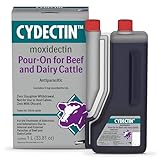
- Effective Parasiticide: Cydectin Pour On is a ready-to-use product for beef and dairy cattle to control internal and external parasites
- Livestock Pest Control: Provides treatment for 13 species of internal parasites and many of their larval stages––including brown stomach worms, lungworms, and nodular and barber pole worms–– as well as controls horn flies, lice, cattle grubs, and mites
- Active Ingredient Moxidectin: This Milbemycin dewormer contains a weatherproof formula with a purple dye to easily see which cows have been treated
- Use as Directed: This pour-on is suitable for lactating cows, with zero milk withhold and zero slaughter withdrawal, and is dung beetle and earthworm-friendly
- Contains one (1) 1L bottle of Cydectin Pour-On for beef and dairy cattle
Resistance can also be encouraged by an inaccurate dose, treating the wrong parasite, using a product that is no longer effective on a particular farm, or repeatedly relying on the same drug class without checking its performance. The result may be treatment failure, poorer weight gain, reduced reproductive performance, higher parasite burdens, and wasted medication costs.
That is why “spring and fall, every cow” is not a reliable universal parasite-control plan. Local parasite pressure and farm conditions vary, and a schedule that is appropriate for one operation may be unnecessary or ineffective on another.
Which cattle may deserve priority?
Calves and other young cattle often deserve closer attention. They generally have less developed immunity to gastrointestinal parasites and may experience reduced feed intake, weaning weight, or daily gain when parasite burdens are significant. Treating a high-risk young group can therefore provide more production benefit than routinely treating every mature cow.
Priority may also go to animals or groups with:
- poor or declining body condition;
- diarrhea, anemia, weakness, bottle jaw, coughing, or other signs that could be associated with parasites;
- poor weight gain or an unexpected production setback;
- high parasite counts or a history of heavy pasture contamination;
- recent movement onto a high-risk pasture or exposure during a season favorable to parasite transmission; or
- evidence that a previous treatment did not work.
This does not mean every calf should automatically be dewormed, and it does not mean mature cows never need treatment. A clinically ill or heavily burdened adult should not be left untreated simply to reduce the number of animals receiving medication. The point is to match treatment to risk and likely benefit.
What “refugia” means—and why it matters
Refugia is the population of parasites that has not recently been exposed to a dewormer. Leaving some susceptible parasites in the environment can dilute resistant survivors and slow the spread of resistance.
Rank #2

- PARASITE CONTROL: Durvet liquid ivermectin helps to control a broad range of internal and external parasites in cattle, including worms, grubs, lice, flies, mites.
- POUR-ON DEWORMER: Ivermectin liquid is a convenient topical solution, simple to apply directly to cattle, making deworming hassle-free.
- EFFECTIVE SOLUTION: 5 mg/ml liquid ivermectin solution helps to maintain cattle comfort and effective parasite management.
- PACKAGE INCLUDE: Pour on cattle dewormers contain 250ml liquid ivermectin for routine parasite control.
- IDEAL FOR ALL: DuraMectin Ivermectin is reliable for farmers, ranchers, veterinarians and cattle producers to maintain their livestock easily.
Extension guidance and the researched expert discussion describe situations in which approximately 10% to 20% of healthy mature cattle may be left untreated during routine deworming. Some guidance specifically discusses healthy adults older than three years. This percentage is a management example, not a rule to apply mechanically to every herd.
Refugia may be unsuitable when parasite pressure is severe, when animals are sick or losing condition, or when a veterinarian determines that the untreated animals would face unacceptable risk. Which animals remain untreated matters as much as the percentage: they should be healthy, lower-risk animals selected as part of a deliberate plan—not cattle that obviously need care.
Use testing before assuming treatment is needed
Testing can make deworming decisions more precise and can reveal when a product is not performing as expected. A veterinarian or qualified diagnostic laboratory can help select animals, determine sampling timing, and interpret the result.
Composite fecal egg count
A fecal egg count estimates the number of parasite eggs in feces and can provide a relative picture of gastrointestinal parasite burden. A composite sample made from several animals in the same production group may be used to screen that group; the researched guidance discusses sampling roughly 20 animals as one way to obtain a useful relative estimate.
A fecal egg count is not a complete diagnosis. It does not, by itself, identify every parasite species, measure the full effect on an individual animal, or prove that treatment is necessary. Egg shedding can vary, and some important parasites or disease causes may not be represented accurately by a basic count.
Rank #3

- Multi-species deformer
- This product is easy to Use
- This product is manufactured in China
- Brand name: Animal Health International
Coproculture
Coproculture can help identify the types of gastrointestinal parasites present when a basic fecal egg count cannot distinguish them. Knowing the likely parasite matters because not every product works against every parasite, and cattle with similar signs may have different causes of illness.
Fecal egg count reduction test
A fecal egg count reduction test compares parasite egg counts before treatment with counts collected after treatment at the appropriate interval. It can help determine whether a dewormer worked and whether resistance or a management problem should be investigated.
A poor result does not automatically prove genetic drug resistance. Incorrect dosing, underestimating body weight, poor administration, unsuitable timing, an ineffective product, reinfection, or testing errors can also contribute. Do not respond by repeatedly switching products at random. Review the dose, active ingredient, treatment technique, timing, parasite diagnosis, and test design with a veterinarian.
A practical decision sequence
- Divide the herd into meaningful groups. Consider calves, yearlings, mature cows, bulls, recently treated animals, and cattle on different pastures separately.
- Assess risk. Review body condition, growth, clinical signs, pasture history, season, weather, geography, previous treatments, and any known parasite problems.
- Discuss sampling. Ask a veterinarian or diagnostic laboratory whether a composite fecal egg count, coproculture, individual samples, or another test is appropriate.
- Treat when the expected benefit justifies it. Use a product labeled for the animal, parasite, route, and situation. Dose according to the heaviest animal in the treated group when the label and veterinary plan call for that approach, and avoid guessing body weight.
- Preserve refugia when appropriate. Leave selected healthy, lower-risk cattle untreated only when that fits the parasite pressure and veterinary plan.
- Verify the result. If treatment failure is suspected, use a properly timed fecal egg count reduction test and investigate administration, diagnosis, reinfection, and resistance.
- Improve the whole program. Combine treatment decisions with pasture and grazing management, animal grouping, nutrition, monitoring, and timely veterinary review.
Choosing and using a cattle dewormer safely
A cattle dewormer can be useful when a veterinarian-guided plan identifies animals that need treatment. It is not a reason to medicate every cow by default. When comparing products, match the active ingredient and formulation to the suspected parasite, cattle class, route of administration, and current label.
Before administering any product:
- read the exact current label, including species, age, dose, route, parasite claims, and restrictions;
- weigh cattle as accurately as practical and use properly maintained dosing equipment;
- do not assume that two products with similar names have the same concentration or withdrawal requirements;
- record the product, active ingredient, lot information, dose, date, route, and animals treated;
- follow slaughter and milk withdrawal periods exactly; and
- ask a veterinarian before using an extra-label treatment or combining products.
Food-animal withdrawal periods vary by product, route, dose, and animal use. The U.S. Food and Drug Administration advises producers to follow the withdrawal time for every drug. Product restrictions also differ. For example, the DailyMed label for one cattle ivermectin product warns that it should not be used in female dairy cattle of breeding age because a milk withdrawal time has not been established. That restriction should not be generalized to every ivermectin formulation, but it illustrates why the exact label matters.
What’s actually slowing this PC down?
Pick the symptom - the matching free tool is one click away.
Rank #4

- Effective Parasiticide: Cydectin Pour On is a ready-to-use product for beef and dairy cattle to control internal and external parasites
- Livestock Pest Control: Provides treatment for 13 species of internal parasites and many of their larval stages––including brown stomach worms, lungworms, and nodular and barber pole worms–– as well as controls horn flies, lice, cattle grubs, and mites
- Active Ingredient Moxidectin: This Milbemycin dewormer contains a weatherproof formula with a purple dye to easily see which cows have been treated
- Use as Directed: This pour-on is suitable for lactating cows, with zero milk withhold and zero slaughter withdrawal, and is dung beetle and earthworm-friendly
- Contains one (1) 2.5L bottle of Cydectin Pour-On for beef and dairy cattle
The FDA announced a specified emergency use of injectable Ivomec against New World screwworm on February 5, 2026, with a 35-day cattle slaughter withdrawal period for that use. That emergency authorization must not be treated as approval for every ivermectin formulation, every parasite, or every cattle-management situation. Use a product only for the indication and conditions listed on its current label or otherwise authorized under applicable veterinary direction.
Independent reader supportYour contribution helps us test, update, and keep practical guides available for everyone.Not every “worm” problem is the same
This discussion concerns gastrointestinal parasites and anthelmintic resistance. Lice, ticks, screwworm, liver flukes, coccidia, and other organisms require different diagnostic and control strategies. A product that treats one parasite may not treat another, and visible rubbing, diarrhea, weight loss, or anemia can have causes unrelated to the parasite you suspect.
Identify the problem before choosing a product. If cattle are severely weak, dehydrated, anemic, rapidly losing condition, or showing widespread illness, contact a veterinarian promptly rather than waiting for a routine deworming date.
The bottom line for cattle producers
Do not automatically deworm every cow simply because the calendar says spring or fall. Diagnose the likely problem, prioritize cattle most likely to benefit—often calves and other high-risk groups—use accurate, label-directed treatment, preserve refugia when appropriate, and check whether the treatment worked. A targeted program protects both animal performance today and the usefulness of dewormers in the future.
Do these 3 things before closing this tab:
1Fix the driver behind crashes, sound loss and screen glitches2Clear out junk files and repair common Windows errors3Scan for outdated or missing drivers - takes under a minuteFrequently Asked Questions
Does this mean I should never deworm adult cows?
No. The advice is not to stop deworming cattle or to avoid treating adult cows in every situation. It is to avoid automatically treating every animal without considering parasite risk, age, condition, pasture history, diagnostic results, and veterinary advice.
Best Value

- Broad-Spectrum Deworming Formula: Formulated with 10% Fenbendazole, this oral suspension helps control common internal worms in beef cattle, dairy cattle, and goats, including stomach worms, intestinal worms, and lungworms
- Easy Oral Administration: Includes a convenient oral drencher for simple and accurate administration. Shake well before use and administer according to the recommended dosage instructions
- Livestock Health Support: Fenbendazole dewormer helps maintain healthy animals by supporting effective internal worm control, allowing cattle and goats to stay active, healthy, and productive
- Ideal for Farm & Ranch Care: A practical addition to livestock health routines, suitable for farms, ranches, and small-scale animal owners looking for convenient internal worm management
- Convenient Storage & Handling: This fenbendazole suspension is easy to handle and store, making it a practical choice for regular livestock management needs
What is refugia in cattle parasite control?
Refugia is the population of parasites that has not recently been exposed to a dewormer. In appropriate situations, leaving selected healthy, lower-risk mature cattle untreated can preserve susceptible parasites that dilute resistant survivors. The often-mentioned 10% to 20% range is not a universal rule.
Can fecal testing show whether a cattle dewormer worked?
A fecal egg count estimates relative parasite egg shedding, while coproculture can help identify parasite types. A fecal egg count reduction test compares counts before and after treatment to assess whether the product worked. Sampling and interpretation should be planned with a veterinarian or qualified diagnostic laboratory.
What should I check before giving a dewormer to cattle?
Follow the exact current label for the product, formulation, dose, route, cattle class, and intended use. Withdrawal times vary, and some products have dairy or other restrictions. Never generalize the instructions for one ivermectin or dewormer product to another.
Recommended Free Tools
The Bottom Line
Practical rule: Do not treat every cow by routine. Assess risk, test when useful, treat the animals most likely to benefit, follow the exact label and withdrawal period, and involve a veterinarian when cattle are sick or treatment fails.
Quick Recap
Product prices and availability are accurate as of the date/time indicated and are subject to change. Any price and availability information displayed on Amazon at the time of purchase will apply.





Leave a Reply