
Outdated Drivers Are Slowing You Down
One free scan finds every outdated or missing driver and matches the right update for your exact hardware.Free scan · exact hardware matchWindows Errors? Fix Them Before They Spread
Repair common Windows errors and clear accumulated junk for a smoother, more stable PC - no reinstall needed.Free scan · no reinstallA Drum Horse is a large, feathered, athletic horse type developed from Shire, Clydesdale, and Gypsy Horse or Gypsy Cob ancestry. It is valued for draft strength, elegant movement, abundant mane and tail, striking leg feathering, and the steady temperament sought in ceremonial horses.
It is also important not to treat the Drum Horse as a single, universally standardized international breed. Multiple registries use different eligibility, bloodline, DNA, and studbook rules. If you are buying one, verify the exact registry behind its papers—and be prepared for the substantial feeding, hoof, feather, veterinary, equipment, and training responsibilities that come with a very large horse.
As an Amazon Associate I earn from qualifying purchases.
What is a Drum Horse?
A Drum Horse is a large, feathered, athletic horse type developed from Shire, Clydesdale, and Gypsy Horse or Gypsy Cob ancestry. Its ideal combines draft-horse strength and substance with elegant movement, abundant mane, tail, and leg feathering, and a steady, willing temperament.
Do these 3 things before closing this tab:
1Fix the driver behind crashes, sound loss and screen glitches2Clear out junk files and repair common Windows errors3Scan for outdated or missing drivers - takes under a minuteThe most important qualification is that the Drum Horse does not have one universally controlling international breed standard. Several registries and breeding programs define eligibility differently. That means two horses may both be registered or marketed as Drum Horses while having different bloodline percentages, studbook categories, or registration requirements. For any individual horse, the registry named on its papers matters.
#1 Best Overall

- 7-Piece Grooming Kit: Weaver Equine’s grooming horse supplies meet all your equine grooming needs; the horse care kit includes a comb, hoof pick, palm-held curry comb, face brush, mane and tail brush, dandy brush, and sweat scraper/coarse curry combo
- Organizer Storage Bag: Assorted horse brushes for grooming come in a sturdy nylon tote bag with six outer pockets; the plastic feet of this horse grooming bag protect the bottom from wear and tear, making it a reliable choice for every equestrian
- Convenient Design: This horse grooming tote features a top drawstring closure and flexible retaining strap to safely secure and hold all sorts of tools - use the wide pockets and spacious interior to easily organize your horse accessories
- Comfortable and Portable: Designed for easy use, the grooming bag for horses includes comfortable webbing handles and a soft padded shoulder strap with an on and off snap; effortlessly carry this lightweight horse tack room equipment wherever you go
- Ideal Equine Accessory: Crafted for both functionality and comfort, this horse grooming brushes kit is, with a wire-reinforced top that maintains shape, while the plastic feet keep the horse grooming caddy upright - ideal for both occasional and everyday grooming
| Feature | What to expect |
|---|---|
| Type | Large draft-influenced riding, driving, and ceremonial horse |
| Foundation bloodlines | Usually combinations of Shire, Clydesdale, and Gypsy Horse or Gypsy Cob; some programs also recognize specific crosses such as Friesian |
| Height | Some registry standards set a mature target of at least 16 hands, but this is a program aim rather than a guarantee for every horse |
| Build | Substantial, muscular, deep-bodied, and strong without sacrificing balance or athletic movement |
| Coat and feathering | Abundant mane, tail, and feathering are strongly associated with the type; colors can vary according to bloodlines and registry rules |
| Temperament | Breeding programs seek intelligent, kind, willing, even-tempered horses, but an individual’s behavior still depends on genetics, training, health, and management |
| Common roles | Ridden and driven work, exhibitions, parades, ceremonial programs, and recreational ownership |
Why is it called a Drum Horse?
The name comes from the British military tradition of mounted drum horses. In ceremonial units, a specially trained horse carries large kettledrums while moving in formation, often through crowded and noisy public events. The drum horse is therefore associated not just with size and spectacle, but with exceptional steadiness and careful preparation.
British Army records state that the Royal Horse Guards received a pair of solid-silver kettledrums from King George III in 1805, and those drums remain in ceremonial use. The Life Guards received their own silver drums during the nineteenth century. In modern British Army ceremonial events, the pair of solid-silver kettledrums can weigh more than 60 kilograms.
That weight explains why ceremonial horses must be physically capable, balanced, accustomed to unusual equipment, and remarkably dependable around crowds, music, flags, traffic, and close formation riding. It does not mean that every privately owned Drum Horse must carry kettledrums or meet the training standard of the Household Cavalry. The ceremonial role is an important historical model for the type, not a universal requirement of ownership.
The Household Cavalry’s equine operation includes horse trainers, riding instructors, and a School of Farriery. This specialized support structure is a useful reminder that ceremonial reliability comes from systematic training and professional care rather than from breed identity alone.
Drum Horse ancestry and registration
Drum Horse breeding generally draws on three influential kinds of ancestry:
- Shire: contributes scale, bone, substance, draft presence, and weight-bearing ability.
- Clydesdale: is associated with height, expressive movement, draft athleticism, and feathering.
- Gypsy Horse or Gypsy Cob: contributes feathering, mane and tail, color variety, and a more ornamental but useful riding-horse influence.
The proportions are not universal. The Drum Horse Breed Registry describes lineage categories involving Shire, Clydesdale, and Gypsy blood, along with DNA requirements and separate main-book and B-book pathways. The Gypsy Horse Association publishes a different application framework that specifies Gypsy percentages and recognizes certain Shire, Clydesdale, and Friesian crosses. These systems should not be treated as interchangeable.
What to verify on a Drum Horse’s papers
If you are buying, breeding, or importing one, ask for more than the phrase Drum Horse in an advertisement. Verify:
- the exact name of the registry or association;
- the registration number and certificate;
- the recorded sire and dam;
- the documented ancestry and applicable bloodline percentages;
- whether DNA parentage or DNA identification is on file;
- whether the horse is entered in a main studbook, B-book, appendix, or another category;
- transfer paperwork and current ownership information; and
- the registry’s rules for breeding, inspection, or future registration.
Registration with one organization does not automatically establish eligibility with another. If documentation is important to your plans, contact the relevant Drum Horse breed registry directly before completing the purchase or breeding arrangement. The name on the papers should match the organization whose rules you are relying on.
Appearance and conformation
The desired Drum Horse is more than a very large horse with feathered legs. Registry standards describe a medium-to-heavyweight, well-muscled horse with enough balance and athleticism for ridden work. Commonly expected features include:
- a tall, substantial frame;
- a broad, expressive head;
- a muscular neck that blends into the shoulder;
- a deep chest and well-sprung ribs;
- a strong back and loin;
- a rounded barrel;
- powerful hindquarters;
- large, well-shaped hooves; and
- abundant feathering beginning above the fetlocks and extending down the lower legs.
The mature target of at least 16 hands appears in the Drum Horse Breed Registry’s standard, but height alone does not make a good Drum Horse. A sound, balanced horse with appropriate bone, correct limb alignment, good feet, and comfortable movement is more useful than an exceptionally tall horse with structural weaknesses.
When assessing an individual, look at the horse standing, walking, and moving on appropriate surfaces. Pay attention to straightness, limb alignment, hoof balance, joint movement, back comfort, body condition, and whether the horse can carry itself without laborious or uneven action. Abundant feathering can make the legs look more substantial than they are, so hands-on examination and a professional pre-purchase evaluation are especially valuable.
What’s actually slowing this PC down?
Pick the symptom - the matching free tool is one click away.
Temperament and trainability
Breeding programs commonly aim for a Drum Horse that is intelligent, willing, kind, and even-tempered. Those qualities are particularly valuable in a horse expected to work around people, equipment, noise, and public distractions.
Rank #2

- 7-Piece Grooming Kit: Weaver Equine’s grooming horse supplies meet all your equine grooming needs; the horse care kit includes a comb, hoof pick, palm-held curry comb, face brush, mane and tail brush, dandy brush, and sweat scraper/coarse curry combo
- Organizer Storage Bag: Assorted horse brushes for grooming come in a sturdy nylon tote bag with six outer pockets; the plastic feet of this horse grooming bag protect the bottom from wear and tear, making it a reliable choice for every equestrian
- Convenient Design: This horse grooming tote features a top drawstring closure and flexible retaining strap to safely secure and hold all sorts of tools - use the wide pockets and spacious interior to easily organize your horse accessories
- Comfortable and Portable: Designed for easy use, the grooming bag for horses includes comfortable webbing handles and a soft padded shoulder strap with an on and off snap; effortlessly carry this lightweight horse tack room equipment wherever you go
- Ideal Equine Accessory: Crafted for both functionality and comfort, this horse grooming brushes kit is, with a wire-reinforced top that maintains shape, while the plastic feet keep the horse grooming caddy upright - ideal for both occasional and everyday grooming
They are aims, not guarantees. Behavior is influenced by inherited temperament, early handling, training methods, pain, living conditions, diet, turnout, and the horse’s current environment. A quiet horse in a familiar stall may respond very differently at a show, on the road, during loading, or when its feet are handled.
Before buying, observe the horse in several ordinary situations:
- catching and leading from the field;
- grooming and touching the ears, belly, legs, and tail;
- picking up all four feet;
- standing tied or waiting quietly;
- loading and unloading from a trailer;
- meeting unfamiliar people, horses, and objects; and
- ridden or driven work appropriate to its training, if that is part of the intended use.
Ask whether any behavior changes have coincided with lameness, gastric discomfort, dental problems, skin irritation, or changes in management. A horse that suddenly becomes resistant should be evaluated for pain rather than simply labeled difficult.
Quick wins for a faster PC:
Clear out junk files and repair common Windows errorsFree Scan →Fix the driver behind crashes, sound loss and screen glitchesFind Drivers →What are Drum Horses used for?
Drum Horses appeal to people who want a tall, eye-catching horse with draft substance and a calm public presence. Depending on the individual’s conformation, fitness, training, and registration, they may participate in:
- ceremonial and parade work;
- exhibitions and breed demonstrations;
- driving;
- dressage or other ridden disciplines suited to the horse;
- trail and recreational riding; and
- general companionship and breed-enthusiast ownership.
Registry materials emphasize versatility, but a breed label is not a performance guarantee. A horse’s suitability depends on its soundness, movement, training, fitness, and ability to remain comfortable under the intended workload.
A good home must also be physically prepared for a large horse. Safe fencing, suitable turnout, adequate shelter, appropriately sized stalls, large-horse tack, reliable transport, and professionals comfortable working around draft horses are not optional details. The costs of feed, hoof care, veterinary care, equipment, and transport can be higher than a new owner expects.
Feeding a Drum Horse
Feed a Drum Horse according to body condition, workload, age, health, climate, and forage quality—not simply according to its size. Merck Veterinary Manual guidance places forage at the foundation of equine nutrition and notes that draft breeds and other easy keepers may have energy requirements toward the lower end of normal ranges.
A practical feeding framework
- Start with forage. Evaluate the hay or pasture and provide enough forage to support normal chewing and digestive function.
- Monitor body condition. Feel the horse rather than judging only by its thick coat or feathering. A heavy mane, tail, and winter coat can conceal excess weight.
- Match calories to work. Increase energy only when the horse’s workload, growth, pregnancy, lactation, climate, or condition requires it.
- Fill nutrient gaps carefully. A ration balancer or concentrate may be useful when forage does not supply needed nutrients or energy, but large quantities of grain are not automatically appropriate.
- Make changes gradually. Sudden changes in hay, concentrate, pasture access, or feeding schedule can create digestive and metabolic problems.
- Provide water and salt. Clean water should be continuously available, with salt supplied in a form appropriate to the horse and management system.
Draft and draft-cross horses may gain weight readily. Overfeeding can create more serious management challenges, particularly when the horse is lightly worked or has limited turnout. A slow-feed hay net can help some horses extend forage consumption, but it must be selected and installed safely for the individual horse and should not replace an overall nutrition plan.
For obesity, unexplained weight loss, suspected metabolic disease, pregnancy, lactation, growth, or a difficult-to-balance ration, consult an equine veterinarian or equine nutritionist. Do not use a commercial feed merely because its label features a draft horse or because the horse appears to need more bulk.
Grooming and feather care
Feathering is one of the Drum Horse’s defining visual features, but it adds real management work. The lower legs and pasterns need routine inspection for mud, abrasions, swelling, heat, odor, parasites, hair loss, and signs of discomfort. Feathering can hide a small wound or skin problem until it becomes significant.
Routine grooming steps
- Curry and brush the body as appropriate for the coat and the horse’s tolerance.
- Brush the mane and tail carefully to avoid unnecessary breakage.
- Separate the leg feathering and inspect the skin rather than aggressively pulling a brush through mats.
- Keep the lower legs and hoof margins as clean and dry as practical.
- Pick out each hoof regularly, including before and after work.
- Dry wet feathering when conditions permit, particularly when the horse is prone to skin irritation.
- Contact a veterinarian for persistent crusting, hair loss, swelling, foul odor, lameness, recurring lesions, or obvious pain.
A horse grooming kit containing suitable body brushes, mane and tail tools, and a hoof pick is a practical starting point for routine care. Choose tools that let you inspect and clean the feathering without scraping irritated skin. Grooming equipment supports daily maintenance; it does not replace a farrier, veterinary examination, or diagnosis.
Do not treat shaving or medicated products as universal answers. Feather clipping may be appropriate for a particular job, climate, or health-management plan, but it changes the horse’s natural protection and should be discussed with a knowledgeable professional first.
Rank #3
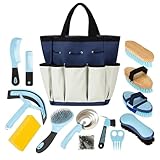
- 14-Piece All-In-One Horse Grooming Kit: Our all-in-one horse brush set covers daily care and show preparation to avoid separate purchases. This full horse brush set includes a soft face brush, flexible finish brush, hard dandy brush, soft body brush, grooming sponge, hoof pick with brush, sweat scraper, 2 straight combs, mane and tail detangler brush, braiding comb, rubber bands, and a waterproof storage tote — the ultimate equine grooming kit for all needs
- Deep Grooming for Healthy Shiny Coat: This horse care kit delivers gentle yet thorough care from head to hoof. The curry comb loosens caked mud, sweat and shedding hair, while the brushes boost skin blood circulation and the detangler brush smooths manes without pulling. Regular grooming leaves coats glossy and healthy, turning routine care into a relaxing bonding experience for you and your horse
- Premium Durable & Ergonomic Build: Built for long-term stable and pasture use, every piece in our horse grooming tools set uses high-grade materials. The rust-resistant stainless steel hoof pick ensures lasting reliability, and all brushes are ergonomically designed which reduce hand fatigue during extended sessions. Gentle on sensitive skin, tough on heavy dirt, suitable for year-round daily use
- 900D Waterproof Oxford Storage Tote: Keep all your tack room accessories neatly organized and ready to go. This waterproof horse grooming bag is made of heavy-duty 900D Oxford cloth, with dedicated compartments and elastic straps to secure each tool. It's for use in horse tack rooms or for on the go, ensuring you have quick access to your essentials
- Fits Riders of All Skill Levels: Ideal for beginners, seasoned equestrians, stable owners and professional caretakers alike, this horse grooming kit fits all usage scenarios. Whether for daily coat upkeep, thorough pre-show grooming, or casual bonding time with your horse, the intuitive tools deliver professional results without a steep learning curve
Hoof care for a large, feathered horse
Hoof care is one of the most important recurring responsibilities of Drum Horse ownership. University of Minnesota Extension recommends a working relationship with a farrier and veterinarian, regular trimming or shoeing, balanced feet, and shoeing appropriate to the horse’s footing and use.
A common interval is approximately six to eight weeks in summer and six to twelve weeks in winter. These are planning ranges, not a universal schedule. Growth rate, climate, pasture, workload, hoof quality, conformation, and whether the horse wears shoes can all change the correct interval.
Pick the hooves routinely and check for packed mud, stones, cracks, thrush, heat, changes in digital pulse, and sudden tenderness or lameness. A large horse can place considerable force on an imbalanced foot, so delaying an assessment is unwise. A farrier experienced with large, feathered horses can also help you decide whether the horse needs routine trimming, shoes, pads, or a work-specific solution.
Free tools Windows power users keep installed
One-click scans. No signup required.
If you are establishing a new care team, ask local equine veterinarians, experienced owners, and boarding facilities how to find an equine farrier who is comfortable handling draft-sized horses. Confirm availability before bringing the horse home; finding a suitable farrier after a missed appointment can be difficult.
Dental care
The American Association of Equine Practitioners recommends at least annual dental examinations. Older horses and those with known dental abnormalities may need more frequent evaluations.
Arrange an examination promptly if you notice:
- dropping partially chewed feed;
- taking much longer to eat;
- difficulty chewing;
- weight loss or unexplained changes in body condition;
- foul odor from the mouth;
- nasal discharge associated with eating;
- head tossing or an abnormal head position; or
- a sudden change in behavior during bridling, riding, or feeding.
Dental floating and other procedures should be performed by a qualified equine professional. Owners should not attempt to file teeth or use improvised tools.
Vaccination and disease prevention
AAEP identifies tetanus, Eastern equine encephalomyelitis, Western equine encephalomyelitis, West Nile virus, and rabies as core vaccination categories. Additional risk-based vaccines may be appropriate depending on geography, travel, age, use, exposure, pregnancy, boarding conditions, and the horse’s previous vaccine history.
There is no single vaccination schedule that is correct for every Drum Horse. Work with your veterinarian to review local disease pressure, transport and show plans, herd turnover, contact with unfamiliar horses, and the horse’s records. Vaccination is only one part of prevention. Clean water management, sanitation, isolation of new or sick horses, and responsible movement of horses also matter.
Keep a written record of vaccine dates, products, lot information when available, reactions, and the next recommended interval. That record is useful for boarding, travel, competition, insurance, and veterinary decision-making.
Parasite control
Current AAEP guidance favors surveillance-based parasite control rather than blindly deworming every horse at a fixed short interval. A typical program may include fecal egg counts once or twice a year, annual fecal egg count reduction testing, baseline treatment for selected parasite groups, and targeted treatment of higher shedders or horses with specific risks.
The correct plan varies with region, climate, pasture conditions, stocking density, age, herd management, and previous treatment history. A universal instruction such as deworming every two months can expose parasites to unnecessary medication without providing better control.
The Tool Desk
Outbyte Driver Updater FREEFix the driver behind crashes, sound loss and screen glitchesFind Drivers →Outbyte PC Repair FREERepair Windows errors before they cause bigger problemsFix Now →Ask your veterinarian to interpret fecal results and determine which product, dose, and timing are appropriate. Rotate management practices—such as manure removal, sensible stocking density, and pasture planning—alongside any medication plan. Do not give a product solely because it worked for another horse.
Rank #4

- 【Horse Grooming Kit 13-piece Includes】1x soft horse brush, 1x hard horse brush, 1x grooming sponge, 1x oval massage curry, 1x hoof pick with brush, 1x sweat scraper, 1x curry comb, 2x portable metal comb, 1x mane and tail brush,1x horse braiding comb, 1x rubber band, 1x storage tote bage
- 【All-round Horse Grooming Kit】Making horse grooming simple and efficient. It includes a range of professional-grade tools for effective comb, unhair, bathe or massage your horses, from hoof picks to horse brushes and other horse accessories, easily cope with various grooming needs.
- 【High-Quality Materials】Each tool in this horse supplies set is crafted from premium materials, ensuring durability and reliability. This allows for effective dirt removal and muscle massage, providing a comfortable grooming experience for your beloved horse.
- 【Convenient Storage & Carrying】 The horse grooming tools come housed in a practical storage bag, making it easy to keep your supplies organized and portable. The mesh bag design is also effective in draining away excess water and dirt after grooming. It's for use in horse tack rooms or for on the go, ensuring you have quick access to your essentials.
- 【User-Friendly for All Horse Riders】 Whether you are a beginner or an experienced rider, this set of horse grooming brushes can meet the needs of different users. It's perfect for daily maintenance, show preparations, or simply bonding with your horse, offering ergonomic tools for hassle-free grooming sessions.
Exercise, training, and daily management
Drum Horses are intended to combine size with athleticism, but their conditioning should be progressive. A sensible foundation begins with:
- leading quietly and stopping from light cues;
- standing for grooming and veterinary procedures;
- lifting and holding each hoof;
- loading and unloading calmly;
- accepting tack or driving equipment in a controlled setting;
- walking over and around unfamiliar objects; and
- gradually increasing duration, intensity, and environmental distraction.
Give the horse rest and turnout appropriate to its condition. Increase work slowly, watch for heat, swelling, stiffness, shortened stride, reluctance, or changes in attitude, and investigate possible pain rather than forcing through a problem.
A ceremonial Drum Horse may need to tolerate music, flags, traffic, crowds, close formation, unusual equipment, and long periods of controlled movement. Those skills are built through repetition and careful exposure. A privately owned Drum Horse does not need that same workload, but the historical role helps explain why steadiness and trainability are prized in the type.
Recommended Free Tools
Is a Drum Horse suitable for a first-time owner?
Not automatically. A kind temperament can make an individual Drum Horse pleasant to handle, but its size, strength, feathering, equipment needs, and potential health-care costs can overwhelm an inexperienced owner. A beginner may be successful with strong professional support, a suitable schoolmaster, safe facilities, and regular instruction; the breed label alone should not decide the question.
Before choosing one, honestly assess whether you can:
- handle a very large horse safely on the ground;
- provide appropriate fencing, turnout, shelter, and stall space;
- obtain large-horse tack, a suitable trailer, and safe transport;
- secure a farrier who regularly works with draft or draft-cross horses;
- pay for regular hoof, dental, veterinary, feed, and preventive-care needs;
- manage feather inspection and cleaning throughout wet or muddy seasons; and
- obtain instruction if the horse is intended for riding, driving, or public work.
Drum Horse pre-purchase checklist
Use the following checklist before committing to a horse:
- Identity: Match the microchip or other identification, registration certificate, passport where applicable, and sale documents.
- Registry: Confirm the registry name, registration number, pedigree, DNA status, studbook category, and transfer requirements.
- Health records: Review vaccination, dental, parasite, and veterinary records rather than relying on verbal assurances.
- Hooves: Ask about trimming or shoeing intervals, previous hoof problems, corrective work, and the horse’s current farrier.
- Soundness: Arrange a pre-purchase examination with an equine veterinarian, particularly if the horse will be ridden, driven, bred, or used ceremonially.
- Skin and feathering: Examine the pasterns and lower legs directly for crusting, swelling, lesions, odor, hair loss, or tenderness.
- Temperament: Watch catching, leading, tying, grooming, hoof handling, loading, and the intended ridden or driven work.
- Management: Ask what hay, pasture, concentrates, supplements, turnout, and exercise the horse currently receives.
- Equipment: Measure for tack, confirm trailer dimensions and payload, and check that gates, stalls, and wash areas accommodate the horse.
- Budget: Plan for feed, hoof care, routine veterinary care, emergencies, insurance if available and appropriate, equipment replacement, and transport.
Ask for a written history of lameness, metabolic disease, recurrent skin problems, colic, respiratory disease, medication, and prior injuries. If the seller will not permit a reasonable examination or document review, treat that as a buying risk.
Common Drum Horse misconceptions
Every Drum Horse has the same blood percentages
False. Registry requirements differ. The correct bloodline description depends on the organization issuing the papers and the category in which the horse is registered.
A Drum Horse is simply a Shire with feathers
That is too simplistic. The type is associated with Shire, Clydesdale, and Gypsy bloodlines and aims for a combination of draft substance, ornamental feathering, movement, and riding or driving usefulness.
A large horse needs unlimited grain
Incorrect. Feeding should be forage-centered and adjusted to body condition and work. A lightly worked draft-cross can become overweight if calories are supplied according to size rather than need.
Feathering is purely decorative
Feathering is visually important, but it also creates additional grooming, drying, and skin-inspection responsibilities. It can conceal irritation or injury if it is not separated and checked regularly.
The Tool Desk
Outbyte Driver Updater FREEFix the driver behind crashes, sound loss and screen glitchesFind Drivers →Outbyte PC Repair FREERepair Windows errors before they cause bigger problemsFix Now →Every horse should be dewormed every two months
Current parasite-control guidance favors fecal surveillance and targeted treatment over indiscriminate fixed-interval deworming. A veterinarian should build the plan around the horse and its environment.
Best Value

- Product Information: the horse grooming kit, includes a horse grooming tote bag, a oval massage curry, a hard brush, a soft brush, a sweat scraper, bathing sponge, a hoof pick with brush, a mane comb and a tail comb, a total of 9 pieces
- Suitable for Most Kinds of People: our horse tack and supplies are rich in style, which can comb, unhair, bathe or massage your horses, very suitable for riders and stable owners, whether you are a beginner or experienced, they can meet your needs
- Reliable Beauty Handbag: the horse grooming bag is designed with zipper and handle, which can bring your horse brush kit together, make it easy to take and store, and keep your beauty tools in good order
- Providing a Comfortable Experience: the horse grooming supplies are made of quality materials, not easy to break or wear, providing a more comfortable experience for your beloved horses, and you can rest assured to wash their bodies
- Intimate Gift: if there are horse lovers around you, you can send them our horse grooming set, they will be very happy to receive this thoughtful gift; You can also take care of the horses with your friends, bringing you a different experience
A calm ceremonial horse needs no training
Ceremonial steadiness is trained. Horses carrying heavy kettledrums in public settings undergo extensive preparation and professional handling. A private Drum Horse may be naturally sensible, but it still needs education and gradual exposure.
Frequently asked questions
How tall is a Drum Horse?
The Drum Horse Breed Registry describes a mature target of at least 16 hands. Height requirements and eligibility rules can vary by registry, and an individual horse may be smaller or larger. Evaluate soundness, balance, and suitability rather than height alone.
Are Drum Horses always black and white?
No universal color claim should be made. Gypsy and draft ancestry can produce color variety, and acceptable colors may depend on the registry. Check the individual horse’s papers and the relevant organization’s rules.
Can a Drum Horse be ridden?
Yes, many are bred and marketed as versatile riding and driving horses. Whether a particular horse is suitable depends on its conformation, soundness, training, fitness, and the rider’s goals.
How much grooming does a Drum Horse need?
More than a short-coated horse typically needs, especially when it has abundant leg feathering. Daily or frequent inspection may be needed during wet, muddy, or heavily worked periods, with regular hoof picking and careful attention to the skin beneath the feather.
Does registration prove that a horse is healthy or well trained?
No. Registration documents ancestry and eligibility under a particular organization’s rules. They do not replace a veterinary examination, soundness assessment, training evaluation, or review of the horse’s management history.
Frequently Asked Questions
How tall is a Drum Horse?
The Drum Horse Breed Registry describes a mature target of at least 16 hands, but height requirements and eligibility can vary by registry. Height alone is not a substitute for soundness, balance, or suitable conformation.
Are Drum Horses always black and white?
No. Drum Horses can show a range of colors because of their mixed draft and Gypsy ancestry. Accepted colors depend on the registry and the individual horse’s documented eligibility.
Can a Drum Horse be ridden?
Many Drum Horses are suitable for riding or driving, but the individual horse’s conformation, soundness, training, fitness, and intended workload determine suitability.
How much grooming does a Drum Horse need?
They generally require more maintenance than a short-coated horse, particularly when they have abundant leg feathering. Owners should inspect the skin beneath the feathering, keep hooves clean, and manage wet or muddy conditions carefully.
Does Drum Horse registration prove that a horse is healthy or well trained?
No. Registration confirms eligibility and ancestry under a particular organization’s rules. It does not prove soundness, health, temperament, training, or suitability for a buyer’s intended use.
Do these 3 things before closing this tab:
1Repair Windows errors before they cause bigger problems2Fix the driver behind crashes, sound loss and screen glitches3Clear out junk files and repair common Windows errorsThe Bottom Line
The Drum Horse is best understood as a developing, registry-dependent type: a substantial but athletic horse influenced by Shire, Clydesdale, and Gypsy bloodlines and shaped by the tradition of British ceremonial drum horses. The right individual can be impressive, willing, and versatile, but ownership demands careful document verification, forage-based nutrition, regular hoof and dental care, feather inspection, progressive training, and a realistic large-horse budget.
Quick Recap
Product prices and availability are accurate as of the date/time indicated and are subject to change. Any price and availability information displayed on Amazon at the time of purchase will apply.





Leave a Reply