There is no universally better choice between filling a veterinary prescription in-house and sending it to an external pharmacy. Build your practice policy around the law where you operate, the veterinarian’s clinical oversight, clear client choice, patient follow-up, and a workflow your team can document reliably.
What the federal rules require
The FDA’s federal baseline is that prescription animal drugs must be “dispensed by or upon the lawful written or oral order of a licensed veterinarian in the course of the veterinarian’s professional practice.” A veterinarian can authorize a pharmacy to dispense a drug, but remains responsible for appropriate oversight and for ensuring directions for safe use are provided. State and local requirements may add conditions, so federal guidance alone does not settle what a practice must do in its jurisdiction. FDA guidance on federal requirements relevant to veterinary practice
As an Amazon Associate I earn from qualifying purchases.
Prescription animal drugs may be distributed only by people or firms authorized under state law. The FDA says a dispensed label must include the dispenser’s name and address, the order serial number and date, the prescribing veterinarian’s name and address, directions for use, and necessary warnings or precautions. Include the information needed for lawful dispensing in the prescription. FDA guidance on prescription animal drugs
Do these 3 things before closing this tab:
1Repair Windows errors before they cause bigger problems2Scan for outdated or missing drivers - takes under a minute3Clear out junk files and repair common Windows errorsKeep the VCPR requirement in view
Under the FDA’s federal definition, a veterinarian-client-patient relationship (VCPR) requires that the veterinarian have recently seen and be personally acquainted with the animal’s keeping and care through examination and/or medically appropriate and timely visits to the premises, and be readily available for follow-up if treatment fails or adverse effects occur. The federal VCPR cannot be established solely through telemedicine. State definitions may differ; consult the relevant licensing board. FDA explanation of the federal VCPR
#1 Best Overall
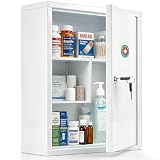
- 【Secure Medication Storage for Families】Keep prescription medications, vitamins, and first aid supplies safely stored in one place. Equipped with a lock and 2 keys, this locking medicine cabinet helps limit unauthorized access and is especially useful for households with children, shared living spaces, or guest areas
- 【Fits Daily Medications and First Aid Essentials】Designed for everyday home use, this cabinet accommodates a variety of medication bottles, ointments, supplements, and first aid supplies. Measuring 15.75" H x 11.82" W x 4.72" D, it provides practical storage capacity while maintaining a compact wall-mounted footprint
- 【3 Compartments for Better Organization】The interior features 3 separate storage sections that help keep medications, vitamins, and emergency supplies neatly organized. Dedicated compartments make it easier to sort items by type and quickly find what you need when time matters
- 【Easy Wall Mount Installation】Pre-drilled mounting holes and installation hardware are included for straightforward setup. Mount it in a bathroom, bedroom, kitchen, office, clinic, or other shared space to keep important supplies organized, visible, and within reach
- 【Solid Steel Cabinet Built for Everyday Use】Constructed from solid steel for everyday use, this medicine cabinet helps keep medications and first aid supplies organized and protected. A practical storage solution for everyday use at home, in schools, offices, and other shared spaces
Do not treat a VFD as an ordinary prescription
A veterinary feed directive (VFD) is a separate regulatory category for medicated feed, with its own VCPR, documentation, distribution, and retention duties. An external pharmacy prescription workflow should not be assumed to cover VFDs. FDA guidance on veterinary feed directives
Client choice and professional responsibility
AVMA-hosted therapeutic guidance says veterinarians should honor client requests to prescribe rather than dispense. It recommends keeping a record and communicating directions for use and relevant risks regardless of where the client obtains the drug. The veterinarian—not the pharmacy—determines whether a medication is medically indicated. AVMA-hosted therapeutic guidance
Rank #2

- Wall-Mounted Medicine Cabinet: Always keep your medications organized and effortless to find. No more rummaging through drawers in a hurry when needed. Also effectively ensure the medicines are out of the reach of the little ones
- Ultra-Large Capacity: Size: 11.8" L x 4.8" W x 15.7" H. 3 practical compartments to hold medicine bottles or boxes of various sizes. Also ideal for storing toiletries, cosmetics, gadgets, etc. Perfect for a home, office, school, clinic, and so on
- Sturdy & Secure: Well-constructed from rigid steel with a protective white coating, the medical cabinet is resistant to rust, scratches, and impacts. Thick and solid metal plate prevents it from being pried open, ensuring content confidentiality anytime
- Sturdy & Secure: Well-constructed from rigid steel with a protective white coating, the medical cabinet is resistant to rust, scratches, and impacts. Thick and solid metal plate prevents it from being pried open, ensuring content confidentiality anytime
- Easy Installation: 4 screws and 4 wall anchors are included for quick and stable mounting. Once installed, the medicine organizer stays firmly in place without wobbling or tilting
That guidance includes older references to internet-pharmacy accreditation programs. Do not assume a named program is still active or applicable: verify the pharmacy’s licensure and the requirements in the relevant state instead.
What’s actually slowing this PC down?
Pick the symptom - the matching free tool is one click away.
Compare the two fulfillment routes
| Decision area | In-house dispensing | External pharmacy |
|---|---|---|
| Legal fit | Confirm state veterinary-practice and dispensing rules, client-notice duties, prescription requirements, and controlled-substance limits. | Confirm the pharmacy is authorized under applicable state law and that the prescription and transmission method meet local rules. |
| Patient safety and continuity | Plan how staff will provide directions, warnings, monitoring, and follow-up. | Provide the same directions and warnings, and keep follow-up under the veterinarian’s oversight even though another party dispenses the medication. |
| Client access and choice | Explain the option to receive a prescription where local law requires it, and make the client’s choice clear. | Clarify what information the practice will send and what monitoring or recheck remains necessary. |
| Workflow burden | Account for staff time spent dispensing, labeling, and recording the transaction. | Account for writing or transmitting prescriptions, pharmacy questions, possible substitutions, and documentation. |
| Refills and reassessment | Set a consistent process for refill requests when monitoring or a recommended recheck is overdue. | Use the same clinical reassessment standard and give staff a process for responding when an outside pharmacy contacts the practice. |
These are policy dimensions, not evidence that one route produces better outcomes. The reviewed professional material does not establish a universal winner or provide a head-to-head comparison of clinical outcomes, costs, or client preferences.
Rank #3
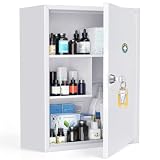
- Wall-Mounted Medicine Cabinet: Always keep your medications organized and effortless to find. No more rummaging through drawers in a hurry when needed. Also effectively ensure the medicines are out of the reach of the little ones
- Key-Lock Design: Come with 2 spare keys for 2 users. Simply turn the key right to lock and left to unlock the first aid cabinet. Always guarantee your private and exclusive access to the medicines inside
- Ultra-Large Capacity: Size: 11.8" L x 4.8" W x 15.7" H. 3 practical compartments to hold medicine bottles or boxes of various sizes. Also ideal for storing toiletries, cosmetics, gadgets, etc. Perfect for a home, office, school, clinic, and so on
- Sturdy & Secure: Well-constructed from rigid steel with a protective white coating, the medical cabinet is resistant to rust, scratches, and impacts. Thick and solid metal plate prevents it from being pried open, ensuring content confidentiality anytime
- Easy Installation: 4 screws and 4 wall anchors are included for quick and stable mounting. Once installed, the medicine organizer stays firmly in place without wobbling or tilting
Design for pharmacy communication and refills
External fulfillment can bring practical questions back to the practice. An AVMA educational session originally presented at the 2026 AVMA Convention describes pharmacists questioning a dose, clients requesting refills despite missed recommended rechecks, and pharmacies substituting a medication without consulting the veterinarian. The session emphasizes communication and relationships with community pharmacists; it is educational material, not comparative outcomes research. AVMA Convention educational information
- Choose how prescriptions will reach pharmacies: a written prescription given to the client, or direct phone or electronic transmission. AVMA-hosted guidance describes both routes but does not establish that one is superior. AVMA-hosted therapeutic guidance
- Use a legible, complete order; record what was authorized, when, and how it was sent.
- Tell clients how to use the medication and explain relevant risks, monitoring, and follow-up.
- Give staff a route for escalating a pharmacist’s question about dose or a proposed substitution to the veterinarian.
- Define how the practice handles refill requests when a recommended recheck or monitoring step is overdue. The AVMA educational session identifies this as a practical challenge but does not prescribe one policy for every practice.
Apply the law in your state
Requirements vary by state, so check both veterinary and pharmacy authorities in the jurisdiction where the practice operates. Florida offers a specific current example, not a national rule. Its 2026 statute requires covered veterinary establishments to inform clients that they may receive a written prescription for a pharmacy of their choice or have the establishment fill the prescription when able. It provides for a one-time client acknowledgment documenting the choice and a conspicuous notice at checkout. Exceptions include situations where immediate dispensing is needed to preserve life or prevent suffering, and certain controlled-substance prescriptions. Read the statute and verify that it applies to the establishment and prescription at issue. Florida Statutes, 2026, section 474.214
Rank #4

- 【19QT Large Capacity Medicine Box】:Designed with taller layers, this large-capacity medicine storage box allows ※※small medicine bottles※※. The vertical storage design of the medicine cabinet organizer maximizes usable space and keeps all medications neatly organized.
- 【3-Tier Efficient Medicine Cabinet Organizer】: The ※※2.56"H top layer ※※stores ※※small prescription bottles※※, the 2.56"H middle layer holds bandages, gauze pads and small first aid essentials, and the 5.7"H bottom layer holds standard liquid medicine bottles. No more laying bottles flat or worrying about leaks. The 3-tier structure is designed for medication management, functioning as a practical first aid box and efficient medicine storage solution.
- 【Light-Blocking & Moisture Protection】: Made from thickened plastic, this medicine storage box is built for safe and long-lasting use. The sealed, light-blocking and moisture-proof design helps protect medications from humidity and sunlight, making it ideal for use in a medicine cabinet and for long-term storage.
- 【Portable, Secure & Easy to Use】: Equipped with a comfortable leather handle, this portable medicine cabinet is easy to move when needed. Reinforced clasps of the medicine bottle organizer keep all tiers securely locked together, preventing items from falling out during transport while allowing smooth and easy opening for daily use. The 3-tier medicine storage box supports a maximum combined load of up to 5.5 kg / 12.2 lb when properly assembled.
- 【Multi-Purpose Medicine Container】: More than just a medicine cabinet organizer, this versatile storage box with handle is ideal for storing craft supplies, tools, cosmetics, and stationery. Suitable for home, bathroom, school, office, classroom, and travel use, it offers a reliable and organized storage solution for a wide range of everyday essentials.
The Florida veterinary board says the client-choice provisions took effect July 1, 2026, and provides additional acknowledgment guidance. Florida practices should check the current statute and board guidance; practices in other states should consult their own veterinary and pharmacy authorities. Florida Board of Veterinary Medicine FAQ
Free tools Windows power users keep installed
One-click scans. No signup required.
Turn the decision into a written practice policy
- Map the applicable rules. Confirm state veterinary-practice and pharmacy requirements, prescription format and notice duties, and any controlled-substance limits. Treat federal FDA guidance as the baseline, not a substitute for local rules.
- Set the client-choice process. Decide how staff explain the available options and record the client’s choice. Where state law specifies a notice or acknowledgment, follow its exact requirements.
- Standardize authorization and transmission. Select the permitted route or routes, define who may prepare and send an order, and ensure each prescription contains information needed for lawful dispensing.
- Preserve clinical oversight. Make sure clients receive directions and relevant risks, and define who handles pharmacy questions, substitution requests, adverse effects, and treatment failure.
- Set refill and recheck rules. Specify how staff identify overdue monitoring or recommended rechecks and when a refill request must go to the veterinarian for a decision.
- Keep a usable record. Document the authorization, transmission or written prescription, client choice where required, and relevant communications so the practice can follow the case.
A policy is workable when it complies with local rules, preserves clinical oversight, and gives staff a repeatable way to communicate and document. The available guidance supports planning for both client choice and the operational friction that can accompany external fulfillment; it does not support blanket claims that outside pharmacies are unsafe or that in-house dispensing is always preferable.
Quick Recap
Best Value

- Wall-mounted Design: Easy to install the medicine cabinet firmly on the wall. Always keep your medications organized and effortless to find. Also effectively ensure they are out of the reach of the little ones
- Code & Key Locks: 2 ways to unlock the first aid cabinet. Provide a 4-digit code lock with 10,000 combination methods and 2 spare keys. No more worry about forgetting your code
- Locking Methods: Code: turn the knob right first and scramble the digits. Key: scramble the digits first, insert the key and turn it to the far right. (Notice: It must be locked by the key first, otherwise it can be opened even with a wrong code.)
- Ultra-large Capacity: Size: 12.8" L x 5.46" W x 14.8" H. 3 practical compartments to hold medicine bottles or boxes of various sizes. Also ideal for storing toiletries, cosmetics, gadgets, etc. Perfect for a home, office, school, clinic and so on
- Sturdy & Secure: Well-constructed by rigid steel with a white coating, the medical cabinet is resistant to rust, scratch or impact. Thick and solid metal plate prevents it from being pried open, guaranteeing your exclusive access to the items inside
Product prices and availability are accurate as of the date/time indicated and are subject to change. Any price and availability information displayed on Amazon at the time of purchase will apply.




