
Free tools Windows power users keep installed
One-click scans. No signup required.
Short answer: Freshwater jellyfish can bloom in lakes, ponds and reservoirs, but they are generally harmless to swimmers. The species most often involved is the tiny introduced hydrozoan Craspedacusta sowerbii. Scientists are concerned mainly because new controlled experiments suggest dense populations may reduce zooplankton and increase algae—not because every bloom is a public-safety emergency or proof of lake-wide ecological collapse.
Freshwater jellyfish are real, but the recent headlines need context. The species most often involved, Craspedacusta sowerbii—also spelled C. sowerbyi in older literature—is a tiny, introduced hydrozoan that has lived in suitable lakes, ponds and slow-moving waterways for decades. It is generally harmless to swimmers and is not evidence, by itself, that a lake is undergoing ecological collapse.
As an Amazon Associate I earn from qualifying purchases.
There is a legitimate reason scientists are paying closer attention: a controlled 2026 mesocosm experiment found that relatively dense populations could reduce crustacean zooplankton and sharply increase chlorophyll-a, a measure associated with microscopic algae. That finding suggests a possible food-web effect. It does not mean that every natural bloom will damage an entire lake.
What the “jellyfish spawn” actually is
The visible animals are the medusa stage of a freshwater hydrozoan. They are transparent or translucent, bell-shaped and usually about 5 to 25 millimeters across—roughly 0.2 to 1 inch, with larger individuals often around half an inch to 1 inch.
#1 Best Overall

- Professional Quality Testing Kit: The AAwipes Aquarium test kit (50 strips) is developed by experts for fish enthusiasts. It offers 8-in-1 testing capabilities, made with high-quality fiber paper and non-bleeding colors. The kit measures key parameters like Free Chlorine, Nitrate, Nitrite, Hardness, Sodium Chloride, Total Alkalinity, pH and Ammonia nitrogen. By identifying potential issues, our fish tank testing kit helps prevent hidden water problems and ensures the safety and well-being of your fish.
- Versatile Use for Freshwater and Ponds: This aquarium water test kit is versatile and suitable for both freshwater and saltwater environments. It can be used in various aquariums, fish tanks, ponds, pools, and shrimp tanks, making it easy to monitor water quality and ensure your filter functions properly. Experts recommend testing your aquarium water at least twice a week to maintain optimal water quality.
- Fast and Accurate Results: Get accurate results in minutes with just 3 steps: 1) Dip the test strip into water for 2 seconds for pads 1-7; dip pad 8 (Ammonia nitrogen) separately for 5 seconds. 2) Remove the strip without shaking off excess water. Hold horizontally for 30 seconds for pads 1-7, wait 180 seconds to read Pad 8 (Ammonia nitrogen). 3) Compare the colors to the chart for up to 99% accuracy and take necessary action.
- Extended Shelf Life: The test strips are packaged in a well-sealed bottle to ensure they remain effective over time. This protects the strips from moisture and other environmental factors, ensuring you have reliable testing materials on hand when needed.
- Convenient Use: With this kit, you can test your aquarium water at home without the need to send samples to a lab, saving you both time and money. Enjoy peace of mind knowing your aquarium water is balanced and safe without the stress or extra expense.
Unlike marine jellyfish, these animals are adapted to calm freshwater. They are most often found in:
- quiet lakes and reservoirs;
- farm ponds and ornamental ponds;
- quarries, gravel pits and other flooded excavations; and
- slow river backwaters and oxbow lakes.
The species is native to the Yangtze River valley in China but is now established in suitable freshwater habitats across much of the United States and in many other parts of the world. U.S. Geological Survey records and state wildlife agencies describe it as widespread rather than newly confined to one recent outbreak.
Reports published in 2025 described sightings in parts of the American Midwest, including Lake Erie, ornamental ponds and Oklahoma oxbow lakes. Those reports reflected renewed sightings and scientific uncertainty—not the arrival of a previously unknown, highly dangerous jellyfish in every American lake.
Quick wins for a faster PC:
Clear out junk files and repair common Windows errorsFree Scan →Fix the driver behind crashes, sound loss and screen glitchesFind Drivers →Why a lake can suddenly seem full of jellyfish
A bloom can look sudden because people usually see only one part of the animal’s life cycle. For much of the year, the population may exist as attached polyps or as dormant podocysts, both of which are easy to overlook.
| Life-cycle stage | What it does | Why it matters |
|---|---|---|
| Polyp | A small attached form that can live on submerged surfaces | It can reproduce asexually by budding and remain inconspicuous |
| Medusa | The free-swimming, jellyfish-like stage | It is the form people notice during a bloom and the stage that feeds actively in the plankton |
| Podocyst | A contracted, resistant resting stage | It can help the organism persist through unfavorable conditions |
Polyps can produce more polyps or develop medusae. Medusae can reproduce sexually, although many populations are predominantly male or female, so sexual reproduction appears to be uncommon in some U.S. populations. Calling the event “spawning” therefore oversimplifies what is happening: a visible group of medusae may have emerged from an established, mostly hidden population rather than arrived recently.
Temperature is one important trigger. Medusa production is generally associated with warm water and commonly requires temperatures around 25°C or higher. Missouri conservation guidance similarly associates visible medusae with surface water near 80°F. That helps explain why sightings are concentrated in mid-to-late summer and early fall.
Rank #2

- 𝗛𝗼𝗺𝗲 𝗔𝗾𝘂𝗮𝗿𝗶𝘂𝗺 𝗪𝗮𝘁𝗲𝗿 𝗧𝗲𝘀𝘁 𝗞𝗶𝘁 - Ensure the health of your fish with aquarium water testing kit & ammonia test strips for fish tank. This complete freshwater & saltwater tank test kit provides a reliable water tester for ammonia, pH, iron, chlorine, total hardness (GH), carbonate, nitrate, nitrite, total alkalinity, copper, and temperature, allowing you to have a complete understanding of your aquarium water quality. Trusted by fish enthusiasts, it adapts to your needs, making it an essential tool for aquarium care.
- 𝗔𝗰𝗰𝘂𝗿𝗮𝘁𝗲 & 𝗙𝗮𝘀𝘁 𝗧𝗲𝘀𝘁𝗶𝗻𝗴 𝗥𝗲𝘀𝘂𝗹𝘁𝘀 - Our aquarium water test strips deliver reliable results. Each fish tank water testing kit comes with easy-to-read color charts. This fish tank test strips are highly sensitive, detecting low levels of impurities and foreign substances in aquarium water. Our aquarium water quality tester helps prevent any invisible water problems.
- 𝗜𝗻𝘀𝘁𝗮𝗻𝘁 𝗛𝗼𝗺𝗲 𝗧𝗲𝘀𝘁𝗶𝗻𝗴—𝗡𝗼 𝗧𝗿𝗶𝗽𝘀 𝘁𝗼 𝘁𝗵𝗲 𝗦𝘁𝗼𝗿𝗲 - Testing 11 key parameters in your aquarium is easier than ever with just one kit. Just dip the strip in water and use the provided color chart for instant, reliable results. Say goodbye to frequent trips to pet stores because now you have our home water test kit with the ability to monitor your aquarium's water quality in the comfort of your own home.
- 𝗧𝗲𝘀𝘁 𝗦𝗺𝗮𝗿𝘁𝗲𝗿 𝘄𝗶𝘁𝗵 𝗘𝘅𝘁𝗲𝗻𝗱𝗲𝗱 𝗦𝗵𝗲𝗹𝗳 𝗟𝗶𝗳𝗲 𝗦𝘁𝗿𝗶𝗽𝘀 - Our aquarium test kit contains 150 test strips for aquarium fish tank: 50 strips in a bottle and 100 in a separate bags to maintain freshness. Once opened, it's recommended to use the strips within 3 months for maximum accuracy of the fish water testing kit. These water testing strips allow regular water quality checks without using all water test strips at once.
- 𝗩𝗲𝗿𝘀𝗮t𝗶𝗹𝗲 𝗪𝗮𝘁𝗲𝗿 𝗧𝗲𝘀𝘁𝗶𝗻𝗴 𝗞𝗶𝘁 𝗳𝗼𝗿 𝗔𝗹𝗹 𝗔𝗾𝘂𝗮𝘁𝗶𝗰 𝗡𝗲𝗲𝗱𝘀 - Our Aquarium water quality test kit is designed to cater to a wide range of aquariums including saltwater aquariums, freshwater fish tanks, betta fish tank, and fish ponds. Our hard water test kit can be used to test the water quality effectively, which ensures that you can maintain optimal water conditions in different aquarium setups.
The pattern can be highly irregular. A lake may have thousands of visible jellyfish one year and none the next, or go several years without an obvious bloom. Absence from the surface does not necessarily mean the organism has disappeared.
Are freshwater jellyfish dangerous to swimmers?
Usually, no. C. sowerbii has nematocysts, or stinging cells, which it uses to immobilize zooplankton and other small prey. However, USGS says those cells are not likely to penetrate human skin. Indiana wildlife officials report no documented cases of the species stinging people and say swimmers do not need to worry about it.
Missouri’s guidance is slightly more qualified: a few people have reported itching or redness, while most people feel nothing. That is a reason not to handle the animals unnecessarily, not a reason to treat a lake bloom as a medical emergency.
The distinction matters because “jellyfish” is a broad label. Some marine and brackish species can deliver medically significant stings. The freshwater species discussed here is not considered a meaningful swimmer hazard, but a suspected jellyfish should still be left in the water rather than picked up.
What about dogs and other pets?
The official safety statements summarized above address human contact, not veterinary toxicology. Nothing in the available evidence supports calling C. sowerbii a dangerous pet poison, but there is also no good reason to let a dog or other pet chew, collect or carry unfamiliar aquatic wildlife. Keep pets from disturbing the bloom, and contact a veterinarian if an animal develops an unusual reaction after contact with lake water or wildlife.
What’s actually slowing this PC down?
Pick the symptom - the matching free tool is one click away.
What do freshwater jellyfish eat?
The medusa stage is a predator of zooplankton—small animals drifting in the water column. Documented or summarized prey include:
Rank #3
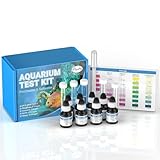
- 5-in-1 Master Test Kit: Monitor all 5 critical water parameters – pH, nitrite, nitrate, ammonia, and phosphate – in one comprehensive aquarium test kit. The rigorous analysis helps you maintain an ideal haven for your aquatic friends
- Freshwater & Saltwater Application: This aquarium water master test kit works perfectly for both freshwater and marine fish tanks. Precise color-matching charts are included – simply compare your water’s hue to the color swatches for instant results
- Enhanced Accuracy: Using professional liquid reagents, the aquarium water test kit delivers high accuracy that far exceeds traditional test strips. Get laboratory-quality results every time, safeguarding a stable and enjoyable fish tank environment
- Regular Testing: Complete with 265 measurements across all parameters – pH (100), nitrite (45), nitrate (50), ammonia (30), phosphate (40). This fish tank water testing kit supports months of consistent monitoring to keep your aquarium perfectly balanced
- Essential Fish Care: Your trusted solution to prevent fish loss from fatal ammonia, nitrite buildup, or pH imbalances! Proper water quality maintenance ensures your aquatic pets stay healthy and your plants thrive in optimal conditions
- daphnids and other small crustaceans;
- copepods;
- rotifers; and
- other small planktonic organisms.
Some studies suggest that feeding is size-selective: larger or more active zooplankton may be particularly vulnerable. That matters because zooplankton are not just tiny prey. They graze on phytoplankton and help transfer energy to larger aquatic animals, including fish.
Why scientists are concerned about the food web
The concern is ecological rather than medical. If a dense jellyfish population removes substantial numbers of crustacean zooplankton, those grazers may exert less pressure on phytoplankton. In theory, that can produce a top-down food-web effect in which fewer grazers are followed by more microscopic algae.
A controlled 2026 mesocosm study provides the strongest recent reason to investigate the issue. Across three lake communities, jellyfish densities of 14 to 114 individuals per cubic meter significantly reduced crustacean mesozooplankton biomass. Chlorophyll-a increased by as much as fourfold in the experimental communities.
Do these 3 things before closing this tab:
1Repair Windows errors before they cause bigger problems2Fix the driver behind crashes, sound loss and screen glitches3Clear out junk files and repair common Windows errorsThose are meaningful results, but they need to be interpreted correctly:
- It was a mesocosm experiment. Mesocosms are controlled, enclosed experimental communities. They are useful for testing mechanisms, but they are not the same as following every process in a whole natural lake over many years.
- The tested densities and conditions may not match every bloom. Effects depend on jellyfish density, bloom duration, temperature, water clarity, nutrient levels, the local zooplankton community and the presence of predators.
- Earlier field guidance has been more cautious. State agencies and previous reviews have described real-world ecological impacts as unclear, apparently limited or context-dependent.
- A dramatic sight is not automatically a lasting ecosystem shift. A short-lived surface concentration may have a different effect from a dense population that persists throughout the feeding season.
The defensible conclusion is that freshwater jellyfish deserve monitoring, especially where dense or recurring blooms coincide with changes in plankton or algae. The evidence does not support saying that every bloom is destroying a lake ecosystem.
Are climate change and warmer lakes causing the sightings?
Warming is a plausible contributor. Because medusa production is linked to warm water, higher temperatures could lengthen the season in which the visible stage appears or make some habitats more suitable. Climate-distribution modeling has also projected changes in habitat suitability under future warming scenarios, and recent research has recommended monitoring as temperatures rise.
Rank #4

- Contains one (1) API 5-IN-1 TEST STRIPS Freshwater and Saltwater Aquarium Test Strips 25-Count Box
- Monitors levels of pH, nitrite, nitrate carbonate and general water hardness in freshwater and saltwater aquariums
- Dip test strips into aquarium water and check colors for fast and accurate results
- Helps prevent invisible water problems that can be harmful to fish and cause fish loss
- Use for weekly monitoring and when water or fish problems appear
But “climate change caused this sighting” is too simple. More reports can result from:
Recommended Free Tools
- warmer seasonal conditions;
- more people using or photographing lakes;
- greater media attention;
- better public recognition of the species; and
- community-science reporting that captures organisms previously overlooked.
Warming may facilitate more frequent or more noticeable blooms, but it is not possible to assign every individual sighting to climate change from the sighting alone.
How did they get into lakes?
The organism’s hidden stages make accidental transport easy. Polyps and podocysts can attach to submerged plants, equipment or other surfaces. USGS identifies several probable pathways:
- ornamental aquatic plants;
- stocked fish;
- waterfowl; and
- wet gear or objects moved between water bodies.
A bloom does not reveal when the population arrived. It may have been introduced recently, or it may have been present for years in a form that no one noticed.
The most useful prevention step is to follow local aquatic-invasive-species guidance: do not move live aquatic plants, bait, animals or water between lakes, and clean, drain and dry boats and other wet equipment as required locally. Missouri conservation officials specifically warn against dumping aquarium contents, ornamental aquatic plants or bait into natural waters.
The Tool Desk
Outbyte Driver Updater FREEScan for outdated or missing drivers - takes under a minuteDriver Scan →Outbyte PC Repair FREERepair Windows errors before they cause bigger problemsFix Now →What to do if you see a bloom
- Observe from a safe distance. Do not scoop up the animals, let children handle them or encourage pets to investigate them closely.
- Take photographs without collecting specimens. Include an object for scale if possible, but do not put a hand, container or net into the bloom just to obtain a better image.
- Record the basics. Note the water body, access point or approximate location, date, time, weather, water temperature if already available, and whether the animals were isolated or present in large numbers.
- Report the observation locally. A state wildlife or aquatic-invasive-species program may have the most useful reporting route. You can also look for an established biodiversity platform where you can report a freshwater jellyfish sighting with photographs and location information.
- Do not move anything between water bodies. Never transport the jellyfish, water, plants, bait or wet equipment to another lake, pond or aquarium.
For readers who regularly observe ponds and lakes, a freshwater invertebrate field guide can help compare transparent, drifting organisms with other plankton and small aquatic animals. It is an optional identification aid, not a requirement: the safest and most useful record is usually a clear photograph plus the location and date.
Best Value

- Professional Quality Testing Kit: The AAwipes Aquarium test kit (25 strips) is developed by experts for fish enthusiasts. It offers 8-in-1 testing capabilities, made with high-quality fiber paper and non-bleeding colors. The kit measures key parameters like Free Chlorine, Nitrate, Nitrite, Hardness, Sodium Chloride, Total Alkalinity, pH and Ammonia nitrogen
- Versatile Use for Freshwater and Ponds: This aquarium water test kit is versatile and suitable for both freshwater and saltwater environments. It can be used in various aquariums, fish tanks, ponds, pools, and shrimp tanks, making it easy to monitor water quality and ensure your filter functions properly. Experts recommend testing your aquarium water at least twice a week to maintain optimal water quality
- Fast and Accurate Results: Get accurate results in minutes with just 3 steps: 1) Dip the test strip into water for 2 seconds for pads 1-7; dip pad 8 (Ammonia nitrogen) separately for 5 seconds. 2) Remove the strip without shaking off excess water. Hold horizontally for 30 seconds for pads 1-7, wait 180 seconds to read Pad 8 (Ammonia nitrogen). 3) Compare the colors to the chart for up to 99% accuracy and take necessary action
- Extended Shelf Life: The test strips are packaged in a well-sealed bottle to ensure they remain effective over time. This protects the strips from moisture and other environmental factors, ensuring you have reliable testing materials on hand when needed
- Convenient Use: With this kit, you can test your aquarium water at home without the need to send samples to a lab, saving you both time and money. Enjoy peace of mind knowing your aquarium water is balanced and safe without the stress or extra expense. By identifying potential issues, our fish tank testing kit helps prevent hidden water problems and ensures the safety and well-being of your fish
A waterproof field notebook is likewise useful for tracking whether a bloom appears every year, how long it lasts and what the water conditions were. Repeated local observations are more informative than a single dramatic photograph, particularly because this species can disappear from view for a year or more.
What a sighting can—and cannot—tell you
| If you observe… | You can reasonably say… | You cannot conclude from that alone… |
|---|---|---|
| A few tiny transparent medusae in warm water | The lake may support C. sowerbii or another organism that needs confirmation | That a new invasion occurred this year |
| Thousands during late summer | Conditions favored visible medusa production | That the lake has suffered permanent ecological damage |
| A recurring bloom | The population may be established and responding to seasonal conditions | That climate change is the only cause |
| Jellyfish alongside cloudy or green water | There may be several interacting water-quality and food-web processes | That the jellyfish alone caused the algae |
The bottom line for swimmers, pet owners and lake managers
Freshwater jellyfish sightings are surprising because the animals are small, transparent and often hidden for most of their life cycle—not because they represent a newly arrived marine threat. Craspedacusta sowerbii has been documented outside its native range for more than a century and is already widespread in suitable freshwater habitats.
For people, the species is generally harmless. For pets, the prudent approach is to avoid handling or ingesting unfamiliar wildlife. For ecosystems, the picture is more complicated: new experimental evidence shows that dense populations can alter zooplankton and algae in controlled communities, while earlier field assessments found impacts uncertain or limited.
PC Slower Than It Used to Be?
A free scan shows the junk files, broken settings and background clutter dragging Windows down - then fixes them in one click.Free scan · Windows 10 & 11Crashes, No Sound, or Screen Glitches?
Random freezes, missing sound and display glitches usually trace back to one bad driver. Find and replace yours safely.Free scan · under a minuteThat combination calls for better identification, careful reporting and prevention of further spread—not panic. A photograph, location and date can help scientists far more than a collected specimen or a sensational claim that an entire lake is collapsing.
Sources behind this assessment
- U.S. Geological Survey information on the distribution, life cycle, habitat, temperature dependence, feeding and likely dispersal pathways of Craspedacusta sowerbii.
- Indiana wildlife guidance on human safety and the lack of documented freshwater-jellyfish stings there.
- Missouri Department of Conservation guidance on seasonal sightings, reported skin reactions and preventing aquatic-organism movement.
- Reports from 2025 describing sightings in parts of the American Midwest.
- A controlled 2026 mesocosm experiment examining effects on crustacean mesozooplankton and chlorophyll-a.
Frequently Asked Questions
Can freshwater jellyfish sting people?
Usually not. Craspedacusta sowerbii has stinging cells, but official guidance says they are unlikely to penetrate human skin. A few people have reported itching or redness, so avoid handling the animals.
Does a sudden bloom mean the jellyfish just invaded the lake?
Not necessarily. The visible medusa may have emerged from polyps or dormant podocysts that were present for years. A bloom shows that conditions favored emergence, not when the population arrived.
Can I put a freshwater jellyfish in an aquarium?
No. Do not collect or transport the animals, water, plants or wet equipment. Photograph the bloom, record the location and date, and report it through a local wildlife or aquatic-invasive-species program or an established biodiversity platform.
The Bottom Line
Bottom line: Freshwater jellyfish are usually harmless to swimmers, and a bloom does not automatically mean a lake is ecologically collapsing. But dense populations may affect zooplankton and algae, so photographs, local reporting and careful aquatic-invasive-species prevention are warranted.
Quick Recap
Product prices and availability are accurate as of the date/time indicated and are subject to change. Any price and availability information displayed on Amazon at the time of purchase will apply.





Leave a Reply