The Tool Desk
Outbyte Driver Updater FREEScan for outdated or missing drivers - takes under a minuteDriver Scan →Outbyte PC Repair FREERepair Windows errors before they cause bigger problemsFix Now →Fish culture is classified along several overlapping dimensions, not by one universal list. The main dimensions are production intensity and feed inputs, water environment, facility and water system, species count, integration with other activities, and production stage. These categories help describe how a farm works, but a label on one dimension does not determine its labels on the others.
The commonly used intensity terms are extensive, semi-intensive, and intensive. Their boundaries are not universally precise, so describing actual feed, fertilization, stocking, and management practices is more useful than relying on a label alone.


What is fish culture?
Fish culture is the controlled rearing and harvesting of fish. It involves deliberate intervention in the rearing process, such as regular stocking, feeding, or protection against predators. Aquaculture is the broader activity of farming aquatic organisms.
The main classification: production intensity and feed inputs
Extensive, semi-intensive, and intensive describe how production depends on natural food, external inputs, and management. These terms are commonly used, but their boundaries vary. There is no universal stocking-density number that separates all three categories. FAO also notes that a feed-based intensity scale is a poor fit for mollusc culture, which relies on natural food, and has limited relevance to aquatic plants.
Do these 3 things before closing this tab:
1Fix the driver behind crashes, sound loss and screen glitches2Repair Windows errors before they cause bigger problems3Scan for outdated or missing drivers - takes under a minute#1 Best Overall
Extensive fish culture
In extensive culture, production depends mainly on natural food available in the culture area or supplied with the water. Stocking and external feeding are relatively low. Some definitions allow fertilization to enhance natural food, so the actual inputs should be stated rather than assumed from the label.
Semi-intensive fish culture
In semi-intensive culture, natural productivity is enhanced, often through fertilization, and supplementary feed may also be used. The balance between natural food and added inputs varies by system and definition.
Intensive fish culture
Intensive culture relies more heavily on complete external feed and closer control and management, and it often uses higher stocking density. Density alone does not define intensity: the relevant practices include feed, natural productivity, other inputs, and how actively the system is managed.
Comparing the intensity categories
| Category | Typical food and input pattern | How to interpret it |
|---|---|---|
| Extensive | Mainly natural food; relatively low external feeding and stocking | Some definitions include fertilization to enhance natural food |
| Semi-intensive | Enhanced natural productivity, often with fertilization and possibly supplementary feed | The balance of natural food and added inputs varies |
| Intensive | Greater reliance on complete external feed and management control; often higher stocking | No universal density threshold defines the category |
Other ways to classify fish culture
By water environment
Fish culture may be described as freshwater, brackishwater, or marine. These labels describe the water environment, not production intensity. FAO’s statistical definitions focus on where the end product is raised, even if earlier life stages were raised in a different salinity environment.
| Environment | General FAO statistical description |
|---|---|
| Freshwater | Generally no more than 0.5‰ salinity |
| Brackishwater | Generally between 0.5‰ and full-strength seawater |
| Mariculture | End product raised in seawater, generally above 20‰ |
These are statistical definitions, not universal biological rules. Describe site conditions and the relevant framework when applying a salinity threshold. FAO guidance also says that where salinity conditions do not exist or do not affect farming practice, production should be recorded as freshwater culture or mariculture.
By facility or water system
Facilities and production methods describe where fish are held or how water is managed. Examples include ponds, tanks, raceways, cages, pens, flow-through or irrigated systems, and recycling or recirculating systems. A pond or cage is not automatically extensive or intensive; facility type and intensity are different classification dimensions.
Rank #3

- [FAST CHARGING] Designed specifically for electric sprayers this 2A delivers efficient fast charging that helps reduce waiting time and gets your equipment ready sooner. It is a practical solution for busy gardening spraying and daily outdoor maintenance tasks.
- [SMART BATTERY CARE] Built with a smart charging function this adapter provides a stable and secure power supply to help protect the sprayer battery during charging. By supporting safer charging performance it can help extend battery service life and improve long term reliability.
- [DURABLE OUTDOOR BUILD] Made with a sturdy ABS housing this charger is built to handle demanding outdoor conditions. Its and outer shell helps resist everyday wear accidental splashes and debris making it a dependable accessory for repeated use.
- [EASY TO USE] The simple plug and play design makes charging quick and convenient with no complicated setup required. Whether used in the garden on a farm or at another outdoor work site this charger is easy to connect store and carry when needed.
- [WIDE APPLICATION] More than a basic replacement charger this accessory is suitable for a variety of practical settings including gardening livestock farming aquaculture and forestry work. It helps keep your electric sprayer powered for efficient and dependable operation.
By species count
- Monoculture: one species in a culture unit.
- Polyculture: two or more compatible species raised in the same unit.
These labels can be combined with other dimensions. For example, a pond can be freshwater polyculture and either extensive, semi-intensive, or intensive, depending on its inputs and management.
By integration with other activities
Integrated aquaculture shares resources, water, feed, management, or nutrient flows with another activity, commonly crop or livestock production. Rice–fish farming is one example. An integrated fish farm can itself be extensive, semi-intensive, or intensive. FAO notes that integrated livestock-fish production is more complex than a separate aquaculture operation and requires additional knowledge and management.
By production stage
Hatcheries, nurseries, and grow-out facilities describe phases of production. A hatchery or nursery label does not determine the intensity of a farm’s later grow-out operation.
Rank #4

- 🐟 Designed for Biofloc & Fish Farming – Ideal for monitoring water quality and measuring floc density in biofloc aquaculture systems
- 🔬 Great for Research & Educational Use – Suitable for environmental studies, biology labs, universities, and water analysis training.
- 💧 Durable, Transparent Construction – Made from strong, clear plastic for easy sediment observation and repeated lab or field use.
- 📏 Graduated for Precision – Each cone has clear volume markings (up to 1000 ml) to ensure accurate sediment level readings.
- 🧪 Set of 2 Imhoff Cones (1000 ml) – Perfect for water sedimentation tests and sludge volume measurement in lab and aquaculture environments.
Why classify fish culture?
Classification helps readers compare farms that may look similar but operate differently. It can describe natural productivity, feed, stocking, water control, labor, and management, as well as the farm’s environment, facility, and production method. For statistical reporting, consistent definitions matter; for practical comparisons, intensity labels should be accompanied by a description of actual practices.
Because the dimensions overlap, a useful description can combine them—for example, “intensive freshwater cage culture” or “semi-intensive brackishwater integrated pond culture”—provided the terms fit the actual system.
Independent reader supportYour contribution helps us test, update, and keep practical guides available for everyone.Frequently Asked Questions
What are the types of fish culture?
There is no single universal list. Common classification dimensions include intensity and feed inputs, water environment, facility and water system, species count, integration with other activities, and production stage.
Best Value
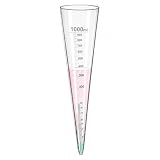
- 🐟 Ideal for Biofloc & Aquaculture Use – Perfect for fish farming and aquaculture systems to monitor water quality and floc performance.
- 💧 Clear, Durable Construction – Made from high-quality transparent material for clear visibility, accurate readings, and long-lasting use.
- 🔬 Educational & Research Applications – Used in labs, colleges, and universities for water sedimentation analysis, microbiology, and biofloc studies.
- 📏 Graduated Markings for Precision – Includes clear volume graduations up to 1000 ml for precise measurement of settled solids and sediments.
- 🧪 1000 ml Imhoff Cone for Sedimentation – Designed for accurate measurement of sludge volume and settling solids in water and wastewater samples.
What is the difference between extensive, semi-intensive, and intensive fish culture?
The terms broadly describe the role of natural food, external feed and other inputs, stocking, and management. Extensive systems depend mainly on natural food; semi-intensive systems enhance natural productivity and may add supplementary feed; intensive systems rely more heavily on complete external feed and management control.
Is pond culture the same as extensive fish culture?
No. Pond culture describes the facility, while extensive culture describes production inputs and management. A pond can operate at different intensity levels.
Does a higher stocking density automatically mean intensive culture?
No. Density is one factor, but there is no universal threshold that separates extensive, semi-intensive, and intensive systems. Consider feed, natural productivity, other inputs, and management as well.
What is the difference between freshwater, brackishwater, and marine culture?
These terms describe the water environment. FAO’s statistical definitions use general salinity ranges and classify the environment where the end product is raised; they do not describe a system’s intensity.
Recommended Free Tools
Quick Recap
Product prices and availability are accurate as of the date/time indicated and are subject to change. Any price and availability information displayed on Amazon at the time of purchase will apply.




