Free tools Windows power users keep installed
One-click scans. No signup required.
Veterinary clinics can have plenty of software and still lose time moving information between it. Integrated technology can reduce that friction when connected systems share the right data with the practice management system (PIMS), fit the clinic’s actual workflows, and remove steps rather than add them. Buying a platform alone does not establish an efficiency gain: practices need to map the work, train staff, and measure results.
What integration means in a veterinary practice
Integration is more than having several digital tools available. In an integrated workflow, information can move between the PIMS and connected systems—such as communications, online booking, inventory, or prescription tools—so staff do not have to repeatedly enter the same details or switch between disconnected screens. Practices should confirm what data moves, in which direction, and which system remains the authoritative record.
As an Amazon Associate I earn from qualifying purchases.
An AAHA interview sponsored by MWI Animal Health describes disconnected tools as a source of staff context switching and fragmented client information. AllyDVM representatives also describe potential benefits from reminders, two-way messaging, mobile self-service, retention calendars, and centralized reporting. These are attributed operational observations and product claims, not independent proof that a specific platform improves efficiency in every clinic. Zach Melton, AllyDVM’s director of sales and strategic partnerships, put the selection principle this way: “You want a platform that works with your existing practice management system, not one that forces you to rip and replace.” AAHA Trends Magazine, May 29, 2026.
Recommended Free Tools
How widely are veterinary practices using digital tools?
The American Veterinary Medical Association’s Economic State of the Veterinary Profession 2025 reports adoption across several technology categories. These figures describe reported use, not whether a tool is integrated, effective, or suitable for a particular clinic.
| Technology category | Practices reporting use |
|---|---|
| Practice management software (PIMS) | 76.5% (AVMA, 2025) |
| Electronic medical record software | 66.8% (AVMA, 2025) |
| Client communications software that integrates directly with PIMS | 59.9% (AVMA, 2025) |
| Digital inventory management system | 43.5% (AVMA, 2025) |
| Online appointment scheduling | 33.4% (AVMA, 2025) |
| Telehealth | 29.2% (AVMA, 2025) |
The spread across categories suggests that adoption is uneven. A clinic may already have a PIMS but still handle booking, inventory, or client communications through separate processes. The figures alone do not show how much time integration saves or whether a given system connects reliably.
#1 Best Overall
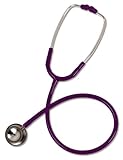
- Classic dual head stethoscope that is acoustically and aesthetically enhanced by its all stainless steel construction
- Features 2" longer tubing to enable easier auscultation of larger animals
- Incorporates a snap-on diaphragm retaining ring and a non-chill bell ring which contributes to the ease of use and maintenance
- Overall Length: Appx. 33"
- Weight: Appx. 6.7 oz
Where connected workflows may reduce friction
Client communication and appointment booking
Reminders, two-way messaging, and online self-service can shift some routine contact away from phone calls and manual follow-up. For these tools to work smoothly, appointment status and client details need to stay consistent with the PIMS. Check how cancellations, replies, and booking changes reach the clinic’s record and staff queues; an automated message is not useful if employees must reconcile it manually afterward.
Inventory and prescription workflows
Digital inventory systems can make stock information easier to manage, while connected prescription workflows may reduce repeated handling of prescription details. A July 31, 2026, AAHA sponsored article quotes a 2025 First Data Bank white paper estimate of 30–40% less time spent on prescription management and more than 150 staff hours saved annually per veterinary practice. That is an estimate attributed to First Data Bank through sponsored AAHA content, not an independently verified or universal result. AAHA Trends Magazine, “Reclaiming lost hours”.
Telehealth and clinical processes
Telehealth can affect more than the consultation itself: scheduling, staffing, reminders, forms, consent, communications, diagnostics, and invoicing may all need adjustment. The 2021 AAHA/AVMA telehealth guidelines advise practices to “Review your existing clinical processes and workflow.” They also call for defining when telehealth is appropriate and ensuring a suitable internet connection and consultation space. These are implementation considerations, not evidence that telehealth will make every practice more efficient. 2021 AAHA/AVMA Telehealth Guidelines for Small-Animal Practice: Design the Workflow.
Rank #2

- Monitor and assess a wide range of patients and detect normal and abnormal sounds and rhythms
- Useful in non-critical care environments such as a medical office, general ward, OB/GYN, ambulatory clinic or urgent care
- More than twice as loud* as the next leading stethoscope. *Based on tests against globally-available comparable stethoscopes in an equivalent class using recorded heart sounds with diaphragm.
- Allows you to more reliably and consistently hear heart sounds at lower frequencies (below 120Hz*) like Korotkoff sounds, Mitral Stenosis and S3 and S4 Gallops when compared to other leading stethoscopes. *Based on tests against globally-available comparable stethoscopes in an equivalent class using recorded heart sounds with diaphragm.
- Weighs less** than other stethoscopes. ** Based on published weights of globally-available comparable stethoscopes in an equivalent class.
Reporting and analytics
Centralized reporting can help leaders see operational patterns without gathering information from multiple tools. Before relying on a dashboard, verify which systems contribute data, how often it updates, and whether definitions match the clinic’s own measures. A single view is valuable only if the underlying information is complete and interpreted consistently.
What should I look for in veterinary practice management software?
Compare software against real clinic workflows, not a feature list alone. AAHA’s software-selection article is an opinion piece and explicitly does not endorse the brands it discusses. Its selection criteria, combined with practical workflow questions, make a useful evaluation framework:
Rank #3

- ADVANCED ALLOY CHEST PIECE with Anti-Cooling Ring | Zinc alloy chest piece includes an integrated anti-cooling ring to help reduce patient discomfort during animal examinations.
- ERGONOMIC FIT for Extended Clinical Use | Embedded connecting spring and anatomically shaped ear tips adapt naturally to the ear for stable, comfortable wear during long shifts.
- CLEAR HEART AND LUNG SOUND Transmission | Chrome-plated zinc alloy chest piece provides consistent acoustic response for reliable cardiac and pulmonary auscultation.
- INCLUDES ATTACHABLE NAME TAG | Comes with a clip-on identification tag that attaches directly to the tubing, helping prevent mix-ups in shared clinical or educational environments.
- SOFT EAR TIPS with Noise Isolation | Secure, soft ear tips help block ambient noise and maintain comfort for focused listening in busy veterinary environments.
- Compatibility and data flow: Confirm compatibility with the clinic’s PIMS and diagnostic systems, including labs and imaging. Ask which information transfers in each direction, what requires manual entry, and whether the connection is supported for the clinic’s software version.
- Workflow fit: Map the work of receptionists, technicians, and veterinarians. Check whether the platform accommodates the clinic’s roles, protocols, case mix, and number of locations rather than forcing workarounds.
- Ease of use and training: Ask staff who will use the system to test common tasks. Clarify onboarding, training time, and support arrangements for new hires as well as initial rollout.
- Customization and mobile access: Determine whether settings can be adapted to the practice’s size and type, and whether mobile access supports the work staff actually do.
- Support and continuity: Ask what support is included, how issues are escalated, and what the clinic can do if a connected service is unavailable.
- Total cost: Request a written breakdown of setup, monthly, usage-based, and integration charges. Include staff training and ongoing administration in the comparison.
- Data control: Ask about access permissions, audit records, data ownership, export options, and how the practice can retrieve information if it changes providers. These are prudent questions; the cited selection article does not establish comparative answers across vendors.
- Measurable outcome: Agree in advance which task or bottleneck the tool is meant to improve and how the clinic will measure it.
AAHA’s article discusses products including Vetport, EzyVet, Covetrus Impromed, Shepherd, Instinct, Covetrus Pulse, Digital, IDEXX Neo, and IDEXX Cornerstone, but it should not be read as a definitive ranking. AAHA Trends Magazine, “View from the Board: Considerations for choosing veterinary practice management software,” Dec. 16, 2025.
What’s actually slowing this PC down?
Pick the symptom - the matching free tool is one click away.
For example, AllyDVM’s current product information describes a cloud platform with reminders, booking, communications, analytics, and PIMS integrations. Its compatibility page lists systems including Avimark, Cornerstone, EzyVet, Instinct EMR, and Shepherd. These are vendor statements: confirm compatibility and the specific data your clinic needs directly with the provider. AllyDVM platform · AllyDVM compatible PIMS.
Rank #4

- TRUSTED by Medical Providers since 1971 | Backed by our Full Lifetime Warranty & Replacement-Parts-For-Life Program Included| Latex-Free
- ALL-PURPOSE LIGHTWEIGHT diagnostic stethoscope that delivers accurate auscultation of heart, lung, and stomach (gastrointestinal, bowel, etc.), blood pressure flow (Korotkoff) sounds with acoustic integrity and clarity in doctor, nurse, student, etc. clinical settings or home settings.
- DUAL HEAD CHESTPIECE designed with a turnable, fully rotating stem and a true bell and true diaphragm to capture high or low frequency sounds as needed. Handcrafted from premium aluminum to deliver the ultimate value in auditory diagnostics with unmatched performance and durability in its lightweight class.
- PATENTS, HEADSET, TUBING & EARTIPS: longer, thicker and non-stick tube and ErgonoMax headset that includes a patented dual-leaf spring construction, patented Acoustic Pyramid Chamber and a patented SafetyLock Eartip adapters to maximize sound performance, durability, comfort, and extended use.
- INCLUDES: 3 pairs of Small, Regular and Large MDF ComfortSeal clear eartips, an extra diaphragm, ID name tag, Lifetime Warranty and Replacement Parts for Life program included. Makes a great gift with over 20 color variations to choose from.
How to introduce technology without adding new friction
AVMA learning resources recommend identifying productivity obstacles before choosing a solution, then using change management, systems, and checklists to support consistent work. A practical rollout can follow this sequence:
- Audit the current workflow. Choose a recurring task—such as booking, reminders, or prescription handling—and document who does each step, which systems they use, where information is re-entered, and where delays occur.
- Set a baseline and a target. Record a measure tied to the problem, such as time per task, call volume, re-entry frequency, missed appointments, or prescription turnaround. Define the measurement period and who will collect it.
- Choose a staff champion. Include a person who understands the day-to-day workflow and can gather feedback from the roles affected by the change.
- Map the future workflow with the vendor. Walk through real scenarios, including exceptions. Specify which system owns each record, how errors are corrected, and what staff should do if the integration is unavailable.
- Pilot and test data flow. Start with a limited workflow or group where practical. Check that expected data appears in the correct places and that the process does not create extra reconciliation work.
- Train, document, and launch. Provide role-specific training and concise protocols or checklists. For telehealth, include suitability criteria, scheduling, consent, communication, staffing, and invoicing steps.
- Review results and revise. Compare the agreed measure with the baseline after staff have had time to use the system. Ask where work remains duplicated, update protocols, and decide whether to expand, change configuration, or stop.
AVMA Axon provides learning resources on productivity obstacles and on systems and processes for practice productivity. AVMA Axon, “Tech Talk: Boosting productivity” · AVMA Axon, “Systems and processes for practice productivity”.
Best Value
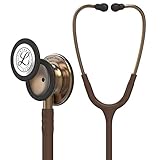
- Monitor and assess a wide range of patients and detect normal and abnormal sounds and rhythms
- Useful in non-critical care environments such as a medical office, general ward, OB/GYN, ambulatory clinic or urgent care
- More than twice as loud* as the next leading stethoscope. *Based on tests against globally-available comparable stethoscopes in an equivalent class using recorded heart sounds with diaphragm.
- Allows you to more reliably and consistently hear heart sounds at lower frequencies (below 120Hz*) like Korotkoff sounds, Mitral Stenosis and S3 and S4 Gallops when compared to other leading stethoscopes. *Based on tests against globally-available comparable stethoscopes in an equivalent class using recorded heart sounds with diaphragm.
- Weighs less** than other stethoscopes. ** Based on published weights of globally-available comparable stethoscopes in an equivalent class.
When integration is—and is not—an efficiency improvement
Integration is a plausible efficiency improvement when it removes repeated entry, reduces avoidable switching, or makes a handoff more reliable without creating extra administrative work. Adoption figures show that veterinary practices use a range of tools, but they do not prove that integration itself causes better outcomes. The clinic’s own baseline and post-rollout measures should determine whether the change earns its place in the workflow.
The Tool Desk
Outbyte Driver Updater FREEFix the driver behind crashes, sound loss and screen glitchesFind Drivers →Outbyte PC Repair FREEClear out junk files and repair common Windows errorsFree Scan →Also distinguish operational features from commercial programs. MWI’s Synergy Partner Program describes targeted email campaigns powered by AllyDVM and integrated with PIMS, with participating manufacturers listed by MWI. That is a practice-facing outreach offering, not evidence that it improves clinical or administrative efficiency. MWI Animal Health, Synergy Partner Program.
Quick Recap
Product prices and availability are accurate as of the date/time indicated and are subject to change. Any price and availability information displayed on Amazon at the time of purchase will apply.




