
Rabies is not considered to spread through ordinary contact with contaminated surfaces, clothing, bedding, or other household objects. The virus is vulnerable to drying, sunlight, heat, and environmental exposure. Once infected saliva has dried, it should not be considered a realistic rabies exposure. The urgent situation is fresh saliva, tears, or nervous-system tissue from a potentially rabid mammal entering broken skin or contacting the eye, nose, or mouth.
For ordinary household situations, rabies is not considered to spread from contaminated objects such as clothing, bedding, floors, or furniture. Rabies virus is damaged by drying, sunlight, heat, and environmental exposure. Once infected saliva has completely dried, it should not be treated as a realistic rabies exposure.
As an Amazon Associate I earn from qualifying purchases.
There is no universal number of hours or days that rabies virus survives on a surface. Under controlled laboratory conditions, infectious virus has persisted for hours—and sometimes longer in cool, protected conditions—but those findings do not establish a household rule such as “rabies lasts 24 hours on metal.” The important question is not simply whether an animal was recently in an area. It is whether fresh infectious saliva, tears, or nervous-system tissue reached broken skin or a mucous membrane, such as the eye, nose, or mouth.
How long does rabies survive on surfaces?
Rabies virus does not survive equally well on every surface or in every environment. It is an enveloped virus, which makes it vulnerable to drying and other environmental stresses. CDC guidance describes rabies as unlikely to persist outside a dead animal’s body for an extended time because of desiccation, ultraviolet irradiation, and related factors. [CDC, c001]
In practical terms:
#1 Best Overall

- ALL PURPOSE CLEANER KILLS 99.9% OF VIRUSES and BACTERIA: Lysol All Purpose disinfectant spray kills 99.9% of viruses and bacteria including the COVID-19 virus to help keep your family protected
- KILLS 99.9% OF GERMS FOR A DEEP CLEAN: This disinfectant spray kills 99.9% of germs, removes soap scum and cuts through tough grease and grime — a versatile, multipurpose cleaner you can count on
- MULTI SURFACE CLEANER and DEGREASER: This cleaning spray can be used on hard, non-porous surfaces throughout your household including counters, sinks, stovetops, cabinets, appliance exteriors, high chairs, bathtubs and showers
- 0% BLEACH: Lysol multipurpose cleaner spray provides powerful cleaning and disinfecting without the harshness of bleach
- CONVENIENT LYSOL SPRAY: This all purpose cleaner has fast-acting sanitization, so you can kill 99.9% of bacteria in a flash
- Thin saliva exposed to air: infectivity falls as the saliva dries.
- Dried saliva: is not recognized as a rabies exposure in ordinary circumstances.
- Sunlight and ultraviolet light: accelerate viral inactivation.
- Warm, exposed conditions: generally damage the virus faster than cool conditions.
- Cool, wet, or protected material: may preserve infectious virus longer in controlled conditions.
“Live” should mean that infectious virus can still be recovered and can infect susceptible cells or animals. It does not merely mean that fragments of rabies-virus genetic material can be detected. A 2026 stability study found that viral RNA could remain detectable after infectious virus was no longer recoverable under some warm conditions. A positive molecular test therefore does not necessarily mean that viable, transmissible rabies virus remains. [2026 study, c004]
What laboratory studies found
Laboratory experiments help show why a single survival time would be misleading, but they should not be converted into predictions about normal household transmission.
1987 controlled surface study
One experimental study used a concentrated suspension prepared from the salivary gland of an infected fox. At approximately 20–21°C, infectious activity was reported for about:
| Test surface | Reported result under the study conditions |
|---|---|
| Glass | About 24 hours |
| Plant leaf | About 24 hours |
| Metal | About 48 hours |
At 5°C, the longest reported survival on the tested materials was 144 hours. Under intensive sunlight at 30°C, the virus was inactivated within about 1.5 hours in that experiment. [1987 study, c007]
These numbers came from defined laboratory conditions, a concentrated inoculum, and specific surfaces. They do not mean that rabies routinely remains infectious for 48 hours on household metal or 144 hours on a cold object. The appearance of a dried drop also cannot, by itself, establish exactly when infectivity ended.
Do these 3 things before closing this tab:
1Clear out junk files and repair common Windows errors2Scan for outdated or missing drivers - takes under a minute3Repair Windows errors before they cause bigger problems2026 stability study
A 2026 laboratory study tested a rabies-virus strain on glass, rubber, plastic, polypropylene mask material, fabric, and paper at 25°C. It also examined simulated saliva, brain tissue, and muscle under seasonal temperature and humidity conditions. The study reported declining infectious-virus levels on surfaces over 72 hours, with faster inactivation on fabric. Under its warm summer condition:
Rank #2

- ALL PURPOSE CLEANER KILLS 99.9% OF VIRUSES and BACTERIA: Lysol All Purpose disinfectant spray kills 99.9% of viruses and bacteria including the COVID-19 virus to help keep your family protected
- KILLS 99.9% OF GERMS FOR A DEEP CLEAN: This disinfectant spray kills 99.9% of germs, removes soap scum and cuts through tough grease and grime — a versatile, multipurpose cleaner you can count on
- MULTI SURFACE CLEANER and DEGREASER: This cleaning spray can be used on hard, non-porous surfaces throughout your household including counters, sinks, stovetops, cabinets, appliance exteriors, high chairs, bathtubs and showers
- 0% BLEACH: Lysol multipurpose cleaner spray provides powerful cleaning and disinfecting without the harshness of bleach
- CONVENIENT LYSOL SPRAY: This all purpose cleaner has fast-acting sanitization, so you can kill 99.9% of bacteria in a flash
- No infectious virus was recovered from simulated saliva after 12 hours.
- No infectious virus was recovered from simulated brain or muscle tissue after 24 hours.
- Infectious virus was more stable under cooler, winter-like conditions.
Again, these results describe controlled inoculations and laboratory recovery methods. They demonstrate that environmental persistence depends on temperature, moisture, material, and protection from the elements; they do not demonstrate that fomites are a usual route of rabies transmission. [2026 study, c004]
What makes rabies virus lose infectivity?
Drying
Drying is one of the most important factors. Pennsylvania rabies guidance states that rabies virus can survive on an inanimate object only as long as it takes the saliva to completely dry. Utah guidance similarly states that drying and sunlight rapidly deactivate the virus and that dried saliva does not contain live rabies virus. [c005] [c006]
This is why a pet’s old drool mark, a dried spot on a floor, or clothing that has contacted dried saliva is not generally treated as a rabies exposure.
Sunlight and ultraviolet light
Ultraviolet light accelerates inactivation. A wet spot indoors, under furniture, or inside a protected crevice is not exposed to the same conditions as a thin droplet in direct sunlight. That distinction explains why laboratory results under cool or shielded conditions can show longer persistence than would normally be expected on an exposed household surface. [c001] [c007]
Temperature
Cooler temperatures can preserve infectious virus longer than warm conditions. The 1987 experiment found longer survival at 5°C than at approximately 20–21°C, and the 2026 study likewise reported greater stability under cooler, winter-like conditions. [c004] [c007]
Moisture and protection
Wet biological material that remains shielded from air, sunlight, and heat is not equivalent to a thin saliva droplet that dries quickly. This is especially relevant when considering fresh saliva or nervous-system tissue in a confined or protected location. It does not change the central public-health point: ordinary touching of objects is not a recognized route of rabies transmission.
Surface material
Surface type can affect how quickly material dries and how readily the virus can be recovered. In the 2026 study, fabric inactivated virus faster than several hard or synthetic materials under the tested conditions. That finding is useful for understanding environmental stability, but it is not a reason to assign a fixed survival time to every fabric, plastic, or metal object. [c004]
Can rabies spread from a floor, bed, clothing, or furniture?
Not through ordinary contact with those objects. CDC states that rabies is not transmitted through contaminated objects or materials such as clothes or bedding. Transmission requires direct contact of infectious saliva, tears, or nervous-system tissue with broken skin or a mucous membrane. [c002] [c003]
State public-health guidance is consistent with this conclusion. Maine states that rabies does not spread by touching dried saliva, and Pennsylvania reports that there has never been a documented human rabies transmission from an inanimate object. [c005] [c008]
The following situations are not, by themselves, considered rabies exposures:
Quick wins for a faster PC:
Fix the driver behind crashes, sound loss and screen glitchesFind Drivers →Clear out junk files and repair common Windows errorsFree Scan →- Touching a dry spot where an animal drooled.
- Walking across a floor where a potentially rabid animal was present.
- Handling clothing, bedding, towels, or furniture that may have been touched by an animal.
- Touching a surface after saliva has dried.
- Petting or handling an animal without a bite, scratch contaminated with saliva, or direct contact between infectious material and a wound or mucous membrane.
The concern is different if fresh saliva or nervous-system tissue entered an open wound or splashed into the eye, nose, or mouth. That is a direct-exposure question, not a surface-survival calculation.
Rank #3
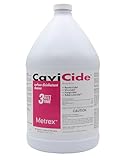
- Effective against TB in 3 minutes and HIV-1 HCV HBV and MRSA in 2 minutes
- Disinfectant cleaner and decontaminant all in one
- For use on hard nonporous surfaces even in neonatal and infant care areas
What to do after possible fresh saliva contact
If saliva or nervous tissue from a potentially rabid mammal contacts broken skin, the eye, the nose, or the mouth:
- Wash immediately. Thoroughly flush and wash the area with soap and running water for at least 15 minutes. If soap is unavailable, flush extensively with water. [WHO, c009] [c010]
- Contact a healthcare professional or local/state health department promptly. Explain the animal involved, what happened, whether the material was fresh or dried, and where it contacted your body.
- Do not wait for symptoms. Rabies can be prevented with appropriate post-exposure prophylaxis before symptoms begin, but it is nearly always fatal once clinical symptoms appear. [c002] [c010]
- Let public-health professionals assess the exposure. Whether vaccination and rabies immune globulin are recommended depends on the type of contact, the animal, the animal’s availability for observation or testing, and local epidemiology.
A person who only touched dried saliva or an object such as clothing or bedding does not generally meet the CDC definition of a rabies exposure. If you are unsure whether the material was fresh, the animal was potentially rabid, or a wound or mucous membrane was involved, contact your local health department rather than trying to calculate the virus’s survival time yourself. [c002] [c011]
How to clean a potentially contaminated surface
Cleaning is appropriate for hygiene and to remove visible animal material, but it does not replace medical exposure assessment.
- Keep children and pets away from the area until it has been cleaned.
- For visibly wet saliva or animal remains, consider disposable nitrile gloves and protective eyewear, particularly if splashing is possible.
- Clean visible material with liquid soap and water or detergent.
- After cleaning, use a household disinfectant according to its label if disinfection is appropriate.
- If using regular unscented household bleach, follow the product’s stated concentration and wet-contact-time instructions, ventilate the area, and use suitable protection.
- Never mix bleach with ammonia, acids, or other cleaning products.
- Wash your hands thoroughly after removing gloves.
CDC advises cleaning visibly dirty surfaces before disinfecting, following the disinfectant label, maintaining the required wet contact time, providing ventilation, and never mixing bleach with other cleaners. [CDC, c012]
Protective equipment and disinfectant do not determine whether post-exposure prophylaxis is needed. The deciding issue is whether infectious material reached broken skin or a mucous membrane. If that may have happened, wash first and seek an urgent professional assessment.
Common mistakes to avoid
- “Rabies dies instantly in air.” Too broad. Controlled studies have recovered infectious virus for hours under some conditions. [c004] [c007]
- “Rabies lasts exactly 24, 48, or 144 hours.” Those are observations from particular experiments, not universal household limits.
- “A positive RNA test proves the surface is infectious.” Genetic material can remain detectable after infectious virus is no longer recoverable. [c004]
- “Any object touched by a rabid animal is dangerous.” CDC does not recognize contaminated objects such as bedding or clothing as a transmission route. [c002] [c003]
- “Cleaning alone answers the medical question.” Cleaning is useful, but fresh saliva or nervous tissue contacting a wound or mucous membrane requires prompt medical or public-health advice.
Bottom line
Rabies virus is quickly weakened by drying, sunlight, heat, and environmental exposure, but there is no scientifically defensible single survival time for every surface. Laboratory studies have found infectious virus persisting for hours under some cool or protected conditions, so “instantaneous” is inaccurate. Nevertheless, CDC guidance says rabies is not spread through contaminated objects such as clothing or bedding, and dried saliva is not considered a realistic exposure.
Rank #4

- Cuts through grease and other soils
- Kills 99.9% of disease-causing germs and bacteria, including MRSA and HIV
- Hospital-grade germicidal cleaner and deodorant
- Neutralizes odors and cuts through grease and tough soils
- Ready-to-use formula
Take urgent action when fresh saliva, tears, or nervous-system tissue from a potentially rabid mammal reaches broken skin or the eyes, nose, or mouth: wash for at least 15 minutes and contact a healthcare professional or health department immediately.
Frequently Asked Questions
Can I get rabies from touching a surface?
No. CDC does not recognize rabies transmission through contaminated objects such as clothing or bedding. Touching a floor, piece of furniture, or dry saliva is not generally an exposure. The concern is fresh infectious material reaching broken skin or a mucous membrane.
Is dried rabies saliva dangerous?
Dried saliva is not considered to contain live rabies virus in ordinary circumstances. Rabies loses infectivity as saliva dries, although there is no need to handle visibly contaminated material with bare hands.
What should I do if fresh saliva enters an open wound?
Wash the area immediately with soap and running water for at least 15 minutes. Then contact a healthcare professional or local/state health department promptly for an exposure assessment. Do not wait for symptoms.
Best Value
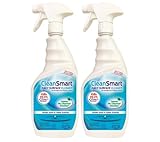
- KILLS 99.9% OF VIRUSES AND BACTERIA and leaves no harsh residue PACKAGING MAY VARY
- DAILY SURFACE DISINFECTANT for household cleaning; countertops, pet bowls, highchairs, floors and toys, non-abrasive
- SAFE TO SPRAY AROUND FOOD; Breaks down to saline solution after it kills viruses and bacteria. Free of alcohol, ammonia, bleach, fragrance & dyes
- FRIENDLY CLEANING SUPPLIES; Safe to store with kids and pets nearby, no harsh fumes or odors
- DISINFECTING HYPOCHLOROUS; Nature's germ killer made in the USA
Does rabies survive for 24 or 48 hours on metal or glass?
No fixed time applies to every surface. Controlled studies have recovered infectious virus for about 24 hours on glass or plant leaf and about 48 hours on metal at roughly 20–21°C, with longer survival under colder test conditions. These results are not household transmission rules.
How should I clean a surface that may have rabies-contaminated material on it?
Clean visible material with soap and water, then use a labeled household disinfectant if appropriate. Gloves and eye protection can help when handling visibly wet saliva or animal remains. Never mix bleach with other cleaners, and remember that cleaning does not replace medical advice after direct contact with a wound or mucous membrane.
The Bottom Line
Rabies is not considered to spread from ordinary contact with surfaces, clothing, bedding, or other objects. Drying, sunlight, heat, and environmental exposure rapidly reduce infectivity, although controlled studies show that survival can be longer in cool, protected conditions. If fresh saliva or nervous tissue enters broken skin or a mucous membrane, wash for at least 15 minutes and seek immediate medical or public-health advice.
The Tool Desk
Outbyte Driver Updater FREEFix the driver behind crashes, sound loss and screen glitchesFind Drivers →Outbyte PC Repair FREERepair Windows errors before they cause bigger problemsFix Now →Quick Recap
Product prices and availability are accurate as of the date/time indicated and are subject to change. Any price and availability information displayed on Amazon at the time of purchase will apply.





Leave a Reply