Most common house flies live for about 3–4 weeks as adults. Their complete development—from egg to adult—can take as little as 10 days in warm conditions, so a fly problem can continue even after the adults you see have been swatted or trapped.
For pet owners, the important question is not only how long a fly lives. It is where it is breeding. Manure, soiled bedding, spilled pet food, garbage, damp drains, and decaying organic material can support the hidden egg, maggot, and pupal stages.
A fly’s life has four stages
Flies undergo complete metamorphosis. They do not gradually grow from a tiny adult into a large one.
- Egg: laid in moist, decaying organic material or other suitable breeding sites.
- Larva: the larva is the familiar maggot. This stage feeds and grows, usually out of sight.
- Pupa: the larva forms a hardened pupal case, or puparium, before becoming an adult.
- Adult: the winged fly emerges, feeds, mates, and—if female—may lay another batch of eggs.
A small adult fly is not a young house fly waiting to become bigger. Once an adult emerges, its body size is essentially set. A tiny fly and a large fly may simply be different species. Penn State Extension explains that adult flies do not continue growing after emergence.
#1 Best Overall

- Catch Flying Insects 24/7: This plug-in flying insect trap uses blue & UV light to attract and catch house flies, fruit flies, gnats, and flying pests. Its continuous attraction helps catch insects day and night for everyday indoor flying pest control.
- No-Mess Adhesive Cartridge: Disposable glue cartridge works like bug sticky traps by holding trapped insects hidden on the wall-facing adhesive pad, while the no-mess tab makes cartridge removal simple when it is time to toss and replace.
- Spray-Free, Zap-Free, Odor-Free Design: This quiet fly trap helps quickly and continuously control small flying insects indoors without spraying, zapping or added odors, making it a discreet everyday option in kitchens, living rooms, bathrooms, enclosed patios, and other indoor spaces.
- Family-Friendly Fly Trap: Safe for use around children and pets when used as directed.* Works best placed near the source - fruit bowls, trash bins and indoor plants, where flying insects and fungus gnats gather.
- Year-Round Indoor Fly Control: Blinking blue light reminds you to check the cartridge every six weeks. Includes 1 device & 1 cartridge for everyday fly control in your kitchen and home. Stock up on refills or choose a Value Pack to keep a fly catcher in every room.
How long do common household flies live?
| Fly or stage | Typical timing | What it means in a pet home |
|---|---|---|
| House fly adult | Usually 3–4 weeks; some may live roughly twice as long in favorable conditions | Several weeks of adult activity can overlap with new adults emerging nearby. |
| House fly, egg to adult | About 10 days at 85°F, 21 days at 70°F, and 45 days at 60°F | Warm waste, manure, or bedding can produce new flies quickly. |
| Fruit fly, complete cycle | About 8 days under warm summer conditions | A bowl of fermenting food or a dirty recycling container can sustain repeated generations. |
| Cluster fly | Adults may remain sheltered for months | They often overwinter in walls or attics rather than breeding indoors. |
Penn State Extension reports the house fly lifespan and temperature-dependent development times above. More generally, the CDC gives domestic fly development as roughly 8–20 days, depending on food, temperature, and moisture. University of Minnesota Extension describes the fruit-fly cycle as about eight days in warm summer conditions. Penn State Extension notes that cluster flies can shelter in buildings for months.
Temperature is one of the biggest variables. Warm, moist conditions speed development; cooler conditions slow it. Food availability and the type of fly also matter.
Why flies keep appearing after you kill them
Swatting adults addresses the visible part of the problem. It does not remove eggs, maggots, or pupae hidden in a breeding site. If flies continue appearing for days, look for the material supporting their early stages.
Rank #2
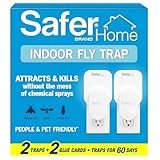
- PLUG-IN CONVENIENCE: Simply plug this indoor fly trap into any standard outlet and it starts working immediately to attract and capture fruit flies, gnats, moths, and other flying insects using UV LED light technology
- FAMILY-FRIENDLY PROTECTION: This gnat killer indoor uses no chemical insecticides, making it safe for use around children and pets when used as directed while providing effective pest control for your home environment
- DUAL-PACK VALUE: Includes 2 plug-in devices plus 2 StickyTech glue cards for comprehensive coverage, allowing you to protect multiple rooms or replace cards as needed for continuous insect trapping performance
- WIDE COVERAGE AREA: Each device protects up to 400 sq ft for a total of 800 sq ft coverage, making these fly traps indoor perfect for kitchens, bedrooms, living rooms, and other areas where flying pests gather
- DISCREET OPERATION: Versatile design rotates to fit any outlet orientation while the UV LED light attracts bugs 24/7 without disrupting your daily activities or sleep, keeping trapped insects hidden from view
Common pet-related sources include:
- Dog feces left in a yard, kennel, or litter area
- Cat litter that is overdue for cleaning
- Soiled bedding or a damp pet crate
- Spilled kibble, wet food, or treats beneath furniture
- Open garbage, food scraps, or a dirty trash-can lid
- Animal manure, dead rodents, or other decaying material outdoors
- Wet organic buildup inside a drain
- Leaking plumbing or damp areas beneath cabinets
Female house flies can lay multiple batches of eggs, and generations overlap. That means one household may contain adults, maggots, pupae, and newly emerging adults at the same time.
Free tools Windows power users keep installed
One-click scans. No signup required.
Which kind of fly is bothering your pet household?
House flies
House flies are the familiar larger gray flies. They breed in garbage, manure, spilled feed, lawn clippings, and other warm, moist organic material. A dog’s waste area, uncovered trash, or decomposing material near an outdoor kennel can be enough to maintain them.
Fruit flies
Fruit flies are very small and often hover around fruit, vegetables, wine, beer, soda, recycling, or sticky food residue. In a pet home, check beneath a feeding mat and around wet food dishes, but do not assume the pet itself is the source.
Drain flies
Drain flies look fuzzy or moth-like. They breed in the slimy organic film inside continuously wet plumbing. Killing the adults does not solve the problem if that film remains. Scrubbing the drain and removing the buildup is more useful than repeatedly pouring hot water into it, according to Colorado State University Extension.
Rank #3

- REUSABLE: TERRO fly trap can be emptied and refilled with bait and water to continue trapping flies
- EASY TO USE: Simply pour in the fly trap bait, then add water to the fill line and swirl to mix. Add more water as needed to keep the bait moist and flies submerged
- OUTDOOR FLY TRAPS: Attracts and traps flies outdoors
- IRRESISTIBLE TO FLIES: Combined with the fly bait, the trap’s color and diamond-shaped lid is designed to attract more flies
- SAY GOODBYE TO FLIES: Use these fly traps outdoors to attract, trap, and kill a variety of flies, including house flies, barn flies, and bottle flies; they go in for a treat but are unable to escape
Phorid flies
Phorid flies are small and may run across a surface before taking flight. They can develop in moist, decaying organic material, garbage, plumbing areas, and sometimes hidden animal matter. A persistent indoor infestation can point to a leak, sewer or plumbing issue, or inaccessible decay.
Cluster flies
Cluster flies are a different case. They commonly enter buildings in late summer or autumn and shelter in wall voids, attics, and other protected spaces. They may appear on warm, sunny winter or spring days, but they generally do not reproduce inside the home. Sealing entry points is more effective than repeatedly spraying the adults.
What to do if you have pets
- Remove the likely breeding material. Pick up feces promptly, empty litter regularly, discard spoiled food, and remove wet or contaminated bedding. If there is a dead animal, manure pile, or decaying vegetation outdoors, remove it safely.
- Clean feeding areas. Wash food and water bowls, wipe the floor beneath them, and avoid leaving wet food out longer than necessary. Store kibble and treats in sealed containers.
- Clean the trash container. Tie waste bags securely, use a covered bin, and wash residue from the inside and lid. Pet-food scraps left in a warm bin can support flies even when the kitchen looks clean.
- Inspect drains and leaks. Look under sinks, around washing-machine connections, near floor drains, and in damp utility areas. For drain flies, mechanically scrub the organic film from the drain and follow appropriate product directions.
- Block new adults. Repair window screens, keep doors closed, seal cracks, and check gaps around pipes and vents. This is especially important for cluster flies.
- Use traps carefully. Traps can reduce visible adults, but place them where pets cannot reach them and do not treat them as a substitute for source removal.
Should you use insecticide?
Usually, sanitation and exclusion should come first. Sprays may kill exposed adults but often leave the developing stages untouched. Chemical control alone can fail when a breeding site remains, and repeated use can contribute to pesticide resistance.
Rank #4
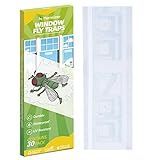
- No Trace Left - After peeling it off, there's nothing sticky will be left on the window, it will absolutely keep your window clean.
- Clean and Transparent - It will not affect the light transmittance of window, and not easily be spotted by the flies. -PLEASE NOTE: Unique Dual-Side Design. Must be installed with CATCH SIDE facing INDOORS towards the room to work correctly.
- Strong Viscosity - Adopting specially designed glue of no chemical and no pollution, there is no way to escape once the flies stick on it.
- Safe and Convenient - Odorless, non-toxic and Eco-friendly, it won't affect the health of babies or pets and easy to use.
- Included - Each package contains 30pcs disposable window fly trap. Ship new and old packaging at random. If there is any issue with quantity, please feel free to contact us.
If you use an indoor fly product, follow its label exactly. Do not increase the concentration, spray food or water bowls, or apply a product to an animal unless the label specifically permits that use. Keep pets away from treated areas for the period stated on the label, and provide ventilation as directed.
Never use a household insecticide on a dog, cat, bird, rabbit, or other pet unless it is specifically labeled for that species. Cats in particular can be harmed by some products intended for other animals. Ask a veterinarian before using a flea, fly, or insect treatment on a pet.
When a fly problem needs more investigation
Contact a pest professional or investigate the building more closely when flies continue despite cleaning, appear to come from a wall or ceiling, cluster around a drain, or are accompanied by a sewage smell or plumbing leak. A sudden large number of flies indoors can also indicate a dead animal in a wall, attic, chimney, or crawl space.
Best Value

- Catch Flying Insects 24/7: This plug-in flying insect trap uses blue & UV light to attract and catch house flies, fruit flies, gnats, and flying pests. Its continuous attraction helps catch insects day and night for everyday indoor flying pest control.
- No-Mess Adhesive Cartridge: Disposable glue cartridge works like bug sticky traps by holding trapped insects hidden on the wall-facing adhesive pad, while the no-mess tab makes cartridge removal simple when it is time to toss and replace.
- Spray-Free, Zap-Free, Odor-Free Design: This quiet fly trap helps quickly and continuously control small flying insects indoors without spraying, zapping or added odors, making it a discreet everyday option in kitchens, living rooms, bathrooms, enclosed patios, and other indoor spaces.
- Family-Friendly Fly Trap: Safe for use around children and pets when used as directed.* Works best placed near the source - fruit bowls, trash bins and indoor plants, where flying insects and fungus gnats gather.
- Year-Round Indoor Fly Control: Blinking blue light reminds you to check the cartridge every six weeks. Includes 2 devices & 2 cartridges for everyday fly control in your kitchen and home. Stock up on refills or choose a Value Pack to keep a fly catcher in every room.
Do not wait for every adult to die naturally. If eggs or larvae remain, the next generation may emerge before the current adults disappear.
FAQ
Do flies really live for only 24 hours?
No. That claim is commonly confused with the short adult life of some mayflies. Common house flies typically live about 3–4 weeks as adults, and some can live roughly twice as long in favorable conditions, according to Penn State Extension.
How fast can flies multiply in a pet home?
A house fly can develop from egg to adult in about 10 days at 85°F, although cooler temperatures slow the process. Some fruit flies can complete their entire life cycle in about 8 days in warm conditions. The exact rate depends on species, temperature, moisture, and food.
Recommended Free Tools
Will flies go away when the adult flies die?
Not necessarily. Eggs, maggots, and pupae may be hidden in feces, garbage, damp bedding, drains, or decaying material. Remove the breeding source as well as the adult flies.
Are fly sprays safe around dogs and cats?
Only if the product label permits the specific indoor use and you follow all directions. Keep pets away from treated areas, never spray food or water bowls, and do not apply a household insecticide directly to a pet unless it is labeled for that animal. Ask your veterinarian if you are unsure.
The Bottom Line
Common house flies usually live for 3–4 weeks as adults, but their next generation can appear in roughly 10 days under warm conditions. To get rid of flies around pets, remove feces, spoiled food, damp bedding, garbage, and other breeding material; then repair screens and seal entry points. Traps and sprays can reduce the adults you see, but they rarely solve a continuing infestation on their own.
Quick Recap
Product prices and availability are accurate as of the date/time indicated and are subject to change. Any price and availability information displayed on Amazon at the time of purchase will apply.
Do these 3 things before closing this tab:
1Scan for outdated or missing drivers - takes under a minute2Clear out junk files and repair common Windows errors3Fix the driver behind crashes, sound loss and screen glitches



