
Windows Errors? Fix Them Before They Spread
Repair common Windows errors and clear accumulated junk for a smoother, more stable PC - no reinstall needed.Free scan · no reinstallCrashes, No Sound, or Screen Glitches?
Random freezes, missing sound and display glitches usually trace back to one bad driver. Find and replace yours safely.Free scan · under a minuteThere is no reliable universal cup amount for every American Bulldog. Start with the feeding directions and calorie information on a complete food suited to your dog’s life stage, then tailor the portion to the dog’s weight trend, body and muscle condition, activity, health, and treats. For a puppy, choose a large-breed growth food and have your veterinarian help determine when to transition. The amount printed on a package is a starting point—not an individual prescription.
Why there is no single American Bulldog feeding amount
A scoop measures volume, not calories. Two foods can provide different amounts of energy in the same measured serving, and two dogs of the same breed can differ in age, size, activity, health, and body condition. Those differences make a universal number of cups—or a fixed daily calorie target—unreliable for this breed.
As an Amazon Associate I earn from qualifying purchases.
The practical answer is to begin with the selected food’s directions for your dog’s life stage and current size, measure the daily portion consistently, and assess how the dog responds. A veterinarian can set or refine a target using the dog’s history and examination. The U.S. Food and Drug Administration’s summary of American Animal Hospital Association nutritional-assessment guidance identifies factors such as age, activity, health, diet, treats, feeding management, and body and muscle condition as relevant to that assessment.
General dog charts can help orient a conversation, but they are not validated American Bulldog prescriptions. The available breed-specific guidance does not establish a calorie or cup chart by age and activity level. A precise amount therefore requires both details about the individual dog and the calorie density of its food.
#1 Best Overall
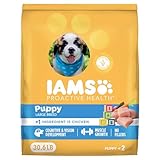
- Veterinarians Recommend IAMS: IAMS large breed dog food recipe is made with real chicken as the #1 ingredient and contains no fillers or artificial flavors; ingredients are natural as defined by the Association of American Feed Control Officials (AAFCO)
- Healthy Cognitive & Vision Development: IAMS Dog Food Proactive Health Large Breed Dry Puppy Food is formulated with Omega-3 DHA to support smarter, more trainable puppies, providing a great start with essential nutrients
- Healthy Bones & Joints: IAMS dog food large breed puppy dry is formulated with essential nutrients and optimal calcium levels to support healthy bones & joints
- Immune System Support: IAMS proactive health dog food is enriched with essential antioxidants Vitamin E and Selenium to help develop a strong immune system
- The Proactive 5 Difference: The Proactive 5 health benefits for IAMS Dog Food Dry Recipe for Large Breed Puppies are scientifically designed to support five key areas of your dog's health, keeping them full of life, for more of life
How much to feed at each life stage
American Bulldog puppies
Choose a complete food labeled for growth and appropriate for large-breed puppies. The American Kennel Club’s American Bulldog guidance recommends large-breed puppy food through the first 14 months, with the goal of slow, steady growth. It also advises against adding calcium before the transition to adult food. Do not add calcium or other supplements on your own: an unnecessary supplement can alter a puppy’s diet, and supplementation should be discussed with a veterinarian.
Use the selected puppy food’s own feeding directions as your initial guide. Check that the directions apply to growth and the puppy’s current size; then measure the amount and keep track of the puppy’s weight trend and body condition. Revisit the portion as the puppy grows rather than assuming the first amount will remain appropriate. If the puppy gains condition rapidly, fails to grow as expected, or has a health concern, ask the veterinarian to evaluate the diet and feeding plan.
Rank #2

- Diamond Naturals Large Breed Puppy Lamb and Rice dry dog food; REAL PASTURE-RAISED LAMB is the #1 ingredient; specially formulated with carefully determined protein and mineral content to support the needs of LARGE BREED PUPPIES
The first-14-month recommendation is not a mandatory switch date for every dog. AAHA notes that some large- and giant-breed dogs may not reach skeletal maturity until about 15–16 months. Development varies, so discuss the transition with your veterinarian instead of changing food solely because the puppy has reached a particular birthday. Keeping a growing dog lean and avoiding excessive calcium are important considerations while growth continues.
Quick wins for a faster PC:
Scan for outdated or missing drivers - takes under a minuteDriver Scan →Repair Windows errors before they cause bigger problemsFix Now →PetMD describes three meals a day as typical puppy scheduling guidance. That is a general suggestion, not a requirement for every puppy; follow the feeding plan that works for the dog and your veterinarian’s advice. Divide the daily amount consistently if feeding multiple meals, and remember that meal frequency does not change the total daily amount the food directions indicate.
Rank #3

- Real chicken is the number 1 ingredient in this dry puppy food to help provide the protein he needs for strong, growing muscles, including a healthy heart
- Purina ONE puppy food made with DHA, a nutrient found in mothers' milk, to support vision and brain development and four antioxidant sources for immune support for dogs
- Purina large breed dry puppy food with high protein and glucosamine for dogs helps maintain an appropriate growth rate and supports dog joint health
- Deliciously crunchy bites and tender meaty morsels deliver great taste in this Purina ONE dry dog food for large breed puppies made with no artificial flavors or preservatives
- Crafted in Purina-owned, U.S. facilities with a SmartBlend of high-quality ingredients, including omega-6 fatty acids, vitamins and minerals to support a shiny, healthy skin and coat for dogs
Adult American Bulldogs
For an adult, select a complete food appropriate for adult maintenance and portion it to support healthy body and muscle condition. Use the package’s feeding table as a starting point, checking its serving units and calorie information. Adjustments may be needed as activity, health, reproductive status, or weight changes. A dog that becomes less active may not need the same daily energy intake as before; a more active dog may need more.
Do not use the breed’s reputation or a description of typical activity as a substitute for observing your dog. VCA describes American Bulldogs as moderately to highly active and recommends daily exercise, but that broad breed description does not establish an individual calorie requirement. A working or hunting dog may use more energy than a sedentary house pet, yet the sources do not provide a validated American Bulldog activity multiplier or a fixed percentage to add to the food.
Rank #4

- Growing bones and teeth supported by balanced minerals
- Healthy brain and eye development supported by DHA and Fish Oil
- Developing immune system supported by antioxidant blend
- Growing muscles fueled by high quality proteins
- Made with natural ingredients
Senior American Bulldogs
There is no evidence-based rule that every American Bulldog must switch to a food labeled “senior” at a fixed age. VCA uses 8 years and older as its senior category for the breed, but a life-stage label by itself is not a feeding prescription. AAHA explains that energy needs can vary with age and that AAFCO does not set separate nutrient requirements specifically for foods labeled mature, senior, or geriatric.
A healthy older dog may remain on a complete adult-maintenance diet if it suits that dog’s needs. Changes in weight, muscle condition, activity, or health are more useful reasons to review the feeding plan than the label alone. Ask the veterinarian whether a different food or portion is appropriate if an older dog develops a health issue or changes condition.
Best Value

- Formulated to support an appropriate growth rate for large breed puppies
- Glucosamine supports developing joints and cartilage
- Vitamin A and omega-6 fatty acids to nourish skin and coat
- High protein formula, with real chicken as the first ingredient
- DHA from omega-rich fish oil nourishes brain and vision development
How activity should change the portion
Activity is one part of energy need, alongside life stage, health, body condition, and diet. A regularly working dog may need a different amount from a companion dog that spends much of the day resting. But “moderately to highly active” is not a calculation: it cannot tell you how many cups to serve without the dog’s details and the food’s calories per serving.
When activity rises or falls, keep the portion measurement consistent and watch the dog’s weight and condition over time. If the routine changes substantially, review the amount with your veterinarian rather than applying an arbitrary extra percentage. Health changes can also affect energy needs, so a change in activity or weight may call for a broader nutritional assessment—not simply a larger or smaller scoop.
A practical method for setting the daily amount
- Choose food for the current life stage. For a puppy, select a complete large-breed growth formula. For an adult, use a food appropriate for adult maintenance. Discuss a senior dog’s needs with the veterinarian rather than switching based only on age or packaging language.
- Read the exact product directions. Use the feeding table and calorie information on the food you actually feed. Directions differ by product, so do not transfer a cup amount from another formula. Treat the table as a starting point, not a guarantee that it is right for your individual dog.
- Measure the daily portion consistently. Follow the units on the package and divide the daily amount among meals as appropriate. Consistent measurement makes it easier to judge whether a change in weight or condition corresponds to the feeding plan.
- Include treats in the daily total. PetMD’s American Bulldog guide recommends keeping treats to no more than 10% of daily calories. Treats are part of what the dog eats, not an extra allowance outside the plan. If treats are frequent, account for them when assessing the food portion.
- Track the dog, not just the scoop. Note weight trend, body condition, muscle condition, activity, and changes in health. The amount should be reviewed when these change, and nutritional assessment can be part of routine veterinary visits.
- Ask for an individualized target when needed. A veterinarian can help determine a suitable amount for a particular dog, including during growth or when weight changes, illness, or other concerns arise. Seek advice before adding supplements.
How to compare foods for an American Bulldog
When choosing between foods, compare the information that determines whether the product fits the dog and how much energy a serving provides. A high-protein claim by itself does not show that a food is appropriate for a puppy, a large-breed puppy, or an adult with particular needs. AAFCO explains that “complete” indicates required nutrients are present and “balanced” indicates they are in appropriate ratios; look for the product’s nutritional adequacy statement as well as its feeding directions.
The Tool Desk
Outbyte Driver Updater FREEFix the driver behind crashes, sound loss and screen glitchesFind Drivers →Outbyte PC Repair FREEClear out junk files and repair common Windows errorsFree Scan →| What to check | What it tells you |
|---|---|
| Life-stage nutritional adequacy statement | Whether the food is intended to be complete and balanced for the relevant life stage, such as growth or adult maintenance. |
| Large-breed growth suitability | For a puppy, whether the food is appropriate for large-breed growth, rather than merely carrying a general puppy description. |
| Calories per measured serving | How much energy the stated serving provides; this helps explain why equal volumes of different foods may not be interchangeable. |
| Feeding directions | The product-specific starting guidance to use when setting a measured daily portion. |
| Fit with the dog’s health needs | Whether the food is suitable for the individual dog; discuss health-related diet choices with a veterinarian. |
When to review the feeding plan
Reassess the amount when a puppy grows, an adult’s activity changes, an older dog loses muscle or gains weight, or the dog’s health changes. Also review how much the dog receives from treats and other food, since these affect the overall diet. At routine veterinary visits, provide a clear account of the food, measured amount, meal pattern, treats, and recent changes in weight or activity. That information is more useful for individualizing a plan than relying on breed averages alone.
Contact your veterinarian if you are concerned about a puppy’s growth, notice unexpected weight gain or loss, are managing an illness, or are considering supplements. The veterinarian can assess body and muscle condition alongside the dog’s life stage and diet, then advise whether the product, amount, or feeding routine should change.
Quick Recap
Product prices and availability are accurate as of the date/time indicated and are subject to change. Any price and availability information displayed on Amazon at the time of purchase will apply.





Leave a Reply