
Some links on this page are affiliate links: if you buy through them we may earn a commission, at no extra cost to you.
Help a nervous rescue dog feel safe before asking for interaction. Give the dog distance, a predictable retreat, and the choice to approach or opt out. Pair the sight of people with something the dog values, increase difficulty only while the dog stays relaxed, and manage visitors so overwhelming encounters do not undo progress. Never force greetings, punish fear signals, or flood the dog with exposure. If fear is severe, worsening, sudden, or creates a risk of injury, involve a veterinarian and a qualified reward-based behavior professional.
What nervous behavior around people can look like
Fear is not always quiet. A dog may hide behind furniture, move away, freeze, or avoid eye contact. Another dog may bark, growl, lunge, snap, or bite. Those louder behaviors can look confident, but they can be attempts to make a frightening person go away. A dog that rushes forward is not necessarily comfortable.
As an Amazon Associate I earn from qualifying purchases.
AVSAB describes this range of responses in “Scaredy Dogs and Strangers – Part 1”. Treat every reaction as information about the dog’s emotional state, not as defiance or a character flaw.
| What you may see | What it can mean | Helpful response |
|---|---|---|
| Hiding, retreating, turning away | The person or situation feels too intense | Increase distance and make the retreat available; do not pull the dog out |
| Freezing or becoming very still | The dog may be overwhelmed even without vocalizing | Stop the interaction and lower the intensity |
| Barking or growling | A warning or an effort to create space | Move the person farther away and avoid punishment |
| Lunging, snapping, or biting | The dog is experiencing a serious safety problem | End the encounter, use physical separation, and arrange professional help |
| Taking food but staying tense | Eating alone does not prove the dog is comfortable | Watch the whole body and give more distance if needed |
Warning signals are useful. Punishing barking or growling may suppress the sound without changing the fear, leaving you with less warning and the same underlying problem.
Popular on Amazon

- BIG MOTIVATION IN EACH MINI BITE. Each of these 3 calorie treats are packed with flavor from pork liver, real bacon, and added botanicals that will keep dogs focused and eager to learn!
- TRAIN. ENRICH. TREAT. These low calorie training rewards are great for training sessions, enrichment activities such as puzzle toys and snuffle mats, and every day treating occasions.
- GREAT FOR DOGS OF ALL SIZES. These bite-sized treats are the perfect size for training and every day treating for dogs of all sizes. Each 20 oz bag includes approximately 500 treats.
- REWARD THE EVERYDAY Pet Botanics healthy training rewards are perfect for training and treating every day in every way. These soft & chewy treats have no artificial flavors, colors or preservatives.
- PROUD MEMBER THE CLOUD STAR FAMILY. With Cloud Star products, you can spend less time worrying about what to feed your pet and spend more time Living Life with Your Dog by Your Side.
Give the dog safety, distance, and a real choice
Create a retreat that people will respect
Set up a bed, crate, or quiet room where the dog can rest without anyone reaching in, staring, or following. A retreat is effective only if it is protected: tell household members and visitors that the dog is not approached there. A pet gate or a closed door can create a reliable boundary between the dog and guests.
This is management, not a cure. Management prevents frightening repetitions while training changes the dog’s associations. AVSAB’s public guidance on fearful dogs emphasizes that the two work together.
What’s actually slowing this PC down?
Pick the symptom - the matching free tool is one click away.
Control distance before controlling behavior
Distance is one of your most useful training tools. Keep people far enough away that the dog can notice them and still remain able to think, move normally, and take a preferred reward. If the dog stiffens, retreats, vocalizes, or stops engaging, the setup is too difficult. Move away, add a barrier, end the session, or ask the person to leave.
Do not lure a dog into a stranger’s reach with food. A dog may eat while still feeling trapped. Place or toss the reward so the dog can take it and keep its distance, rather than using it to draw the dog toward a hand.
Let the dog decide whether to approach
Approaching is optional. Visitors should remain still or turn slightly sideways, avoid looming over the dog, and refrain from reaching, petting, calling, or staring. If the dog chooses to come closer, the person can continue to ignore the dog and let the dog leave again. A retreat is not a failure; it is the dog using a safe option.
Also popular on Amazon

- GRAIN-FREE PUPPY TREATS: These bite-sized, soft puppy training treats are the perfect reward during training sessions or any time you want to thank your dog for good behavior. Puppy bites contain 6 calories per individual treat!
- SUPPORTS BRAIN DEVELOPMENT: Soft dog treats are crafted with salmon, a healthy source of DHA to promote healthy brain development.
- HEALTHY INGREDIENTS: These treats for dogs are made with minimal ingredients focused on quality proteins: made with lamb and salmon, with added vitamins specifically for puppies.
- NO CORN, WHEAT, OR SOY: Treats for dogs do not contain wheat, wheat gluten, corn, soy, or artificial colors.
- MADE IN USA: Our dog treats are quality-assured, made in USA, and crafted from the finest globally-sourced ingredients. Treats are tender, healthy, and bite-sized for small, medium, and large dogs of all lifestages, and activity levels.
Understand the training method: desensitization plus counterconditioning
Desensitization
Desensitization means exposing the dog to a controlled, low-intensity version of the trigger and changing the level gradually. For a dog afraid of visitors, the starting point might be a person visible at a distance outdoors, not a stranger stepping through the front door. The exposure remains below the level that produces panic.
Free tools Windows power users keep installed
One-click scans. No signup required.
Counterconditioning
Counterconditioning pairs the feared person or event with something the dog values, commonly food. The appearance of a person predicts a reward, and the person’s disappearance ends the sequence. The goal is a more positive emotional response, not merely obedience while the dog is frightened.
The two procedures are related but distinct: desensitization controls the intensity of exposure, while counterconditioning changes what the trigger predicts. Neither is a reason to force contact. Flooding—keeping a dog in an overwhelming situation until it stops reacting—is not a safe shortcut.
A step-by-step plan for people the dog sees outdoors
- Choose a controllable setting. Start where you can increase distance quickly, such as a quiet area rather than a crowded entrance. Use a calm helper who will follow instructions.
- Find the starting distance. Have the helper stand far enough away that the dog can notice the person without stiffening, retreating, barking, growling, or losing interest in you. This distance is your starting point for that dog and setting.
- Pair the sight of the person with a reward. When the dog notices the helper, deliver a high-value treat or another reward the dog genuinely enjoys. Keep your hands and the helper’s hands out of the dog’s space.
- End while the dog is still comfortable. After a few calm pairings, let the person move away or finish the session. Brief, successful repetitions are more useful than a long session that ends in distress.
- Repeat at the same level. Several easy sessions establish predictability. Do not reduce distance simply because one repetition went well.
- Change one variable at a time. You might move the helper slightly closer, have the person take a step, change locations, or add a second person. Make only a small change and return to the previous easy level if the dog struggles.
- Back up at the first sign of stress. If the dog stiffens, retreats, barks, growls, lunges, or stops taking food, increase distance or end the session. The next practice should be easier, not more intense.
A dog that is too distressed to eat is telling you that the setup is too hard. Do not pressure the dog to take the treat; create more distance and restore a level at which the dog can engage.
Use a visitor routine that prevents surprise
Before the visitor arrives
- Tell the visitor in advance that ignoring the dog is part of the plan.
- Prepare the retreat, barrier, leash setup, and rewards before the doorbell or knock.
- If those sounds trigger the dog, arrange a quieter arrival: have the visitor text from outside, enter calmly, and settle before the dog is brought out.
- Decide where the dog will be during entry. A separate room or gated area can prevent a rush through the doorway.
During entry
- Place the dog behind the barrier or in the retreat before opening the door.
- Ask the visitor to avoid eye contact, reaching, leaning over, and excited greetings.
- Once the visitor is seated and the environment is quiet, let the dog observe from the chosen distance.
- Pair calm observation with rewards. The visitor should not use food to draw the dog closer.
- Allow the dog to remain behind the barrier for the entire visit if that is the most comfortable option.
If the dog chooses to come closer
Coming forward does not grant permission to touch. Keep the visitor still and let the dog investigate briefly, then leave an open path back to safety. If the dog turns away, retreats, freezes, or shows tension, the visitor should stop interacting and the dog should be given space.
Also popular on Amazon

- Lots of flavor, not fillers: Just three simple, all-natural ingredients mean low calories and high nutritional value, making a tasty but healthy treat that your pup will actually love
- Ready for training, wherever you are: The best training is consistent training. Our small treats are lightweight and perfectly sized for quick rewards so they are ready to go whenever there is a training opportunity
- Mess free treats: No oily, greasy, crumbly messes here, Pupford treats keep your hands and pouches clean. You can even keep some in your pocket for walks, classes, or mini adventures without worrying about them getting grimy or stale
- Motivate even the pickiest of pups: A wide range of flavors makes it easy to find the perfect fit for your pup’s tastes
- Pupford Promise: We strive to always provide simple, high-quality, healthy pup essentials. If you or your pup aren't happy with a purchase, let us know so we can help find the right fit!
When the visitor leaves
Use the same quiet routine in reverse. Keep the dog separated during the door opening so departure does not create a sudden rush or another intense rehearsal.
Manage everyday life while training
Training cannot succeed if the dog is repeatedly pushed past its limit. Management reduces those unavoidable surprises while you build new associations.
- Plan routes and timing. Choose walks and locations where you can see people early and move away before the dog is cornered.
- Use physical separation at home. Gates, doors, and a designated room can keep delivery workers and unexpected guests from entering the dog’s space.
- Protect the retreat. Do not allow children or visitors to follow the dog into it or reach through a barrier.
- Keep routines predictable. Consistent rest, walks, feeding, and quiet periods make the environment easier to anticipate.
- Tell people what to do. A simple instruction—“Please ignore the dog and give us space”—is more useful than hoping strangers understand.
Management does not mean the dog must be isolated forever. It means you choose when and how exposure occurs, rather than allowing every visitor, hallway, or sidewalk encounter to become an uncontrolled test.
How to tell whether a session is at the right level
| Response during exposure | Adjustment for the next moment |
|---|---|
| The dog notices the person, remains loose, and can take the reward | Continue briefly at that distance |
| The dog watches intensely, slows down, or becomes less willing to engage | Pause and add distance; do not increase the challenge |
| The dog turns away, retreats, stiffens, barks, or growls | End or reset from farther away |
| The dog lunges, snaps, or attempts to bite | Use immediate separation and seek professional guidance before another exposure |
| The dog will not eat a normally valued reward | Lower the intensity; food refusal in this context is a sign the setup is too difficult |
Look at the whole dog rather than using one behavior as a pass-or-fail test. A dog can accept food and still be frightened, and a quiet dog can be frozen rather than relaxed.
Crashes, No Sound, or Screen Glitches?
Random freezes, missing sound and display glitches usually trace back to one bad driver. Find and replace yours safely.Free scan · under a minuteWindows Errors? Fix Them Before They Spread
Repair common Windows errors and clear accumulated junk for a smoother, more stable PC - no reinstall needed.Free scan · no reinstallUse reward-based training and avoid methods that add fear
AVSAB’s current public summary says the organization continues to support its 2021 statement recommending reward-based methods for all dog training and behavior modification. Its position is: “Based on current scientific evidence, AVSAB recommends that only reward-based training methods are used for all dog training, including the treatment of behavior problems.”
Also popular on Amazon

- BIG MOTIVATION IN EACH MINI BITE. Each of these 1.5 calorie treats are packed with flavor from pork liver, real bacon, and added botanicals that will keep dogs focused and eager to learn!
- TRAIN. ENRICH. TREAT. These low calorie training rewards are great for training sessions, enrichment activities such as puzzle toys and snuffle mats, and every day treating occasions.
- GREAT FOR SMALLER DOGS. These bite-sized treats are the perfect size for training and every day treating for smaller dogs. Each 10 oz bag includes approximately 500 treats
- REWARD THE EVERYDAY Pet Botanics healthy training rewards are perfect for training and treating every day in every way. These soft & chewy treats have no artificial flavors, colors or preservatives.
- PROUD MEMBER THE CLOUD STAR FAMILY. With Cloud Star products, you can spend less time worrying about what to feed your pet and spend more time Living Life with Your Dog by Your Side.
Do not use leash jerks, yelling, intimidation, pain-based tools, or punishment for barking and growling. These methods can increase stress and may make the person-related association worse. Suppressing a warning does not demonstrate that the dog feels safe; it can remove an important signal before the fear has changed.
Reward-based does not mean allowing unsafe behavior. You can calmly increase distance, close a door, use a gate, or end an interaction. Safety boundaries and humane training are compatible.
Independent reader supportYour contribution helps us test, update, and keep practical guides available for everyone.Common mistakes and how to correct them
“The dog needs to get used to people.”
Repeated overwhelming exposure can intensify fear. Replace uncontrolled encounters with planned, low-intensity sessions in which the dog can retreat.
Recommended Free Tools
“The dog took a treat, so the visitor can pet it.”
Eating is not consent. Keep the person at the dog’s comfortable distance and let the dog decide whether to approach. Do not use treats as a lure into contact.
“The dog barked, so I should correct it.”
Barking may be a distance-increasing warning. Punishment can add stress and suppress communication without making the person less frightening. Move away and reassess the setup instead.
Also popular on Amazon
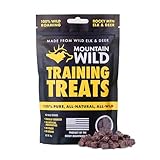
- Wild-Sourced Protein: Our treats are made from all-wild roaming elk and deer protein, sustainably harvested from the Rocky Mountains, offering your dog a unique and premium nutritional experience Wild-Sourced Protein: Our treats are made from all-wild roaming elk and deer protein, sustainably harvested from the Rocky Mountains, offering your dog a unique and premium nutritional experience
- Ideal for Training: With a wild protein source that dogs instinctively crave, these training treats are recognized as an extremely high-value reward, boosting your dog’s attention, focus and motivation
- Pure & Natural: Embrace the wilderness with dog training treats that are all-natural and all-wild, meeting your dog's ancestral dietary needs and cravings for a healthy and active lifestyle
- Eco-Conscious Choice: With every purchase, you support the full utilization of precious wildlife resources along with wildlife conservation and anti-poaching efforts to help maintain strong wildlife populations
- Clean Recipe: Free from nasty fillers, artificial preservatives, and grains, our treats ensure your dog enjoys the healthiest reward. Perfect for dogs of all sizes and puppies too
“A single good greeting means we can repeat it with everyone.”
Dogs may be comfortable in one location, with one person, or at one distance and frightened in another context. Change one variable at a time and return to an easier level when needed.
“The retreat means the training failed.”
Choosing a safe place is an appropriate coping behavior. Protecting that choice prevents the dog from learning that escape routes disappear when people arrive.
Track progress by comfort, not by a promised timetable
There is no evidence-backed universal number of days or weeks for a rescue dog to trust people. Progress depends on the individual dog, the trigger, the setting, the distance, and how consistently stressful encounters are prevented. A more useful measure is what the dog can comfortably do now compared with earlier sessions.
- Can the dog notice a person at a distance and remain relaxed?
- Can the dog take a preferred reward without being lured toward the person?
- Does the dog recover quickly after the person leaves?
- Can the dog choose to retreat and then re-engage when ready?
- Are warning behaviors becoming less frequent or less intense in the same situations?
Record the setting, approximate distance, the person’s movement, the dog’s response, and what helped. If a change causes a setback, return to the last comfortable arrangement rather than trying to “push through.”
When to involve a veterinarian or behavior professional
Arrange veterinary advice when fear is severe, is getting worse, appears suddenly, or creates a risk that someone will be injured. A veterinarian can look for medical contributors and discuss whether a behavior referral or medication evaluation is appropriate. Medication, when considered, is part of an individualized veterinary plan; it is not a substitute for management and gradual behavior work.
Seek behavior support promptly after lunging, snapping, a bite, or any situation you cannot safely manage. The professional should use reward-based methods and have specific experience with fear. The ASPCA notes that dog training is not regulated in the United States, so ask about credentials, methods, and experience treating fearful dogs before hiring anyone.
Quick wins for a faster PC:
Scan for outdated or missing drivers - takes under a minuteDriver Scan →Clear out junk files and repair common Windows errorsFree Scan →AVSAB’s guidance also emphasizes safety, gradual exposure, management, and veterinary evaluation. A professional should be willing to explain the plan, identify the dog’s threshold, and tell you what to do if the dog becomes distressed. Be cautious of anyone promising a fixed timetable, demanding forced greetings, or recommending punishment as the primary solution.
A practical daily plan
- Prevent one predictable trigger. Use a gate, closed door, quieter arrival, or a different walking route so the dog is not repeatedly overwhelmed.
- Practice one easy exposure. Choose a person and distance at which the dog can remain comfortable, then pair the person’s appearance with a valued reward.
- End early. Stop while the dog is still able to engage and return to the retreat or another calm activity.
- Review the response. Note what the dog’s body communicated and whether the distance was sufficient.
- Repeat or make the setup easier. Increase difficulty only after repeated comfortable responses, and change only one feature at a time.
Trust grows from many experiences in which the dog’s warnings are heard, escape remains possible, and people predict good things without demanding contact. Give the dog that control consistently, and let comfort—not a calendar—set the pace.





Leave a Reply