
Free tools Windows power users keep installed
One-click scans. No signup required.
Some links on this page are affiliate links: if you buy through them we may earn a commission, at no extra cost to you.
Brush your Pomchi’s teeth every day with a soft pet toothbrush and pet-formulated toothpaste, giving priority to the cheek-facing surfaces of the upper teeth when cooperation is limited. Add only products accepted for dental claims by the Veterinary Oral Health Council (VOHC), and arrange a veterinary dental examination for bad breath, red gums, drooling, trouble eating, visible tartar, or other changes. Brushing controls new plaque; it cannot remove hardened calculus or treat disease below the gumline.
Pomchis are small dogs, and veterinary guidance consistently treats small dogs as a group that often develops dental problems earlier or more severely than larger dogs. No reliable study establishing a Pomchi-specific disease rate was identified, so use small-dog guidance without assuming a particular percentage or timetable for your individual dog.
As an Amazon Associate I earn from qualifying purchases.
Why dental care matters for a Pomchi
Plaque is a bacterial film that forms continuously on teeth. If it is not disrupted, it mineralizes into calculus (also called tartar). Calculus is firmly attached and creates a rough surface that holds more plaque. Inflammation can then progress beneath the gumline, where it may damage supporting tissues and bone. The visible portion of the tooth can look only mildly dirty while significant periodontal disease is developing out of sight.
The VOHC explains that body size is relevant when dental products are evaluated and that toy and small dogs have higher prevalence and severity of dental disease than medium and larger dogs. That is useful context for a Pomchi, but it is not a measurement of Pomchis specifically. Your dog’s mouth shape, retained or crowded teeth, chewing habits, age, diet, previous dental history, and general health all affect the schedule a veterinarian recommends.
Popular on Amazon
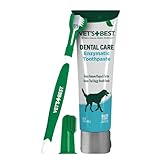
- DOG TOOTH BRUSHING KIT: Keep your dog's teeth and gums healthy with our dog toothbrush and toothpaste kit; our toothpaste is made with aloe, neem oil, grapefruit seed extract, baking soda, and enzymes to keep you dog's mouth fresh
- DOG DENTAL CARE MADE EASY: Our dog tooth paste gently cleans away plaque and tartar, serving as an effective dog breath freshener; rid your dog of bad breath and gift them a healthier mouth with our dog tooth brushing kit.
- TRIPLE HEAD TOOTHBRUSH: Our dog dental cleaning kit features a triple-sided dog tooth brush that cleans all sides of your dog's teeth at once, making tooth brushing faster and more efficient; no more struggling to clean those hard to reach back teeth
- NATURAL FLAVORS: Our toothpaste for dogs has natural flavors that your furry friend will love, making dog tooth brushing a more enjoyable experience even for the pickiest of pups, so you can keep their dog breath fresh without any fuss
- DENTAL KIT FOR DOGS OF ALL SIZES: Regular teeth cleaning supports your pet’s health. Use our dog toothbrush and toothpaste between vet visits to maintain oral hygiene, reduce plaque and tartar buildup, and keep your dog’s mouth fresh and healthy.
Home care has one central job: remove plaque before it hardens. Veterinary care has a different job: examine every tooth and the tissues below the gumline, remove calculus safely, and treat disease that brushing cannot reach.
What a healthy Pomchi mouth should look like
A normal mouth should not have a persistent foul odor. Gums generally appear smooth and pink, although natural pigmentation can make some areas darker. Your Pomchi should be able to pick up food and chew without dropping it, crying, or favoring one side. Look for changes rather than relying on a single inspection; a dog can hide oral pain.
- Check the gum margins: redness, swelling, bleeding, or a line of brown calculus deserves veterinary attention.
- Look for function changes: slower eating, dropping kibble, avoiding hard food, chewing on one side, or reluctance to open the mouth can signal pain.
- Notice saliva and odor: new drooling, blood-tinged saliva, or worsening breath is not something to mask with a chew or spray.
- Watch the face: facial swelling, rubbing the muzzle, or reluctance to be touched around the mouth warrants prompt examination.
Do not force your dog’s mouth open for an inspection. Lift the lip gently during calm handling and stop if your Pomchi becomes frightened or painful.
Supplies for a safe home routine
Choose equipment that lets you work gently and consistently. The phrase “small-dog toothbrush and pet-specific toothpaste” is a useful starting point when shopping. A veterinary professional can help if your dog has a painful mouth, unusually crowded teeth, or a history of dental procedures.
| Supply | Selection criteria | What it can and cannot do |
|---|---|---|
| Pet toothbrush | Soft bristles and a size that fits a small mouth; a pet-designed brush is easier to control. | Provides mechanical plaque removal. It does not dissolve established calculus. |
| Pet toothpaste | Formulated for animals and acceptable to your dog’s taste. | Helps the routine feel comfortable and supports brushing. It is not a treatment for periodontal disease. |
| Finger brush or wipe | Use only if your veterinarian considers it suitable and your dog accepts handling. | May help with regular plaque disruption, but a finger brush is not automatically safer or more effective than a soft toothbrush. |
| Supplemental product | Look for the exact product and claim on the current VOHC accepted-products list. | Can add plaque or calculus control between brushings; it does not replace brushing or veterinary care. |
Never use human toothpaste. Human formulas may contain ingredients that are unsafe when swallowed, and dogs do not reliably spit out toothpaste. Do not improvise with abrasive powders, essential oils, or household products.
Also popular on Amazon
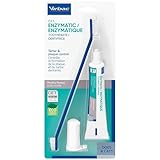
- #1 BRAND CHOSEN BY VETERINARIANS: Proven effective and trusted for over 30 years, C.E.T. is the top recommended dental brand by veterinary professionals to reduce plaque & tartar buildup
- Dual-sided toothbrush designed specifically for canine mouths with soft bristles for comfortable brushing
- Long handle with reverse angle allows for easy use and soft bristles for comfortable brushing while the finger-brush slips over finger for ease of use and better control
- Great tasting poultry-flavored toothpaste is ideal for dogs and cats that quickly build up plaque and tartar
- Complete kit with everything pet owners need to start a program of regular oral hygiene for their dog or cat. Ideal to help acquaint dogs/cats and their owners with the tooth brushing experience
How to introduce brushing without creating a struggle
Make mouth care a predictable, low-pressure routine. A Pomchi that learns brushing is calm is more likely to permit a complete examination later. Progress at the pace your dog can tolerate; moving backward a step is preferable to forcing the next one.
What’s actually slowing this PC down?
Pick the symptom - the matching free tool is one click away.
Stage 1: Teach calm face handling
- Choose a quiet time when your dog is not hungry, overexcited, or exhausted.
- Touch the cheek and lift the lip for a moment, then release. Pair the handling with praise or a reward your veterinarian considers appropriate.
- Repeat on both sides until your Pomchi remains relaxed. Do not pry the jaws apart.
Stage 2: Introduce toothpaste
- Let your dog sniff a small amount of pet toothpaste on your finger.
- Touch a little toothpaste to the outside of a tooth or gumline, then stop.
- If your dog backs away, return to brief lip lifts without toothpaste and try again later.
Stage 3: Introduce the brush
- Show the soft brush and touch it to the outside of one or two teeth.
- Use tiny, gentle movements on the cheek-facing surfaces before attempting a larger area.
- End while your dog is still cooperative. Several short successful sessions are more useful than one prolonged struggle.
VOHC’s practical message is clear: “Any brushing activity, used regularly, is better than no brushing activity.” Build toward daily brushing, but if a full sequence is not yet possible, maintain the portion your Pomchi accepts and expand gradually.
Daily brushing: the step-by-step technique
VOHC recommends brushing all teeth and, ideally, all surfaces daily. The outside, cheek-facing surfaces of the upper teeth deserve special attention when time or cooperation is limited because plaque and tartar accumulate there most rapidly.
- Prepare the equipment. Use a soft pet toothbrush and pet toothpaste. Have everything ready before calling your dog.
- Position comfortably. Sit beside or slightly behind your Pomchi so you can lift the lip without restraining the head harshly. Keep the neck in a natural position.
- Lift one lip. Start on the side your dog accepts most readily. Keep the mouth closed; most useful brushing can be done from the outside.
- Brush the upper cheek-side teeth first. Place the bristles at the gumline and use gentle, small strokes over the canine and back teeth. Do not jab the gums or scrub forcefully.
- Continue around the mouth. Brush the lower cheek-side surfaces, then work toward the front teeth as tolerated. Gradually include the tongue-facing surfaces and chewing surfaces so that every tooth is addressed.
- Keep sessions regular. Daily is the target. If you miss a day, resume at the next calm opportunity rather than doubling the pressure or duration.
- Inspect as you work. Note bleeding that persists, a loose or fractured tooth, swelling, a mass, or a painful reaction. Stop and arrange a veterinary examination if you see these changes.
Do not scrape tartar with a metal tool. Scraping can injure gums, damage enamel, and leave disease under the gumline untouched. A clean-looking crown after scraping does not prove that the mouth is healthy.
What to do when your Pomchi will not allow a full brushing
Some dogs never accept every tooth and surface at once. Keep the routine regular and prioritize the surfaces with the greatest plaque buildup. Brush the outer upper teeth whenever possible, then add other areas in small increments. A partial session that happens consistently is more useful than an ideal plan that your dog refuses entirely.
Also popular on Amazon

- COMPLETE DOG DENTAL KIT: Includes a 2.5 oz tube of chicken flavor enzymatic dog toothpaste, a long-handled double-ended toothbrush, and a finger brush, giving you a full at-home dog tooth brushing kit in one pack.
- ENZYMATIC BAKING SODA FORMULA: This Arm & Hammer enzymatic toothpaste for dogs uses baking soda for fresh breath and helps with tartar control*. Added calcium is part of the formula for stronger teeth.
- CHICKEN FLAVOR TOOTHPASTE: The chicken flavored dog toothpaste is made to make brushing more appealing. Start with a small amount so your dog can adjust to the flavor, then build a steady brushing habit over time.
- TARTAR CONTROL SUPPORT: Brushing regularly with this dog toothpaste and toothbrush helps with tartar control* and fresh breath. Use the toothpaste with either brush as part of a consistent at-home dental care routine.
- TWO BRUSH SIZES INCLUDED: The long-handled double-ended toothbrush and the finger brush give you two brush sizes to suit all size pets. The finger brush is made for training and for sensitive pets.
- Try a different time of day if your Pomchi is more relaxed after exercise or rest.
- Use shorter sessions and stop before resistance escalates.
- Change only one variable at a time: brush size, toothpaste flavor, your position, or the side you start on.
- Ask a veterinary team to demonstrate handling if your dog panics, snaps, or appears painful.
- Do not pin the dog down or pry open the mouth. Fear and injury make future care harder.
If pain is the reason your Pomchi resists, training alone will not solve the problem. A dental examination should come first.
Supplemental dental products: useful additions, not replacements
The VOHC lists accepted products in several categories, including edible chews, dental diets, water additives, oral gels and sprays, toothbrushes, and wipes. Acceptance applies to the named product and the claim shown on the current accepted-products list; it does not mean every product in a category has demonstrated the same effect. Lists and product claims can change, so check the current page each time you select an item.
| Option | How to evaluate it | Important limitation |
|---|---|---|
| VOHC-accepted edible chew | Match the size to your Pomchi’s body weight, follow the label, and supervise every chewing session. | It supplements mechanical brushing and cannot clean below the gumline. |
| VOHC-accepted dental diet | Confirm that the exact diet and dental claim appear on the current list; discuss a diet change with your veterinarian. | It is not appropriate for every medical condition and does not replace oral examinations. |
| Water additive, gel, or spray | Verify the exact accepted product and follow dilution or application instructions. | These products do not physically remove all plaque and should not be used to hide bad breath. |
| Dental wipe or toothbrush | Use a product listed for the relevant claim and sized for a small dog. | Acceptance is product-specific; an unlisted substitute should not be assumed equivalent. |
For a conditional shopping search, use “VOHC-accepted dog dental chew,” then verify the current listing, the weight range, and the label directions. Supervision matters because any chew can be swallowed too quickly or break into pieces. Remove it if your dog tries to gulp, guards it aggressively, or develops vomiting or diarrhea, and ask your veterinarian whether another option is safer.
When professional dental cleaning is necessary
Brushing removes soft plaque. It cannot remove calculus that has already hardened, and it cannot evaluate or treat the tissues beneath the gumline. Merck Veterinary Manual explains that periodontal disease is assessed and treated by trained veterinary professionals under general anesthesia, using periodontal probing and dental radiography when indicated. Those steps allow the team to identify pockets, damaged support, diseased roots, and other problems that are invisible during a quick awake inspection.
Do these 3 things before closing this tab:
1Clear out junk files and repair common Windows errors2Scan for outdated or missing drivers - takes under a minute3Repair Windows errors before they cause bigger problemsThe American Veterinary Medical Association relays the position of the American Veterinary Dental College that anesthesia-free cleanings should not be used as a substitute. Without anesthesia, a provider cannot safely inspect or clean below the gumline, and the process can injure the pet or the person performing it. A polished visible tooth is not proof that subgingival disease has been treated.
Also popular on Amazon

- Bark & Clean's dog tooth brushing kit comes with toothpaste, a dual-head toothbrush, and a small dog finger tooth brush.
- The dog toothpaste is an enzymatic formula with protease and glucose oxidase to help break down debris and food residue and to target odor-causing germs.
- Our dog tooth paste contains zinc, which supports gums and teeth by promoting healthy tooth enamel. Thymol helps to freshen bad breath and support and cleaner oral environment.
- Our senior & puppy tooth brushing kit is made for dogs of all ages. The toothpaste contains sodium saccharin, a non-toxic sweetener that makes brushing more enjoyable.
- The older & puppy toothbrush has a dual head to fit all needs. The small brushing head has soft bristles for hard-to-reach areas. There is also a large brushing head for bigger areas.
AAHA gives broad scheduling guidance: “Most pets need a professional dental cleaning every 1-2 years, but small dogs, cats, and certain breeds may need them more frequently.” That is not a fixed Pomchi interval. Your veterinarian should set the timing after examining the mouth, reviewing previous findings, and considering age and overall health.
Warning signs that call for a veterinary dental exam
Arrange an appointment rather than trying another home product if you notice any of the following signs. AAHA specifically identifies bad breath, red gums, drooling, and difficulty eating as reasons to seek a dental examination.
- Persistent or newly worsening bad breath
- Red, swollen, bleeding, or receding gums
- Brown or yellow calculus along the gumline
- Drooling, blood in saliva, or pawing at the mouth
- Difficulty eating, dropping food, chewing on one side, or refusing usual food
- A loose, broken, discolored, or missing tooth
- Facial swelling, nasal discharge associated with mouth pain, or marked reluctance to be touched
Severe facial swelling, inability to eat or drink, uncontrolled bleeding, or obvious extreme pain should be treated as urgent. Call a veterinary clinic for immediate triage.
Windows Errors? Fix Them Before They Spread
Repair common Windows errors and clear accumulated junk for a smoother, more stable PC - no reinstall needed.Free scan · no reinstallOutdated Drivers Are Slowing You Down
One free scan finds every outdated or missing driver and matches the right update for your exact hardware.Free scan · exact hardware matchA practical Pomchi dental-care schedule
| Frequency | Action | Purpose |
|---|---|---|
| Every day | Brush with a soft pet toothbrush and pet toothpaste; prioritize upper cheek-side surfaces if the session must be shortened. | Disrupts plaque before it mineralizes. |
| Whenever a chew is offered | Use only the exact accepted product, match the weight range, follow the label, and supervise. | Adds a supplemental measure without replacing brushing. |
| Regularly at home | Lift the lips gently and look for odor, redness, swelling, calculus, broken teeth, or changes in eating. | Detects changes early without forcing an examination. |
| At veterinary visits | Ask the veterinarian to assess the mouth and recommend when professional cleaning or dental radiographs are indicated. | Finds disease that home care cannot see or treat. |
Keep a simple note of the date of each professional cleaning, findings your veterinarian reported, and any areas that are difficult to brush. This gives the clinic useful history and helps you notice a gradual change in odor, chewing, or gum appearance.
Common mistakes and how to correct them
Waiting until tartar is obvious
Visible tartar is already hardened calculus. Start daily plaque control as soon as your veterinarian says the mouth is suitable for home care, and do not wait for a thick deposit to appear.
Also popular on Amazon

- Value Set: small dog toothbrush and toothpaste set - 2.5 oz coconut chicken flavored puppy toothpaste, soft bristle toothbrush and finger toothbrush - cost-effective dental care for small dogs! For dogs under 30 lbs.
- Natural coconut oil power: Our pet toothpaste uses coconut oil to fight plaque and calculus, providing gentle yet effective dog dental care. Made with gluten-free, sweetener-free ingredients for safe and healthy brushing.
- Super soft puppy toothbrush - 0.39-inch mini brush head with bite-resistant rubber and 20,000 ultra-soft bristles are gentle on your puppy's sensitive gums and prevent bad breath
- Newbie must have puppy special silicone finger toothbrush: gentle cleaning teeth gums With pet toothpaste to use, easy to cultivate small dog brushing habits
- Witness your dog's teeth go from yellow to white: comes with a dog teeth whitening comparison card that boosts the effectiveness of gingivitis care by 50%!
Using human toothpaste
Replace it with toothpaste formulated for pets. Dogs swallow what is placed in their mouths, so a human product is not an appropriate substitute.
Choosing a chew by appearance alone
Do not assume that a hard, large, or heavily flavored chew is effective or safe. Confirm the exact VOHC acceptance, select the weight-appropriate size, follow the label, and supervise.
Treating odor instead of the cause
Sprays, additives, and chews may reduce odor temporarily, but persistent bad breath can indicate periodontal disease. Arrange an examination rather than masking the symptom.
Accepting an anesthesia-free “cleaning” as complete care
Such a procedure cannot provide the safe below-gumline inspection and treatment described by veterinary dental guidance. Discuss a complete veterinary dental plan instead.
How the main options compare
| Approach | Best use | Reaches hardened calculus or below gumline? | Should it replace brushing? |
|---|---|---|---|
| Daily brushing | First-line home plaque control. | No. | No; it is the foundation of home prevention. |
| VOHC-accepted supplemental product | Additional plaque or calculus control when selected and used as labeled. | Not reliably; it is not a substitute for treatment. | No. |
| Veterinary professional cleaning | Complete assessment, calculus removal, periodontal probing, radiography when indicated, and treatment planning. | Yes, when performed by trained veterinary professionals under appropriate anesthesia. | No; home care is still needed afterward. |
| Anesthesia-free cosmetic cleaning | Not recommended as a replacement for veterinary dental care. | No safe, complete below-gumline assessment. | No. |
Questions to ask your veterinarian
- Does my Pomchi have calculus, periodontal pockets, loose teeth, or retained teeth that require treatment?
- Which toothbrush and toothpaste size are appropriate for this mouth?
- How often should this dog be rechecked, and when do you expect a professional cleaning?
- Would a particular VOHC-accepted chew, diet, additive, gel, or wipe be compatible with my dog’s weight and medical history?
- What changes after a cleaning should prompt an earlier appointment?
Consistent brushing, careful product selection, and timely veterinary examinations work together. None can substitute for the others: brushing limits new plaque, accepted products can supplement that effort, and professional care addresses calculus and disease that home routines cannot reach.





Leave a Reply