
The Tool Desk
Outbyte Driver Updater FREEFix the driver behind crashes, sound loss and screen glitchesFind Drivers →Outbyte PC Repair FREEClear out junk files and repair common Windows errorsFree Scan →Some links on this page are affiliate links: if you buy through them we may earn a commission, at no extra cost to you.
The best starting point is a secure, well-ventilated carrier that lets your cat stand, turn around, sit and lie down comfortably. For many cats who struggle at the veterinary clinic, choose a sturdy hard-sided model with a removable top and a front door. A top opening can make entry less confrontational, while a removable top lets the veterinary team examine your cat in the carrier base. Keep the carrier in the home, introduce it gradually and make the journey as steady and familiar as possible. If your cat remains highly distressed, ask your veterinarian for an individual training or medical plan rather than choosing a carrier on appearance alone.
Why the carrier matters to a stressed cat
A carrier is not just luggage. It is the cat’s confined space during loading, the car trip and at least part of the appointment. A poorly fitting or unstable carrier can add struggling, escape risk and handling difficulty to an already frightening experience. The Feline Veterinary Medical Association says, “It is important to choose a carrier that is safe to reduce the stress of traveling and the veterinary visit and to prevent your cat from getting loose.” Read its full guidance in Visiting Your Veterinarian: Getting Your Cat to the Veterinary Practice.
As an Amazon Associate I earn from qualifying purchases.
Individual cats react differently. One may enter a carrier voluntarily but dislike being carried; another may hide as soon as the carrier appears. Treat the cat’s behavior as part of the selection process. A carrier that is theoretically convenient but causes your cat to panic during gradual practice is not a good practical choice.
Start with the non-negotiable fit and safety requirements
Before comparing doors, fabrics or colors, check whether the carrier can safely contain your cat and support a calm examination.
Popular on Amazon
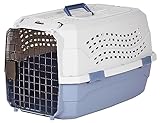
- Hard sided pet carrier with 2 doors for front and top entry; suitable for cat or medium size dog weighing 12 - 20 pounds
- Durable plastic construction with steel wire doors; screws keep the top and bottom sections securely connected
- Spring load latches ensure easy one-handed door opening and closing; top door swings open to the left or right and includes a top carry handle
- Plenty of air ventilation on the sides, top, and back of the carrier
- Note: Be sure to measure the size of the pet when choosing carrier size
- Enough interior space: your cat should be able to stand, turn, sit and lie down comfortably. Do not select a size that forces the cat to crouch or remain pressed against a wall.
- Secure construction: latches, zippers and fasteners must stay closed while the carrier is lifted and during travel. Check them before every appointment.
- Ventilation: openings should provide good airflow without creating gaps through which a paw or head could escape.
- Cleanable surfaces: accidents and vomit are possible during stressful travel. A carrier that can be wiped or washed thoroughly is easier to keep hygienic.
- A stable base: the floor should not flex or tip when the cat shifts position. Put absorbent or familiar bedding inside without reducing the usable space.
These requirements are consistent with recommendations from the Feline Veterinary Medical Association, the American Animal Hospital Association and Cats Protection. They are safety and welfare criteria, not a promise that any particular shape will suit every cat.
Hard-sided or soft-sided: compare the features that affect stress
| Feature | Hard-sided carrier | Soft-sided carrier |
|---|---|---|
| Security and stability | Rigid walls and a firm base generally make the carrier stable to lift and place. FelineVMA describes hard plastic as the safest and easiest-to-clean option. | Can be suitable when well structured, but the frame and door must not collapse around the opening or allow the cat to push through. |
| Entry | Look for a large front door and, ideally, a top opening or removable top. | Favor a generous top opening with secure zippers or fasteners as well as a usable front door. |
| Veterinary examination | A removable top allows the cat to remain in the bottom half while the veterinarian examines it. | A wide, secure top opening can help access, but the whole structure cannot be allowed to fold around the cat. |
| Ventilation | Check that vents are distributed around the carrier and cannot be blocked by bedding or a cover. | Mesh panels can provide airflow; inspect them for tears and make sure they remain open during travel. |
| Cleaning | Rigid plastic is usually straightforward to wipe and disinfect after an accident. | Removable, washable liners are useful, but fabric may take longer to dry and can retain odors if not cleaned thoroughly. |
| Cat’s response | Some cats settle better in a firm, enclosed space; others dislike the sound or appearance of a rigid shell. | Some cats prefer the softer feel, while others become unsettled if the sides move or the door sags. |
This comparison summarizes the feature guidance in the FelineVMA veterinary-visit guide and the AAHA advice for helping cats cope with visits. It is not a product test or a universal ranking. Choose the construction that meets the safety requirements and produces the calmer response during gradual introduction.
Free tools Windows power users keep installed
One-click scans. No signup required.
Prioritize top access, a removable top and a usable front door
Why a removable top helps at the clinic
With a two-piece hard carrier, the veterinary team can remove the top and examine the cat in the familiar bottom half. This can avoid tipping or pulling a frightened cat through a small door. The top should detach smoothly, and the base should remain stable when the top is removed. Practice opening and closing the carrier at home so the mechanism is not unfamiliar on appointment day.
Also popular on Amazon

- Secure Hard-Sided Construction: Designed as a durable pet travel carrier for small dogs and cats, this hard shell pet carrier features four reinforced buckles with optional screws that help keep the top and bottom securely connected during car rides, vet visits and everyday travel.
- Front & Top Entry with 4-Sided Ventilation: Load your pet with ease using dual-door access. Four-sided ventilation allows continuous airflow and better visibility, making this dog and cat carrier more comfortable for road trips and camping.
- Comfortable Travel Essentials Included: The included feeding bowl makes feeding on the go easy, while the raised floor helps separate pets from urine and minor spills, creating a cleaner, more comfortable resting area during travel.
- Sized for Small Pets Up to 20 lbs: This pet carrier offers room for pets to sit, turn and lie down comfortably. Ideal for small dogs, cats, puppies and kittens during daily outings, road trips and veterinary appointments.
- Easy to Carry & Simple to Clean: Made from durable plastic with sturdy steel wire doors and secure locking latches, this travel pet crate is built for repeated use. The foldable handle makes carrying easier, while the smooth surface wipes clean quickly after every adventure.
Why a large top opening helps at home
A cat that refuses to walk through a front door may accept being lowered gently through a wide top opening. Top access also gives you another option if the cat is already near the carrier but will not approach its front. The opening must still have a secure closure; a wide door is helpful only if it cannot spring open while the carrier is being carried.
Keep front access too
A front door allows voluntary entry during training and lets a cat walk in to investigate bedding, treats or a toy. A carrier with only a narrow top opening may be harder to use for a cat that prefers to enter head-first and retreat the same way. Look for doors that open fully without creating a flap that blocks the cat’s path.
Be cautious with backpack-style designs
Backpack carriers can look attractive because they leave your hands free. FelineVMA cautions that some backpack-style carriers may not provide enough room and can be unstable. That is a feature warning, not a claim about every model. If you consider one, verify the same essentials: your cat can stand, turn, sit and lie down; the base stays level; ventilation remains unobstructed; and the enclosure cannot shift against your cat while you walk. A conventional carrier that you can support securely underneath may be the safer choice for a cat already worried about movement.
Quick wins for a faster PC:
Clear out junk files and repair common Windows errorsFree Scan →Fix the driver behind crashes, sound loss and screen glitchesFind Drivers →Repair Windows errors before they cause bigger problemsFix Now →Also popular on Amazon

- Top & Front Dual-Entry for Easy Placement: Gently place pets through the top opening — ideal for cats or small dogs who resist front-door entry — or use the front door for easy loading. The top carry handle makes transport simple for outdoor trips, vet appointments, and carrier training at home
- Secure Multi-Point Locking System: Built with a molded ABS hard shell and welded steel wire mesh door, secured by 4 reinforced locking buckles with matching fixing screws, this hard-sided carrier helps prevent door push-out during bumpy car rides. Tip: confirm every buckle clicks fully into place before travel. Ideal for vet visits, daily commutes, and weekend road trips.
- Durable Hard-Shell Construction: Molded ABS hard shell with a welded steel wire mesh door keeps its rigid shape and protects pets trip after trip — a noticeably more solid build than typical soft-sided carriers. Ideal for frequent trips and multi-pet households.
- Easy Cleanup & Feeding Access: The removable raised grate separates urine and dirt from your pet's body to keep fur clean between washes; the removable hanging food and water bowl allows mid-trip feeding without unlocking the door. Ideal for long road trips and daily feeding.
- Comfortable Fit & Durable Construction: Designed for cats and small dogs with a body length under 19.5" and a standing height under 12", this sturdy pet carrier supports pets weighing under 15 lbs. Its durable construction is built for everyday travel, while the compact 19.5"L x 13.5"W x 12"H exterior and lightweight 2.87 lb design make it convenient for car trips and travel. Measure your pet before ordering to help ensure a comfortable fit
Turn the carrier into a familiar resting place
Putting the carrier away until appointment morning makes it a strong signal that something unpleasant is about to happen. Instead, leave it in a room where your cat already spends time. Remove the door or secure it open while the cat is learning that the carrier is not a trap. Add a familiar washable blanket, then occasionally place treats or a favorite toy inside. The 2022 Cat Friendly Veterinary Environment Guidelines from ISFM and AAFP note that acclimation can take days or weeks, so begin well before the next appointment.
A gradual introduction plan
- Set up the carrier as furniture. Place it on a stable surface or the floor in a quiet area, with the opening secured so it cannot swing shut unexpectedly. Put familiar bedding inside.
- Reward investigation. Leave treats or toys near the entrance, then just inside it. Do not reach in or close the door when your cat first approaches.
- Wait for voluntary rests. When your cat chooses to sit or sleep inside, allow the behavior to end without immediately moving the carrier.
- Introduce brief door movement. Once the cat is relaxed, move the door slightly, reward calm behavior and open it again. Increase the duration only when the cat remains comfortable.
- Practice lifting. Close the carrier, lift it a short distance while supporting the base, set it down and reward calm behavior. Gradually practice carrying it farther.
- Rehearse short journeys. When the cat tolerates carrying, place the carrier securely in the vehicle for a brief stationary session, then progress to a short drive if your cat remains settled.
These steps are about changing the association with the carrier, not forcing compliance. Avoid chasing your cat around the home as a routine method of loading; the ISFM/AAFP guidance specifically emphasizes gradual acclimation.
Prepare the carrier for appointment day
Use familiar bedding and a practical liner
Line the carrier with bedding that smells like home. A washable liner or spare towel can absorb an accident and give you a clean replacement. Keep the bedding thin enough that it does not obstruct ventilation or make the interior too cramped. If your cat has a strong preference for a particular blanket, use that familiar item rather than introducing a new scented fabric immediately before travel.
Also popular on Amazon
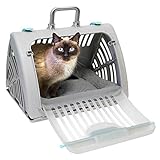
- DESIGNED SPECIFICALLY FOR CATS – PATENTED SIDE-OPENING DOOR - Original SportPet patented wide side-opening door allows cats to walk in naturally reducing fear, stress, and resistance. Ideal for anxious cats, vet visits, grooming, and everyday transport. Veterinarian recommended design for easier handling.
- HARD-SIDED CAT CARRIER WITH COMFORT BED INCLUDED - Includes 1 light gray hard-shell carrier with gray door plus an extra-comfy removable pet bed. Sturdy construction provides a safe, enclosed space cats prefer, while the soft bed adds comfort for travel or waiting rooms.
- TRAVEL-READY & VET VISIT ESSENTIAL - Perfect cat carrier for car travel, road trips, moving, and trips to the veterinarian. Smooth-closing secure door keeps pets safely contained while allowing fast, stress-free loading and unloading.
- EASY TO CLEAN & FOLD-FLAT STORAGE - Wide door opening makes cleaning quick after accidents. Carrier folds down flat for compact storage in closets, cabinets, or vehicles. Machine-washable & dryer-safe bed for hassle-free maintenance.
- IDEAL SIZE FOR LARGE CATS & SMALL PETS - Carrier dimensions: 18.5” L x 15.25” W x 14.25” H. Bed dimensions: 18” L x 13.75” W. Supports pets up to 25 lbs. Works great for large cats, small dogs, and small animals like rabbits, ferrets, and guinea pigs.
Consider a cover when hiding helps
Some cats are calmer when visual stimulation is reduced. A lightweight cover over part of the carrier can provide that hiding effect, but do not seal the ventilation openings or allow the fabric to touch the cat’s face. Leave enough exposed area to monitor airflow and temperature. Remove or adjust the cover if your cat becomes hotter, more agitated or unable to settle.
What’s actually slowing this PC down?
Pick the symptom - the matching free tool is one click away.
Use pheromone products only as directed
The feline-friendly guidance cited by Cats Protection discusses applying a synthetic feline facial pheromone spray in advance—about 15 minutes before the cat enters the carrier. Follow the product label and your veterinarian’s advice, and allow the carrier to air as directed. A spray is an optional aid; it does not replace a secure carrier, gradual training or professional help for severe fear.
Load without a chase
Prepare the room and carrier before bringing the cat toward it. Close doors and windows so an escape cannot become a second emergency. If your cat will not enter voluntarily, the top opening or removable top gives you a controlled alternative to pushing through a small front door. Keep movements slow, and stop if handling is escalating dangerously. Your veterinary team can advise on a safer loading method for your individual cat.
Also popular on Amazon

- SECURE AND COZY DEN: The Petmate One-Door portable dog crate provides easy access with a front-loading door, offering a safe and comfortable space for your pet's natural denning instincts.
- AIRLINE-APPROVED: This small dog carrier airline approved meets most airline cargo specs. Ventilation holes provide fresh air and 360-degree visibility for your pet
- IDEAL FOR SMALL PETS: Designed as a puppy carrier for small dogs 0-15 lbs, the 24-inch crate offers room for pets to stand, turn, and lie comfortably; with space for a cushion to enhance comfort.
- EASY ASSEMBLY AND MAINTENANCE: The plastic dog crate shell is simple to clean; a stay-dry moat directs fluids away from pets
- CONVENIENT: Featuring steel doors with easy-squeeze latches and a foldable handle, this USA-made pet carrier for dogs & cats provides a less stressful travel experience.
Carry and position the carrier to reduce movement
Support the carrier underneath with both hands rather than relying on the handle alone. This keeps the base more level and reduces swinging. In a vehicle, place the carrier where it can be secured and where ventilation is not blocked by luggage, a seat back or a cover. Drive smoothly, avoid loud audio and keep the journey as calm as practical. The FelineVMA and Cats Protection guidance both emphasize stable handling, familiar bedding and a calm trip; read their complete recommendations at FelineVMA and Cats Protection.
Make the carrier useful once you arrive
Tell the veterinary team before handling that your cat is fearful. A removable top lets staff work with the cat in the base, and a cover can preserve a sense of privacy between examination steps. Do not force your cat out simply because the carrier door is open; ask the team how they want to proceed. The carrier’s design cannot solve every behavioral or medical problem, but good access gives the professionals more options for a gentle examination.
What to do when your cat is still extremely distressed
If gradual practice, a familiar setup and a calm journey do not reduce your cat’s fear, contact the veterinary practice before the appointment. Describe what happens at home, during loading, in the car and in the waiting area. The veterinarian may suggest a revised training plan, a quieter appointment arrangement or medication. Do not give a sedative, anti-anxiety medicine or another product without veterinary direction; the appropriate choice depends on your cat’s health, the examination and the timing of the visit.
A quick carrier-selection checklist
- Can your cat stand, turn, sit and lie down comfortably inside?
- Are the latches, zippers and doors secure enough to prevent escape?
- Does the carrier provide good airflow without exposing gaps?
- Can you clean every surface after an accident?
- Is there a large top opening or a removable top for easier loading and examination?
- Is the front door large enough for voluntary entry and retreat?
- Does the base remain stable when lifted and when the top is removed?
- Can you support the carrier underneath while carrying it?
- Will your cat tolerate the carrier during a gradual introduction at home?
- Can you add familiar bedding without blocking ventilation or reducing space?
A hard-sided cat carrier with a removable top is a strong default when you need security, cleanability and veterinary access. A well-structured soft carrier can also work when it provides equivalent space, ventilation, secure access and stability. The deciding test is not the label or price; it is whether the carrier keeps your cat safely contained and supports a calmer, more manageable visit.
Quick Recap
Sources and further guidance
- Feline Veterinary Medical Association: Visiting Your Veterinarian—Getting Your Cat to the Veterinary Practice
- American Animal Hospital Association: Helping your cat cope with veterinary visits
- ISFM and AAFP: 2022 Cat Friendly Veterinary Environment Guidelines
- Cats Protection: Choosing and Using—Cat Carrier Training





Leave a Reply