
Free tools Windows power users keep installed
One-click scans. No signup required.
Some links on this page are affiliate links: if you buy through them we may earn a commission, at no extra cost to you.
The right groomer is the one who can explain exactly how they will reduce your dog’s fear, protect sensitive skin or painful areas, and stop safely if the dog cannot cope. Do not choose on a certificate, a polished salon, or a low price alone. Interview the groomer about low-stress handling, medical and behavioral intake, equipment, products, emergency procedures, and what they do when stress rises. Arrange gradual familiarization rather than forcing a full groom on the first visit, and involve your veterinarian when anxiety is severe or grooming cannot be completed safely.
Start with your dog’s individual triggers
“Nervous” is not a complete grooming profile. One dog may tolerate brushing but panic when separated from its owner; another may struggle with dryers, nail handling, ear cleaning, face work, slippery tables, unfamiliar people, or contact with a painful joint. A sensitive-skinned dog may also react to products even when its behavior is calm.
As an Amazon Associate I earn from qualifying purchases.
Do these 3 things before closing this tab:
1Repair Windows errors before they cause bigger problems2Scan for outdated or missing drivers - takes under a minute3Clear out junk files and repair common Windows errorsBefore contacting salons, write down what your dog avoids, what has helped, what has made previous experiences worse, and any history of pain, allergies, skin disease, or reactions to shampoos and sprays. Include whether the dog has ever tried to bite, escape, or become unmanageable during handling. A complete, honest history lets a groomer decide whether the appointment can be performed safely.
Give the groomer practical information rather than a label such as “shy” or “difficult.” Explain which body areas are hard to touch, whether the dog withdraws when worried, how it responds to other dogs and loud equipment, and whether it can eat treats around strangers. Mention every current medical or behavioral concern and provide your veterinarian’s contact details when requested. The American Kennel Club’s National Core Professional Dog Grooming Educational Standards include collecting owner and veterinarian information and current medical and behavioral concerns as part of intake.
Popular on Amazon
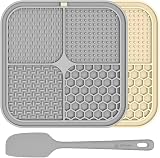
- Food-Grade Silicone:Our lick mat is crafted from premium food-grade silicone, 100% BPA-Free and Non-Toxic. 4 different textured surface design is perfect for yogurt, peanut butter, and other spreadable treats
- Easy to Clean:The mat is freezer, microwave and dishwasher safe . After use, you can soak the lick mat in warm soapy water, brush off residual food and rinse clean with water, or put It into the dishwasher directly, making cleanup convenient
- 49 Strong Suction Cups:The back of the lick mat is equipped with 49 strong suction cups that firmly stick to smooth surface such as shower tiles, glass windows, refrigerator doors, floors and more, preventing the mat from moving while your dog is licking
- Easy to Use:Before you start grooming, bathing, nail trimming, training and medical treatment, spread your dog's favorite food on the lick mat and stick it on a flat surface to calm and soothe your pets
- Slow Feeding & Improve Digestion:The textured surface design is perfect for extending the feeding time to prevent bloating and choking risks, helping your dog,cat cultivate a good eating habit and aiding digestion, promoting oral health
What to look for in a groomer
Relevant experience, not just a certificate
Ask how often the groomer works with dogs that are fearful, touch-sensitive, elderly, painful, or easily overwhelmed. Request a concrete example of how they changed a handling plan for an anxious dog. A useful answer describes the trigger, the adjustment, the dog’s response, and the point at which the groomer would pause or end the session. “We are good with nervous dogs” is too vague to evaluate.
Qualifications and continuing education can show that a groomer has studied safety, anatomy, handling, behavior, hygiene, or first aid. They are not a universal legal requirement, and no single credential proves that a particular person is a good match for your dog. The RSPCA describes grooming as unregulated in its context; local licensing and credential rules may differ. Verify what a qualification means where you live, then judge the groomer’s specific plan for your dog.
Outdated Drivers Are Slowing You Down
One free scan finds every outdated or missing driver and matches the right update for your exact hardware.Free scan · exact hardware matchPC Slower Than It Used to Be?
A free scan shows the junk files, broken settings and background clutter dragging Windows down - then fixes them in one click.Free scan · Windows 10 & 11A structured intake
A careful groomer asks about health, skin, pain, behavior, handling triggers, previous grooming, medication, and emergency contacts before taking the dog onto a table. They should invite you to describe sensitive areas and product restrictions rather than treating them as minor details. The AKC standards also call for owner permission before treats are offered, so tell the groomer which rewards are safe and acceptable.
Stress monitoring and the authority to stop
Ask how the groomer evaluates stress and what changes they make when the dog is no longer coping. The standard to look for is not “the dog must finish at all costs,” but a willingness to modify, pause, shorten, or stop. The AKC wording is direct: “Evaluate the pet’s stress level and respond accordingly to reduce fear and anxiety.” A groomer may refuse an unsafe or unmanageable case; that can be a responsible welfare decision, not poor service.
Safe, clean equipment and suitable products
Ask to see the work area, if the business permits visits, and ask how equipment is cleaned, maintained, and checked before use. The RSPCA recommends attention to safety, hygiene, dog anatomy, handling, first aid, equipment condition, and product suitability. Tell the groomer about allergies, recurring skin problems, past reactions, and painful areas before bathing or clipping. Ask which products they would select for your dog’s coat and skin and whether you may approve substitutions.
Also popular on Amazon
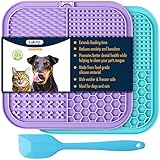
- 【77 Super Suctions】: The back of this licking mat is equipped with 77 high-strength suction cups, which can be well fixed on various walls or glass, refrigerators. It is a good distraction toy for pet bathing grooming and dog nail trimming.
- 【Slow Feeder Mat for Dogs & Cats】: Four different textured surfaces design is prefect for spreadable treats, such as cream cheese, yoghurt, peanut butter and so on. It is a peanut butter slow feeder mat for dogs to extend the feeding time and aid digestion. This lick mat is an ideal size for cats, puppies, small meduim and large dogs.
- 【Reduces anxiety, boredom and destructive behavior】: The lick pads help calm pets. It is a boredom buster for dog to suppress destructive behavio and relieves anxiety at home alone. This dog treat pad is great for stressful times such vet visits, bath time, nail clipping, injury recovery as well as thunderstorms and fireworks.
- 【Food grade silicone】 Premium food grade silicone material, very durable and tough, safe for your pets.
- 【Dish-Washer & Freezer safe 】: It is dish-washer safe, and can be hand-washed in warm soapy water; and it is also freezer safe.
Questions to ask before booking
Use this checklist in a phone call, email, or in-person consultation. You are assessing the quality of the answers, not trying to obtain a particular slogan.
| Question | What a useful answer covers | Warning sign |
|---|---|---|
| What training or continuing education have you completed in low-stress handling? | Specific courses, subjects studied, and examples of applying them to fearful dogs. | Only a vague claim that the groomer “loves animals” or has a label with no explanation. |
| What experience do you have with dogs nervous about grooming? | Relevant cases, triggers encountered, and how the groomer adjusted pace or handling. | A promise that every dog will be finished regardless of distress. |
| What information do you collect before the appointment? | Health, skin, pain, behavior, handling sensitivities, veterinarian contact, and emergency details. | No questions beyond the requested haircut. |
| What signs tell you a dog is becoming too stressed? | A clear explanation of behavioral changes the groomer watches and how those observations change the plan. | The groomer says stress is irrelevant if the dog is physically restrained. |
| When would you pause, shorten, or stop? | Defined safety boundaries and a plan to contact you if the groom cannot continue. | “We never stop” or reluctance to discuss an incomplete groom. |
| Can my dog visit briefly before a full appointment? | Whether a short introduction or gradual familiarization is possible, and any conditions attached. | Pressure to book a long first session without meeting or discussing triggers. |
| Can the same groomer work with my dog each time? | Whether continuity is available and how changes in staff are communicated. | No way to record your dog’s handling history. |
| How do you manage noise, waiting, other dogs, drying, and handling of paws, ears, face, or nails? | A description of the actual setup and alternatives for the dog’s particular sensitivities. | “Every dog gets the same process.” |
| Which products would you use for this coat and skin? | Product selection, patch or sensitivity considerations, and how you handle restrictions. | Dismissal of known allergies or previous reactions. |
| What is your emergency process? | How you will be contacted, which veterinarian is used, and what happens if the appointment cannot safely be completed. | No emergency contact procedure or refusal to discuss it. |
These questions do not imply that every groomer offers meet-and-greets, one-to-one appointments, or a particular salon design. They help you discover what is actually available and whether it fits your dog.
Match the grooming environment to the dog
Ask the groomer to describe the sequence from arrival to collection. Find out where dogs wait, whether they can see or hear other dogs, how separation from owners is handled, and what type of dryer and restraint are used. A dog that panics around noise may need a different plan from one that is primarily distressed by paw handling. A dog that cannot settle while waiting may need an appointment arrangement that minimizes idle time.
Ask whether the groomer can reduce the number of unfamiliar people involved and whether continuity with one person is realistic. Ask how the groomer introduces a table, clippers, brushes, dryers, nail tools, and water. The useful answer is an adaptable process, not a fixed list of equipment. Tell the groomer what has helped at home and what has escalated fear so those details can inform the plan.
Do not infer that a business is low-stress from a “fear-free” or similar label alone. Such a credential may be a useful prompt to discuss education, but the available guidance does not establish it as a guarantee of your dog’s comfort or of a particular salon procedure. Ask for examples of how the groomer changes handling when a dog withdraws or shows other stress-related behavior.
Recommended Free Tools
Also popular on Amazon

- 【Convenient and easy to use】 Before you start bathing / sanding / trimming / grooming, spread your dog's favorite food on your lick pad and stick the lick pad on a flat / shiny surface. When the bath is over, just rinse it off or wash it in the dishwasher your next use.
- 【Safe and Secure】 Lick Pad made of food-grade silicone, and strong flexibility with durable suctions. Easy to clean and top rack dishwasher safe.
- 【Special design for dogs】 The Square shape is more attractive for pets so they can focus on food, bath time or other things easier for you.
- 【Multiple Functions】 Great for cat and dog dental care at home,the textured surfaces promote pleasurable licking action, which generates helping protect your pet's teeth and gums.
- 【Make bathing easy and fun】 Did your dog hate bathing? Now we have the product for you to solve these problems. Just place our lick pad on the bathroom wall, the dog's attention will be on the wall and they will not fight to bathe. Not only suitable for bathing, but also suitable for sanding and trimming pets. It can be treated as a slow feeding bowl for developing good eating habits.
Plan a gradual first visit
A full haircut is often the wrong first test for a worried dog. Ask whether the groomer can begin with a short introduction or another limited step that allows the dog to learn what will happen without being pushed beyond its ability to cope. The exact sequence depends on the dog, the groomer, and the services required.
- Share the written profile. Send the dog’s triggers, medical history, product restrictions, reward permissions, and emergency contacts before arrival.
- Arrange a low-pressure introduction. If the groomer offers one, let the dog meet the person and experience the setting briefly. Confirm what the visit includes and what it does not.
- Agree on a stopping plan. Decide what level of work is realistic for the first session and how the groomer will contact you if stress or safety concerns make continuation inappropriate.
- Use approved rewards. Give permission for specific treats only after discussing allergies, diet, and your dog’s ability to eat when worried.
- Keep the first service achievable. A shorter or partial groom may be safer than insisting on every requested finish in one appointment.
- Record what happened. Ask which tools, body areas, sounds, and handling steps were tolerated or difficult so the next appointment can start from that information.
Gradual familiarization is not a promise that every dog will eventually tolerate every procedure. It is a way to avoid turning one difficult appointment into a more serious fear response.
Prepare at home without forcing handling
Cornell’s Canine Health Center recommends practicing handling in a stress-free setting. Apply the principle to grooming as general preparation, not as evidence from a grooming-specific clinical trial.
- Choose a quiet time when your dog is relaxed and able to move away.
- Briefly touch one easy body area, then offer a preferred reward.
- Progress in very small steps toward paws, ears, mouth, or other areas that will be handled during grooming.
- Introduce grooming equipment gradually, pairing its presence with rewards before attempting a full procedure.
- Let the dog walk away. If it withdraws, reduce the intensity, shorten the session, or return to an easier step.
- Stop while the dog is still coping and repeat only when the earlier step is comfortable.
Never pin the dog down or continue simply because you have started. The RSPCA likewise recommends reward-based, gradual familiarization with grooming equipment and the environment and advises against forcing grooming when the dog is not coping.
A favorite treat can support practice. Cornell also describes a frozen hollow rubber treat dispenser or a textured rubber mat with a preferred snack as possible distractions in veterinary care. A dog lick mat may therefore be used as an optional reward-based practice aid or distraction if your dog can use it safely; the cited guidance does not show that it treats anxiety or guarantees a calm grooming appointment.
Also popular on Amazon

- Food-Grade Silicone:Our lick mat is crafted from premium food-grade silicone, 100% BPA-Free and Non-Toxic. 4 different textured surface design is perfect for yogurt, peanut butter, and other spreadable treats
- Easy to Clean:The mat is freezer, microwave and dishwasher safe . After use, you can soak the lick mat in warm soapy water, brush off residual food and rinse clean with water, or put It into the dishwasher directly, making cleanup convenient
- 49 Strong Suction Cups:The back of the lick mat is equipped with 49 strong suction cups that firmly stick to smooth surface such as shower tiles, glass windows, refrigerator doors, floors and more, preventing the mat from moving while your dog is licking
- Easy to Use:Before you start grooming, bathing, nail trimming, training and medical treatment, spread your dog's favorite food on the lick mat and stick it on a flat surface to calm and soothe your pets
- Slow Feeding & Improve Digestion:The textured surface design is perfect for extending the feeding time to prevent bloating and choking risks, helping your dog,cat cultivate a good eating habit and aiding digestion, promoting oral health
Set clear boundaries for the appointment
Before handing over the dog, repeat the areas that are painful, sensitive, or likely to trigger a reaction. Confirm who may give treats, what products are permitted, whether you will be called before any change, and what happens if the dog cannot safely continue.
Ask the groomer to contact you rather than escalating restraint when fear is increasing. A session that ends early can still provide valuable information and prevent a dangerous struggle. The AKC educational standards include refusing unsafe or unmanageable pets; a groomer who stops for safety is following an important professional boundary.
Do not ask a groomer to sedate your dog. Under the cited AKC standards, groomers should not administer natural or prescription sedation or other medication. Medication decisions belong with a veterinarian, who can consider the dog’s health, the planned procedure, and the risks of any drug.
When veterinary help is needed
Contact your veterinarian when anxiety is marked, when grooming has repeatedly failed, when handling appears painful, or when the dog has a medical or skin problem that could affect the appointment. Cornell notes that anti-anxiety medication may help some dogs and advises discussing that option with a veterinarian. A veterinarian can also investigate pain, allergies, skin disease, or other conditions that make grooming harder.
If behavior support is needed, ask the veterinarian whether referral to a qualified behavior professional is appropriate. Arrange this before the next difficult appointment rather than waiting for a crisis. Do not give a medication left over from another pet or change a prescribed dose to make grooming easier.
Also popular on Amazon

- Slow Feeder & Improve Digestion: As an exquisite form of slow feeder dog bowls, The lick mat for dogs large breed can slow down a pet's eating pace and go away from intestinal diseases, including bloating, obesity, and choking. Frozen lick mat for dogs helps to change the bad behavior of gobbling up, thereby forming a healthy diet habit of eating slowly. With an uneven surface structure, the dog lick mat with suction cups scrapes food particles off the pet's tongue and protects gum health
- Reduce Anxiety, Boredom & Destructive Behaviors: Licking matt for dogs is a boredom buster for pets, which can entertain your lovely pets longer and keep them occupied. Licking the mat also helps release endorphins, which brings much-needed calmness to puppies. As an enrichment for large dogs, our dog toys to keep them busy, enrichment toys for medium dogs and dog toys for boredom and stimulating are perfect for stressful times such as grooming, bathing, nail trimming, and injury recovery
- 75 Strong Suction Cups & 4-Quadrant Design: The licking mat for dogs large and cat lick mat with 75 suction cups can stick to any glossy surface, such as ceramic tile, floors, glass, bathtubs, and fridges. Four different textured areas are spreadable for all kinds of dog foods, like peanut butter, yogurt, and cream cheese. It's better to put the dog lick pad on a towel to spread the treat mixture rather than place it on the kitchen counter so as to avoid food splashing when picking it up
- Food Grade Silicone & Easy To Clean: Our licking mat for small dogs and dog peanut butter lick pad is made of 100% BPA-free silicone, non-toxic, high-temperature resistant, and microwave-safe. Soaking your lick mat for cats in warm, soapy water to remove any additional food that may have lodged in the maze crevices after each meal, and then scrub anything left behind with a brush. The final step is to spray it with the faucet sprayer. The likimat for dogs is top-rack dishwasher safe
- After-Sales Services: A pack of 2 mats comes with 1 spatula and 1 brush, we also provide lickmats for dogs in different sizes and colors. We are committed to providing hassle-free service for our products, including puppy lick mats for small dogs and dog lick mats for large dogs. Please note that pets may mistake the lick matt for dog as a chew toy and tear it, and supervise your pets while using it. Any issues, please feel free to contact us
Protect sensitive skin and coat
Tell the groomer about diagnosed allergies, itching, rashes, recurring infections, previous product reactions, and any veterinary restrictions. Explain whether the dog has reacted to shampoo, conditioner, fragrance, sprays, ear products, or disinfectants. Ask the groomer to confirm the proposed products before service.
The RSPCA advises discussing special needs such as sensitive skin and says a groomer should be able to recommend a suitable product. It notes that an allergic reaction may become apparent within 24 hours. That timing is not a guarantee: a delayed or mild reaction should not be dismissed, and a severe reaction requires veterinary advice. Contact your veterinarian about recurring or serious skin problems rather than trying to solve them through repeated product changes.
What’s actually slowing this PC down?
Pick the symptom - the matching free tool is one click away.
How to compare two or more groomers
Use the same questions with each candidate and record specific answers. A simple scorecard prevents a confident sales conversation from outweighing a weak safety plan.
| Comparison area | Evidence to record | Why it matters |
|---|---|---|
| Experience | Training, continuing education, and examples involving fearful or touch-sensitive dogs. | Shows whether the groomer can translate general knowledge into an individual plan. |
| Intake quality | Questions about health, skin, pain, behavior, triggers, rewards, and veterinarian contact. | Important risks are identified before tools and products are used. |
| Stress response | Observable signs the groomer watches and the exact pause, modification, or stop policy. | Fear is managed before it becomes a safety problem. |
| Facility and equipment | Condition and maintenance of tools, cleaning procedures, bathing and drying arrangements, and waiting setup. | Safety and environmental fit affect both welfare and hygiene. |
| Handling fit | Plan for paws, ears, face, nails, separation, noise, other dogs, and dryers. | Specific adaptations are more useful than a generic “nervous dog” promise. |
| Products | Proposed products, restrictions accepted, and communication about substitutions. | Reduces the chance of avoidable skin reactions. |
| Communication | Emergency contacts, progress updates, continuity, and what happens after an incomplete groom. | You need a safe decision process when the original plan no longer works. |
Choose the groomer whose answers are specific, candid, and centered on welfare. A candidate who admits that a dog may need shorter sessions or veterinary support is often demonstrating better judgment than one who promises to complete everything.
Red flags that justify walking away
- The groomer refuses to ask about medical history, skin, pain, behavior, or handling triggers.
- They guarantee that a fearful dog will be completed in one appointment.
- They dismiss withdrawal, escalating fear, or attempts to escape as disobedience.
- They cannot explain when they would pause or stop.
- They insist on using a product despite a known allergy or veterinary restriction.
- They offer to administer sedatives or medication themselves.
- They will not explain emergency contacts or what happens if the dog is unsafe to handle.
- They treat a credential or marketing label as proof that no individual assessment is necessary.
After the first appointment
Ask for a factual debrief: which steps were completed, which were not, what stress changes were observed, which products were used, and what should be different next time. Keep the information with your dog’s records. If the dog had a skin reaction, pain, persistent behavioral change, or an unsafe incident, contact your veterinarian and reconsider the grooming plan before booking again.
A successful first appointment is not necessarily the longest or most polished groom. It is one that leaves the dog safe, gives the groomer useful information, and creates a realistic next step. If the dog cannot continue, stopping and seeking veterinary or behavior support is preferable to forcing completion.
The Tool Desk
Outbyte PC Repair FREERepair Windows errors before they cause bigger problemsFix Now →Outbyte Driver Updater FREEScan for outdated or missing drivers - takes under a minuteDriver Scan →




Leave a Reply