
Free tools Windows power users keep installed
One-click scans. No signup required.
Some links on this page are affiliate links: if you buy through them we may earn a commission, at no extra cost to you.
An active lifestyle does not create a reliable calorie allowance by itself. The safest method is to have your veterinary team set a daily calorie and food target from your cat’s ideal weight, body- and muscle-condition scores, health, and goal; measure that entire ration; count every treat and edible extra; and adjust only after regular weight and body-condition checks.
Activity should change how you enrich your cat’s day, not automatically how much food you pour into the bowl. A cat can play vigorously and still gain weight if meals, treats, toppers, table food, supplements, or medication treats exceed its individual needs. Conversely, unexplained weight loss or a sudden appetite change can signal illness rather than a need for more exercise or food.
As an Amazon Associate I earn from qualifying purchases.
Set an individualized target before changing portions
Begin with a veterinary assessment. Ask the team to evaluate current weight, ideal weight, body condition, muscle condition, health status, normal activity, and whether the goal is maintenance, weight loss, or weight gain. Cornell Feline Health Center guidance emphasizes that cats vary and that the veterinarian should help establish an ideal weight and diet.
Use body condition, not activity labels, as the starting point
Cornell uses a nine-point body-condition score (BCS). A score of 5/9 is generally described as ideal: the cat is proportionate, has a visible waist behind the ribs, ribs that can be felt beneath a slight fat covering, and minimal abdominal fat. A cat described as active can still be above an ideal score, while a very playful cat can be too thin. Ask the veterinary team to show you the score and the physical landmarks they are using so you can monitor the same features at home.
Popular on Amazon

- Digital Measuring Spoon:Sofevaim food measuring scoop scale measures solids, liquids, and powders, perfect for measuring flour, sugar, coffee bean, spices, milk, cream, butter, tea, pet food. For cooking, baking, pet cat dog food and making DIY products.
- Five Measurement Units:Versatile Measurement Units. Our food measuring scoop scale offers five measurement units, grams (g), milliliters (ml), cups, fluid ounces (fl. oz), and ounces (oz). Simply press the "UNIT" button to switch between them, making it ideal for a wide range of kitchen and pet food applications.
- High Precision Measuring Spoons:This digital measuring cup boasts high precision, measuring weights from 1g up to 800g with an LCD display. Which can accurately sense the change of food weight, so that we can easily master the balanced proportion of food.
- Easy to Use:This portable electronic digital spoon is lightweight, press button “ON/OFF all the while to shut off. The digital scoop scale will auto enter into the sleeping state after 30 seconds if without any operation.
- Removable Scoop:The handle of this electronic digital spoon has a metal plate with a fixing slot, allows for easy installation and makes cleaning a breeze after use. And the detachable spoon is safe to wash with water.
Separate maintenance from a weight-change plan
A calorie amount suitable for maintaining an ideal-weight adult is not automatically appropriate for weight loss, recovery, illness, pregnancy, nursing, or growth. A cat already losing weight, eating less, or being treated for a medical condition needs a plan designed for that situation. Do not turn an online maintenance estimate into a do-it-yourself slimming prescription.
Use calorie tables and calculators only as reference points
The WSAVA Global Nutrition Committee’s table, updated in July 2020, is for an average healthy adult cat in ideal body condition. It explicitly warns that individual requirements may be higher or lower. Its illustrative daily ranges are:
Recommended Free Tools
| Body weight | WSAVA reference range | How to interpret it |
|---|---|---|
| 2.5 kg | 180–190 kcal/day | Reference for an average healthy adult at ideal condition, not an individual prescription |
| 4.0 kg | 225–250 kcal/day | Reference for an average healthy adult at ideal condition, not an individual prescription |
| 5.0 kg | 250–290 kcal/day | Reference for an average healthy adult at ideal condition, not an individual prescription |
Those ranges do not account for every cat’s metabolism, body composition, activity pattern, environment, neuter status, food, or disease. WSAVA’s wording is worth keeping in mind: “Cats are individuals and some may have higher or lower requirements in order to maintain an ideal, trim body condition.”
The Association for Pet Obesity Prevention (APOP) calculator is narrower. It is intended for healthy, fully grown adult cats that eat normally and have a veterinary-confirmed BCS of 5/9. It is not a weight-loss plan and should not be applied to kittens, pregnant or nursing cats, cats with illness or recovery needs, cats with appetite changes, or cats whose body condition has not been confirmed.
Also popular on Amazon

- 𝗘𝗳𝗳𝗼𝗿𝘁𝗹𝗲𝘀𝘀 𝗪𝗲𝗶𝗴𝗵𝗶𝗻𝗴: Supports 5 units (oz/lb:oz/fl'oz/g/mL), tare function, and includes 2 AAA batteries for hassle-free operation
- 𝗣𝗿𝗲𝗰𝗶𝘀𝗲 𝗥𝗲𝘀𝘂𝗹𝘁𝘀: Accurately weighs up to 11 lb/5 kg with 1 g increments
- 𝗦𝗶𝗺𝗽𝗹𝗲 & 𝗖𝗼𝗺𝗽𝗮𝗰𝘁: The small and sleek scale is a perfect fit for most kitchens, occupying little space and easily storable in cabinets
- 𝗘𝗮𝘀𝘆 𝘁𝗼 𝗖𝗹𝗲𝗮𝗻: Just wipe down the 304 food-grade stainless steel surfaces to keep clean
- 𝗟𝗖𝗗 𝗗𝗶𝘀𝗽𝗹𝗮𝘆: Backlit LCD screen with large fonts for easy reading
Turn the calorie target into one measured daily ration
Once your veterinary team gives you a daily calorie target and identifies an appropriate complete diet, use the food’s calorie statement to calculate the food quantity. Food labels may state calories per gram, can, pouch, cup, or another unit. Use the unit printed for that specific food rather than estimating from another product.
- Read the calorie declaration. Record the stated kcal per gram, can, pouch, cup, or other serving unit.
- Do the conversion. For a gram-based label, use
daily kcal target ÷ kcal per gram = grams per day. For a product labeled per cup or container, divide the target by the calories in that unit to obtain the corresponding number of units. - Weigh whenever practical. A digital kitchen scale makes a gram-based ration repeatable and avoids the variation that comes from heaped or partially filled measuring cups. APOP specifically recommends weighing food for accuracy.
- Measure the whole day at once. Put the complete daily ration in a labeled container before the first meal. Any kibble removed for training, puzzle feeders, medication, or treats comes from this container.
- Divide the ration to fit your household. Split it into scheduled meals if that helps prevent begging or accidental refills. The number of meals should support the veterinary plan; dividing food does not increase the daily allowance.
If you change foods, repeat the calculation because calorie density differs between formulas and between wet and dry products. Follow the veterinary team’s transition instructions, particularly when a cat has a sensitive stomach or a prescribed diet.
Outdated Drivers Are Slowing You Down
One free scan finds every outdated or missing driver and matches the right update for your exact hardware.Free scan · exact hardware matchPC Slower Than It Used to Be?
A free scan shows the junk files, broken settings and background clutter dragging Windows down - then fixes them in one click.Free scan · Windows 10 & 11Count every edible extra
Record treats, table food, toppers, supplements, flavored medications, lickable products, and food used to administer medicine. These items can be small individually but substantial across a day. Write them down for several days if you are unsure where extra calories are coming from.
Keep treats within the general 10% limit
APOP and the WSAVA Nutrition Committee’s 2024 treat guidance both state that treats should provide no more than 10% of daily calories. The veterinary team should set the actual allowance when a cat has diabetes, kidney disease, food allergy, gastrointestinal disease, another medical condition, or a prescribed therapeutic diet. Some treats may be unsuitable even when their calorie amount appears small.
Also popular on Amazon
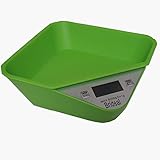
- Precise measurement: the digital cooking scale with a maximum weight capacity of up to 11 lb / 5 kg / 5000 g / 5000 ml / 176 fl. Oz. With a graduation of 0.1 oz/1 g.
- Multifunctional use: the electronic scale includes a removable and washable bowl for weighing all kinds of fruit, vegetables as well as milk and water and so on.
- Removable bowl for easy mixing and pouring, clear LCD display with backlight for clear readability in any light situation
- Measuring units available: pounds, ounces, grams, millilitres, fluid ounces. Easy and free switching between different units
- The zero tare function of the food scale allows you to turn off containers when you weigh multiple ingredients, CE/FCC/ROHS approved
A practical system is to reserve the treat allowance at the start of the day. You can use part of the measured meal ration as rewards, which avoids adding calories while still allowing frequent interaction. If commercial treats are used, check their calorie information and account for the exact number given rather than relying on the package’s suggested serving.
Use activity for enrichment, not for automatic refills
Play, climbing, chasing, food puzzles, and hunting-style feeders can increase movement and provide mental engagement. They do not prove that a cat has burned a specific number of calories. Unless the veterinary team changes the target after reviewing weight and body condition, keep the daily food amount fixed.
The Tool Desk
Outbyte Driver Updater FREEFix the driver behind crashes, sound loss and screen glitchesFind Drivers →Outbyte PC Repair FREERepair Windows errors before they cause bigger problemsFix Now →Make enrichment calorie-neutral
- Load puzzle toys with food removed from the measured daily ration.
- Scatter or hide measured portions around a safe area to encourage searching.
- Use a small part of the ration for short training sessions.
- Rotate toys and play styles so enrichment does not depend on extra snacks.
- Supervise hunting feeders and puzzles to ensure the cat can access food and that pieces are cleaned regularly.
If an activity causes vomiting, exhaustion, limping, breathing difficulty, or unusual reluctance to move, stop and contact the veterinary team. Increased activity should be appropriate for the individual cat’s age and health.
Choose feeding equipment by control and accountability
No device determines the correct calorie target. Equipment is useful only when it helps you deliver the amount already prescribed.
Also popular on Amazon

- 【Versatile Measurement Mastery】Tcsxady food scale supports 6 units (g/kg/lb/oz/ml/milk ml) for baking, meal prep, or liquid tracking. Optimized for recipes requiring precise conversions, it replaces guesswork with quick-tap unit switching. Ideal for food scales for kitchen enthusiasts prioritizing flexibility.
- 【Lab-Grade Accuracy, Simplified】Engineered with 1g precision and 5KG/11lb capacity, scales digital weight food tasks effortlessly. Tare function removes container weight instantly. Overload alerts prevent damage, while low-battery warnings ensure uninterrupted use.
- 【Built-in Battery, Low Energy Consumption】The scale for food already includes the required batteries. It will automatically shut down after 2 minutes of inactivity to save power.
- 【Crystal-Clear Visibility】Kitchen scale high-contrast backlit LED displays weights in bold fonts, readable under dim lighting or angled views. Milk ml mode calculates liquid volumes without containers – perfect for calorie counters and baristas.
- 【Compact Design, Effortless Care】This gram scale fits in utensil drawers yet withstands daily demands. Stain-resistant ABS surface wipes clean instantly. Portable for travel cooks, durable for busy kitchens.
| Tool | Useful selection criteria | What to watch |
|---|---|---|
| Digital kitchen scale | Readable increments, gram and other useful units, tare function, a platform that fits the bowl or container, and easy cleaning | It measures portions; it does not decide how many calories your cat needs |
| Portion-controlled feeder | Reliable scheduling, portion settings that match your food, compatibility with wet or dry diets, removable parts, and a way to verify every dispensed portion | Food released by the machine still belongs to the day’s measured ration |
| Food puzzle or hunting feeder | Adjustable difficulty, safe construction, easy cleaning, and a design your cat can use without frustration | Fill it only with food already counted for that day |
Introduce a feeder or puzzle gradually. Confirm that your cat actually eats the dispensed food and that another pet is not taking it. A device that loses power, jams, or is difficult to clean can undermine portion control, so check it routinely.
Independent reader supportYour contribution helps us test, update, and keep practical guides available for everyone.Monitor weight and body condition instead of guessing
Keep a simple record of food offered, treats, appetite, body weight, and notable activity or health changes. Weighing at consistent times and with the same equipment makes trends easier to interpret. The veterinary team should determine the interval for a cat maintaining weight.
What’s actually slowing this PC down?
Pick the symptom - the matching free tool is one click away.
For an active weight-loss plan, recheck regularly
APOP advises weighing cats on an active weight-loss plan every two to four weeks and reassessing body and muscle condition at veterinary rechecks. Its planning range is about 2–5% of body weight per month, with about 2% per month described as a conservative starting point. This is a planning range, not a universal target or safety cutoff. The veterinary team may change the food, calorie amount, or schedule based on the cat’s response.
Look for changes beyond the scale
- A waist that becomes less visible and ribs that are harder to feel can indicate unwanted gain.
- Prominent bones, reduced muscle over the spine or hips, or a rapidly falling weight can indicate loss that needs assessment.
- Changes in thirst, urination, stool, vomiting, grooming, sleep, or willingness to play can provide important health clues.
Do not simply reduce the amount of the current food when a cat needs to lose weight. VCA Animal Hospitals cautions that feeding less of an unsuitable diet can create nutritional deficiencies. A veterinary weight-management diet and a measured plan may be needed.
Also popular on Amazon

- Digital kitchen scale with food-safe, BPA-free plastic components
- Stainless steel platform with wide LCD screen
- Weighs up to 11 pounds (2 grams minimum, up to about 5000 grams); displays results in pounds, ounces, grams, fluid ounces, and ml
- Tare button for measuring just the food, minus the container weight
- Battery operated; (2) AAA batteries included
Know when appetite changes require prompt care
An active cat that suddenly eats less is not necessarily self-regulating. Illness, pain, dental disease, gastrointestinal problems, stress, or other conditions can reduce intake. APOP advises same-day veterinary assessment when a cat has eaten little or nothing for 24 hours. Contact the veterinary team sooner if the cat appears ill, is vomiting repeatedly, is weak, has breathing trouble, or shows another urgent symptom.
Do not attempt a crash diet, force a large meal, or wait for exercise to restore appetite without professional advice. Cats that stop eating can become seriously ill, and a safe response depends on the cause.
Situations that need a veterinary-specific feeding plan
Use professional guidance rather than an adult maintenance calculator when any of the following applies:
- The cat is a kitten or still growing.
- The cat is pregnant or nursing.
- There is kidney, liver, pancreatic, endocrine, gastrointestinal, dental, or other diagnosed disease.
- The cat is recovering from surgery, injury, hospitalization, or significant illness.
- The cat has a prescribed therapeutic diet or known food allergy.
- Body condition is below or above the ideal range.
- Weight is changing unexpectedly.
- Appetite has fallen, become unusually intense, or changed abruptly.
In these circumstances, activity may be part of the treatment plan, but it does not provide a safe shortcut to a calorie number.
Common overfeeding pathways and fixes
| What happens | Why it causes trouble | Practical correction |
|---|---|---|
| The bowl is topped up whenever it looks empty | No one knows the daily amount | Measure the entire day’s ration first and serve only from that supply |
| Play sessions earn uncounted snacks | Activity is treated as permission for unlimited food | Use meal kibble as rewards or reserve a documented treat allowance |
| Several household members feed the cat | Duplicate meals and treats are easy to miss | Keep a shared log and one labeled daily-food container |
| A puzzle feeder is filled in addition to meals | Enrichment silently adds calories | Load puzzles with food taken from the measured ration |
| A calculator is used for a sick or non-ideal-condition cat | The tool’s assumptions do not apply | Ask the veterinary team for a condition-specific plan |
| Food is cut sharply after weight gain | The cat may receive inadequate nutrients | Request a structured weight-management plan and follow-up checks |
| A feeder dispenses more than expected | Mechanical settings and actual portions can differ | Test portions, verify output with a scale, and include every dispensed amount in the daily total |
A repeatable daily routine
- Confirm the current calorie and food target with the veterinary team.
- Read the exact food label and calculate the corresponding daily quantity.
- Weigh or otherwise measure the full day’s food into one container.
- Set aside the agreed treat allowance, or use meal food for rewards.
- Distribute meals, puzzle portions, and medication food only from the measured supply.
- Record extras and note appetite, stool, vomiting, and unusual behavior.
- Check weight and body condition on the schedule recommended by the veterinary team.
- Report unexpected gain, loss, muscle decline, or appetite reduction promptly.
Why careful portion control matters
VCA Animal Hospitals reports that more than 60% of cats in North America are overweight or obese; the page reviewed on October 13, 2026, does not specify the underlying study’s year. That context makes routine monitoring worthwhile, but it does not replace an examination or provide a universal calorie rule.
The reliable answer to how much an active cat should eat is therefore individualized: establish an ideal condition and target with a veterinary professional, measure the complete ration, count extras, enrich without adding food, and adjust only from documented weight and body-condition trends. If the cat is losing weight unexpectedly or has eaten little or nothing for 24 hours, seek veterinary care rather than experimenting with portions.
Do these 3 things before closing this tab:
1Fix the driver behind crashes, sound loss and screen glitches2Clear out junk files and repair common Windows errors3Scan for outdated or missing drivers - takes under a minute



Leave a Reply