What’s actually slowing this PC down?
Pick the symptom - the matching free tool is one click away.
To find a good dog trainer, ask how they train, whether they have experience with your specific concern, how they will teach you and your household, which setting suits your dog, and how progress, fees, and policies will be handled. Look for clear, patient answers and a plan tailored to your dog—not a guaranteed result or a credential treated as proof of fit.
1. What training methods do you use, and how would you approach my dog’s goal?
Ask the trainer to explain the approach they would use for your dog and the behavior you want to address. Their answer should be specific enough for you to understand what happens during a session, what your dog experiences, and how the plan may change if your dog is frightened or does not respond as expected.
The American Veterinary Society of Animal Behavior (AVSAB) says its 2021 Humane Dog Training Position Statement is its current authoritative view. It recommends reward-based methods for all dog training and behavior modification, and says aversive methods—including electronic collars, prong collars, choke chains, leash corrections, and other physical or psychological punishment—should not be used under any circumstances. AVSAB provides science-based guidance; it does not certify individual trainers or endorse specific trainer organizations. Read AVSAB’s position statements and public clarification.
The International Association of Animal Behavior Consultants (IAABC) likewise says positive reinforcement should be the primary strategy and opposes intentional use of pain, fear, intimidation, shock, and other punishment-based interventions. Its standards were updated in 2025, incorporating the former shock-collar addendum in February of that year. Review IAABC’s standards of practice.
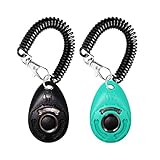
#1 Best Overall

- New communication tool about you and your puppy.
- Pet Dog Training Clickers for Puppy, Cat, Potty, Bird, Horse, Pet, Trainer Training Tools, Behavior Aids
- Just press to mark desired behavior, then reward for faster learning.
- The spring wrist length : 16cm/6.3inches and can strength to 25cm/9.84inches.
- Package include : Black + Blue,each color 1 pcs.
A useful follow-up is: “What would you do if my dog became frightened or the plan wasn’t working?” Look for a willingness to adapt the approach and protect your dog’s welfare, not a promise that a particular outcome is guaranteed.
2. What experience and credentials do you have for this specific issue?
Ask about experience with the behavior, skill, and setting you need help with. A trainer who teaches basic manners may not have the same background as a consultant who works with complex concerns affecting safety or quality of life. Credentials can help you understand someone’s preparation, but they are not interchangeable and do not, by themselves, prove that the person is the right fit for your case.
Rank #2

- ▼Come in 4 pack button clickers with wrist strap in 4 different colors:Black, Green, Orange, Yellow, each color 1 PCS
- ▼Can be used to train the dog basic obedience, small trick, and correct the bad behavior; Scientific method of training your pet safely and easily.
- ▼Stop barking and dog obdeience. Train your dog quiqly just by simply pressing the clicker and command.
- ▼Well constructed and durable, metal clicker will not rust or break.
- ▼Big button for easy clicking and loud sound. Easy to use in any position.
In the United States-focused guidance from the Certification Council for Professional Dog Trainers (CCPDT), dog training is described as an unregulated industry with no licensing requirements or regulatory oversight. CCPDT credential pathways have different requirements:
- CPDT-KA: a comprehensive knowledge examination and at least 300 hours of dog-training experience.
- CPDT-KSA: the knowledge examination plus an objective skills-based assessment, with the same 300-hour experience threshold.
- CBCC-KA: a behavior-consultant credential involving a behavior-modification examination and at least 300 hours of consulting experience.
IAABC also distinguishes its credentials by scope. Its Accredited Dog Trainer (ADT) pathway is for trainers with at least two years of experience teaching manners, life skills, sports, enrichment, and prevention. Its Certified Dog Behavior Consultant (CDBC) pathway is for consultants with at least three years of experience with complex cases, including fear, anxiety, and aggression. IAABC says credential holders must complete at least 36 continuing education units every three years. These are credential requirements, not evidence that a trainer will achieve a particular outcome. See IAABC’s credential descriptions.
Rank #3
- EASY TO USE - Simple push button with distinct clicking sound.
- Comes with an elastic wrist band so you can leave it on your wrist or clip it to the leash or your pants.
- Not only train the dog but also the cat, bird, chicken, sheep a new behaviors like sit, fetch, roll over, lie down.
- For effective pet training ALWAYS reward with a treat after clicking.
- Can be used to train the dog basic obedience, small trick, and correct the bad behavior; Scientific method of training your pet safely and easily.
Ask to see the exact credential and verify it with its issuer or in the issuer’s directory. CCPDT cautions that certification is not an endorsement of an individual; it indicates that the person sought a credential and met its requirements. Also distinguish independent certification from membership: CCPDT describes the Association of Professional Dog Trainers (APDT) as an education-focused membership association, while CCPDT provides independent certification and requires certificants to recertify to maintain credentials. CCPDT’s trainer-selection guidance and certification FAQ explain those distinctions.
3. How will you teach me and involve the people who live with my dog?
Training involves the person as well as the dog. Ask what you will learn during appointments, what practice between sessions will involve, and how the trainer will explain dog behavior and learning. If other household members will handle the dog, ask how they can participate where appropriate so that everyone understands the plan.
Rank #4

- MANUAL AUDIBLE CLICKER: Produces an audible click when manually pressed. The clicker contains no electronics, batteries, remote-control functions, or Electronic Stimulation features.
- INDIVIDUAL RESPONSE TO SOUND MAY VARY: Dogs and other animals may respond differently to audible clicker sounds. Introduce the clicker gradually and discontinue use if the animal shows discomfort or fear.
- COMPACT HANDHELD DESIGN: Small finger-clicker design is intended to be carried and operated by the user. Review the product images and compact size before ordering to confirm it meets your expectations.
- 5-INCH VELCRO FINGER STRAP: Includes an approximately 5-inch adjustable Velcro strap designed to position the clicker on the user's finger or hand. The strap is worn by the user and is NOT intended to be worn by the pet.
- TEAL CLICKER ACCESSORY: Includes one Teal manual finger clicker and training instructions. Remote transmitter, receiver collar, batteries, and other training-system components are NOT included.
Notice how the trainer treats you as a student. CCPDT suggests looking for clear, knowledgeable answers, patience, thoroughness, and a willingness to make you comfortable asking questions. The American Kennel Club (AKC) also recommends evaluating whether a trainer is patient, encouraging, and respectful with human students; if possible, observe a class and ask former students for references. CCPDT’s selection checklist and AKC’s advice on finding a trainer offer more guidance.
4. Which format and location fit my dog and the behavior we’re working on?
Ask whether the trainer offers group classes, private lessons at a facility, in-home sessions, or practice in the real-world setting where the behavior occurs. Choose based on your dog’s comfort, the goal, and where the issue happens—not simply the format that is most familiar.
Quick wins for a faster PC:
Repair Windows errors before they cause bigger problemsFix Now →Scan for outdated or missing drivers - takes under a minuteDriver Scan →Clear out junk files and repair common Windows errorsFree Scan →Best Value

- Stronger Bark Control with 3X Ultrasonic Emitters: Unlike single-emitter devices, our upgraded dog bark deterrent features three synchronized ultrasonic heads—delivering 3X the coverage to quickly stop barking, biting, and jumping behaviors. Ideal for anti barking training, safer than bark collar, more effective than a dog whistle, offers a humane, high-performance dog training solution
- 6-in-1 Safe & Humane Training Modes:Our dog bark deterrent device features dual ultrasonic frequencies (fixed 25kHz and variable 20-30kHz), combining 4 ultrasonic modes plus an audible beep and LED flashlight for versatile training. Whether for daily training or stubborn, persistent barking, this anti bark device adapts to different dogs providing effective bark control without causing pain or distress. Perfect for training at home or to stop neighbors dog bark that disturbs your peace
- 23 FT Extended Range & Night Safety: Bark Control Anytime, Anywhere: Stop barking and bad behavior from up to 23 feet away with our powerful dog bark deterrent device — perfect for your yard, neighbor’s yard, outdoor walks, and off-leash areas. Whether you're relaxing at home or out for a stroll, enjoy safe, long-distance control to correct disruptions quickly. The built-in LED flashlight adds safety for evening walks, and low-light training
- Fast Charge & Long Battery Life – Always Ready for Training:With a Type-C fast charging port, our dog bark deterrent device reaches a full charge in just 2 hours and provides up to 30 days of regular use on a single charge, along with 180 days of standby time. Whether you're correcting anti barking behavior or training your dog in public places, you’ll always be prepared for any situation. Forget the hassle of frequent charging and enjoy reliable, long-term barks no more support
- Ultra-Compact Design for Everyday Convenience:50% smaller than standard dog bark deterrent devices, our anti barking device is ultra-compact and lightweight, fitting effortlessly into your pocket, bag, or hand. Whether you're on daily walks, outdoor adventures, or dealing with unexpected situations in public places, this portable design helps you stop barking and encourage good behavior anywhere, anytime. Say goodbye to constant noise and enjoy a barks no more experience with your dog
| Format | Potential fit to discuss | Questions to ask |
|---|---|---|
| Group class | Can provide practice around distractions and opportunities for socialization. | How large is the group? What is the setup? Can my dog participate comfortably? |
| Private lesson at a facility | One-to-one instruction may suit a dog that becomes anxious or overstimulated around other dogs. | Will the location and setup work for my dog and training goal? |
| In-home session | May be relevant when the behavior occurs at home, such as at a particular door. | Do you make home visits, and what does the visit include? |
| Real-world practice | May let you work in the place where the behavior happens. | Where can we practice, and how will distractions be managed? |
These are comparison considerations, not guarantees of results or price. Providers differ in what they offer, and home visits may cost more. Compare relevant experience, group size and setup, travel or facility location, opportunities to practice around distractions, and whether your dog can take part comfortably. AKC’s guide to trainer formats discusses group and one-to-one settings.
Independent reader supportYour contribution helps us test, update, and keep practical guides available for everyone.5. How will we measure progress, and what are the costs and policies?
Ask what progress would look like for your dog, how often you will review the plan, what you should practice between sessions, and what the trainer will do if the approach is not working. A useful answer should describe how you will assess progress and adjust the work, rather than guarantee a result.
Before committing, request the current session length and fees, cancellation terms, and any package or refund conditions in writing. Ask for client references, too. There is no universal price range or standard policy established by the cited guidance, so compare the actual terms each provider gives you rather than relying on an assumed market rate.
Red flags and green flags when choosing a trainer
Use the answers across all five questions to judge fit. CCPDT specifically flags dominance or submission framing and primarily punishment-based methods; AVSAB’s position advises against aversive methods. Be cautious if a trainer is evasive about methods, unwilling to answer reasonable questions, or lacks relevant experience for your concern.
The Tool Desk
Outbyte PC Repair FREERepair Windows errors before they cause bigger problemsFix Now →Outbyte Driver Updater FREEFix the driver behind crashes, sound loss and screen glitchesFind Drivers →- Red flags: dominance or “alpha” explanations as the basis for training; primarily punishment-based methods; evasiveness about methods; refusal to answer reasonable questions; or no relevant experience for the issue.
- Green flags: clear explanations; patience with questions; relevant experience; client references; openness about credentials and their scope; a plan suited to the dog and setting; and instruction that helps you work with your dog.
Neither a credential nor a reassuring first conversation replaces asking for a plan that makes sense for your dog and situation. For context, see CCPDT’s guidance on trainer fit and warning signs.
Quick Recap
Product prices and availability are accurate as of the date/time indicated and are subject to change. Any price and availability information displayed on Amazon at the time of purchase will apply.




