
Recommended Free Tools
Call your local animal shelter or animal-control agency first. Tell them you found an orphaned puppy, ask how your area handles found animals, and request a referral to a rescue or foster coordinator that can take the puppy. While you make calls, keep the puppy in a safe, sheltered place and arrange veterinary or experienced newborn-puppy help if it is very young, weak, cold, injured, or unwell.
This U.S.-oriented guide gives you a practical call sequence, the questions that reveal whether a placement is genuinely ready, and the interim-care information a shelter or veterinarian will need. Intake rules, reporting requirements, foster openings, and costs vary by jurisdiction and organization, so treat local agencies as the authority for what happens next.
As an Amazon Associate I earn from qualifying purchases.
What to do in the first 30 minutes
- Move the puppy to a safe, sheltered location. Keep it protected from traffic, weather, and other immediate hazards while you call. Do not delay urgent veterinary help if the puppy appears seriously ill or injured.
- Write down the facts. Record the exact place and time you found the puppy, its apparent age, condition, whether its mother or littermates were present, and anything you have already given it. These details help an intake worker decide whether the puppy needs emergency care, a foster with bottle-feeding experience, or a reunification check.
- Call the local shelter or animal-control agency. Ask how it handles found puppies, whether it can accept this puppy, and which local rescue or foster coordinator it recommends. ASPCA guidance for a found stray is: “If you’ve found a lost pet or stray animal in your area, contact your local shelter for guidance on the best steps to take.”
- Arrange professional direction for a very young puppy. Newborn or apparently orphaned puppies can require controlled warmth, frequent feeding, and close observation. If the puppy is weak, cold, injured, or unwell, tell the shelter and a veterinary hospital immediately that you need prompt direction.
Start with the local shelter or animal-control agency
The first call is not necessarily a request that the shelter keep the puppy permanently. It is a request for the correct local process. A shelter may accept the puppy, document the found-animal report, connect you with a contracted rescue, or direct you to a foster coordinator. It can also explain local reporting or stray-hold requirements that differ from one jurisdiction to another.
Questions for the first call
- Can you accept this found puppy now, or arrange an immediate transfer?
- If you cannot take it, which specific rescue, foster coordinator, or shelter should I contact next?
- Does the puppy need to be reported as found, and what information or form is required?
- Where should I go if the puppy becomes weak, cold, injured, or unwell outside normal hours?
- What temporary-care instructions do you want me to follow while placement is arranged?
Ask for a person’s name, the time of the call, the next organization to contact, and any reference number. If the answer is “we are full,” ask for a named referral and a clear next step rather than ending the search with a general suggestion to call around.
#1 Best Overall
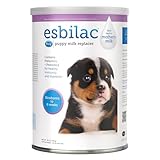
- PUPPY MILK REPLACEMENT — When mom can’t nourish them, Esbilac can. Scientifically the next best to mother’s milk, Esbilac provides all the nutritional elements necessary for puppies, newborn to six weeks old.
- COMPLETE, BALANCED NUTRITION — Our formula is closest to mother's milk in protein, fat, and carbohydrates. We’ve also added vitamins, minerals, and trace nutrients; plus prebiotics and probiotics to support healthy immunity and digestion.
- EASY TO DIGEST — Esbilac is highly palatable and formulated with a special fiber blend for easy digestion and improved gut health.
- EASY-TO-MIX FORMULA — Whisk or shake 1 part powdered Esbilac into 2 parts warm water. Do not mix more Esbilac than can be consumed in 24 hours. Do not use a blender. Must be kept refrigerated after reconstituting.
- ABOUT US — PetAg is a trusted leader in pet wellness, with science-backed formulas in our milk replacers, health supplements, and grooming products helping pet owners to proactively enhance the lives of their pets, for more healthy years together.
Build a local contact list instead of waiting on one call
Contact several appropriate organizations in parallel. ASPCA lists local shelters, veterinary hospitals, municipal and private shelters, and rescue groups as useful contacts when locating or helping a stray animal. Use the shelter’s advice to determine which organizations in your area accept found animals directly.
Veterinary hospitals
Call nearby veterinary hospitals and explain that you found a puppy with no known caregiver. Ask whether a veterinarian can assess the puppy, whether the hospital works with a rescue or foster network, and who pays for an examination, treatment, food, and supplies. A hospital may not be an intake facility, but its staff may know local neonatal-care resources.
Municipal and private shelters
Municipal facilities may be responsible for found-animal reporting and stray intake. Private shelters may have different capacity, hours, or foster networks. Confirm whether each one accepts a member of the public’s found puppy, whether an appointment is required, and where to go after hours.
Free tools Windows power users keep installed
One-click scans. No signup required.
Rescue groups and foster networks
Ask whether the group has a foster home experienced with newborn or bottle-fed puppies. Foster support differs by organization: some provide veterinary care, food, equipment, training, or follow-up; others may expect the finder to provide some of these resources. Do not assume that a social-media post or a volunteer’s informal offer is an approved placement. Confirm who is responsible for the puppy and how the handoff is documented.
Finding independent organizations
ASPCA points people to its shelter list through Petfinder to locate local independent shelters or rescues. Search by your location, then confirm each organization’s current phone number, intake policy, hours, and ability to accept a found puppy. Directory listings do not establish that a group has an open foster space today.
Give every organization the same concise case summary
A consistent summary prevents important facts from being lost as you move between calls. You can read this aloud:
“I found a puppy at [location] at [time]. It appears to be [approximate age or developmental description]. Its condition is [alert, weak, cold, injured, or other observation]. I did/did not see the mother or littermates. I have provided [nothing, warmth, or other care]. Can you accept it, arrange a veterinary assessment, or refer me to a foster experienced with this level of care?”
Rank #2

- NUTRITIONAL SUPPLEMENT - Esbilac Healthy Development supports healthy growth and development with high-quality protein for dogs weaning to 6 years.
- SUPPORTS COGNITIVE DEVELOPMENT – With DHA (Omega 3 fatty acids) and Vitamin E, our formula supports visual & cognitive development.
- CONTAINS OMEGA 6 FATTY ACIDS - Our powder contains Omega 6 fatty acids to support a healthy skin and coat.
- GREAT TASTE - Esbilac Healthy Development is formulated with a great taste dogs love. Supports transition to solid foods for weaning puppies.
- ABOUT US − PetAg is a trusted leader in pet wellness, with science-backed formulas in our milk replacers, health supplements, and grooming products helping pet owners to proactively enhance the lives of their pets, for more healthy years together.
Describe observations rather than making a diagnosis. For example, say that the puppy feels cold or is not sucking instead of assigning a medical label. Tell each organization about any change in condition immediately.
Compare placements on the factors that affect survival and continuity
When more than one organization offers help, compare the practical details below. The best option is not simply the first “yes”; it is the placement that can safely accept the puppy and provide the level of care it needs.
| Question | What a strong answer establishes | Follow-up if the answer is unclear |
|---|---|---|
| Can it accept the puppy now? | A named person, location, and handoff time | Ask whether you should remain the temporary caregiver and until when. |
| Is veterinary assessment available? | A plan for examination and urgent treatment | Ask who schedules it and who pays. |
| Does the caregiver have newborn or bottle-feeding experience? | Relevant hands-on experience or trained supervision | Ask whether a veterinarian or experienced neonatal foster will guide care. |
| What supplies are provided? | Food, approved feeding equipment, warmth support, and other agreed supplies | Ask exactly what you must obtain and whether reimbursement is available. |
| What is the placement plan? | Expected foster duration, updates, and the next transfer or adoption step | Ask who remains responsible if the foster arrangement ends. |
Ask foster programs about money, training, and responsibility
Before handing over the puppy, make sure you understand the arrangement. ASPCA describes veterinary care, food, supplies, training, and follow-up as forms of foster support, but policies differ among organizations. Ask these questions directly:
- Who is the legal or organizational point of contact for this found puppy?
- Who pays for the initial examination, emergency treatment, medication, food, and feeding equipment?
- Will the foster receive instructions or training for newborn care and bottle-feeding?
- Who can be reached overnight if the puppy stops eating or becomes weak?
- How long is the placement expected to last, and what happens if the foster cannot continue?
- Will the organization arrange identification, reunification efforts, transfer, or adoption under its normal process?
- What records should accompany the puppy, including the find location, time, observations, and care already provided?
If an organization cannot accept the puppy, ask it to name the next contact and to tell you what temporary care it considers safe. Keep a written call log so that different organizations receive the same information and you can identify the current responsible person.
Quick wins for a faster PC:
Repair Windows errors before they cause bigger problemsFix Now →Scan for outdated or missing drivers - takes under a minuteDriver Scan →Clear out junk files and repair common Windows errorsFree Scan →Recognize when the puppy needs urgent veterinary or rescue direction
Seek prompt professional direction while arranging placement if the puppy is newborn, appears weak or cold, has an injury, or otherwise seems unwell. Very young puppies cannot be treated like older dogs left alone with food and water. Best Friends Animal Society advises inexperienced caregivers to have a veterinarian examine orphaned newborn puppies before getting started.
Use the organization’s emergency instructions rather than waiting for a routine callback when the puppy’s condition is deteriorating. Tell the caller exactly what you observe, when it began, and whether the puppy is able to suck and remain alert. Do not wait for a rescue placement to be finalized before reporting a serious change in condition.
Independent reader supportYour contribution helps us test, update, and keep practical guides available for everyone.Interim care for an orphaned newborn puppy
Controlled warmth and observation
Newborn puppies require controlled warmth and close observation. Keep the puppy sheltered while you obtain veterinary or experienced-rescue instructions. Record changes in alertness, body warmth as directed by a professional, and ability to feed. Avoid improvising a complex warming or medical setup without guidance; a veterinarian or trained rescue worker can tell you what is appropriate for the puppy’s apparent age and condition.
Rank #3

- MILK REPLACER WITH PROBIOTICS: Suitable for up to 9 young animal species including puppies, kittens, calves, lambs, goats, foals, piglets, llamas, and crias; providing probiotics and balanced nutrition to support healthy growth and development.
- MADE WITH PROTEIN AND FAT: Contains 24% protein and 24% fat; supporting fast, healthy growth, strong muscle development, and overall vitality for young animals during critical early stages of life.
- ALL MILK FORMULA WITH PROBIOTICS: Made with high-quality all-milk protein; supporting healthy growth, proper development, and overall performance for young animals during critical early stages of life.
- SUPPORTS HEALTHY DIGESTION FOR YOUNG ANIMALS: Powered by Opti-Gut probiotics; promoting gut health, nutrient absorption, and digestive balance to support overall growth, vitality, and wellbeing for young animals.
- EASY TO MIX FORMULA: Designed for quick and convenient preparation; ensuring fast mixing, effortless feeding, and optimal consumption so young animals receive balanced nutrition efficiently for healthy growth and development.
Feeding frequency
Best Friends states that newborn puppies need food every two to three hours around the clock. That interval is a newborn-care instruction, not a universal schedule for every puppy. A veterinarian should recommend the product, amount, position, and schedule for the individual puppy, especially if it is weak, chilled, injured, or not nursing normally.
What’s actually slowing this PC down?
Pick the symptom - the matching free tool is one click away.
Milk replacer and feeding equipment
ASPCA notes that commercial milk replacer may be needed when puppies are orphaned during their first weeks and advises contacting a veterinarian for product and feeding recommendations. A commercial animal baby bottle can be appropriate when bottle-feeding is appropriate; Best Friends describes it as preferable to an eyedropper for normal sucking. These supplies do not replace an examination or individualized instructions.
When not to improvise tube-feeding
Best Friends notes that tube-feeding may be necessary when a puppy does not nurse adequately. Tube-feeding carries a training and safety burden, so involve veterinary or experienced rescue staff rather than attempting it from an online description. If the puppy cannot suck, tell the shelter or veterinarian immediately and follow the method they prescribe.
Keep the handoff organized
- Confirm the receiving organization, person, address, and arrival time by phone or message.
- Send the written find location, time, condition, mother or littermate information, and care log.
- List every item provided, including any milk replacer or bottle, and state when the puppy last fed or received care.
- Ask for confirmation that the receiving person has taken responsibility.
- Record the organization’s instructions for updates, veterinary decisions, and what to do if the placement fails.
Do not promise an adoption outcome or a permanent foster period that the organization has not confirmed. The immediate goal is a safe, documented transfer to a person or group equipped for the puppy’s needs.
If no organization can take the puppy immediately
Capacity may be limited even when several groups are contacted. Continue with the shelter or animal-control agency’s instructions, request named referrals, and ask when to call back. Contact veterinary hospitals, municipal and private shelters, and rescue groups again as your case changes, especially if the puppy becomes weak or unwell.
Ask the agency what local found-animal reporting rules apply and whether you must complete a stray report before a rescue can accept the puppy. Keep the puppy in a safe, sheltered place only as an interim measure, and obtain clear instructions for warmth, feeding, observation, and emergency escalation. If you cannot safely provide the required care, say so plainly; that information helps the agency prioritize a trained foster or veterinary placement.
Location and policy issues you must verify locally
This guidance is general and U.S.-oriented. Your city, county, or state may set different rules for reporting a found animal, stray holds, shelter intake, ownership claims, or transfer to a private rescue. Hours, fees, foster openings, and after-hours emergency arrangements also vary. Ask the local shelter or animal-control agency which rules apply where you found the puppy and follow its current instructions.
A simple decision path
- Is the puppy weak, cold, injured, or unwell? Call a veterinary hospital and the local shelter or animal-control agency promptly while keeping the puppy sheltered.
- Can the local agency accept it? Follow its intake or transfer instructions and provide the recorded facts.
- Can it refer you to an approved foster or rescue? Call the named contact and confirm neonatal-care experience, veterinary access, supplies, costs, and duration.
- No immediate placement? Request another named referral, clarify interim-care instructions, and continue contacting local veterinary hospitals, shelters, and rescues.
- Placement confirmed? Complete a documented handoff with the puppy’s history and last-care details.
The reliable sequence is shelter or animal control first, then veterinary hospitals and local shelters or rescues, with professional guidance for any newborn or deteriorating puppy. That approach gets the puppy into the correct local system while reducing the risk of an unsafe feeding attempt or an undocumented handoff.
Quick Recap
Product prices and availability are accurate as of the date/time indicated and are subject to change. Any price and availability information displayed on Amazon at the time of purchase will apply.
Do these 3 things before closing this tab:
1Fix the driver behind crashes, sound loss and screen glitches2Repair Windows errors before they cause bigger problems3Scan for outdated or missing drivers - takes under a minute




Leave a Reply