
Free tools Windows power users keep installed
One-click scans. No signup required.
Foster an injured puppy only with a written, case-specific plan from the treating veterinary team and the rescue or shelter. Your job is to carry out that plan, keep the puppy safe and comfortable within its restrictions, record changes, and use the organization’s designated route to report concerns or get emergency care. Do not change medication, alter a bandage or splint, or start exercises on your own.
What should you arrange before the puppy comes home?
Ask the rescue, shelter, or veterinary team to walk you through the puppy’s diagnosis and current condition, what treatment has already been done, and exactly what care you are expected to provide. Get the instructions in writing, including who to contact if anything changes. Requirements and authorization rules vary by organization and location; Animal Welfare Victoria, for example, calls for a written agreement for rehabilitation foster care and says carers should follow veterinary directions, report illness, and keep records as required.
As an Amazon Associate I earn from qualifying purchases.
- Medication: Get the name, schedule, and directions for each prescribed medicine, plus instructions for a dose that is missed, refused, or vomited. Ask whom to call with questions.
- Movement and handling: Confirm where the puppy should rest, whether a crate or small room is appropriate, how much movement is allowed, how to manage toilet trips, and whether you may lift or assist the puppy. Ask about transport to appointments.
- Wounds and devices: Find out how to protect and check any incision, wound, cast, splint, or bandage—and who is authorized to inspect, change, or adjust it.
- Follow-up: Record recheck dates and establish who schedules and transports the puppy. Ask what recovery signs the team expects and what would change the plan.
- Escalation: Save the daytime and after-hours contacts, the designated emergency route, and any rules about authorization for outside veterinary care. Ask who can approve care and what to do if you cannot reach them.
- Practical support: Clarify the likely care period, what supplies the organization provides, and how treatment costs are handled.
If you are unsure whether your home, schedule, experience, or access to urgent veterinary care can meet the plan, raise that before accepting the placement. For fracture-treatment choices, the American College of Veterinary Surgeons (ACVS) identifies the home environment, time commitment, possible financial constraints, and the need to assess or change some splints and bandages as factors to discuss with the veterinary team. No single repair approach is easiest or best for every puppy.
Recommended Free Tools
How do you set up a safe recovery space?
Use the confinement arrangement the veterinary team prescribes. A crate or small room may be suitable in some cases, but the appropriate setup depends on the injury and the puppy’s care plan; a particular crate size or style is not established as medically necessary.
#1 Best Overall

- SCRATCH & BITE RESISTANT - This inflatable dog donut collar is a perfect cone for dogs after surgery. Inflated dog neck donut works like a plump barrier around your canine's neck, can effectively prevent your pets from biting and licking injured area or surgical site. With this collar on, the unique and cute donut shape makes it like a pet ornament instead of a dog surgery collar, your pet must be a million times happier with this.
- NON-STICK FABRIC - Unlike other common velvet inflatable dog collars for after surgery donut, the outside of this small dog cone is made of upgraded non-stick fabric, then you won't have to keep cleaning pet's hair frequently. Also it is easy to clean if needed, just unzip to take off the outer cloth. Soft cones for dogs after surgery keeps your dog comfortable, can even act as a neck pillow which helps him/her fall asleep quickly and forget the pain of the wound.
- NO STRESS - We all know how pets hate the cumbersome cone, poor dogs and cats would keep tripping on it and could not get around. This inflatable cone ecollar for dogs WON'T let that happen, the inner air bag provides full support for the neck while keeping it lightweight. It does not block dog’s vision like traditional Elizabethan collar, which allows your doggie chase butterflies, hummers and grass hoppers all with wearing its collar.
- ADJUSTABLE &PERFECT FIT - In case you are concerned of the soft collar for dogs from slipping down or getting taken off, we designed a fixed position on the inner part of the dog head cone, just thread your pet's everyday collar through the strips to fix it. Furthermore, a velcro strap is equipped on the opening of the collar, which can allow you to adjust the the tightness to ensure a perfect neck fit. Please remember to put the strap side at the back of your dog’s neck in case of biting.
- WARM PROMPT - If your small animal wants to escape when he/she put on the collar for the first time, we hope you can work with your dog to acclimate him/her. And due to differences in dog breeds, body sizes, and growing environments, this comfortable dog cone may not be suitable for dogs with long noses, long legs, long tails, and long bodies. Any more questions, we are here to assist you, we sincerely wish your pet a speedy recovery.
- Block access to stairs, furniture, and other places the puppy might climb or jump.
- Reduce the risk of slipping and keep the permitted route to the toilet short and controlled.
- Place bedding and water within comfortable reach, while keeping the area suitable for observation and care.
- Keep the puppy separate from situations that could prompt chasing, rough play, or sudden movement, if that is consistent with the plan.
These are ways to support prescribed rest, not substitutes for the veterinary team’s instructions. If a proposed setup makes toileting, monitoring, or required care difficult, ask the team to help you adapt it rather than changing the restrictions yourself.
How should you manage rest, medication, and daily care?
Restrict movement as directed
Follow the specified limits on activity and confinement even if the puppy seems brighter or begins using an injured limb. ACVS fracture guidance notes that some pets need confinement and that fracture recovery may mean no running, jumping, or play, with short, leash-controlled bathroom trips. Those are general examples, not instructions for every injury. The treating team must specify what this puppy may do.
Rank #2

- [FUNCTION] QIYADIN pet recovery cone is a professional and effective tool for postoperative cats and dogs. It prevents them from licking and biting incisions and helps them recover faster and better. It can also be used in pet grooming and skin disease treatment.
- [MATERIAL] It is mainly made of high-quality translucent soft and flexible plastic, it can be rolled into a cone to Keep your pet's head and body separate. Its edges are covered with cotton flannel, which makes it comfortable for pets to wear.
- [SIZE and WEIGHT] 9 sizes from XXXS to XXXL for choices. You can always find the right size for your pet. You can first measure the size of your pet, then compare it with our size chart, finally choose the appropriate size. Its weight is very light. Pets can move normally with it.
- [USAGE METHOD] Put the inner ring of this pet recovery collar close to the pet's neck and roll it into a cone, then stick the Velcro on. The large area of Velcro makes the cone firmly fixed on the pet's neck. You can fine tune the size by adjusting the adhesive area of the Velcro. Make sure it is in a comfortable state, not too tight to hurt the pet's neck, and not too loose to escape.
- [DURABLE] This pet recovery cone is difficult to be damaged by scratching of dogs and cats. It can be used repeatedly and has long service life. But it's plastic. Please stay away from fire!
For fractures, ACVS says activity restrictions can continue until healing has been confirmed with radiographs. It gives general context that fractures may take a minimum of four weeks to heal sufficiently to begin progressing toward normal activity in young puppies, compared with eight weeks in adult or older animals. These figures are not a forecast for an individual puppy or permission to resume activity; the veterinarian sets the milestone and timing. Any rehabilitation should be coordinated by the surgeon and physical therapist, as ACVS advises.
Outdated Drivers Are Slowing You Down
One free scan finds every outdated or missing driver and matches the right update for your exact hardware.Free scan · exact hardware matchPC Slower Than It Used to Be?
A free scan shows the junk files, broken settings and background clutter dragging Windows down - then fixes them in one click.Free scan · Windows 10 & 11Give only the prescribed treatment
Give medication exactly as directed. Do not add human pain medicine, supplements, or leftover prescriptions, and do not change or stop a prescribed treatment without asking the prescribing professional. If a dose is refused, missed, or vomited, use the instructions you obtained for that situation or contact the veterinary team rather than improvising.
Rank #3

- 【 FREEDOM OF MOVEMENT 】Our dog donut collar enables your dog an increased range of movement .It does not block dog’s vision like traditional elizabethan collar which allows your doggie eat, drink, sleep, play at ease during the healing period. They can recover tress-free.
- 【 SAFETY PROTECTION 】This inflatable dog collar is a perfect dog cone alternative after surgery. The inner air bag made of high density material which is stronger and not easy to leak, prevent canine to stop biting and licking the injured area or surgical site, protect them from injuries, rashes and post-operative wounds.
- 【 EXTRA COMFY 】The doughnut cover is made of 3D fabric, which is fluffy and soft as comfortable as wearing a feather neck donut pillow.It helps reducing our pet's anxiety and creating stress-free comfort experience.It is also easy to clean if needed.just unzip to take off the outer cloth and throw it in the washing machine.
- 【 ADJUSTABLE &PERFECT FIT 】The double-covered inflation valve can easily adjust air volume without pressing hard,put the e collars on the puppy's head after blowing and then adjust the velcro strap to the suitable location
- 【 WARM PROMPT 】If the dog surgery collar is a bit large or you are concerned of the blow up collar from slipping down or getting taken off,please try to loop the daily collar with the protective dog collar,it would be helpful.Recommended size is just a suggestion ,if it doesn't work for your pets, please contact us in time, we provide free return or refund after-sales service for you.
Protect wounds, bandages, and splints
Keep a bandage or splint clean and dry as instructed. ACVS advises caregivers not to modify these devices. Do not tighten, tape, remove, or reapply one unless the treating team explicitly tells you to. Contact the veterinary service about a bandage that becomes wet, smells bad, slips, is damaged, or is accompanied by swelling around the toes.
For a surgical incision, follow the clinic’s instructions for checking and protecting it from licking or chewing. Tufts’ post-operative guidance recommends daily incision checks and contacting the clinic if redness or swelling increases. That advice is an example for post-operative care, not a universal wound protocol for every traumatic injury.
Rank #4

- Comfortable to wear: Lightweight and transparent plastic having linear structure and built-in padded inner liner, dog cone collar extra soft fabric edge for additional comfort and protection, will not tighten the neck
- Suitable protection: Dog surgery recovery collar is an effective way to helps to overcome lick-bite
- Reasonable design: Puppy collar made of high-quality PVC material for easy cleaning and multi-layer snaps for easy tightening or loosening
- Pet collar is suitable for all types of dog cats, like Labrador, Teddy, Poodle, Corgi and so on
- Easy to store: Unique cat collar button cloak, flexible easy to fold
How can you keep the puppy comfortable without adding activity?
Rest does not require social isolation. Calaveras County Animal Services’ foster guidance describes quiet social contact for injured foster dogs, such as talking, petting, cuddling, and brushing, while limiting active play. Keep all contact within the puppy’s handling restrictions and avoid touching an injury or massaging the puppy unless the veterinary team directs you to do so.
Food puzzles or similar mental enrichment may be options if the care plan allows them. Calaveras County describes providing Kongs and puzzle toys for cognitive enrichment, but an activity that encourages movement, strains the puppy, or conflicts with feeding instructions may not be suitable. Check before offering one.
Best Value
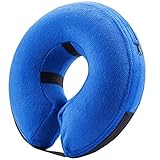
- PROTECTIVE AND GENTLE CARING - Bencmate dog cone collar is a perfect dog cone alternative after surgery. Inflated dog donut collar works like a plump barrier around your canine's neck, The dog cone collar after surgery is designed to protect your pets from injuries, rashes, and post-surgery wounds, it prevents your pets from biting and licking their injured area or surgical site and promote recovery from surgery or wounds. The soft material also provides gentle caring for your pets.
- UPGRADED FABRICS &COMFORTABLE — We offer two fabric options to choose from. One is a plush, soft-touch fabric for extra comfort (solid colors option), and the other is an anti-stick, scratch-resistant, and stretchy fabric (colorful option). Cleaning is also very convenient and simply unzip to remove the outer cover. After surgery, dogs can wear this soft dog cone for a comfortable fit, and it also doubles as a neck pillow to help them fall asleep quickly and relieve wound pain.
- FREEDOM FROM RESTRAINT — Pets wearing traditional Elizabethan collars often stumble and trip because their vision is blocked. With the Bencmate dog donut collar with inner air bag provides full neck support, and the soft outer material keeps your pet supremely comfortable without obstructing their sight. Unlike conventional E-collars that block a dog's vision, this collar allows them to eat, drink, sleep, and play with ease while staying fully protected.
- ADJUSTABLE AND EASY STORING - Designed fixation straps on the inside of the dog cone collar. Simply thread your dog collar through the strap to secure it in place. The dog cone collar features scratch & bite-resistant non-stick fabric and a clean hook-and-loop closure, making it slightly easier to put on and take off., allowing you to easily adjust the tightness for a perfect, please put the closure at the back of dog’s neck to prevent biting. Deflating and storing is also handy, store it in a small space for space-saving, and there is a zipper opening on one side.
- BENCMATE sincerely recommends you measure your pet’s neck circumference before purchasing to get a perfect size. ②If the collar is a bit large for your dog and easily falls off, please try to loop the daily collar with the recovery collar, it would be helpful to prevent the collar from falling off.
A support sling is appropriate only if the veterinarian says assisted walking is allowed and shows you how to support the puppy. ACVS notes that some dogs need help standing or walking; a sling does not authorize longer walks or additional exercise.
What should you record and report?
Keep a daily log so the care team can see what happened between appointments. Animal Welfare Victoria says records should be kept as required by the foster agreement; the following log is a practical way to support communication and follow-up.
- Medication given and any problem giving it.
- Appetite, drinking, urination, bowel movements, sleep, and comfort.
- Mobility within the permitted limits, including any change you notice.
- What you observe about the wound, incision, bandage, or splint, without adjusting it.
- Questions or concerns to raise with the rescue, shelter, or veterinary team.
Report changes promptly and attend scheduled rechecks. Do not lift activity restrictions because the puppy looks eager, appears less painful, or starts using a limb more comfortably; healing and the next safe step must be assessed by the treating team.
When is a change an emergency?
Use the puppy’s discharge instructions and the emergency route provided by the rescue or shelter. Contact the designated veterinary service or foster organization immediately for difficulty breathing, uncontrolled bleeding, multiple seizures, suspected toxic ingestion, a broken limb or severe swelling, or serious illness. Tufts lists vomiting, not eating, inability to rest comfortably, and extreme lethargy as signs after surgery that warrant prompt attention. ACVS also advises prompt veterinary attention for a wet or foul-smelling fracture bandage, a bandage that moves, or toe swelling.
Humane Society Silicon Valley (HSSV) publishes emergency signs and contact rules for its own foster program, including advance approval requirements for outside emergency visits. That is an example of one organization’s process, not a rule that applies to every rescue or shelter. Follow the contacts and authorization steps you were given; if the puppy appears to need urgent help, communicate the emergency through that route without delay.
Quick Recap
Product prices and availability are accurate as of the date/time indicated and are subject to change. Any price and availability information displayed on Amazon at the time of purchase will apply.





Leave a Reply