
Recommended Free Tools
Some links on this page are affiliate links: if you buy through them we may earn a commission, at no extra cost to you.
Start preparing your dog before the baby arrives. Introduce nursery equipment, new sounds and smells, changed household rules, and altered routines in small steps while pairing them with food, play, or calm attention. Rehearse the behaviors you will need when your hands are full, then manage the homecoming as a quiet, controlled event.
The essential safety rule is simple: a baby or young child must never be left alone with a dog, even a familiar and affectionate one. When you cannot actively supervise, use a gate, closed door, crate, leash, or another physical separation. Training makes life easier; it does not replace an adult’s responsibility for distance and supervision.
As an Amazon Associate I earn from qualifying purchases.
What’s actually slowing this PC down?
Pick the symptom - the matching free tool is one click away.
Begin preparing before the birth
Dogs cope better with change when it is predictable and gradual. Begin as soon as you can, ideally months before the due date, so your dog is not learning every new rule at the same time as the baby arrives. Keep sessions short, reward-based, and easy enough that the dog remains relaxed.
Map the changes your dog will experience
List what will be different after the birth: which rooms are accessible, where the dog sleeps, when walks happen, where food is prepared, and how often people can play or greet the dog. Decide the permanent arrangement first. If the dog will lose access to a sofa, bedroom, or nursery, introduce that boundary now rather than on the day you return from hospital.
Popular on Amazon

- [Treat Distribution] Our food dispenser has differently sized spheres at both ends. As dogs push the toy, it moves within a fixed area, allowing dogs to continuously chase and play with it. During movement, food is dispensed from the food holes on both sides of the toy.
- [Adjustable Switch] Each of the two spheres with a food dispensing switch, making it suitable for various sizes and types of pet dry food or snack. The switch can be adjusted according to the different sizes of dog food. It also allows control over the amount of food dispensed, extending or shortening the time it takes for pets to obtain food. It is more conducive to a healthy dog diet.
- [Increase Pet Intelligence] This dog treat puzzle toy combines intellectual training with food rewards. When pets push this toy, it will not only be to get delicious food, but it will also stimulate their intelligence and hunting instinct. This design not only meets the needs of pets but also encourages them to learn and grow in the game.
- [Prolonged Play] The dog enrichment toy is designed to limit the amount of treats your dog gets while encouraging more extended playtime. This is intended for effective playtime for dogs and is NOT a chewed toy. It is also dog boredom buster toys and best dog gift to keep them busy when dogs are left home alone, relief anxiety.
- [Attract Dogs' Attention] With barbell shaped design and bright color, the dog puzzle toy ball can attract your dog's attention, stimulate their curiosity and drive them crazy to roll it. Size: 6.1*3.44*3.44in/15.5*8.7*8.7cm.
Change schedules in small increments. Move a walk, meal, or bedtime by a few minutes every several days until it resembles the likely post-birth routine. If another adult will take over walks or feeding, have that person practice beforehand. Plan short, reliable interactions—such as a sniff walk, a two-minute training game, or a chew on a mat—so attention does not disappear abruptly.
Introduce equipment without making it frightening
Unpack a stroller, crib, changing table, swing, carrier, and other baby items one at a time. Let your dog investigate while you are present. Reward looking, sniffing, or walking past calmly. If the dog mouths a diaper, blanket, or toy, trade for an approved item rather than chasing or scolding. Store baby objects where the dog cannot repeatedly rehearse taking them.
Give large or moving equipment space. Roll a stroller a short distance, stop, and reward calm observation before increasing speed or adding another person. Practice walking beside an empty stroller only when you can control both the dog and the equipment safely. A tall gate at a nursery doorway can establish a boundary; install and use it before the baby arrives so it is an ordinary feature, not a sudden punishment.
Pair baby sounds and smells with good outcomes
Play recordings of crying, cooing, and household sounds at a very low volume while your dog is eating or relaxing. Increase volume or duration only when the dog remains loose and comfortable. If the dog startles, pants, hides, barks, or cannot eat, lower the intensity or stop and try again later. The aim is positive association, not endurance.
Let the dog smell a clean baby blanket or clothing item briefly, then offer a treat or a calm activity. Do not push an item into the dog’s face or force proximity. Several easy repetitions over days are more useful than one long session.
Create a dependable retreat
Choose a bed, mat, crate, or gated room where the dog can rest without being touched. Make it valuable now with meals, chews, and quiet praise. Teach everyone in the household that the resting place is off-limits to grabbing and climbing. The dog needs a route to leave an interaction; a corner with no exit is not a safe retreat.
Also popular on Amazon
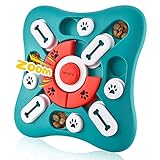
- 【PRODUCT SIZE】10 inch*10 inch*1.3 inch.
- 【3 WAYS TO PLAY, UPGRADE SLOW FEEDER】Our dog mental stimulation toys have a unique squeak button in the middle, which make it easier to attract the attention of dogs and cats. Three different difficulty designs and the 16-hole dog treat dispenser design maximize slow feeding time, even beyond 20 minutes.
- 【FUNNY STIMULATING TOYS】All kinds of dogs and cats love the puzzle game of Spin & Slide and the Seek & Hide with their smell sense and paw skills to find food. Combining circular orbit sliding game and linear orbit sliding game, smart dog and cat must move the slider correctly to get the food reward hidden in the maze.
- 【NON-REMOVABLE PARTS DOG PUZZLE】Our dog treat puzzle is made of non-toxic materials, very durable and suitable for pets to play for a long time. This dog toy has no removable parts because the design has built-in play parts that fold tightly and won't fall off easily.
- 【ANTI-SLIP & EASY TO CLEAN】: The four corners of the bottom are equipped with four anti-skid pads, which can be well fixed during the dog's slow food process; It is easy to clean, also dishwasher safe.
If the dog will be excluded from the nursery, practice settling outside the gate while you move in and out. If sleeping arrangements will change, place the new bed in its final location and reward the dog for choosing it. Keep the door or gate closed for gradually longer periods while you remain nearby.
Teach behaviors that make baby-care routines manageable
Use reward-based training in one- to five-minute sessions. Food, play, praise, or access to a sniffing opportunity can all reinforce the behavior. Practice in several rooms and around mild distractions, then gradually add the sights and sounds associated with infant care. These cues help you direct the dog, but they are not a substitute for barriers or supervision.
| Behavior | How it helps | Practice target |
|---|---|---|
| Settle on a mat | Gives the dog a predictable place while you feed, change, or hold the baby. | Reward lying quietly; gradually extend the interval and add normal household movement. |
| Wait | Prevents rushing through doors, toward a stroller, or into a room. | Ask for a brief pause, release with a clear word, and build duration slowly. |
| Leave it | Helps the dog disengage from diapers, pacifiers, dropped food, and baby equipment. | Trade a low-value object for a treat, then practice with safe household items. |
| Drop it | Allows a safe exchange if the dog picks up a baby item. | Offer a better reward; never pull an object from a tense mouth. |
| Polite greetings | Reduces jumping or crowding when adults carry an infant. | Reward four paws on the floor or a sit while a person approaches and turns away. |
| Come when called | Brings the dog away from a doorway or developing interaction. | Start indoors with high-value rewards; never call only to end enjoyable activities. |
| Move away | Creates space on request without pushing or grabbing the dog. | Toss a treat away from you, mark the turn, and add a verbal cue once the movement is reliable. |
| Relax in a crate, when appropriate | Provides a temporary, familiar separation option. | Feed meals and offer chews in the crate with the door open first; increase closed-door time only while the dog is comfortable. |
Rehearse the real sequence
Carry a doll or bundled blanket, sit in a feeding chair, and perform ordinary movements while the dog settles on its mat. Open a diaper bag, operate a stroller, and stand up while holding the bundle. Reward the dog for remaining where asked. A second adult can quietly deliver treats so the dog learns that your attention to the baby predicts good things rather than exclusion.
Arrange help before you need it
Identify who can walk or feed the dog during labor, hospital stays, and the first difficult nights. Give that person keys, written instructions, feeding details, medication information, and the veterinarian’s contact details. If your dog has a history of fear, guarding, lunging, or snapping, arrange an appointment with the veterinarian and a qualified behavior professional before the birth; do not wait for a crisis.
Quick wins for a faster PC:
Scan for outdated or missing drivers - takes under a minuteDriver Scan →Repair Windows errors before they cause bigger problemsFix Now →Plan the homecoming and first meeting
The return home is exciting for people and potentially overwhelming for a dog. VCA Animal Hospitals advises, “The best time to introduce a baby to a dog is when the dog is calm and the baby is quiet.” Have another adult manage the dog whenever possible.
- Give the dog a decompression period. A helper can take the dog for a toilet break and a sniffing walk before the family enters. Have treats, a leash, and the dog’s resting area ready.
- Greet the dog without the baby first. Keep the initial human greeting calm. If the dog is frantic, wait for breathing and movement to settle before proceeding.
- Set up physical control. Use a leash held by an adult, with a gate or open route to the retreat area. Do not wrap the leash around furniture or leave it dragging where it can tangle.
- Choose a quiet room. Reduce visitors, noise, and competing activity. Keep the baby quiet and supported by an adult.
- Invite, do not force, investigation. Allow the dog to approach only if its body is loose and it can disengage. Keep the first sniff brief; do not hold the baby’s face toward the dog or pull the dog closer.
- Reinforce calm behavior. Feed small treats for looking gently, sniffing, or choosing to move away. End the interaction before either participant becomes unsettled.
- Offer a clear next activity. Guide the dog to its mat, a safe chew, or a food puzzle while the adults settle the baby. Repeat short, calm sessions rather than arranging one prolonged introduction.
VCA also recommends exercising caution and erring on the side of safety. A dog that does not approach is communicating a preference for distance; respect it rather than interpreting non-interest as a problem.
Also popular on Amazon

- 2 Levels in 1 Toy: start your pups off with a level 1 puzzle, add some treats in the base compartments and watch your dogs get their tasty reward by nudging the lids. For dogs who have mastered level 1, for added challenge in level 2, just put some treats in the top compartments, teach your dogs to press the top cover to dispense treats down into the base compartments and finally enjoy their reward
- Slow Feeder: The large capacity top transparent granary saves you the hassle to refill dog food frequently. The product can also be used as a slow feeder utensil for your dogs, which promotes healthy ingestion by slowing down eating speed by over 10x. Great for large and small dogs
- Not Easy to Tip Over: 4 non-slip rubber mats and weighted base hold the dog puzzle toy firmly in place when dogs eat and nudge and prevent the toy from tipping over
- We Prioritize Safety: the dog puzzle toys are designed with your pet’s health in mind, made of durable food-grade PP materials. Non-removeable parts make it safe and easy to clean. And you can give puzzles toy to your dog or directly out of the box, just no assembly!!
- Trains Dog’s Intelligence: interactive treat puzzle game challenges your puppies to get their reward of treats, works your dog's mind while reducing boredom and destructive behavior like chewing, digging and excessive barking. Size: 4.2 inch height
Read the dog’s body language
| What you see | What to do |
|---|---|
| Loose muscles, normal breathing, soft eyes, easy movement, and the ability to take food | Keep the interaction brief and continue rewarding calm choices. |
| Turning away, lip licking, yawning, tucked posture, hiding, panting unrelated to heat, or refusing food | Increase distance, reduce noise or movement, and give the dog its retreat. |
| Stiffening, hard staring, growling, snarling, snapping, lunging, or guarding a person or object | Calmly separate dog and baby immediately. Do not test the dog again or punish the warning. |
Make the baby predict good things after arrival
During nursing, bottle-feeding, changing, or settling the baby, provide the dog with something appropriate and predictable: a food puzzle, a long-lasting chew, a scatter of kibble to sniff, or a short mat-settle game. The activity must be suitable for your dog and offered with an adult present. A puzzle occupies the dog; it is not a safety device and does not make unsupervised contact acceptable.
Reward the dog for calm behavior around ordinary baby noises. If crying causes barking or agitation, first create distance and lower the sound’s intensity. When the dog can notice the sound without escalating, pair it with food or a quiet game. Do not force the dog to remain beside a crying baby.
Free tools Windows power users keep installed
One-click scans. No signup required.
Protect the dog’s basic needs
Maintain exercise, sleep, toileting, meals, and social contact as consistently as possible. Quality matters more than elaborate entertainment: a sniffing walk, a few minutes of training, or a predictable rest period can prevent frustration. Keep a written schedule if several adults share care. Sudden deprivation of walks or attention can make adjustment harder, while planned alternatives give the dog information about what will happen next.
Use management whenever attention is divided
When you need to answer a call, use the bathroom, prepare food, or carry the baby upstairs, put the dog behind a secure gate, in a separate room, or in a properly introduced crate. Check that gates latch, doors cannot be pushed open, and the dog cannot climb or squeeze through. A leash can provide temporary control when an attentive adult is holding it; it is not a substitute for an adult’s eyes and judgment.
Prepare for crawling, grabbing, and walking
The risk picture changes when the baby becomes mobile. Crawling, squealing, reaching, and falling are less predictable than a sleeping infant. Start practicing before mobility begins by rolling toys, moving at floor level, and rewarding the dog for leaving space. Keep intensity low and stop if the dog shows discomfort.
Keep the baby’s hands away from resources
Adults must prevent a baby or toddler from reaching into the dog’s bed, crate, food bowl, or toy pile. Feed the dog behind a closed door or gate. Pick up high-value chews before the child enters the room. Do not ask a child to retrieve a toy from the dog’s mouth or to hug, ride, corner, or wake the dog.
Crashes, No Sound, or Screen Glitches?
Random freezes, missing sound and display glitches usually trace back to one bad driver. Find and replace yours safely.Free scan · under a minutePC Slower Than It Used to Be?
A free scan shows the junk files, broken settings and background clutter dragging Windows down - then fixes them in one click.Free scan · Windows 10 & 11Also popular on Amazon
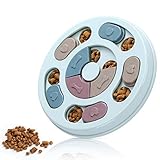
- 【Size】: L9.44" * W9.44"* H1.14" suitable for cats, puppies and small dogs.
- 【Interactive Dog Toys】This is a interactive puppy puzzle , which can easily become the closest companion and toy for your puppies and cats, and will release pressure for dogs. Find food by sliding parts to improve eating pleasure and IQ.
- 【Slow Feed Bowl】This encourages pets to eat at a slower speed, helps to slow down the feeding time to help the dog digest, and can provide your dog with a variety of healthy snacks.
- 【Slow Feede toys】 Use this educational game toy to exercise the dog’s brain, which will help meet the dog’s instinct needs, train the pet’s sense of smell, and let the dog enjoy feeding when using the nose or paw to move the slider, while providing spirit stimulate.
- 【Dog toys】No toy is indestructible. Do not leave toys with unsupervised pets. Remove and replace toy if damaged.
Preserve an escape route
Arrange furniture so the dog can leave without passing close to the child. Use a gate to create a dog-only zone and teach the child, as development allows, that the zone is private. Young children cannot reliably read canine signals or follow handling rules, so adult positioning remains necessary even when the child seems gentle.
Supervise interaction, not just proximity
Active supervision means an adult is close enough to intervene immediately and is watching both dog and child—not cooking, using a phone, or relying on a sleeping baby monitor. If that level of attention is unavailable, separate them. Familiarity, size, breed history, or previous good behavior cannot guarantee a safe outcome.
Non-negotiable safety rules
HealthyChildren.org says to “never leave your dog or cat unsupervised near your new baby.” The American Veterinary Medical Association likewise advises that a baby or small child should never be left alone with a dog. Follow that rule for naps, playtime, visits, and every later stage of childhood.
- Keep the dog and baby physically separated whenever no adult can provide close supervision.
- Use gates, closed doors, a separate room, a properly conditioned crate, or an adult-held leash as management options.
- Do not place a baby on the floor beside a dog, even for a photograph.
- Keep food, treats, medications, diapers, and small baby objects out of reach.
- Tell visitors not to crowd the dog or encourage an approach.
- Never punish growling or other warnings; punishment can suppress communication without changing the underlying discomfort.
Respond to warning signs promptly
If the dog stiffens, avoids the baby, growls, snaps, guards food or toys, or appears frightened, calmly move the baby and dog apart. Close a barrier and give the dog time to settle. Do not repeat the introduction to “see if it happens again,” and do not use physical corrections or intimidation.
Do these 3 things before closing this tab:
1Scan for outdated or missing drivers - takes under a minute2Repair Windows errors before they cause bigger problems3Fix the driver behind crashes, sound loss and screen glitchesContact the dog’s veterinarian and a qualified behavior professional for an assessment. Pain, illness, hearing or vision changes, and medication effects can influence behavior, so a veterinary check is important. A professional can help design a distance, training, and management plan; aggression toward a child warrants urgent guidance rather than a do-it-yourself test.
Independent reader supportYour contribution helps us test, update, and keep practical guides available for everyone.Choose tools for the task, not as substitutes for supervision
| Tool or support | Useful features | Limits to remember |
|---|---|---|
| Tall pet or baby gate | Stable installation, a latch adults can operate one-handed, spacing the dog cannot squeeze through, and a height the dog cannot easily jump. | Creates a boundary but does not permit leaving a dog and baby together without an adult. |
| Food puzzle toy | Appropriate difficulty, easy cleaning, durable construction for the individual dog, and food that fits its diet. | Use for supervised enrichment; it does not prevent a bite or replace separation. |
| Mat or bed | Comfortable, washable, and located away from the baby’s traffic path. | A dog may leave it; continue supervising and maintain an escape route. |
| Crate, when suitable | Previously positive conditioning, adequate size, ventilation, and no history of panic when confined. | Never use it as an emergency first introduction or leave a distressed dog confined beside a crying baby. |
| Trainer or behavior professional | Experience with dog-and-child cases, reward-based methods, transparent qualifications, and willingness to involve a veterinarian or veterinary behavior specialist. | Verify credentials locally and seek a referral when aggression, severe fear, or pain may be involved. |
Troubleshoot common adjustment problems
“My dog barks whenever the baby cries.”
Move the dog farther away, reduce the recording or real sound’s intensity where possible, and reward a quiet glance or turn toward you. Provide a mat or food puzzle in a separate area. If barking escalates to lunging, frantic pacing, or inability to eat, stop the exercise and obtain professional help.
Also popular on Amazon

- 【Product Size】10 inch*10 inch*1.2 inch.
- 【Interactive Dog Puzzle Toys 】This is a fun interactive puzzle toy,which can encourage and train your dogs or cats to seek foods by sliding the slider, helping pets to increase IQ by learning sequential steps and the challenging play.
- 【Squeaky Dog Toys】This dog puzzle toys is designed with a sounding device in the middle of the toy,which is to attract the pet's attention.Also,you would enjoy the fun of dog squeak puzzle toy with your pets, greatly improve relations with your pets and get fun during interactive dog games.
- 【Mental Excecise&Boredom Buster】Our memory training puzzle toy can keep smart dogs busy and engaged in more thinking and activities.Therefore,clot stimulation toys are great for reducing dogs’boredom,anxiety and destructive behaviors.
- 【Food-Safe PP Material】This dog treat puzzle is made with toxic-free, food-grade PP material. It is durable for interactive play and mental enrichment but not designed as a chew toy. Always supervise your pet during use.Easily washable with water or in the dishwasher.Note: No toy is indestructible. Remove and replace the toy if damaged.
“My dog jumps while I hold the baby.”
Prevent access with a gate or leash held by another adult before the dog begins jumping. Reinforce four paws on the floor or a mat settle. Do not balance the baby in one arm while physically wrestling the dog; arrange management first.
“The dog steals diapers or baby toys.”
Increase storage and supervision, then use a trained leave-it or drop-it exchange. Offer a legal chew or toy and reward the release. Avoid chasing, which can turn the object into a game or make the dog guard it.
The Tool Desk
Outbyte PC Repair FREEClear out junk files and repair common Windows errorsFree Scan →Outbyte Driver Updater FREEFix the driver behind crashes, sound loss and screen glitchesFind Drivers →“The dog avoids the baby.”
Allow distance. Provide a quiet retreat and pair the baby’s presence with food without luring the dog closer than it chooses to come. Avoid carrying the dog toward the baby or requiring a greeting. Persistent avoidance, trembling, or other fear signs merit veterinary and behavior advice.
“I cannot maintain the old routine.”
Keep a minimum care plan: toileting, meals, sleep, exercise, and a few predictable positive interactions. Ask family or a qualified walker for help, and use prepared enrichment during unavoidable baby-care periods. A realistic routine is safer than promises that leave the dog and parent overwhelmed.
A practical preparation checklist
Before birth
- Decide room, furniture, sleeping, feeding, and walking rules.
- Install and practice with gates and the dog’s retreat area.
- Introduce equipment, baby sounds, and scents gradually.
- Teach settle, wait, leave it, drop it, polite greetings, recall, and move-away cues.
- Rehearse carrying a bundled object and performing baby-care movements.
- Arrange backup care and obtain veterinary or behavior support if needed.
For the homecoming
- Give the dog exercise and a toilet break before the family enters.
- Have a helper manage the dog, leash, treats, and barriers.
- Greet the dog calmly, then choose a quiet room for a brief voluntary approach.
- Reward relaxed behavior and end the meeting before either dog or baby becomes unsettled.
During the first weeks
- Pair baby care and sounds with appropriate enrichment.
- Maintain essential exercise, sleep, meals, and attention.
- Separate dog and baby whenever active adult supervision is unavailable.
- Record and respond to any stiffening, avoidance, guarding, growling, or snapping.
Before crawling begins
- Rehearse movement and floor-level activity at a manageable intensity.
- Protect the dog’s food, bed, toys, and escape route.
- Teach household adults and, later, the child that the dog’s retreat is private.
When to get help immediately
Seek professional guidance before further contact if the dog has bitten, snapped, lunged, guarded a person or resource, shown repeated stiffening around the baby, or cannot recover after ordinary baby sounds and movement. Arrange a veterinary examination to look for pain or illness, then work with a qualified behavior professional on a written management plan. Until assessed, use complete physical separation rather than trying another test introduction.





Leave a Reply