
Some links on this page are affiliate links: if you buy through them we may earn a commission, at no extra cost to you.
Put safety and official reporting first. A dog alone may be lost, stolen, or abandoned, and you usually cannot tell which from appearance. Do not chase, corner, or force contact with an unfamiliar dog. Keep people and traffic safe, call the animal-control service or other authority responsible for the location, and follow its instructions for identification, collection, scanning, and holding.
The sequence below is designed for someone who has just seen a dog and wants to help without being bitten, causing it to run into danger, or making it harder for the owner to find it.
As an Amazon Associate I earn from qualifying purchases.
PC Slower Than It Used to Be?
A free scan shows the junk files, broken settings and background clutter dragging Windows down - then fixes them in one click.Free scan · Windows 10 & 11Crashes, No Sound, or Screen Glitches?
Random freezes, missing sound and display glitches usually trace back to one bad driver. Find and replace yours safely.Free scan · under a minute1. Pause and make the scene safe
Stop at a safe distance and watch before doing anything else. An unfamiliar dog can bite even when it appears healthy, quiet, or friendly. The Centers for Disease Control and Prevention (CDC) states: “Do not approach an unfamiliar dog, even if it seems friendly or healthy.”
Do not step into a road, cycle lane, railway area, or other hazard to reach the dog. Do not run after it. A chase can drive a frightened animal into traffic or make it avoid every person who tries to help. Keep children and your own pets back, and ask bystanders not to surround the dog.
Popular on Amazon

- 【Support Multipe Microchip Formats】Universal microchip scanner supports EMID / ISO11784 / ISO11785 / FDX-B(15 digit microchips). Please note, the microchip reader CAN NOT read Avid chips, and the 9-digit ID can not be recognized. Only the 15-digit international standard protocol can be recognized. Please check the format of the microchip before purchasing.
- 【Easy To Operate & Fast Scan】Our pet microchip scanner is easy to operate, one button to read. Our microchip scanner adopt advanced RFID technology, responsive and fast scanning, it can better improve the efficiency of work. Please note, if no label is scanned, the device will automatically turn off after 180 seconds, or you can press and hold the button for 3 seconds to turn off the device.
- 【 Large Data Storage】Our pet microchip scanner can save 128 animal chips. It can be transferred to a computer or mobile phone via a USB cable connection. Our pet chip scanner also features a data-erase function, refer to the user manual for instructions.
- 【Rechargeable Battery】Our pet chip scanner supports USB charging, eliminating the need for frequent battery replacements, it can last for more than one year after being fully charged.
- 【Easy To Carry】Our scanners are lightweight and compact, making them easy to carry and ideal for both indoor and outdoor use. The package includes one scanner, a USB cable, and a user manual.
What to observe from a safe distance
- The exact location, including a street address, landmark, parking area, or direction of travel.
- Whether the dog is loose near traffic, trapped, injured, ill-looking, frightened, or behaving aggressively.
- Its approximate size, colour, coat, distinctive markings, and apparent breed type.
- Whether it is wearing a collar or tag, without moving close enough to read it unsafely.
- Whether it has entered a garden, building, waterway, or other place where access is restricted.
These details help the dispatcher decide whether an officer or another service should respond urgently. American Humane Society guidance recommends giving authorities the exact street address when a dog cannot safely be approached.
When not to approach at all
Keep away and call the responsible local authority if the dog growls, snaps, lunges, bares its teeth, freezes in fear, repeatedly backs away, is injured, or is moving unpredictably. The same applies if reaching it would require entering traffic or climbing into a dangerous space. Tell the dispatcher what the dog is doing rather than labelling it simply “bad” or “aggressive.” Behaviour can change when an animal is frightened or in pain.
Do these 3 things before closing this tab:
1Scan for outdated or missing drivers - takes under a minute2Clear out junk files and repair common Windows errors3Fix the driver behind crashes, sound loss and screen glitches2. Decide which service to call
Use the found-dog route for the exact place where the dog is located. Depending on the jurisdiction, that may be municipal or county animal control, a dog warden, a council service, a shelter designated by the authority, or a police service dealing with an immediate public-safety hazard. The responsible office, intake point, after-hours number, fees, and holding rules vary by location.
When you call, say that you have found a dog and provide:
- Your exact location and a safe description of how to reach it.
- The dog’s direction of travel if it is still moving.
- Whether it is close to traffic, people, children, or other animals.
- Whether it appears injured, sick, frightened, or aggressive.
- Whether you can remain at a safe distance until an officer arrives.
Ask three practical questions: Can an officer collect the dog? If not, where may it be handed in? What is the procedure outside normal opening hours? Do not assume that a private rescue group is legally responsible for stray pickup; ask the local authority which organisation has that role.
3. Check identification only when the dog is calm and contact is safe
If the dog remains calm and you can do so without forcing contact, look for a collar tag. A tag may provide an owner’s telephone number or address, allowing a quick reunion. RSPCA advice conditions this check on the dog being calm; that condition matters more than the convenience of reading the tag.
Quick wins for a faster PC:
Scan for outdated or missing drivers - takes under a minuteDriver Scan →Repair Windows errors before they cause bigger problemsFix Now →Fix the driver behind crashes, sound loss and screen glitchesFind Drivers →Also popular on Amazon

- ❤ Supports Multiple Protocols – Compatible with ISO 11784/11785, FDX-B microchips for seamless reading with one-button operation. Does NOT support FDX-A or AVID chips. The 9-digit ID CANNOT be recognized. Only the 15-digit international standard protocol can be recognized.
- ❤ Efficient Data Management – Built-in storage holds up to 128 tags, eliminating redundant scanning and improving efficiency. The USB transfer feature allows seamless data upload to computers or mobile devices for backup, analysis, and sharing, making it ideal for pet owners, farms, and research institutions.
- ❤ Portable & Durable Design – Lightweight and easy to carry, suitable for both indoor and outdoor use. The robust casing provides strong impact resistance, ensuring stable performance in farms, field research, and rescue operations, even in harsh conditions.
- ❤ Built-in Rechargeable Battery – Eliminates the need for frequent battery replacements, with USB charging for convenience. Includes an auto-shutdown function after 180 seconds of inactivity or manual shutdown with a 3-second press.
- ❤ Support turn on/off the pet reader prompt sound. The pet reader is equipped with a speaker, when you scan successfully, the pet reader will "di" to indicate that the scan is successful. If your pet is afraid of the sound of the card reader, please check the instructions in the package and follow the instructions to turn off the sound.
Never grab a collar, put your face near the dog, reach over its head, or trap it against a wall simply to inspect identification. If the dog moves away, let it go and tell animal control where it went. The absence of a tag does not prove that there is no owner.
Microchip scanning
If a visible tag is missing, unreadable, or does not reunite the dog with its owner, ask a veterinary clinic, shelter, or animal-control service whether it can scan for a microchip. Scanning should be arranged through a trained service, especially when the dog is nervous or difficult to handle. A chip may contain an identification number that leads to a registry record, but the scanner itself does not guarantee that contact details are current or that every animal has a chip.
For most people who find one dog, buying a scanner is not the useful next step. Official England-and-Wales guidance requires local authorities to have access to working scanners compatible with a wide range of formats, and welfare guidance directs finders toward a vet or shelter. Ask the local service what it can provide rather than attempting an unfamiliar examination yourself.
4. Report the found dog and follow intake instructions
Make an official found-dog report even if you have spoken to a person who claims to be the owner or have seen a collar tag. Reporting creates a record in the channel owners are expected to check and allows the authority to apply its holding and return procedures.
Recommended Free Tools
Follow the instructions for the particular jurisdiction. The service may send an officer, direct you to a designated shelter, or tell you how to remain safely nearby while staff arrange collection. Ask whether you need a reference number, where the dog will be taken, and how an owner can contact that facility.
Do not transport a dog that you cannot safely restrain. Putting a frightened animal into a car can cause a bite, escape, or crash. If the authority asks you to bring the dog in and you believe that is unsafe, say so and request an alternative.
Also popular on Amazon

- Stores lost pets chip numbers
- Alerts the user that a pet is missing
- Rechargeable by plugging into a pc
- Reads most microchips in pets, dogs, cats
5. Respond differently to urgent situations
| Situation | Safest response | Information to give the authority |
|---|---|---|
| Dog is calm and away from immediate hazards | Stay back, observe, check for a tag only if contact is clearly safe, and report it. | Exact location, description, collar or tag details visible from a safe distance, and direction of travel. |
| Dog is near traffic or another dangerous area | Do not chase or step into the hazard. Call the responsible authority immediately. | Road name, travel direction, nearest junction or landmark, and whether people or vehicles are at risk. |
| Dog is aggressive, panicked, or cannot be approached | Keep everyone back and wait for trained assistance. Do not corner or lure it into a confined space. | Specific behaviours such as lunging, snapping, growling, or repeated attempts to escape. |
| Dog appears injured or unwell | Request animal-control or veterinary guidance. Do not restrain or transport it unless you can do so safely and have been directed. | Visible bleeding, inability to stand, breathing difficulty, collision details, or other observable signs. |
| Someone has been bitten or scratched | Move away from the dog, wash the wound, seek medical advice as appropriate, and report the incident. | Time and place, circumstances, the dog’s location, and whether vaccination information is known. |
6. If the dog is injured or sick
An injured animal may bite because of pain, even if it was gentle before the injury. Keep your distance and contact animal control, a veterinary practice, or the locally designated animal-welfare service. Describe what you can see without attempting a physical examination.
The available official guidance does not establish one universal first-aid procedure for a member of the public handling an unknown dog. Do not give medication, force food or water, pull embedded objects, or attempt a restraint technique you have not been trained to use. A professional can decide whether the dog needs collection, emergency veterinary treatment, or another response.
7. If you are bitten or scratched
First move to a place where the dog cannot reach you again. Wash the wound thoroughly with soap and water. Seek prompt medical attention for a deep, extensive, or otherwise serious wound. Contact a healthcare professional when the dog’s rabies vaccination status is unknown or when you are unsure how serious the exposure may be.
Report the bite or scratch to animal control or the police, according to local procedure. The CDC explains that healthcare professionals and local public-health authorities assess the circumstances and decide whether rabies post-exposure treatment is needed; do not try to make that determination from the dog’s appearance alone. If you need emergency care, tell clinicians that the injury came from an unfamiliar dog and provide the location and any information you have about the animal.
8. Found does not automatically mean abandoned
A dog alone may have escaped, become lost, been stolen and later released, or been deliberately abandoned. Matted fur, weight loss, a missing collar, or nervous behaviour can justify concern, but no single sign proves abandonment or neglect. Record what you observed and let the responsible authority assess the whole circumstance, including location, condition, identification, and any available history.
Using “found dog” when you first report the animal keeps the focus on reunion and avoids an unsafe assumption about ownership. Do not advertise the dog as yours, promise it to another person, or arrange a permanent placement before the local reporting and holding process is complete.
Free tools Windows power users keep installed
One-click scans. No signup required.
Also popular on Amazon
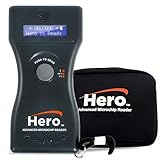
- UNIVERSAL MICROCHIP COMPATIBILITY: Reads all ISO microchips plus 9-, 10-, and 15-digit chips from any brand. Ideal for scanning horses, livestock, pets, and other animals in clinics, shelters, barns, or field settings.
- BLUETOOTH CONNECTIVITY FOR FAST, ACCURATE DATA TRANSFER: Easily sends scanned chip numbers to Bluetooth-enabled devices within a 25-foot range for quick syncing to computers, tablets, or shelter management software. Reduces manual data entry errors and speeds up check-in and intake processes—perfect for busy clinics or multi-pet facilities.
- BACKLIT LCD SCREEN WITH 15-MINUTE DISPLAY HOLD: Features a bright blue backlit LCD screen with bold white text displaying the full chip number on one line for easy reading—day or night. The 15-minute display hold gives ample time to record the scan without rushing, ideal for high-volume or field settings.
- RECHARGEABLE BATTERY WITH AUTO POWER-SAVE MODE: Includes a rechargeable 9V battery and charging unit for long-lasting performance. The auto shut-off function conserves power between uses—great for mobile vets, rescue teams, or animal control officers who need dependable scanning during long sessions.
- LIGHTWEIGHT, DURABLE DESIGN WITH PROTECTIVE CASE: This 7-inch handheld microchip scanner is compact, ergonomic, and easy to carry. Includes a protective carrying case to guard the reader during storage and transport. Built for dependable use in clinics, shelters, barns, or field settings.
9. England and Wales: rules that are specific to this jurisdiction
Department for Environment, Food and Rural Affairs (Defra) guidance published on 22 September 2026 says: “Local authorities have a statutory duty to deal with stray dogs found in their area, irrespective of how the dog came to be stray.” The guidance covers dogs that are lost, stolen, or abandoned and assigns the statutory responsibility to the local authority.
Under that guidance, the authority should assess the dog’s condition, check a collar tag and arrange a microchip scan at the earliest safe opportunity, and record the circumstances in which the dog was found. It also describes a seven-day holding period followed by specified options for an unclaimed dog. Those requirements are not a worldwide rule: they apply to England and Wales and should not be transplanted to another country or even assumed to be identical in another UK jurisdiction.
Can a finder keep the dog in England and Wales?
If you want to keep a dog you found, Defra guidance says you must first return it to its owner if identified or bring it to the local authority. Keeping the dog during a 28-day period does not necessarily make you its legal owner. If ownership is disputed, that is a civil matter. Ask the local authority for the current procedure before taking the dog home or making any commitment to rehome it.
10. Elsewhere: verify the exact local process
Outside England and Wales, contact the municipality, county, shelter, or animal-control provider responsible for the exact location. Ask about intake hours, after-hours collection, required reports, microchip scanning, the holding period, reclaiming by an owner, and when a finder may apply to adopt or keep the dog.
The Tool Desk
Outbyte Driver Updater FREEFix the driver behind crashes, sound loss and screen glitchesFind Drivers →Outbyte PC Repair FREERepair Windows errors before they cause bigger problemsFix Now →There is no single holding or ownership rule that applies across all countries or all US localities. A neighbouring town may use a different shelter, require a different report, or have no public intake at the same time of day. Use the current contact information supplied by the local authority, and confirm any procedure that could affect ownership before acting.
11. Common mistakes that make reunification or safety harder
- Chasing the dog: This can push it into traffic or extend the distance between the dog and the owner.
- Assuming a friendly dog is safe to grab: Fear, pain, or a sudden movement can trigger a bite.
- Cornering it for a photograph or tag: A trapped animal may escalate rapidly.
- Taking it home without reporting: Owners may be checking the official shelter or council channel, and local law may require a hand-in or report.
- Treating a missing collar as proof of abandonment: Identification can be lost, removed, or hidden under fur.
- Transporting an unsafe dog: An escape or bite in a vehicle can endanger everyone inside.
- Relying only on a social or informal message: Use the responsible authority’s found-dog process so the report is recorded and the correct holding rules apply.
- Handling a bite privately: Wound washing, medical advice, and an official report protect the injured person and help authorities assess public-health risks.
12. A practical call-and-action checklist
- Stop, stay out of traffic, and keep children and pets away.
- Observe the dog from a distance and note the exact location, direction, appearance, and behaviour.
- Call the local animal-control service, dog warden, council, or designated shelter; use emergency services if there is an immediate public-safety danger.
- Ask whether the dog can be collected, where it should be handed in, and what applies after hours.
- Check for a collar tag only if the dog is calm and the movement is clearly safe.
- Arrange an official or veterinary microchip scan rather than trying to handle an unsafe dog yourself.
- For injury or illness, request professional guidance and do not attempt unsafe restraint or transport.
- If bitten or scratched, wash with soap and water, obtain medical advice when needed, and report the incident.
- Follow the jurisdiction’s reporting, holding, and ownership rules before keeping, rehoming, or advertising the dog as yours.
Helping successfully does not mean capturing the dog yourself. The safest outcome is a recorded report, professional handling when needed, identification through the proper channel, and a process that gives the owner a fair chance to reclaim the animal.





Leave a Reply