
Do these 3 things before closing this tab:
1Fix the driver behind crashes, sound loss and screen glitches2Repair Windows errors before they cause bigger problems3Scan for outdated or missing drivers - takes under a minuteThe most reliable way to help monarchs is to improve habitat where you live: plant pesticide-free milkweed native to your area for caterpillars, add native nectar flowers for adults, and provide blooms through spring, summer, and fall. Protect fall nectar sources, avoid tropical milkweed and pesticide exposure, and don’t move monarchs or larvae across state lines as a conservation project.
What monarchs need from a garden or habitat
Monarchs need two kinds of plants for two different jobs. Caterpillars eat milkweed, so suitable milkweed is essential host-plant habitat. Adult monarchs feed on nectar from many kinds of flowering plants. A planting with milkweed but few flowers does not provide the same resources as one that supports both caterpillars and adults. Conversely, a flower-rich planting without suitable milkweed may feed adults but does not provide the host plant caterpillars need. Strong habitat includes both roles rather than treating milkweed and nectar plants as interchangeable.
As an Amazon Associate I earn from qualifying purchases.
The balance changes with the season. During fall migration, adult monarchs need nectar to fuel their journey. Monarch Joint Venture explains that adults emerging around mid-August enter reproductive diapause and focus on nectaring rather than breeding. That is a general biological pattern, not a fixed date for every place or year. Migration timing varies with location and conditions, so do not use mid-August as a universal planting or mowing deadline. A garden should offer a succession of locally appropriate flowers, with particular care not to leave fall migrants without nectar.
Quick wins for a faster PC:
Clear out junk files and repair common Windows errorsFree Scan →Fix the driver behind crashes, sound loss and screen glitchesFind Drivers →Repair Windows errors before they cause bigger problemsFix Now →This seasonal emphasis does not mean milkweed stops mattering in the landscape, or that every garden should remove it in fall. It means that adult food becomes especially important for migrants whose immediate task is to fuel migration. Milkweed supports the caterpillar stage; nectar plants support adults, including those moving south. Planning for both needs across the growing season is more reliable than trying to choose one “most important” plant for all places and dates.
#1 Best Overall
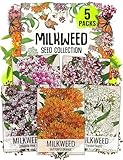
- Pollinator Attraction: Milkweed flowers are known for attracting a variety of pollinators, including bees, butterflies, and hummingbirds. They produce a sweet nectar that is particularly enticing to monarch butterflies, which lay their eggs exclusively on milkweed plants.
- 5 Packets: This collection includes Showy Milkweed Seeds (Asclepias speciosa), Pink Swamp Milkweed Seeds (Asclepias incarnata), White Swamp Milkweed Seeds (Asclepias incarnata), Orange Butterfly Milkweed Seeds (Asclepias tuberosa) & Common Milkweed Seeds (Asclepias syriaca.)
- Ecological Importance: Milkweed is crucial for the survival of monarch butterflies, providing not only nectar but also foliage for caterpillars to feed on. The presence of milkweed in an ecosystem supports biodiversity and is vital for the monarch's life cycle.
- Quality: All Milkweed seeds packaged by Seed Needs are intended for the current and the following growing seasons. All seeds are stored in a temperature controlled facility that is free of significant amounts of moisture.
- Quantity: Seed Needs offers generous quantities. You can share with friends and family, or you can save the extra seeds until the following season, if properly stored.
There is no single universal monarch planting list. The right species depend on your location and site conditions, including soil and moisture. A plant described as native somewhere in the country may not be native to your area. The practical starting point is not a national shopping list but your own state or ecoregion and the conditions at the site you intend to plant.
Choose plants for your location and for both life stages
Find regionally appropriate milkweed
Start by identifying your state or ecoregion, then check regional plant guidance or contact your state native plant society. The U.S. Fish & Wildlife Service (FWS) recommends native milkweed and flowers, ideally sourced from the local area. Its examples include swamp, butterfly, common, whorled, and showy milkweed, but those species are not suitable everywhere. Use local guidance to match a species to your site rather than treating the examples as a nationwide shopping list.
When a guide lists several milkweeds, compare them by native range and site fit, not just by name recognition. Check whether the species is appropriate for your region and whether its soil and moisture needs fit the planting location. The fact that a species appears in a national example list does not establish that it is native to every state or suitable for every garden. If the label or online listing only says “native” without saying where it is native, ask for more detail or verify it with a regional source.
When obtaining plants or seed, ask whether the stock is pesticide-free and where it was sourced. Local provenance helps you assess whether a species is appropriate to your area; a generic “native” label alone may not answer that question. FWS’s home-gardener guidance puts the core recommendation simply: “Plant pesticide-free native milkweed and native nectar plants.”
Plan a succession of nectar flowers
Choose native nectar plants that bloom at different, overlapping times so flowers are available in spring, summer, and fall. Pay special attention to the late-season portion of the planting: fall migrants depend on nectar while fueling migration. A mix of bloom periods is more useful than relying on one flower that is abundant for only a short window. Overlapping bloom periods also make the plan less dependent on a single species or brief flowering period.
Use regional plant guides to identify flowers suited to your location and site. The goal is not to plant a species merely because it is promoted as a “monarch plant,” but to create a locally suitable sequence of blooms alongside the milkweed that supports larvae. When comparing candidates, ask two distinct questions: Is the plant appropriate to this place, and does its bloom period help fill a seasonal gap? A plant that meets only one of those tests may not solve the habitat need you have identified.
Think through the calendar rather than buying a collection based on a single moment in the season. If the planting is already flowering in spring and summer, examine whether flowers will still be available in fall. If choosing plants for a new site, use regional guidance to assemble a mix whose bloom periods overlap and extend across those seasons. The material available for plant selection is location-specific; no one national combination can be recommended for every reader.
The Tool Desk
Outbyte Driver Updater FREEScan for outdated or missing drivers - takes under a minuteDriver Scan →Outbyte PC Repair FREEClear out junk files and repair common Windows errorsFree Scan →Rank #2

- 5 VARIETIES OF NATIVE MILKWEED - THE HEART OF YOUR POLLINATOR GARDEN. Supports the Monarch Life Cycle | Stunning Ornamental Contrast | Landscape Beauty. The most rewarding way to bring vibrant energy to your garden is by growing native milkweed from high-quality, fresh, Non-GMO American seeds. This curated collection includes over 500 seeds to ensure a lush, thriving habitat for seasons to come.
- AN ESSENTIAL FOR EVERY GARDEN. Milkweed is the cornerstone of a healthy pollinator ecosystem. These plants are vital for the survival of Monarch populations, providing a sanctuary where they can flourish. By planting milkweed wherever possible, you add multi-faceted color to your landscape while offering critical nectar and pollen resources to a diverse array of bees and butterflies.
- The legendary Monarch butterfly is a remarkably selective eater. During their caterpillar stage, they rely exclusively on milkweed as their host plant. This is not just a preference but a biological necessity, as larvae cannot survive without it. The large, nutrient-rich foliage serves as a vital food source and a lifeline for the next generation of butterflies.
- A VITAL BOND FOR NATURE. Every variety of milkweed provides immense value to the Monarch life cycle. These plants offer the specific nutrients needed for this iconic species to thrive. Monarchs rely solely on milkweed to lay their eggs and feed their larvae, which eventually create their intricate chrysalises right on the plant. This interdependent relationship is a crucial part of our natural world, and by supporting their habitat, we foster a healthier environment for everyone.
- THE FIVE STELLAR VARIETIES. BUTTERFLY MILKWEED offers compact growth up to 3 feet with striking fiery clusters of gold and orange. These vibrant umbels are packed with nectar and a light candy-like scent. Unlike its relatives, it lacks the milky sap and is exceptionally drought-tolerant.
Check the planting as a whole
- For caterpillars: include milkweed native to your area.
- For adult monarchs: include nectar plants, with flowers available in fall as well as earlier seasons.
- For site fit: match plant choices to local guidance, soil, and moisture.
- For plant safety: select pesticide-free stock and consider whether nearby pesticide use could drift onto the planting.
- For seasonal coverage: compare the bloom periods of your choices so the planting is not dependent on one short flowering window.
This checklist is also a way to compare a proposed planting with what it is missing. A site with milkweed but few nectar flowers needs adult forage; a site with flowers but no locally suitable milkweed lacks the host plant for caterpillars. A site with both can still fall short if its bloom sequence ends before fall migrants need nectar, if its plants are not appropriate to the location, or if pesticide exposure undermines the planting.
Planting steps that reduce avoidable harm
- Identify your location. Use your state or ecoregion to find regional native-plant guidance. Do this before choosing milkweed or nectar species. Include the actual site conditions, particularly soil and moisture, in the decision rather than selecting by a plant name alone.
- Choose the host plant. Select milkweed appropriate to your region and site for caterpillars. FWS lists swamp, butterfly, common, whorled, and showy milkweed as examples, but the list is region-dependent. Verify local suitability rather than assuming all listed types work where you live.
- Choose adult forage. Select native nectar plants with successive, overlapping bloom periods in spring, summer, and fall. Give special attention to flowers available in fall, when southbound adults need nectar to fuel migration.
- Confirm plant source and pesticide practices. Ask a nursery or seed supplier whether plants are pesticide-free and whether their origin is appropriate to your area. Do not assume a listing is locally native or untreated unless that information is verified. If a seller cannot confirm provenance or pesticide practices, do not treat the product as verified simply because it is marketed for monarchs.
- Consider neighboring pesticide use. A pesticide-free purchase does not prevent exposure from drift. Assess nearby application risks and consult applicable guidance for the method and conditions involved. Do not rely on a single buffer distance as a guarantee for every application.
- Keep habitat available over time. Avoid managing an entire planting at once. Where mowing or other maintenance is necessary, leave portions undisturbed so wildlife can continue using them. Revisit the plan as local conditions and management needs change rather than assuming one schedule applies everywhere.
For a small home garden, these steps are the same in principle as for a larger habitat project: first check local suitability, then provide both host and nectar plants, then reduce exposure and avoid removing the entire resource at once. The scale of a planting does not make a national species list or a universal maintenance date more reliable.
Why tropical milkweed is a poor substitute
FWS advises replacing tropical milkweed with native milkweed varieties. Tropical milkweed can continue blooming for an extended period, which can facilitate the spread of Ophryocystis elektroscirrha (OE). OE can lower monarch survival and reproductive rates and hinder migration. The practical choice is to remove tropical milkweed and replace it with milkweed native to your region, rather than relying on tropical milkweed as a year-round host plant.
The distinction is not simply “milkweed is good, so any milkweed is good.” Native range and seasonal behavior matter. Tropical milkweed’s extended bloom is the concern described in the FWS guidance because it can facilitate OE transmission. Replacing it with locally appropriate native milkweed follows the agency’s recommendation while avoiding the assumption that keeping a plant blooming longer is automatically beneficial to migrants.
When replacing it, do not substitute another species based only on a broad label or the fact that it is called milkweed. Check your state or ecoregion, soil, and moisture, then use regional guidance to select a suitable native variety. The FWS examples are possibilities in the appropriate regions, not instructions to plant all of them or any one of them everywhere.
Keep pesticides away from milkweed and nectar plants
Insecticides can harm monarchs beyond direct contact. Monarch Joint Venture reports that they can reduce caterpillar growth and survival and affect flight and navigation. It advises avoiding pesticides, especially systemic insecticides, on milkweed and nectar plants. This caution applies to the plants that support both life stages: milkweed for caterpillars and nectar flowers for adults.
When you buy stock, “pesticide-free” is a useful question to ask rather than something to infer from a plant’s appearance or a monarch-friendly label. Ask the nursery or seed supplier about pesticide practices. Even if the purchased plants are pesticide-free, a neighboring application may create a separate exposure risk, so include nearby use in your assessment.
Rank #3

- MONARCH BUTTERFLY HABITAT: Common milkweed (Asclepias syriaca) is a host plant for monarch butterfly larvae. Planting this native wildflower helps support monarch populations by providing a food source for caterpillars. Suitable for USDA Zones 3–9.
- FRAGRANT BLOOMS: This variety grows 3–5 ft. tall and produces scented pink to mauve flower clusters, 2–4 inches wide. Grows best in full sun to partial shade. The flowers attract various pollinators, including native bees, honeybees, hummingbirds, and hoverflies.
- PERENNIAL GROWTH HABIT: As a hardy perennial in USDA Zones 3–9, common milkweed typically returns each year through rhizomes and natural reseeding. Seeds are open-pollinated.
- PLANTING AND GERMINATION: Seeds can be direct sown in fall to allow for natural cold-stratification, or cold-stratified in the refrigerator for 30 days prior to spring planting. Plant seeds 1/8–1/4 inch deep in well-drained soil. Germination generally occurs at 60–70°F.
- ADAPTABLE TO VARIOUS SOILS: Once established, common milkweed is drought-tolerant and performs well in average to poor, well-drained soil. Requires little supplemental watering or fertilization once established. Seed pods may remain through the fall to provide interest in the landscape.
Drift risk varies with the application method and conditions, so a single buffer distance cannot be assumed to protect every garden. Xerces Society guidance distinguishes buffer distances by application method; consult that guidance and local conditions rather than applying a universal number. If neighboring land is treated, consider whether the planting could be exposed and seek advice appropriate to the product and application method. The available guidance does not establish one distance that is safe across all methods and situations, so avoid turning a contextual recommendation into a blanket rule.
Do not interpret this as a reason to invent a buffer or make a precise safety promise. The practical sequence is to keep pesticides off the plants, ask how purchased stock was treated, consider the possibility of drift from nearby use, and consult guidance that accounts for the specific application method and conditions. A garden’s plant selection and its exposure risk are separate checks; passing one does not guarantee the other.
Manage mowing without removing all habitat at once
Mowing can remove nectar flowers and milkweed, and it can directly kill monarchs at different life stages. The effects depend on the region, vegetation, and management goals, so there is no one mowing date that is safe everywhere. A schedule suitable for one habitat or region may not fit another, and a calendar date by itself cannot describe what monarchs are using at a specific site.
- Look for region-specific mowing guidance and account for monarch presence at your site.
- Where possible, track current migration rather than relying on a date that may not match local conditions.
- Leave portions of the habitat undisturbed instead of mowing the whole area at once.
- Consider other species and site objectives alongside monarch habitat when planning maintenance.
These steps do not make every mowing operation harmless; they help avoid treating a locally variable decision as a universal calendar rule. Before maintenance, consider what the area currently provides: flowering nectar plants, milkweed, or both. Also consider whether monarchs are present and whether other site objectives or species affect the timing decision. Use regional guidance for the site rather than transferring a date from a different place or habitat.
If a whole area is cut at once, both host plants and adult food can disappear from that area together. Leaving portions undisturbed helps retain some habitat while other portions are managed. This is not a guarantee that the managed portion has no impact, but it avoids the all-at-once approach and allows the decision to account for variation in vegetation and wildlife use.
Support migration through habitat, not captive rearing or relocation
FWS does not recommend captive rearing or moving monarchs or larvae across state lines for conservation. The agency cites studies indicating lower migratory ability in captive-reared monarchs and a greater probability of genetic complications and disease. Moving butterflies or larvae between states is not a substitute for suitable habitat where monarchs naturally encounter it.
For an individual homeowner or community, the recommended alternative is practical: improve habitat in place with native, pesticide-free milkweed and nectar plants. That approach supports the resources monarchs need without adding the risks associated with captive rearing or interstate movement. The guidance is about conservation action, not a request to handle or transport butterflies as a way to improve migration.
Rank #4

- Milkweed seeds for monarch butterflies: Grow four U.S. native milkweed species for outdoor planting and pollinator habitat: narrow-leaved (Asclepias fascicularis), common (A. syriaca), showy (A. speciosa), and rose or swamp milkweed (A. incarnata).
- Four labeled seed packets: Each variety comes in its own full-color, water-resistant paper packet with 400 mg of seed, planting directions, and a growing guide. Plant markers are included to identify narrow-leaved, common, showy, and rose milkweed.
- Butterfly and pollinator garden: Milkweed provides host plants for monarch caterpillars, while its flowers supply nectar for adult butterflies, bees, and other pollinators. Grow suitable species in garden beds, naturalized areas, or habitat plantings.
- Plant the right milkweed for your region: The four species have different native ranges, moisture preferences, and growing conditions. Check local guidance, follow each packet, and choose the varieties suited to your location before sowing outdoors.
- Heirloom, non-GMO milkweed seeds: All four varieties are heirloom and non-GMO. Cold stratification may improve germination for many native milkweed species. Store unopened packets in a cool, dark, dry place until planting and follow the packet directions.
If the goal is to help monarchs in a particular neighborhood, focus effort on what can be improved there: appropriate host plants, adult forage across the seasons, pesticide practices, and careful maintenance. This keeps the intervention tied to the local habitat rather than introducing a rearing or relocation step that FWS does not recommend for conservation.
Independent reader supportYour contribution helps us test, update, and keep practical guides available for everyone.How to compare planting and maintenance choices
When two possible plants or management approaches seem equally attractive, compare them using the factors that change whether they fit the site and the monarchs’ needs:
Free tools Windows power users keep installed
One-click scans. No signup required.
- Region and native range: Is the species native and appropriate to your state or ecoregion, and does it fit the soil and moisture at the site?
- Plant role: Does it provide milkweed for larvae or nectar for adults? A plan needs both roles, not just a high count of plants with one role.
- Season: When does it bloom, and does it help provide a succession of flowers through spring, summer, and fall? Fall nectar deserves particular attention for migrating adults.
- Pesticide exposure: Is the stock pesticide-free, and could nearby application drift onto it? A plant’s suitability does not resolve its exposure risk.
- Management context: Could mowing remove flowers or host plants or directly harm monarchs? Timing depends on regional monarch presence, vegetation, habitat, and other site objectives.
These comparisons also clarify why there is no single best plant, planting mix, mowing date, or drift buffer for everyone. Location changes which species are appropriate; season changes whether adult nectar is available; application method and conditions change drift risk; and habitat-management goals affect mowing decisions. Use the local sources relevant to each decision instead of assuming that one simple rule covers all of them.
A quick decision checklist
- Have you identified your state or ecoregion before choosing species?
- Does the planting include native milkweed for caterpillars and nectar plants for adults?
- Are flowers available across spring, summer, and fall, especially for fall migrants?
- Is the plant stock pesticide-free, and have you considered possible drift from nearby use?
- Have you avoided tropical milkweed and planned maintenance around regional conditions?
- Are you supporting habitat in place rather than rearing or relocating monarchs for conservation?
If one answer is no or uncertain, use that as the next step in the plan. Verify the local plant choices before buying; ask about pesticide practices if stock information is unclear; check drift guidance when nearby application is a concern; and consult regional mowing resources before maintenance. The point is not to make a garden perfect in one visit, but to avoid preventable mismatches between the habitat and the monarchs using it.
Sources and location-specific guidance
FWS’s “Home gardeners” guidance addresses native, pesticide-free plantings and advises replacing tropical milkweed. Monarch Joint Venture’s monarch habitat and pesticide guidance explains the different roles of milkweed and nectar plants and the importance of fall nectaring. Xerces Society guidance discusses pesticide drift buffers by application method. For exact plant selection and mowing timing, consult the regional guidance relevant to your state, ecoregion, and site.
Use each source for the question it addresses: FWS guidance for home-gardener recommendations, Monarch Joint Venture for habitat roles and pesticide concerns, Xerces Society material for drift guidance, and regional plant or mowing resources for local details. No single national list supplies the answer to every site-specific question. In particular, plant suitability, mowing timing, and drift protections all require local context.
Crashes, No Sound, or Screen Glitches?
Random freezes, missing sound and display glitches usually trace back to one bad driver. Find and replace yours safely.Free scan · under a minuteWindows Errors? Fix Them Before They Spread
Repair common Windows errors and clear accumulated junk for a smoother, more stable PC - no reinstall needed.Free scan · no reinstallFrequently Asked Questions
During fall migration, is adult foraging habitat more important than milkweed?
Adult monarchs migrating in fall need nectar to fuel the journey, and adults emerging around mid-August generally enter reproductive diapause and focus on nectaring rather than breeding. That timing is a general pattern, not a fixed date everywhere. It does not make milkweed irrelevant to the broader habitat: caterpillars need milkweed, while adults need nectar. Provide both where appropriate, and give fall nectar particular attention.
Best Value

- Monarch Host Plant: Grow common milkweed plants that feed monarch caterpillars; blooms draw butterflies and honeybees. Perennial native wildflowers for USDA zones 2-8, 36 in tall. Great pollinator seeds.
- Cold Stratify for Success: For native milkweed seeds for planting, chill moist sand mix 30 days (cold and wet 4 weeks), then direct sow plant seeds just below surface. Germination 10-30 days after last frost.
- Planting Outdoors: These milkweed seeds for monarch butterflies give the pink blooms from early to late summer in full sun or part sun - ideal flower seeds to plant outside
- Low Disturbance Growing: Milkweed plant seeds resent transplanting - direct sow and thin to strongest. Space 12-24 in, water occasionally; common milkweed reseeds and spreads. Perennial seeds for planting flowers.
- Cut and Save Butterfly Milkweed Seeds: Cut stems when blooms just open. After bloom of milkweed for monarch butterflies, 3-4 in pods form - pick before split. Ideal for milkweed packets and seed packets.
Which milkweed should I plant for monarchs?
Choose milkweed native and appropriate to your state or ecoregion and to the soil and moisture at your site. FWS examples include swamp, butterfly, common, whorled, and showy milkweed, but none should be treated as suitable everywhere. Check regional plant guidance or ask your state native plant society.
Should I plant tropical milkweed to provide flowers for longer?
FWS advises replacing tropical milkweed with native milkweed varieties. Its extended bloom can facilitate the spread of OE, which can lower monarch survival and reproductive rates and hinder migration. Select a locally appropriate native milkweed instead.
Is there one safe date to mow monarch habitat?
No universal mowing date is supported. Mowing can remove milkweed and nectar and directly kill monarchs, while effects depend on region, vegetation, and management goals. Consult regional guidance, account for monarch presence and other site objectives, track current migration where possible, and leave portions undisturbed rather than managing the entire habitat at once.
What’s actually slowing this PC down?
Pick the symptom - the matching free tool is one click away.
How far away should pesticide be applied from milkweed or nectar plants?
There is no single buffer distance that applies to every method and condition. Xerces Society guidance distinguishes distances by application method. Consult that guidance and local conditions, and avoid pesticides—especially systemic insecticides—on milkweed and nectar plants.
Does FWS recommend raising monarchs indoors or moving larvae between states to help migration?
FWS does not recommend captive rearing or interstate movement for conservation. It cites studies indicating lower migratory ability in captive-reared monarchs and a greater probability of genetic complications and disease. Supporting suitable habitat in place with native, pesticide-free plants is the recommended alternative.
The Bottom Line
Help monarchs by matching habitat to your region: provide native milkweed for caterpillars and pesticide-free native nectar plants for adults, with flowers available through fall. Avoid tropical milkweed, pesticide exposure, whole-site mowing, captive rearing, and interstate relocation; use regional guidance whenever plant choice or maintenance timing depends on local conditions.
Quick Recap
Product prices and availability are accurate as of the date/time indicated and are subject to change. Any price and availability information displayed on Amazon at the time of purchase will apply.
Recommended Free Tools





Leave a Reply