
Quick wins for a faster PC:
Fix the driver behind crashes, sound loss and screen glitchesFind Drivers →Clear out junk files and repair common Windows errorsFree Scan →Scan for outdated or missing drivers - takes under a minuteDriver Scan →There is no rodent trap or poison that should be treated as harmless if a pet can reach it. For a household with pets, safer rodent control means keeping animals away from devices, bait, droppings and carcasses while closing entry routes and removing food sources. Start by inspecting and sealing gaps, then use correctly sized snap traps only in places pets and children cannot access. Check traps daily and use careful wet-cleaning procedures for rodent waste. If activity persists, contamination is inaccessible, or rodents are in heating or cooling ventilation, contact a pest-control professional.
What “pet-safe” rodent control means
“Pet-safe” is best understood as a risk-reduction approach, not a guarantee that a product is safe for an animal to touch, chew or eat. The available CDC and EPA guidance does not establish that any trap or rodenticide is harmless if a pet reaches it. A snap trap can injure a curious animal; bait products can harm pets if misused or accessed. Placement, exclusion, storage and careful cleanup are therefore central to protecting pets.
As an Amazon Associate I earn from qualifying purchases.
The sequence matters. Exclusion and source reduction make a home less accessible and attractive to rodents. Traps address rodents already inside. Cleanup limits contact with contaminated waste, and professional help is appropriate when activity or contamination is beyond safe household access. No single trap removes the need to close entry points or handle waste carefully.
Do these 3 things before closing this tab:
1Clear out junk files and repair common Windows errors2Scan for outdated or missing drivers - takes under a minute3Repair Windows errors before they cause bigger problems| Approach | What it addresses | Pet-related consideration |
|---|---|---|
| Seal gaps and reduce food and shelter | Access and attractants; helps prevent entry or re-entry | Generally avoids placing a device or bait where an animal might reach it; use materials safely and keep pets away during work. |
| Snap traps | Rodents already inside | Must be placed where pets and children cannot access them; inspect daily and handle carcasses promptly. |
| Rodenticide bait products | May be considered for persistent infestations under product-label directions | Misuse or access can harm pets; a bait station does not eliminate exposure risk. |
| Professional service | Persistent activity, inaccessible contaminated spaces, HVAC involvement or heavy infestation | Ask how the proposed work, devices and any pesticides will be kept away from pets; local licensing and services vary. |
Start with an inspection and remove attractants
Look for signs and entry routes
Check for droppings, gnaw marks, nesting material, damaged food packaging and other signs of activity. Inspect likely access points inside and outside, including around cabinets, closets, fireplaces, windows and doors, appliances, pipes, vents and utility penetrations. Also check attics, basements, crawl spaces, foundations, roof edges, garages and outbuildings. A mouse can pass through an opening about 1/4 inch (6 millimeters) in diameter, according to the CDC’s 2024 rodent-sealing guidance. Small gaps are worth taking seriously even if they look too narrow to matter.
#1 Best Overall

- GET RID OF MICE: These wide pedal mouse snap traps deliver reliable rodent control, providing quick and clean elimination when used near along walls or near signs of rodent activity
- 12-PACK VALUE: Complete set of 12 wooden mouse traps offers comprehensive pest control coverage, ensuring you have multiple snap traps ready for immediate deployment throughout your entire property
- PRECISION TRIGGER: Advanced plastic pedal mechanism activates instantly upon contact, with this large trip pedal delivering swift rodent elimination for higher catch rates. Equipped with two settings, you can control the trigger sensitivity to adjust it to your liking
- SUSTAINABLE CONSTRUCTION: Crafted from FSC certified wood sourced from responsibly managed forests, these mousetraps combine environmental responsibility with the durability needed for effective mice control
- REUSE OR DISPOSE: Each reusable mouse offers flexible cleanup options as you can either dispose of the entire trap or clean and reset for continued rodent trap performance as needed to continue ongoing pest control throughout your home
Seal openings with suitable materials
For small holes, CDC recommends packing steel wool into the opening and holding it in place with caulk. Larger openings may need lath screen, metal, cement, hardware cloth or sheet metal. Seal gaps around utility penetrations and other places where materials meet, and close openings in garages and outbuildings as well as in the main living area. The right repair depends on the opening’s size and location; a temporary patch that leaves a passable gap will not reliably exclude rodents.
Keep pets away from the repair area while working, especially when using caulk, cement or other materials that require drying or curing. Follow the material’s own directions for application and access. The CDC’s recommended materials are practical guidance, not a substitute for building-specific requirements.
Make food, water and shelter harder to find
- Store food in thick plastic, metal or glass containers with tight-fitting lids, and clean up spills promptly.
- Put pet food away after feeding. Do not leave food or water bowls out overnight.
- Use garbage containers with tight-fitting lids and keep animal feed secured.
- Reduce outdoor nesting opportunities. CDC recommends placing compost bins at least 100 feet from the home; it also recommends moving woodpiles at least 100 feet away and raising them at least one foot. These are CDC recommendations, not universal building-code requirements.
Removing a food source may make an area less attractive, but it does not remove rodents already inside. Pair source reduction with entry-point repairs and, where needed, controlled trapping.
Use snap traps only where pets cannot reach them
Choose and place the trap deliberately
CDC recommends traditional snap traps for household rodent control. Choose a trap designed for the animal—mouse or rat—and follow its package directions. Use a small amount of bait. Place the baited end next to a wall so the trap forms a “T” with the wall, and position it near signs of activity or likely travel routes. Places behind appliances may be relevant if signs are present and the trap can be secured out of a pet’s reach.
Rank #2

- PROVEN PERFORMANCE: These Victor mouse traps offers reliable rodent control with over 120 years of trusted effectiveness, providing snap traps for mice that eliminate pests quickly and cleanly for indoor home use
- 12-PACK VALUE: Complete mice traps indoor set includes 12 wooden snap traps, offering comprehensive pest control coverage for multiple rooms and ensuring you have backup mousetraps when needed for continuous protection
- METAL PEDAL PRECISION: Advanced metal trigger system provides instant activation when mice interact with the trap, delivering immediate snap mouse trap results that outperform traditional designs for superior rodent elimination
- SUSTAINABLE CONSTRUCTION: Crafted from FSC certified wood sourced from responsibly managed forests, these mousetraps for indoor mice combine environmental responsibility with durable performance for long-lasting pest control
- VERSATILE USAGE: Choose between disposable convenience or reusable functionality after each catch, making these mice traps indoor adaptable to your preferred cleanup method while maintaining consistent trapping effectiveness
Before setting a trap, consider the whole route a pet could take: under furniture, behind an appliance, through a gap in a gate or into a cupboard left open. A location that seems hidden from a person may still be accessible to an animal. Keep traps and bait inaccessible to both pets and children, and do not assume a cover, cabinet or bait station is protective unless the specific product’s current label and directions support that use.
Check traps every day and respond to signs
CDC advises checking traps daily, disposing of captured rodents promptly and continuing to trap until signs of activity stop. Daily checks reduce the time a carcass remains in place and let you know whether the chosen location is producing results. Wear gloves and follow the wet-cleaning steps below when handling a dead rodent or nearby waste.
If fresh signs continue after a week, CDC says a rat infestation may be involved. Rats can be wary of new objects; pre-baiting—placing bait on an unset trap before setting it—may help them accept the trap. Follow the trap maker’s directions, and make sure the unset trap and bait remain inaccessible to pets and children during this period. Continued droppings, urine or gnawing also warrant reassessing entry points and whether the affected spaces can be safely inspected and cleaned.
Recommended Free Tools
Avoid glue traps and live traps in CDC guidance
CDC advises against glue traps and live traps for household rodent control in this guidance. A frightened rodent caught in either may urinate, potentially increasing exposure to illness. Use the recommended snap-trap approach instead, with placement that prevents pet access. If a pet can reach the trap location, choose another inaccessible location or seek professional advice rather than accepting the risk.
Rank #3

- 🐀【Reusable & Durable】The mouse traps indoor for home is made of high-strength plastic ABS, which can be cleaned and is easy to remove peculiar smells and blood. A nail hole fixing clip is added to the tail to prevent displacement, guarantee mouse trap sensitivity, which can be used multiple times.
- 🐀【High Sensitivity & Quick Kill】 Best mouse traps for home adopts double spring design, strong bite force, compared with the original version mousetrap, the sensitivity and efficiency have been greatly improved, 0.025lbs can quickly trigger mouse snap trap. It does not take up space and can be placed flexibly.
- 🐀[Safe to Use] The new Human Power Mouse Killer non-toxic, safe, non-contact design, you can safely place the bait without worrying about getting your fingers caught. Say goodbye to ineffective pest control methods and protect your home from rats, mice, mouse, small mice, etc. It is recommended to use a small amount of peanut butter as a bait
- 🐀【Easy to Set Mouse Traps] Just put the bait in the bait cup and press the spring of rodent traps outside to complete the setting. You can use mouse traps indoors and outdoor. Do not touch the mice after setting, and keep them away from children, the elderly and pets to avoid injury.
- 🐀【Wide Applications】Our trap has the unique capability to catch both mice and small sized rats, suitable for both indoor and outdoor use, such as kitchen, living room, bathroom, warehouse, garden, garage etc.
Why bait products require extra caution
Rodenticide is not the first step for a household seeking to reduce pet exposure. CDC presents poison or bait stations as an option for infestations that persist, recommends EPA-registered products and says to keep bait inaccessible to pets and children. EPA warns that rodent bait products can harm people and pets if misused. The label for the particular product determines where and how it may be used; do not improvise placement, dosage or use conditions.
Consumer products may be sold as ready-to-use bait stations with bait secured inside, but that design is not a guarantee that a pet cannot be exposed. Keep pesticide products locked away and separate from food and pet food, follow every label direction, and remove dead rodents promptly so pets or wildlife do not eat carcasses. EPA registrations and product labels can change, so check the current label for the product in hand rather than relying on a general description of bait stations.
If activity persists and you are considering bait, discuss the situation with a qualified local pest-control professional. Be explicit that pets live in the home, ask where any bait or device would be placed, and follow the label’s restrictions. A product’s availability or a tamper-resistant design should never be read as evidence that it is safe for a pet to reach.
Clean droppings, urine, nests and carcasses without stirring dust
For a small amount of waste
Do not dry-sweep or vacuum droppings, urine or nesting material. Those actions can put contaminated particles into the air. CDC’s household cleanup guidance calls for rubber or plastic gloves and thorough wetting with a household disinfectant labeled as a disinfectant or with a bleach solution.
Rank #4
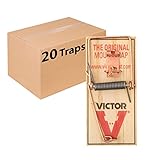
- EFFECTIVE MOUSE CONTROL: Designed specifically for mice traps indoor, this trap delivers a clean and instant kill; ideal for household use
- PRECISION TRIGGER SYSTEM: The snap mouse traps indoor pedal works with precision to immediately trigger the bar, providing quick rodent elimination
- TIME TESTED PERFORMANCE: Relied on for over 120 years, these Victor original wooden snap traps for mice are favored by both consumers and professionals for their consistent results
- REUSABLE MOUSE TRAPS: After a catch, choose the cleanup method that suits your needs best, whether you prefer to dispose of the rodent trap entirely or to reuse the trap
- SUSTAINABLY SOURCED MATERIALS: Made from FSC certified wood, these mouse traps indoor are made of materials harvested from responsibly managed forests
- Put on rubber or plastic gloves.
- Wet the droppings, urine or nesting material thoroughly with household disinfectant or a freshly made bleach solution. CDC specifies 1.5 cups of household bleach in 1 gallon of water, or 1 part bleach to 9 parts water.
- Let the material soak for five minutes, or follow the disinfectant product’s label if it specifies a different contact time.
- Wipe up the wet material with paper towels. Disinfect hard surfaces in the affected area.
- Dispose of the waste as directed by the cleanup guidance and wash your hands after removing the gloves.
Do not mix bleach with other cleaning products. Follow the label for any disinfectant you use, including directions about ventilation, contact time and safe use around people and animals. Keep pets away from the area while it is being cleaned and until the surface is safe for them to return.
For a dead rodent or nest
CDC advises wetting the dead rodent or nest and the surrounding area with disinfectant, then placing the material in a bag and sealing it. Put that bag inside a second bag, seal it, and dispose of it in a covered garbage can. If local rules or circumstances make disposal uncertain, ask the local health department about disposal guidance. Do not handle a carcass bare-handed or leave it where a pet could investigate it.
When ordinary cleanup is not enough
Heavy infestations, vacant dwellings with many rodents and structures with a confirmed rodent-spread disease require additional precautions and appropriate personal protective equipment under CDC guidance. If the quantity of waste is beyond what you can safely clean, or if you cannot reach the contaminated area, arrange professional support rather than dry-cleaning it or attempting an ordinary household cleanup. For rodent activity in heating or cooling ventilation systems, CDC specifically recommends a professional rodent-exterminating service.
When to call a pest-control professional
Get professional help when trapping does not resolve activity, when rodents or waste are in spaces you cannot reach for cleaning, when rodents have entered heating or cooling ventilation systems, or when the infestation is heavy enough that ordinary cleanup precautions are insufficient. These are practical escalation points: the issue is not just removing rodents, but whether the work and cleanup can be done without exposing people or pets.
Best Value

- 🐀【Reusable & Durable】The rat control is made of high-strength plastic ABS, which can be cleaned and is easy to remove peculiar smells and blood. A nail hole fixing clip is added to the tail to prevent displacement, guarantee mouse trap sensitivity, which can be used multiple times.
- 🐀【High Sensitivity & Quick Kill】 Best mouse traps for home adopts double spring design, strong bite force, compared with the original version mousetrap, the sensitivity and efficiency have been greatly improved, 0.025lbs can quickly trigger mouse snap trap. It does not take up space and can be placed flexibly.
- 🐀[Safe to Use] The new Human Power Mouse Killer non-toxic, safe, non-contact design, you can safely place the bait without worrying about getting your fingers caught. Say goodbye to ineffective pest control methods and protect your home from rats, mice, mouse, small mice, etc. It is recommended to use a small amount of peanut butter as a bait
- 🐀【Easy to Set Mouse Traps] Just put the bait in the bait cup and press the spring of rodent traps outside to complete the setting. You can use mouse traps indoors and outdoor. Do not touch the mice after setting, and keep them away from children, the elderly and pets to avoid injury.
- 🐀【Wide Applications】Our trap has the unique capability to catch both mice and small sized rats, suitable for both indoor and outdoor use, such as kitchen, living room, bathroom, warehouse, garden, garage etc.
When you contact a provider, describe the signs you have seen, where they occur, what you have tried and whether pets can enter the affected areas. Ask how the proposed control method will be kept inaccessible to animals, what cleanup is included and whether any pesticide would be used. Check state or local licensing requirements and health-department guidance; requirements and available services vary by location. Federal guidance does not establish a nationwide service-cost range, a universal licensing lookup or a rodent-count threshold for calling a professional.
For situation-specific public-health concerns, contact your local or state health department. That is particularly useful when you need local disposal advice or are dealing with circumstances beyond routine household cleanup.
A practical order of operations
- Inspect for droppings, gnaw marks, nesting material and openings around the home, including utility routes, foundations and outbuildings.
- Secure food, pet food, feed and garbage; clean spills and remove avoidable outdoor nesting sources.
- Seal openings with materials suited to their size, paying attention to gaps as small as about 1/4 inch (6 millimeters).
- If rodents remain, use correctly sized snap traps only in places pets and children cannot access, and follow the product directions.
- Check traps daily, remove captured rodents promptly and keep trapping until signs stop.
- Wet-clean waste using CDC’s directions; do not sweep or vacuum it dry.
- Call a professional if activity persists, waste is inaccessible, HVAC is involved or the infestation exceeds ordinary cleanup precautions.
This sequence separates prevention from removal: sealing and source reduction limit access and attractants, while trapping addresses rodents already present. The safety of each step depends on keeping pets out of contact with traps, bait, waste and cleanup materials.
Crashes, No Sound, or Screen Glitches?
Random freezes, missing sound and display glitches usually trace back to one bad driver. Find and replace yours safely.Free scan · under a minutePC Slower Than It Used to Be?
A free scan shows the junk files, broken settings and background clutter dragging Windows down - then fixes them in one click.Free scan · Windows 10 & 11Quick Recap
Product prices and availability are accurate as of the date/time indicated and are subject to change. Any price and availability information displayed on Amazon at the time of purchase will apply.





Leave a Reply