
Recommended Free Tools
The safest first meeting is not a forced greeting or an instant play session. Arrange a calm, parallel walk on neutral ground, keep enough distance for both dogs to stay relaxed, and let either dog opt out. A successful first meeting may consist entirely of walking near each other without touching.
This approach follows guidance from PetMD, Seattle Humane, the Humane Society for Tacoma & Pierce County, the ASPCA, and Pasadena Humane. Their common principle is choice: expose the dogs gradually, watch their whole-body responses, and add distance whenever either dog becomes uncomfortable.
As an Amazon Associate I earn from qualifying purchases.
What the first meeting is actually for
Your objective is not to make two dogs play, greet nose-to-nose, or become friends on schedule. The first meeting should answer a narrower question: can these dogs remain calm in one another’s presence while each has room to move away?
Do these 3 things before closing this tab:
1Scan for outdated or missing drivers - takes under a minute2Repair Windows errors before they cause bigger problems3Fix the driver behind crashes, sound loss and screen glitchesDogs differ in age, play style, confidence, pain level, social history, and tolerance for close contact. A dog that enjoys familiar playmates may dislike a particular dog, a particular environment, or a particular style of approach. Treat the meeting as information gathering, not a test the dogs must pass.
#1 Best Overall

- Engineered for Ultimate Strength: Constructed from 1/2 inch diameter rock climbing rope, this heavy duty dog leash is distinctively durable and strong. It is designed to withstand the strongest pulls from large and energetic dogs, giving you peace of mind that your pup won't break free during walks
- Comfortable Padded Handle: Say goodbye to rope burn. Our soft, cushioned foam handle provides an amazing grip and protects your hands from sudden tugs. Enjoy longer walks and extended training sessions with total comfort, even if your dog is a puller
- Maximum Nighttime Visibility: Highly reflective threads are woven through the entire length of the rope (not just painted on), keeping you and your fur baby visible to passing cars and cyclists during early morning jogs or late-night strolls. Perfect for urban streets and low-light environments
- Tangle-Free 360° Swivel: Featuring a heavy-duty metal clasp that rotates 360 degrees, this ensures the rope never gets twisted or tangled, no matter how much your dog moves around. The zinc alloy hook is rust-proof and easy to clip onto any dog collar or harness in seconds
- Versatile for Any Activity: Park walks, trail hikes, or yard training. Offers ideal balance of freedom and control. Comes in 4ft, 5ft, 6ft lengths and 12 colors. 3/8" diameter suits small to medium dogs – lightweight and non-bulky. For medium and large dogs, choose 1/2" diameter
The ASPCA’s Dog Bite Prevention guidance states that a dog should progress at its own pace and should never be forced to remain around someone or something when it is clearly fearful or uncomfortable (ASPCA). That means a calm walk in the same direction is a complete first session even if there is no sniffing or play.
Choose a setup that gives both dogs an easy exit
Use neutral outdoor space
Meet in a quiet, unfamiliar outdoor location rather than beginning in the resident dog’s home or yard. A neutral area reduces the chance that one dog feels compelled to defend a doorway, food area, bed, toys, or territory. Select a place with enough room to widen the gap, turn around, or leave without passing through a bottleneck. Avoid crowded dog parks for a first meeting because unfamiliar dogs and limited escape routes make it harder to control distance.
Bring one capable handler per dog
One handler for each dog lets the people adjust distance independently and notice changes in posture or attention. Each person should be able to hold the leash securely, walk at a normal pace, and guide the dog away without jerking or dragging. Do not arrange the meeting if either handler cannot physically manage the dog in an unexpected lunge.
Agree on the plan before the dogs see each other
- Decide which person will signal a turn or increase distance.
- Choose a route with room to walk side by side without forcing the dogs together.
- Keep leashes loose enough for normal movement while retaining control; avoid wrapping a leash around a hand or tying dogs to fixed objects.
- Plan where you will finish and how each dog will leave separately.
- Agree that either handler can end the session immediately, without debate, if a dog becomes distressed.
These precautions are consistent with the neutral-ground and handler-management recommendations from Seattle Humane and the Humane Society for Tacoma & Pierce County.
Two low-pressure meeting formats
Use the format that matches the dogs’ starting comfort and the handlers’ ability to create space. The sources most consistently support a gradual parallel walk; a brief neutral meeting can be useful when a walk is impractical, but it still must remain optional and easy to stop.
Rank #2

- Removable Zipper Pouch: Easily store and access your smartphone, keys, poop bags, dog treats in the removable zipper pouch. It’s a good add-on for the leash for training, walking, jogging, hiking training and running
- Double shock absorbers: Feature 2 shock-absorbers to help provide a bit of “give” in the leash. This can help reduce the amount of tugging both you and your dog will experience as you cruise down the road
- Durable clip - Enjoy a 2” heavy duty clip for added safety and handy D-ring to attach your favorite dog training clicker or dog poop bag holder.
- 2 Extra handles for extra control: Easily guide your pup on your runs through the park with the built in waist handle. Then switch to the amazing traffic handle when you need tighter control of your pet.
- Hand free waist wearing: Enjoy a waist dog running leash belt that lets you freely use your phone or read a newspaper without feeling restrained by your Dog's movements
| Format | How it works | Use it when | Stop or change course when |
|---|---|---|---|
| Parallel walk | Handlers walk in the same direction with the dogs separated, then reduce the gap only while both remain relaxed. | Both dogs can walk outdoors and each handler can maintain a safe distance. | Either dog becomes tense, fixated, fearful, avoidant, or difficult to redirect. |
| Brief neutral outdoor meeting | Dogs see each other in a neutral area, remain at a comfortable distance, and may approach briefly only if both choose to. | A structured walk is not practical, but there is open space and two handlers. | A dog cannot disengage, repeatedly retreats, or shows escalating arousal. |
Neither format guarantees friendship, play, or a particular timeline. Choose the option in which both dogs can disengage and the handlers can leave safely.
Step-by-step: a no-pressure parallel walk
1. Start farther away than feels necessary
Begin with the dogs moving in the same direction, not walking directly toward one another. Published examples differ: Seattle Humane describes about 10 feet, while PetMD advises at least 30 feet. Those figures are starting examples for different situations, not a universal safe distance. Start where both individual dogs can notice the other and still walk, sniff, respond to the handler, and turn away.
What’s actually slowing this PC down?
Pick the symptom - the matching free tool is one click away.
If one dog reacts at 30 feet, begin farther away. If both dogs are comfortable at 10 feet, there is no need to close the gap immediately. Distance is successful when it keeps arousal low, not when it reaches a target number.
2. Let movement lower pressure
Walk parallel for several minutes while keeping the dogs’ shoulders roughly aligned rather than allowing a head-on approach. Keep the pace ordinary and the route predictable. Do not march the dogs toward one another, tighten the leashes to create a face-to-face standoff, or hold one dog in place while the other investigates.
Handlers should watch whether each dog can perform normal behaviors: walk with a reasonably loose body, sniff the ground, look away, respond to its name, and continue moving. A dog that cannot disengage from the other dog is telling you that the gap is too small or the situation is too intense.
Rank #3
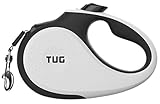
- Small Retractable Dog Leash is Suitable for Dogs Under 35 lbs; Medium For Dogs Under 55 lbs; Large For Dogs Under 110 lbs; Retractable Leashes Not Suitable For Chewing
- 16 ft Tape Retractable Dog Leash With Easy-Adjust Retraction; 360 Degree Tangle-Free Inlet
- Quick Lock And Unlock Feature - Easy Roll-On and Roll-Off With Your Thumb
- Super Comfortable Grip For Those Long Walks! Ergonomic Anti-Slip Handle
- Heavy Duty Internal Coil For Consistent Retraction and Recoil
3. Close the distance in small, reversible changes
Only reduce the gap after both dogs have remained comfortable for a while. Move a few steps closer, continue walking, and reassess. If either dog stiffens, stops responding, pulls toward or away from the other, hides behind the handler, or becomes increasingly focused, turn away and restore the previous distance. You can also end the session; moving closer is never required.
Progress should be reversible. A larger gap, a change of direction, or a short break is preferable to waiting for a reaction and then trying to restrain a dog at close range. The Pasadena Humane guidance specifically cautions against coercing a dog that is stressed or avoidant.
4. Offer a brief sniff only if both dogs choose it
When both dogs remain loose, mobile, and able to disengage at a closer distance, allow a short, moving investigation if they independently angle toward each other. Keep the leashes managed but not tight, and keep your bodies moving so neither dog is trapped in a prolonged face-to-face position. After a brief sniff, call the dogs away and resume the parallel walk or separate calmly.
No source establishes a universal greeting duration, and a greeting is not a milestone every dog must reach. If one dog turns away, circles behind the handler, keeps walking, or shows uncertainty, respect that choice and maintain distance.
5. Reward calm behavior without creating a contest
Small treats can reinforce looking at the other dog and then calmly returning attention to the handler, provided both dogs can eat without guarding, rushing, or competing. Deliver food to each dog separately and maintain enough space that one dog cannot crowd the other. If food increases tension, stop using it and rely on distance, movement, and quiet praise instead.
Quick wins for a faster PC:
Fix the driver behind crashes, sound loss and screen glitchesFind Drivers →Clear out junk files and repair common Windows errorsFree Scan →Rank #4

- Upgrade: The product has been modified to use nylon thread directly sewing, very strong.All handles was sewn onto the leash instead of the cord ties.Package includes: frosted zipper bag,two handles dog leash.
- MAXIMUM TOUGHNESS AND DURABILITY: Nearly 2X thicker and stronger than standard dog leashes. 3mm thick and 1” wide with tightly webbed nylon for enhanced rugged construction.
- DUAL HANDLES FOR TOTAL CONTROL: Soft Neoprene and padded handle, comfortable than ever ;Equipped with an extra traffic handle for amazing control. Use the standard handle for those casual dog walks or quickly grab the built in traffic handle to guide your pup through crowded areas with ease.
- 360° Rotating Clasp: Swivel clasp prevents the leash from twisting and dog getting tangled. Heavy-duty metal clasp makes our training leashes last longer than most ones. Premium components for maximum strength
- BE SAFE AND VISIBLE AT NIGHT: Luminous reflective threading keeps you both safe and visible on your late-evening walks. Enjoy a large 2” heavy duty clip for added safety and thick D-ring to attach your favorite dog training clicker or dog poop bag holder.Packaging details:Frosted zipper bag,Dog leash with D ring
The Seattle Humane and Tacoma & Pierce County humane society recommendations support rewarding calm behavior while managing resources that could trigger competition.
6. End while the dogs are still coping well
Finish after a period of calm walking, not after repeatedly testing closer contact. Walk the dogs apart, give each one a quiet decompression period, and record what distance and activities were comfortable. A short, uneventful session provides better information than a long meeting that ends in a confrontation.
How to read the dogs without overinterpreting one signal
Do not diagnose safety from a wagging tail, a single yawn, an isolated growl, or any other one cue. Consider posture, muscle tension, speed and direction of movement, attention, facial expression, vocalization, and the dog’s ability to disengage as a whole. The same tail position can mean different things in different dogs and contexts.
Signals to treat as a request for more space
- The dog repeatedly turns away, retreats, hides behind the handler, or tries to leave.
- The body becomes stiff or the dog freezes, stares, or tracks the other dog intensely.
- The dog stops responding to familiar cues, cannot take food normally, or keeps escalating despite increased distance.
- Vocalizing, lunging, snapping, or other aggressive behavior appears.
These observations are not a remote diagnosis of what a dog “will” do. They are practical reasons to stop the approach, create distance, and reassess. If you cannot tell whether a dog is comfortable, choose more space and ask a qualified professional rather than experimenting at closer range.
If the dogs will share a home
Do not move indoors just because the walk went well
Wait until the outdoor interaction is calm and both dogs can disengage. A dog may tolerate a short walk but react differently in a hallway, doorway, kitchen, or living room. Enter one at a time if that makes the transition less crowded, and keep both handlers present.
Best Value
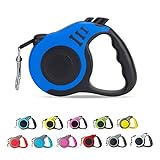
- Lievuiken retractable dog leash can extend to 10 feet which suitable for small dogs. The rope is durable and not easy to break. Comfortable grip design in line with the comfortable grip design, long time holding hands won't be tired. The 10ft durable nylon cord allows safe exploration while maintaining control.
- The product adopts high quality plastic shell and environmental protection, nylon rope, metal lock, bending smooth, no noise, not easy to jam.
- The brake button is more user-friendly. Big button to brake, small button to stop braking for quick adjustments. Convenient for telescopic adjustment, storage and traction.
- It's reliable. Ergonomic handle ensures fatigue-free walks. You don't need to worry that the dog's leash will hurt your hand when the dog runs wildly, but it doesn't mean that your dog can stay too far away to avoid winding the leash.
- It’s widely applicable for dogs under 22lb weight, ideal for puppies and small dogs(chihuahuas, pugs, kittens). Well-controlling of pets is available while walking, training, jogging in the open air.
Remove high-value resources first
Before bringing dogs into a shared space, pick up food bowls, chews, high-value treats, and toys that could become contested. Seattle Humane specifically recommends removing these items before the dogs enter together. Provide multiple resting areas and enough room for either dog to move away from the other.
Supervise every early indoor interaction
Stay close enough to separate the dogs calmly, but do not force them to lie together, share a bed, or interact. Use gates, separate rooms, or brief rotation periods when direct supervision is not possible. A calm first introduction does not establish that the dogs can be left together unsupervised.
Troubleshooting common situations
| What you see | What to do next |
|---|---|
| One dog pulls toward the other and cannot look away. | Turn away and increase distance until the dog can respond and move normally. Do not allow the pull to become a forced greeting. |
| One dog keeps retreating or hiding. | Stop closing the gap. Give that dog a clear route away and end the session if relaxation does not return. |
| Both dogs are calm at a distance but tense when closer. | Return to the last comfortable distance. Continue parallel movement on separate days rather than testing a closer greeting. |
| Food causes staring, rushing, guarding, or conflict. | Stop feeding during the meeting, separate the dogs, and remove food and chews before any indoor transition. |
| The dogs briefly sniff, then one becomes uncomfortable. | Call them apart immediately and resume walking or leave. A brief sniff does not require continued contact. |
| A bite, snap, or escalating aggressive episode occurs. | Separate safely without putting your hands between the dogs, end the meeting, and arrange professional behavior help before another introduction. |
When professional help is the right next step
Consult a qualified, reward-based trainer or a veterinary behavior professional when either dog has a bite history, displays aggression, reacts intensely even at a large distance, or repeatedly cannot remain calm despite careful management. The ASPCA recommends qualified assistance after aggressive behavior, and the Humane Society for Tacoma & Pierce County advises professional support when introductions become difficult.
Seek help before arranging another close meeting. A professional can evaluate medical contributors such as pain, identify the distance at which each dog can learn, and design a controlled plan for your specific dogs. Remote general advice cannot determine whether a particular interaction is safe.
What you need—and what you do not
The process requires management, not a special product. Each handler needs a leash that can be held securely and allows controlled movement; the consulted guidance does not endorse a particular brand, length, or specialty design. Small training treats are optional for calm behavior, but only when they do not create competition. No leash, treat, or accessory guarantees safety, friendship, or play.
- Two handlers who can maintain distance and leave calmly.
- Secure, properly fitted walking equipment for each dog.
- A neutral area with room to turn and widen the gap.
- Optional small treats that both dogs can take without guarding or rushing.
- A plan for separating dogs indoors and removing valued resources.
How to judge whether the first meeting was successful
Judge the session by process rather than by contact. It was productive if both dogs could remain below their stress threshold, move away when needed, and finish without escalation. A parallel walk with no sniffing can therefore be a better outcome than a forced greeting followed by tension.
Friendship and play may develop over multiple carefully managed meetings, or they may never be appropriate for these two dogs. The responsible goal is reliable choice and calm coexistence, not a deadline for physical interaction.
Free tools Windows power users keep installed
One-click scans. No signup required.
Quick Recap
Product prices and availability are accurate as of the date/time indicated and are subject to change. Any price and availability information displayed on Amazon at the time of purchase will apply.





Leave a Reply