
Some links on this page are affiliate links: if you buy through them we may earn a commission, at no extra cost to you.
Do not assume a young wild animal is abandoned. Watch from a safe distance, keep children and pets away, and note the exact location and condition. Parents may be nearby, feeding, or avoiding people. Do not capture, feed, give water to, or move the animal unless a licensed wildlife rehabilitator or wildlife agency gives you specific instructions. Visible bleeding, a broken limb, shivering, severe distress, a confirmed dead parent, or a young animal that cannot safely be reunited with its nest warrants prompt professional advice.
What to do in the first few minutes
- Pause before approaching. Look from a distance for immediate hazards such as traffic, dogs, flooding, exposed machinery, or other threats. Observe whether an adult animal is nearby and whether a nest or den can be seen. Do not remain close enough to discourage a parent from returning.
- Reduce disturbance. Move people and pets away, lower noise, and avoid repeated checks. For many young animals, leaving the area is the action that gives the parent the best chance to continue caring for it.
- Record what you can see. Note the species if known, the animal’s approximate age or life stage, exact location, time, weather, visible injuries, and whether you saw an adult or a dead parent. Do this without touching the animal.
- Look for objective signs of an emergency. Visible bleeding, a broken limb, shivering, obvious distress, or a known dead parent are reasons to seek expert advice. A baby being alone, quiet, or hidden is not, by itself, proof of abandonment.
- Call before moving anything. Contact a permitted wildlife rehabilitator that accepts the species or your state, provincial, or territorial wildlife agency. Describe the situation and follow its instructions exactly. Ask whether the facility has authorization and capacity for that species before you travel.
How to decide whether the animal needs intervention
No single test applies to every species. The safest decision combines the animal’s condition, life stage, surroundings, likelihood that a parent is caring for it, and the availability of a qualified local facility.
As an Amazon Associate I earn from qualifying purchases.
| What you observe | Safer next step | Why |
|---|---|---|
| Young animal appears alert, uninjured, and is in a reasonably safe place | Leave it where it is, keep people and pets back, and observe only from a distance | A parent may be nearby or returning after you leave |
| Bleeding, broken limb, persistent shivering, severe distress, or a confirmed dead parent | Call a licensed or permitted rehabilitator or wildlife agency promptly | These are recognized indicators that professional help may be needed |
| Animal is in immediate danger from traffic, construction, water, or another hazard | Move people and pets away and ask an authority for urgent, species-specific instructions | Improvised capture can injure the animal and may violate local rules |
| You are considering feeding, watering, or transporting it | Stop and obtain instructions first | Incorrect food, liquid, handling, or container choice can cause harm |
Species and life-stage examples
Young birds
A featherless bird or one with closed eyes is a nestling. If you can identify its nest and reach it safely without putting yourself or the bird in danger, returning the nestling to that nest may be appropriate. Touching a nestling does not make its parents reject it; the larger concern is unnecessary handling and disturbance.
A more fully feathered bird that can hop, perch, or flutter is usually a fledgling. Fledglings commonly spend time on the ground while parents continue feeding them. Give the bird a wide, quiet area and keep pets indoors or on a leash. Do not relocate it simply because it is not flying strongly. Some species nest on the ground, so do not disturb vegetation or search for a nest unless a wildlife professional tells you to.
Popular on Amazon

- Safe & Secure Travel for Your Small Pet: The TRIXIE Pico Transport Crate, a sturdy, hard pet carrier, is ideal for transporting your guinea pig, hamster, rat, chinchilla, or other small animals to vet visits, pet stores, or on fun outings
- Top Loading Convenience: This top-loading pet carrier allows for easy access when placing your pet inside or taking them out
- Ventilation & Comfort: Built-in ventilation slots ensure your furry friend gets plenty of fresh air during travel, while the hard plastic construction keeps them secure
- Portable & Easy to Store: The TRIXIE Pico features two foldable handles for comfortable carrying and folds flat for space-saving storage when not in use
- Easy Cleaning & Safety: The TRIXIE Pico is made with BPA, Phthalate, and Lead-Free plastic, and the smooth interior surface makes cleaning a breeze
If a bird is visibly injured, bleeding, cold and shivering, trapped, or associated with a known dead parent, call a rehabilitator or wildlife agency. Explain whether it is featherless, partially feathered, or fully feathered; that information helps the professional judge the next step.
Fawns
A healthy fawn lying quietly in vegetation is often waiting while its mother feeds nearby. The mother may stay out of sight to avoid drawing attention to the hiding place. Keep your distance, remove pets from the area, and avoid touching or carrying the fawn.
Do these 3 things before closing this tab:
1Clear out junk files and repair common Windows errors2Fix the driver behind crashes, sound loss and screen glitches3Repair Windows errors before they cause bigger problemsContact a rehabilitation facility or the relevant wildlife agency if the fawn shows obvious injury, appears in poor condition, or is in clear distress. California guidance gives these examples, but the legal and practical response can differ elsewhere. Do not treat California’s instructions as a universal rule for every deer species or jurisdiction.
Also popular on Amazon

- Bulk Set: You will receive 15 pack individual disposable carriers, essential for poultry farmers, bird breeders, reptile handlers, or animal rescue organizations that frequently transport small animals.
- Dimensions: These pet carriers measure 11 x 8 x 6 inches, providing ample space for small creatures such as baby chicks, ducklings, quail, finches, canaries, hamsters, gerbils, guinea pigs, rats, and small reptiles such as geckos snakes. Please Note: These are NOT suitable for adult cats, dogs, or other large animals due to size and material limitations.
- Sturdy Contruction: Constructed from thick, double-wall corrugated fiberboard for superior strength, sturdy and durable. The durable structure withstands bumps during short-distance travel, making it a reliable for short-term travel and transport needs.
- Ventilation Holes: Each pet transport box features a convenient built-in handle, making it easy to transport your small pets with a secure and steady grip. Built-in ventilation holes allow for proper airflow, keeping your small animals comfortable and safe during travel.
- Easy to Assembly: No tape, glue, or tools required. Simply fold and snap the flaps into place for a secure box. Flat for space saving storage.
Bats
Never handle a bat with bare hands. Local authorities should guide any response, particularly when a person or pet may have touched the bat.
California guidance for a healthy bat indoors that can fly is to turn off lights, keep people and pets away, and open a nearby exit. Do not chase it. For a healthy bat that cannot find its way outside, that guidance describes waiting until the bat has stopped flying, then using gloves and a towel to place it in a covered, properly ventilated container and arranging release at dusk or night. This is a narrow, California-specific scenario, not permission to capture bats generally. Ask your own wildlife agency or a qualified rehabilitator for current instructions before attempting containment.
Finding the right wildlife professional
Use the wildlife agency for your state, province, or territory to locate a directory of licensed or permitted rehabilitators, or contact the agency’s office directly. Tell the person who answers:
Also popular on Amazon
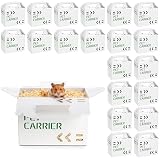
- Size for Small Pets: When assembled, the cardboard pet carrier measures 11" x 6" x 8.1" (excluding the handle) and can be a suitable choice for small pets like chicks, hamsters, gerbils, reptiles, small birds, guinea pigs, and rabbits. It offers a secure and comfortable space for short-distance travel. Not intended for use with adult cats or dogs.
- Durable and Pet-friendly: The disposable pet transport box is constructed from sturdy double-layer cardboard , both strong and lightweight. . The edges are smooth with no burrs, and the staple-free construction reducing the risk of injury while transporting pets.
- Breathable Design: Arrow-shaped ventilation holes are placed on the sides and top to help promote airflow. This prevents overheating and keeps your small pets comfortable and safe. The carrier features a bold green “PET CARRIER” graphic for a clean appearance and quick recognition.
- Comfortable Grip: A handle on top provides a comfortable, stable grip and can be carried easily with one hand—making transport simpler and more convenient. A good choice for vet visit, short trips, carrying pets home or daily use.
- Practical Bulk Set: Snap the carrier box together in seconds – no tape, glue, or staples needed! Each pack includes 20 carriers, well-suited for multi-pet families, breeders, rescue organizations, or other high-use situations.
- Where the animal is, using a precise address or landmark.
- What species you think it is and whether it is a nestling, fledgling, juvenile, or adult.
- What you actually observed, including injury, bleeding, shivering, distress, a dead parent, or a nearby nest.
- Whether people, dogs, cats, roads, or other hazards are present.
- Whether anyone has already touched, fed, watered, or moved the animal.
Ask two practical questions before you do anything else: Does this facility handle this species, and can it accept the animal now? A directory listing does not guarantee that a facility has space or authorization for every species. In Florida, the Fish and Wildlife Conservation Commission directs people who cannot reach a rehabilitator to a regional office; that referral path is Florida-specific.
Handling and transport: only after instructions
Wildlife professionals may tell you to leave the animal in place, to reunite it with a nest, or to contain it for transport. Follow the instructions you receive rather than applying a general rescue routine.
- Confirm the destination first. Call the facility immediately before setting out and verify its address, hours, species authorization, and acceptance of the animal.
- Use the recommended container. In the limited bat situation described by California guidance, this means a covered, properly ventilated container. A container is not a reason to capture an animal, and buying one does not make handling safe.
- Minimize contact and stimulation. Keep the container stable, quiet, and away from children and pets. Do not offer food or water unless the professional specifically directs you to do so.
- Follow the agency’s release or handoff instructions. Some animals should be returned to the exact place they were found; others require immediate delivery. The correct choice depends on species, condition, and local authorization.
Why feeding, watering, or raising the animal yourself can backfire
- Wrong diet: A species’ nutritional needs can be highly specific, and an apparently harmless food can cause injury or illness.
- Liquid aspiration: Giving water by mouth without instruction can put fluid into the lungs.
- Interrupted reunification: Removing a healthy juvenile can prevent its parent from finding or caring for it.
- Stress and injury: Capture, noise, and restraint can worsen shock or cause physical damage.
- Legal exposure: Possession and rehabilitation rules apply even when your intention is to help.
- Missed expertise: A professional can distinguish normal juvenile behavior from a condition that needs treatment.
Wildlife laws depend on where you are
Rehabilitation permissions, possession limits, transport rules, and protected-species requirements are jurisdiction-specific. The U.S. Fish and Wildlife Service notes that most states require permits or licenses, training, and approved facilities; many birds also require federal authorization. Florida states that keeping impaired wildlife beyond immediate transport to a licensed rehabilitator violates Florida law and that rehabilitation requires a Florida Fish and Wildlife Conservation Commission permit. Ontario describes authorized wildlife custodians who provide temporary care under provincial rules.
Also popular on Amazon

- 【Large Size But Foldable】Large Expand Size: 5.9*7*5.9 inch. Large capacity is big enough for hedgehog, hamster, squirrel, parrot, rat and squirrel etc small animals. The small pet carrier can be folded for easy carrying out and indoor storage with the the Foldable Size: 1.6*10.6*7.9 inch.
- 【Transparent Breathable Mesh Design】2 transparent mesh windows on the hamster carrier and 1 side opening mesh door are designed to ensure fresh air and air circulation for your furry child and they can enjoy the scenery. There is a side pocket which is very convenient for you to foldable bowls, toys and store food.
- 【Material】The material is PET breathable gauze +Oxford cloth. It is normal for aggressive rabbit and hamster to chew and bite anything so please put some hamster teething toys or food in the carrier before going out.
- 【Portable and Safety Designer 】This small animal carrier is easy to carry and store, The hamster bag has a hand strap and an adjustable shoulder strap, so you can choose a more comfortable way of carrying. It’s very good option for travel to vet, short trip to vet.
- 【Easy To Carrier】This small animals carring bag has one removable support mat which can be washed by hand or machine, easy to clean. The small animal carry bag is light, easy to fold, and carry.
These examples cannot be generalized. A rule that permits a short handoff in one place may prohibit possession in another. Use your own wildlife agency’s current instructions, and do not keep an animal overnight or attempt home rehabilitation unless the agency or rehabilitator expressly tells you to.
Free tools Windows power users keep installed
One-click scans. No signup required.
Common situations and the safest response
“The baby animal is crying, so it must be abandoned.”
Vocalizing does not establish abandonment. Move away, keep pets and people back, and watch only from a distance. Call for advice if the animal also shows injury, shivering, severe distress, or another objective warning sign.
“I cannot see a parent.”
Parents may be concealed, foraging, or waiting for people to leave. Do not stay close to prove whether a parent returns. Give the area quiet and ask a local professional how long, if at all, you should monitor it.
Also popular on Amazon

- Ventilation Holes: 3 rows of 1mm diameter ventilation holes to meet the reptile high humidity is not easy to lose, but also can be used as a hatchery box
- Transparent Tank: Terrarium skylight can be easily fed, easy to reptilian insects, high transparency, the box landscape at a glance. It's a cricket container for feeders
- FIT FOR: Suitable for all kinds of small reptiles, tortoise, baby snake, lizard, scorpions, spider, chameleon, insect, frog, worm, centipede, dubia roach cage, small animals, etc
- Size: 19 × 12.5 × 8cm / 7.48 × 4.92 × 3.15 ". Bottom size: 17 × 10.5 × 7.5cm / 6.69 × 4.13 × 2.95 "
- Bug Container: As a terrarium, aquarium, pet carrier, small animal pen and nursery. Solid and well ventilated.The Breeding box is easy to clean and can be used repeatedly
“The animal is near a road or another immediate hazard.”
Keep yourself out of danger and move bystanders and pets away. Call the wildlife agency or a permitted rehabilitator for instructions before attempting a rescue. If the hazard is an active public emergency, contact the appropriate emergency service as well.
“I already picked it up.”
Do not feed or water it. Keep handling to a minimum, place it in the type of container the professional recommends, and call a qualified facility immediately. Report what you did and how long you have had the animal so the professional can adjust the advice.
The Tool Desk
Outbyte Driver Updater FREEScan for outdated or missing drivers - takes under a minuteDriver Scan →Outbyte PC Repair FREERepair Windows errors before they cause bigger problemsFix Now →A simple decision checklist
- Have I observed from far enough away that a parent can return?
- Are children, dogs, and cats away from the animal?
- Is there visible bleeding, a broken limb, shivering, severe distress, or a dead parent?
- Do I know the species and life stage, or can I describe them accurately?
- Have I contacted a local permitted rehabilitator or wildlife agency?
- Has a facility confirmed that it accepts this species and can receive the animal?
- Am I following specific instructions rather than improvising food, water, handling, or transport?
The safest principle
Most encounters should begin with distance, quiet, and accurate observation—not a rescue attempt. Intervene when a professional identifies a genuine need, when objective signs of injury or distress are present, or when an authority gives you a species-specific plan. Local wildlife officials and permitted rehabilitators have the training and legal authority to decide whether the animal should remain where it is, be reunited with its nest, or be transported for care.





Leave a Reply