
Do these 3 things before closing this tab:
1Fix the driver behind crashes, sound loss and screen glitches2Clear out junk files and repair common Windows errors3Scan for outdated or missing drivers - takes under a minuteIntroduce a Golden Retriever and a Corgi as two individual dogs, not as representatives of their breeds. The safest plan is a gradual meeting on neutral ground, with space to move away, loose leashes, short sessions and close supervision. Breed labels cannot predict whether these two dogs will enjoy one another.
Before they meet, compare their age, health, energy, social experience, play intensity, communication signals and tolerance for close contact. A Golden Retriever may be substantially larger than a Corgi, so supervise play particularly closely and pause at the first sign that either dog is overwhelmed.
As an Amazon Associate I earn from qualifying purchases.
What makes a Golden Retriever–Corgi introduction different?
There is no evidence for a special, breed-specific Golden Retriever–Corgi introduction protocol. The same principles used for introducing any two dogs apply: create distance, allow voluntary investigation, read both dogs’ body language and prevent competition over food, toys and resting places.
Size is an important management issue rather than a verdict on compatibility. The American Veterinary Society of Animal Behavior (AVSAB) says dogs are generally best matched when they display appropriate and similar canine communication signals and play styles. A larger dog can accidentally injure a smaller dog during exuberant play even when neither intends harm. VCA’s “Getting a Second Dog” guidance states that dogs equally matched for size are less likely to accidentally injure one another while playing. That is a qualitative caution, not a prediction that this particular pair will fail.
#1 Best Overall

- Engineered for Ultimate Strength: Constructed from 1/2 inch diameter rock climbing rope, this heavy duty dog leash is distinctively durable and strong. It is designed to withstand the strongest pulls from large and energetic dogs, giving you peace of mind that your pup won't break free during walks
- Comfortable Padded Handle: Say goodbye to rope burn. Our soft, cushioned foam handle provides an amazing grip and protects your hands from sudden tugs. Enjoy longer walks and extended training sessions with total comfort, even if your dog is a puller
- Maximum Nighttime Visibility: Highly reflective threads are woven through the entire length of the rope (not just painted on), keeping you and your fur baby visible to passing cars and cyclists during early morning jogs or late-night strolls. Perfect for urban streets and low-light environments
- Tangle-Free 360° Swivel: Featuring a heavy-duty metal clasp that rotates 360 degrees, this ensures the rope never gets twisted or tangled, no matter how much your dog moves around. The zinc alloy hook is rust-proof and easy to clip onto any dog collar or harness in seconds
- Versatile for Any Activity: Park walks, trail hikes, or yard training. Offers ideal balance of freedom and control. Comes in 4ft, 5ft, 6ft lengths and 12 colors. 3/8" diameter suits small to medium dogs – lightweight and non-bulky. For medium and large dogs, choose 1/2" diameter
Assess the observable match before arranging close contact:
| Factor | Questions to ask | Why it matters |
|---|---|---|
| Health and comfort | Are both dogs free of pain, illness and mobility problems? Could either be unusually irritable because of discomfort? | Pain and poor health can reduce tolerance and change communication. |
| Age and energy | Is one a puppy, adolescent or senior? Do their exercise needs and recovery time differ? | A high-energy dog may repeatedly bother a dog that needs quiet. |
| Social history | Have they lived successfully with dogs, or do they have a history of fear, guarding or fights? | Past behavior helps determine how cautiously to proceed. |
| Play style | Does each dog prefer chasing, wrestling, running, gentle sniffing or little interaction? | Different styles can cause conflict if one dog cannot stop or read the other’s signals. |
| Communication | Can each dog give and respond to pauses, turn-taking and withdrawal? | Appropriate signals and the ability to disengage are more useful than breed assumptions. |
| Size and physical intensity | Can the smaller dog move freely without being knocked down or pinned? | A marked size difference raises the need for active supervision. |
If either dog has repeated aggression, serious fear, resource guarding or a medical problem affecting behavior, obtain veterinary advice before attempting a close introduction.
Prepare before the dogs meet
Choose a neutral, quiet location
Use an outdoor area neither dog treats as its territory, such as a calm section of pavement or a quiet, secure open space. Avoid crowded dog parks, narrow corridors, doorways and places containing food, toys or chews. The location should let the handlers increase distance and leave without squeezing the dogs past one another.
Free tools Windows power users keep installed
One-click scans. No signup required.
Neutral ground does not mean forcing the dogs into an unfamiliar, stressful environment. Choose a place where both can remain calm enough to notice one another, walk and take an ordinary small reward if appropriate.
Use one capable handler per dog
Two handlers make it easier to maintain space and observe each dog. Use secure, comfortable walking equipment that each handler can control without constant tension. The goal is a loose leash and a handler who can calmly turn away, not a hard restraint that pulls the dogs together or keeps them rigidly apart.
Rank #2

- 【Professional Retractable Dog Leash】 The ultimate combination: 16 ft strong nylon reflective tape, impact-resistant ABS housing, and a stainless steel anti-chew cable. This design greatly reduces the risk of being bitten through, extending the leash’s lifespan. Augwind’s retractable leash is specifically designed for small to medium dogs under 50 lbs, offering the best value on the market
- 【Safe & Effective】16 ft Strong Reflective nylon webbing; Over 100,000 retraction times; Max anti-jerk tensile strength: 350 lbs; . Whether day or night, on the street or lawn, the Augwind retractable leash makes every walk safe and easy
- 【Quick Lock System】 Operate the pause, lock, and unlock buttons with a single thumb. Enjoy smooth braking and instant response. The Augwind retractable dog leash ensures the safety of both you and your pet on every outing
- 【2026 Equipment Upgrades】1. Reflective webbing 2. Chrome-plated, rust-proof 360° rotating clasp 3. Ergonomic soft silicone handle 4. Reserved slot for poop bag holder 5. Stainless steel anti-chew cable
- 【2-Year Warranty】 We are a professional pet products company committed to bringing the safest, most practical, and affordable pet products to pets and their owners. We promise to solve any quality issues within 2 years. We provide 24/7 after-sales service. If you have any questions, please feel free to contact us
Remove competition triggers
Do not bring bones, favorite toys, stuffed food items or other high-value objects to the first meeting. VCA recommends small treats for appropriate behavior in some introductions, but high-value rewards can trigger competition in some dogs. If either dog becomes tense around food, stop using treats and create distance.
Plan separate spaces at home
Before bringing the dogs indoors, prepare separate rooms, crates or gated areas where each dog can rest undisturbed. Set up separate food and water locations, individual beds and a way to close a door or gate. Separation is not a punishment; it gives both dogs a predictable retreat and prevents constant interaction.
Recommended Free Tools
Step-by-step: the first meeting
- Start far enough apart. Have the handlers walk in the same direction with substantial space between the dogs. Begin at a distance where each dog can look at the other and still respond to its handler, move normally and take a breath.
- Keep the leashes relaxed. Avoid dragging the dogs toward one another or allowing leashes to tighten continuously. If a dog pulls, turn or arc away rather than walking directly into a confrontation.
- Let acclimation happen while moving. Parallel walking gives the dogs information without requiring an immediate face-to-face greeting. Match the pace to the slower or more concerned dog.
- Close the distance only while both remain comfortable. Move nearer in small increments. If either dog stiffens, stares, freezes, hides behind the handler or stops taking a normal reward, increase distance again.
- Offer a brief, voluntary sniff. If both dogs show loose movement and can disengage, allow a short investigation from an angle rather than forcing a nose-to-nose approach. It is completely acceptable for them to ignore each other.
- Interrupt before either dog is overwhelmed. Call the dogs apart in a cheerful, calm manner and resume parallel walking. Do not wait for a growl or snap to prove that a break is needed.
- End while it is still going well. Keep the first session short. Separate the dogs for rest and repeat only if both recover easily and continue to show relaxed behavior.
The available veterinary guidance does not establish a universal number of minutes or a fixed number of meetings. The right duration is the longest period both dogs can remain comfortable, not a target you must reach.
Read the dogs’ body language
Look at the whole dog and the interaction between them, not one isolated signal. A wagging tail does not automatically mean a dog is relaxed, and a growl is valuable information that the dog is uncomfortable.
Signs that the interaction can continue cautiously
- Loose, curved body movement rather than a rigid outline.
- Soft facial muscles and ordinary breathing.
- Ability to sniff, look away, walk with the handler or take a normal small reward.
- Pauses and turn-taking during play.
- Either dog can move away without being followed immediately.
- Interest that rises and falls instead of an intense, fixed focus.
Signs to create distance or end the session
- Stiff posture, freezing, leaning forward rigidly or a hard stare.
- Tucked tail, crouching, hiding, repeated lip licking, yawning or attempts to retreat.
- Growling, snarling, snapping, showing teeth or repeatedly barking at close range.
- One dog continually jumping on, pinning, chasing or cornering the other.
- One dog trying to leave while the other keeps pressing forward.
- Loss of responsiveness to the handler or refusal of an ordinary reward that the dog normally accepts.
When you see these signs, calmly add space or finish the session. Do not punish a growl. A growl communicates discomfort; suppressing it without changing the situation can remove an early warning while leaving the underlying problem.
Rank #3
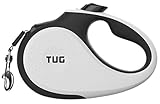
- Small Retractable Dog Leash is Suitable for Dogs Under 35 lbs; Medium For Dogs Under 55 lbs; Large For Dogs Under 110 lbs; Retractable Leashes Not Suitable For Chewing
- 16 ft Tape Retractable Dog Leash With Easy-Adjust Retraction; 360 Degree Tangle-Free Inlet
- Quick Lock And Unlock Feature - Easy Roll-On and Roll-Off With Your Thumb
- Super Comfortable Grip For Those Long Walks! Ergonomic Anti-Slip Handle
- Heavy Duty Internal Coil For Consistent Retraction and Recoil
Move from outdoors into the home gradually
Keep contact supervised
After a successful outdoor session, continue with short, supervised periods indoors. Let the new dog investigate gradually rather than releasing both dogs into the entire home at once. Keep doors, gates or pens available so either dog can take a break.
VCA’s “Moving with Your Dog” guidance recommends giving a dog time to adjust and using safe separate spaces when the dogs are not actively supervised. Apply the same principle here: access to the home should expand as the dogs demonstrate consistently safe interactions.
Feed in separate areas
Feed the Golden Retriever and Corgi in separate rooms or clearly separated spaces. Close doors or use a physical barrier until both have finished and bowls are removed. Do not test whether they can share a bowl, trade food or approach one another while eating.
Put away valuable objects at first
Remove bones, long-lasting chews, favorite toys and objects either dog guards. Provide ordinary toys only when you can watch closely, and return them to storage before leaving. Resource guarding can involve food, objects, resting places or people, so observe all of these contexts.
Provide individual rest and attention
Each dog should have a bed or room where the other cannot crowd it. Continue the resident dog’s normal walks, training and one-on-one attention while the new dog settles in. A dog that is tired, trapped or repeatedly interrupted is more likely to communicate sharply.
What’s actually slowing this PC down?
Pick the symptom - the matching free tool is one click away.
Rank #4

- ENHANCED NIGHT VISIBILITY: Keep your dog safe during early morning or evening walks. The upgraded double-sided reflective stitching catches streetlights and car headlights brightly, ensuring you both remain highly visible to traffic in low-light conditions
- CUSHIONED ANTI-BURN HANDLE: A savior for hands when walking active dogs that pull. The soft, thick interior padding prevents painful rope burn and strain, providing a secure, comfortable grip for better control when your furry friend lunges. Includes a sturdy metal D-ring for clipping poop bag dispensers
- PERFECT 6FT BALANCE: The ideal length for urban walks, offering your dog enough freedom to sniff around while keeping them close enough for easy command in busy areas. Choose the 3/4'' width for small breeds, or the robust 1.0'' width for powerful medium to large dogs
- HEAVY-DUTY TANGLE-FREE CLASP: Features a strong metal spinning snap that allows 360° movement, preventing frustrating leash tangles so your dog can move freely around you. Built with high-density nylon webbing for reliable daily strength. NOTE: While tough for pulling, this nylon material is NOT chew-proof. Don't leave unattended with chewers
- COMPLETE THE LOOK: Available in vibrant colors tailored to match your dog's style. For the ultimate coordinated walking set, pair this leash with our matching Joytale reflective nylon collar
Supervise play with a size difference
Do not treat energetic play as automatically safe. A Golden Retriever can outweigh a Corgi substantially, and a collision, paw strike or body slam can injure the smaller dog even without hostile intent. Watch continuously rather than relying on the dogs to resolve every interaction.
Healthy play has pauses
- Both dogs voluntarily return to the game.
- They trade roles instead of one always chasing or pinning.
- The smaller dog can change direction and leave.
- Brief pauses occur naturally, with loose bodies when play resumes.
- Neither dog is repeatedly knocked down, cornered or unable to get up.
Interrupt early and fairly
Use a calm recall, scatter a few ordinary treats away from the other dog if food is not a trigger, or guide each dog to a separate area. Allow a rest period before deciding whether play should resume. Do not grab collars in the middle of a frantic struggle unless you can do so safely; hands near aroused mouths can be bitten accidentally.
Do not leave the dogs together unsupervised until their interactions have been consistently safe over time. Even friendly dogs need separation when nobody can notice a chase, guarding incident or accidental collision.
Independent reader supportYour contribution helps us test, update, and keep practical guides available for everyone.Prevent fights over food, toys and space
Management prevents many predictable conflicts while trust is developing. The aim is not to make the dogs share everything; it is to remove situations in which they feel compelled to compete.
- Feed behind closed doors or a secure barrier.
- Pick up bowls after meals.
- Store chews and high-value toys out of reach.
- Give each dog a separate bed and retreat.
- Supervise greetings with people if either dog guards attention.
- Call dogs away before taking an object, rather than reaching into a tense interaction.
- Keep sessions short enough that fatigue does not turn into irritability.
If either dog repeatedly freezes, guards, snaps or chases the other away from resources, stop close interactions and seek professional guidance rather than staging repeated tests.
Best Value

- Upgrade: The product has been modified to use nylon thread directly sewing, very strong.All handles was sewn onto the leash instead of the cord ties.Package includes: frosted zipper bag,two handles dog leash.
- MAXIMUM TOUGHNESS AND DURABILITY: Nearly 2X thicker and stronger than standard dog leashes. 3mm thick and 1” wide with tightly webbed nylon for enhanced rugged construction.
- DUAL HANDLES FOR TOTAL CONTROL: Soft Neoprene and padded handle, comfortable than ever ;Equipped with an extra traffic handle for amazing control. Use the standard handle for those casual dog walks or quickly grab the built in traffic handle to guide your pup through crowded areas with ease.
- 360° Rotating Clasp: Swivel clasp prevents the leash from twisting and dog getting tangled. Heavy-duty metal clasp makes our training leashes last longer than most ones. Premium components for maximum strength
- BE SAFE AND VISIBLE AT NIGHT: Luminous reflective threading keeps you both safe and visible on your late-evening walks. Enjoy a large 2” heavy duty clip for added safety and thick D-ring to attach your favorite dog training clicker or dog poop bag holder.Packaging details:Frosted zipper bag,Dog leash with D ring
Common mistakes and safer alternatives
| Mistake | Why it creates risk | Safer alternative |
|---|---|---|
| Forcing a face-to-face greeting | A dog cannot retreat and may escalate from fear. | Parallel walk and allow voluntary investigation. |
| Tightening both leashes | Constant restraint can increase frustration and prevents natural movement. | Keep leashes controlled but loose; arc away when needed. |
| Meeting in a crowded dog park | Noise, unfamiliar dogs and limited escape routes obscure body language. | Choose a quiet neutral area with room to separate. |
| Leaving toys or bones on the floor | Valuable objects can trigger guarding before a relationship is established. | Remove them and reintroduce ordinary toys under supervision. |
| Waiting for a fight before intervening | Repeated rehearsal of chasing or cornering can worsen the pattern. | Interrupt at stiffness, fixation, withdrawal or relentless pursuit. |
| Punishing growling | The warning may disappear while discomfort remains. | Acknowledge the signal, create distance and address the cause. |
| Assuming a friendly first meeting guarantees success | Home territory, food and fatigue introduce new pressures. | Repeat gradual, supervised contact in the home. |
When to pause and get veterinary or behavior help
Pause owner-led close introductions if either dog repeatedly shows fear, guarding or aggression, or if you cannot safely create distance. Consult a veterinarian to check for pain or illness that could affect behavior. A qualified behavior professional can help identify triggers and design a controlled plan; the cited guidance does not establish a particular provider or guarantee an outcome.
Seek urgent veterinary care after a bite, puncture, limp, breathing difficulty or other injury. Do not assume a small puncture is harmless, especially when a larger dog has contacted a smaller dog.
What the veterinary guidance actually establishes
VCA Animal Hospitals’ “Dog Behavior and Training – Introducing a New Dog to Your Family Dog,” authored by Debra Horwitz, DVM, DACVB, and Gary Landsberg, DVM, DACVB, DECAWBM, and edited July 19, 2019, supports neutral introductions, short sessions, separate feeding and removal of valuable items.
VCA’s “Getting a Second Dog,” last updated May 1, 2024, and authored by Ellen Lindell, VMD, DACVB; Ryan Llera, BSc, DVM; and Lynn Buzhardt, DVM, emphasizes matching communication and activity as well as using caution when dogs are not equally matched in size.
AVSAB’s response “Bringing a Second Dog into the Home” includes this guidance from veterinary behaviorist Karen Overall: “In general, dogs are best matched when they both display appropriate and similar canine communication signals and play styles.” It is general behavior guidance, not a finding about Golden Retrievers and Corgis specifically.
AVSAB’s “Understanding Canine Facial Expressions and Body Postures” provides context for recognizing discomfort and escalation signals. Together, these sources offer practical, experience-based recommendations; they do not provide a breed-specific success rate or an injury percentage for this pairing.
A simple decision checklist
Proceed to the next stage only when you can answer “yes” to the relevant questions:
Windows Errors? Fix Them Before They Spread
Repair common Windows errors and clear accumulated junk for a smoother, more stable PC - no reinstall needed.Free scan · no reinstallCrashes, No Sound, or Screen Glitches?
Random freezes, missing sound and display glitches usually trace back to one bad driver. Find and replace yours safely.Free scan · under a minute- Can both dogs notice one another and still move, respond and recover?
- Can each dog disengage without being followed or cornered?
- Are both handlers able to control their dogs without constant leash tension?
- Is there a neutral route and enough space to retreat?
- Are food, chews and high-value toys removed from shared areas?
- Does each dog have a separate resting place?
- Can you supervise every shared interaction, especially play?
If the answer becomes “no,” go back to the last stage that was comfortable, add distance or separate the dogs and obtain help if the problem repeats.
Quick Recap
Product prices and availability are accurate as of the date/time indicated and are subject to change. Any price and availability information displayed on Amazon at the time of purchase will apply.





Leave a Reply