
Do these 3 things before closing this tab:
1Fix the driver behind crashes, sound loss and screen glitches2Clear out junk files and repair common Windows errors3Scan for outdated or missing drivers - takes under a minuteSome links on this page are affiliate links: if you buy through them we may earn a commission, at no extra cost to you.
The most reliable way to stop a dog from waking a sleeping baby is to prevent access to the nursery during naps and overnight sleep, then teach the dog a calm routine away from the crib. Close the nursery door or install a secure, dog-proof gate; settle the dog in a comfortable place with suitable enrichment; and practice quiet behavior when the baby is not trying to sleep.
Barriers manage access, but they do not teach silence and they do not make unsupervised contact safe. A responsible adult must directly supervise every dog-and-baby interaction. If barking is accompanied by panic, growling, snapping, biting, or an inability to settle, separate them and contact your veterinarian or a veterinary behaviorist.
As an Amazon Associate I earn from qualifying purchases.
What to do before the next nap
Use management first. Training is valuable, but it cannot work quickly enough to protect a nap that is already beginning. Set up the dog’s resting area before you begin the baby’s sleep routine so you are not opening doors, moving furniture, or searching for treats while the infant is drowsy.
- Choose the separation point. Decide whether the dog will stay outside the nursery with the door closed or behind a securely installed gate. The barrier must prevent this particular dog from pushing through, climbing over, or jumping it.
- Move the dog before settling the baby. Guide the dog calmly to its bed, crate, or other familiar safe area before you start the nap. Do not wait for the first bark.
- Offer appropriate enrichment. If your dog safely uses them, provide a food puzzle, chew, treat, or favorite toy. This gives the dog something predictable to do; it is not a substitute for the physical separation.
- Remove obvious triggers. If the dog barks at neighbors, squirrels, leaves, deliveries, or activity in the hallway, close blinds, move the resting area away from the window, or use a separate room where those triggers are less visible.
- Keep your response quiet and boring. If barking starts, do not yell, frighten, or punish the dog near the baby. Increase distance, wait for a moment of calm, and guide the dog back to its safe area.
- Check the barrier and the dog. A gate that shifts, a door left ajar, or a dog showing distress requires an immediate change in setup. Do not rely on a barrier that the dog has already defeated.
VCA identifies barking during a baby’s nap or sleep as a practical household problem and advises keeping the pet out of the baby’s room at those times. The ASPCA likewise recommends a closed nursery door or a tall baby gate when access must be restricted.
Popular on Amazon

- Auto-Close Baby Gate: Designed with an intelligent self-closing system, this dog gate automatically swings shut at angle under 90°, providing reliable protection against accidental openings
- Dual-Lock Safety: This baby gate for stairs features a secure dual-lock mechanism, ensuring curious children and pets stay safely contained while allowing adults to open it effortlessly with one hand. Parents can pass through the baby gates for doorways with ease even while carrying groceries or a baby
- Tool-Free Installation: The pressure-mounted dog gate indoor provides a secure hold while protecting your walls or furniture from damage, ideal for renters and hassle-free setups. The dog gates for doorways offer a quick, temporary solution that's both safe and convenient. The attached sticky pads are provided to keep the wall cups in place, so you don't need to drill
- Stroller-Friendly Baby Gate for Stairs: Features an anti-stumble pedal, ensuring a seamless transition between the pet gate and the floor. This design reduces the risk of tripping and allows strollers to roll through the child gate effortlessly, making the pressure mounted baby gate ideal for families with elderly members and young children
- Adjustable Pet Gate Indoor: With an adjustable width from 29 to 40 inches, the baby gate with door fits most standard doorways and stair openings, creating a safety environment for your little ones and furry friends while giving you peace of mind. Please measure the width of the openings you want to place the child gate before installation
Closed door or gate: which works better?
Neither option is universally best. Select the arrangement that gives you dependable separation in your home and with your dog’s physical abilities. A gate can preserve visibility and make adult access easier, while a closed door usually blocks more visual and movement triggers.
| Consideration | Closed nursery door | Secure pet gate |
|---|---|---|
| Access control | Usually blocks entry completely when latched. | Works only if the dog cannot jump, climb, push, or squeeze through. |
| Visibility and airflow | Less visual contact; airflow depends on the room and door. | Allows the caregiver and dog to see one another and may improve airflow. |
| Adult access | Requires opening the door to check or enter. | Can allow quicker visual checks, but adults still need to step over or open it safely. |
| Installation | No hardware beyond a functioning latch. | Requires a doorway width, mounting method, and height suitable for the home and dog. |
| Main failure mode | An unlatched or partly open door. | A gate that is loose, too short, or easy for the dog to force. |
Inspect the chosen barrier each time you change the room arrangement. A product selected for a small puppy may be inadequate for an adult jumper. Do not describe a gate as making dog-and-baby contact safe; it is an access-management tool that must be combined with supervision and training.
Recommended Free Tools
Teach a quiet “settle” routine outside the crisis
Dogs learn more effectively when the baby is not already asleep and the caregiver is not under pressure. Practice the routine during ordinary daytime periods, then gradually use it around the sounds and movements that usually precede a nap.
Choose one resting place
Use a bed, mat, crate, or other location the dog already regards as comfortable. Keep it far enough from the nursery door or window that the dog can relax, but close enough for you to check without leaving the baby unattended. The University of Pennsylvania School of Veterinary Medicine and UC Davis both emphasize establishing a safe zone for the dog.
Build duration in small increments
- Lead the dog to the bed and give a reward when all four paws are there.
- Stand nearby for a few seconds. Reward quiet, relaxed behavior rather than excited attention-seeking.
- Take one step away, return, and reward if the dog remains settled.
- Increase the distance and time gradually. If the dog gets up, shorten the interval instead of scolding.
- Add mild household distractions only after the dog can stay calm in the easy version.
ASPCA describes teaching a stay or settle at the door or on a dog bed and rewarding the dog for remaining calmly in place. A chew or food puzzle can be added when it is safe for that individual dog and can be supervised appropriately.
Also popular on Amazon

- [Worry-Free Safety]: Our expandable dog gate is great for doorways and blocking off other indoor spaces to keep your pet safe and secure. This durable puppy gate is made of strong, appealing fieldstone gray plastic with adorable paw print accents.
- [Convenient and Portable]: This gate for dogs is 23" tall, fits a variety of openings 26" - 40" wide. Please measure carefully: it will not work in a wider doorway. It is easy to take down and install - which means you can use it anywhere you need it!
- [Perfect for Modern Homes]: Our portable, adjustable pet gate features rubber bumpers that protect your walls and are positioned higher than other gates to accommodate up to 4" molding. It's an ideal indoor dog gate.
- [Easy and Comfortable to Use]: The sturdy, curved handle allows for a firm grip, which makes mounting and disassembling a breeze!
- [Proud USA-Owned Company]: Our rigorously tested gates & yards bring peace of mind to your family. We stand for the highest safety & quality standards while creating the ideal products for your furry friends. This item is proudly made in the USA!
Pair the routine with the baby’s schedule
Use the same sequence before naps: toilet break, ordinary exercise or play, water, move to the resting place, provide the optional enrichment, and then settle the baby. Predictability helps the dog understand what happens next. UC Davis recommends preparing dogs for routine changes and maintaining exercise and play as feasible, rather than allowing all attention and activity to disappear when a baby arrives.
Reduce barking at common nap-time triggers
First identify what the dog is reacting to. A dog that barks at a person outside the window needs a different arrangement from a dog that vocalizes because the caregiver has closed the nursery door.
People, animals, leaves, and outdoor movement
Block the view where practical, move the dog’s bed away from the window, and use the room with the fewest outside disturbances. Begin quiet-settle practice when the trigger is distant or mild. Reward the dog for noticing without launching into repeated barking. If the dog is already highly aroused, do not force a prolonged training session; calmly create more distance and try again later.
Sounds from the nursery
Some dogs bark when they hear crying, rocking, or the caregiver moving behind the door. Practice those sounds at low intensity while the dog is on its bed, rewarding calm behavior. Increase the difficulty only while the dog remains relaxed. The goal is not to suppress communication through fear; it is to teach the dog that nursery sounds predict a calm routine and a safe place.
The closed-door reaction
If the dog scratches or barks as soon as the door closes, start with very brief separations when the baby is awake. Close the door for a second, reopen it before the dog escalates, and reward quiet. Extend the interval in small steps. A dog that cannot tolerate even brief separation, pants heavily, drools, attempts to escape, or injures itself needs professional assessment rather than longer forced isolation.
PC Slower Than It Used to Be?
A free scan shows the junk files, broken settings and background clutter dragging Windows down - then fixes them in one click.Free scan · Windows 10 & 11Crashes, No Sound, or Screen Glitches?
Random freezes, missing sound and display glitches usually trace back to one bad driver. Find and replace yours safely.Free scan · under a minuteAlso popular on Amazon

- WORRY FREE SAFETY: Our expandable dog gate is great for doorways and blocking off other indoor spaces to keep your pet safe and secure. This durable puppy gate is made of strong, appealing light gray plastic with adorable paw print accents.
- CONVENIENT AND PORTABLE: This gate for dogs is 23" tall, fits a variety of openings 26" - 40" wide. Please measure carefully: it will not work in a wider doorway. It is easy to take down and install - which means you can use it anywhere you need it!
- PERFECT FOR MODERN HOMES: Our portable, adjustable pet gate features rubber bumpers that protect your walls and are positioned higher than other gates to accommodate up to 4" molding. It's an ideal indoor dog gate.
- EASY AND COMFORTABLE TO USE: The sturdy, curved handle allows for a firm grip, which makes mounting and disassembling a breeze!
- PROUDLY MADE IN THE USA: Our rigorously tested gates, yards & pens bring peace of mind to the entire family. We stand for the highest safety, quality and operational standards while creating the ideal collection of products for your furry friends. This item is proudly made in the USA!
Keep the dog’s needs met without creating a new disturbance
A dog that has had no opportunity to toilet, move, sniff, eat, or rest may have difficulty settling. Fit normal walks, play, training, and meals around the household’s realistic schedule. The aim is a predictable day, not exhausting the dog until it is unable to respond.
- Provide a toilet break before the baby’s nap when timing allows.
- Use calm sniffing, short training sessions, or ordinary play earlier in the routine.
- Keep water available and maintain the dog’s usual feeding pattern unless your veterinarian has prescribed another schedule.
- Reserve food puzzles or chews for the dog’s resting area if the dog uses them safely.
- Remove any item that causes guarding, frantic chewing, or conflict with another animal.
Reward-based training is the consistent theme in guidance from UC Davis and ASPCA. Reward the behavior you want—quietly lying down, looking away from a trigger, or returning to the bed—rather than trying to punish every bark after it has begun.
Non-negotiable safety rules for a dog and sleeping baby
Never leave a dog and a young child together without direct supervision by a responsible adult. UC Davis states: “Never EVER leave ANY dog unattended with a young child without direct supervision of both the dog and the child by a responsible adult. PERIOD.” Texas A&M veterinary professor Lori Teller gives the same warning: a baby and pet should never be left alone together, even when the owner believes the pet would not hurt anyone.
For sleep, separation is the default: the dog stays outside the nursery or in another secure area while the infant is unattended. During awake, supervised contact, keep the adult close enough to intervene immediately. Do not place the baby beside the dog for a photograph, allow face-to-face access, or assume that a familiar family dog has predictable reactions to every infant movement.
Use calm handling around the baby. If the dog stiffens, freezes, turns away repeatedly, growls, raises its lip, snaps, or tries to escape, end the interaction and increase distance. Do not punish warning signals; they are information that the arrangement is too difficult.
Also popular on Amazon

- NO TRIP HAZARD, SPACE-SAVING: No bottom rail to trip over, and the mesh rolls away neatly when not in use—perfect for narrow hallways, doorways, and open-plan homes.
- NO BASEBOARD DAMAGE: The adjustable lower bracket slides up and down to fit any baseboard, so you get a snug, secure fit scratching your trim.
- SEE-THROUGH DURABLE MESH: Strong, tear-resistant mesh lets you keep an eye on children and pets while keeping them safely in their zone.
- ONE-HAND OPERATION: Open and close with a single hand while you carry your baby, laundry, or groceries—just press and pull.
- FITS EVERYWHERE, EASY INSTALL: Extends 0–54" wide, 34" tall for stairs, doorways, hallways, decks, and porches—comes complete with anchors, screws.
Troubleshoot the most common situations
The dog barks only when the baby is put down
Begin the dog’s settle routine before the baby enters the crib. Keep the dog outside the nursery, reduce visual access to the door, and reward quiet during the first few seconds. Practice the same sequence with an empty crib or during a time when the baby is awake so the dog is not learning under maximum pressure.
The dog barks at every sound from the hallway
Move the resting place to a quieter interior location and limit the dog’s view of the entryway. Teach a return-to-bed behavior using low-level sounds first. If the dog cannot disengage from the trigger, keep the dog farther away and seek help rather than repeatedly exposing it to overwhelming noise.
The dog pushes through the gate
Stop using that gate as the separation method. Recheck its width, mounting, height, and latch, then choose a closed door or a more suitable barrier. Until the setup is reliable, use a separate room where the dog cannot reach the infant.
The Tool Desk
Outbyte PC Repair FREEClear out junk files and repair common Windows errorsFree Scan →Outbyte Driver Updater FREEFix the driver behind crashes, sound loss and screen glitchesFind Drivers →The dog becomes frantic when separated
Do not leave the dog to escalate for the duration of a nap. Use the safest familiar area, shorten practice sessions, and contact a veterinarian if distress includes escape attempts, self-injury, persistent panting, drooling, or inability to settle. Anxiety may require a behavior plan or medical evaluation.
The dog growls or snaps near the baby
Separate dog and baby immediately and keep them apart except under a professionally designed plan. Contact your veterinarian or a veterinary behaviorist. Veterinary Partner and UC Davis specifically advise professional help for anxiety or aggression concerns.
Also popular on Amazon
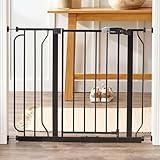
- ✅TESTED & TRUSTED BABY SAFETY GATE FOR OVER 30 YEARS: Parent-trusted safety gate certified by the Baby Safety Alliance.
- ❤️AMERICAN DESIGNED & FAMILY OWNED BABY GATE BRAND: Designed in the USA by parents, for parents. Regalo is a family-owned, US-based brand delivering trusted baby safety gates and child safety products for over 30 years.
- 🔒EXTRA WIDE BABY GATE FOR DOORWAYS & BOTTOM OF STAIRS: Expands to fit openings 29–38.5" wide and stands 30". Ideal for bottom of stairs, hallways, and doorways. FITS OPENINGS: 29–32" no extension, 35.5–38.5" with 6". DOES NOT FIT OPENINGS: 32–35.5".
- EASY SETUP WITH PRESSURE MOUNT DESIGN: ⚠️Install according to manufacturer’s instructions. ⚠️Wall cups must be used to keep the gate securely in place. ⚠️ To prevent falls, never use at the top of stairs.
- 🐾CHILD & PET SAFE | PUERTA DE SEGURIDAD PARA BEBÉS Y MASCOTAS: Walk-through safety gate designed for babies 6–24 months and small to medium pets. Features a secure safety locking system for parent convenience.
Prepare before the baby arrives or routines change
Auckland Council’s guidance, published February 2, 2024, recommends preparing restrictions and routines before the new baby arrives. Decide in advance whether the nursery is off-limits, where the dog will rest, who will provide walks and meals, and how visitors will be managed. Practice the barrier and settle routine before the infant’s first nap.
Introduce changes gradually. If the dog’s bed must move, relocate it in stages. If feeding or walking times will change, shift them before the birth when possible. Continue rewarding calm behavior around baby equipment, crying sounds, and increased household activity. Texas A&M’s September 18, 2020 guidance similarly stresses rewarding good behavior around an active baby and maintaining supervision.
Quick wins for a faster PC:
Repair Windows errors before they cause bigger problemsFix Now →Scan for outdated or missing drivers - takes under a minuteDriver Scan →Keep a written plan for tired caregivers: which door closes, where the dog goes, what enrichment is safe, and who can take over if the primary caregiver is occupied. Consistency matters more than a complicated setup. Every adult in the home should use the same cue, barrier, and response to barking.
When to involve a veterinarian or veterinary behaviorist
Professional advice is appropriate when the dog’s behavior is new, escalating, or difficult to interpret. Arrange an appointment if you see aggression, marked anxiety, repeated escape attempts, inability to settle, sudden sensitivity to the baby’s sounds, or a dramatic change in appetite, sleep, or activity. Pain and medical problems can affect behavior, so a veterinary examination is a sensible first step.
A veterinary behaviorist can assess risk, design a gradual behavior plan, and determine whether medication or additional support is appropriate. A qualified reward-based trainer may help teach a settle cue, but training should not replace veterinary assessment when aggression or severe distress is present. Until the dog has been assessed, maintain physical separation and do not conduct unsupervised experiments with the baby nearby.
What success looks like
Success is a repeatable household routine: the dog has a comfortable place away from the nursery, the barrier remains reliable, the baby sleeps without the dog entering the room, and calm behavior is reinforced during practice. Some dogs will still bark occasionally. The objective is to prevent access and reduce the frequency and intensity of disruptions without frightening the dog or compromising infant safety.





Leave a Reply