The Tool Desk
Outbyte PC Repair FREEClear out junk files and repair common Windows errorsFree Scan →Outbyte Driver Updater FREEScan for outdated or missing drivers - takes under a minuteDriver Scan →Your dog’s paw safety depends more on the ground than on the air temperature. Sun-heated asphalt, concrete, artificial turf, sand, sharp trail debris and rough rock can injure pads even when the weather feels comfortable. Before a walk, choose a cooler, shaded route, test the actual surface, and shorten or change the outing when conditions are unsafe.
For mixed lakeside trails and pavement, use this sequence: assess the route, build rough-ground tolerance gradually, add properly fitted boots when they genuinely help, inspect every paw after the walk, and stop for veterinary advice when you see burns, torn pads or persistent pain.
As an Amazon Associate I earn from qualifying purchases.
Why the ground matters more than the forecast
Air temperature is only an indirect clue to paw risk. Dark, exposed surfaces absorb solar heat and can become far hotter than the surrounding air. The American Animal Hospital Association (AAHA) reports that ground temperatures may run 40–60°F above air temperature. Its example is 86°F air with asphalt at 135°F; burns can occur in 60 seconds under those conditions. AAHA published that guidance on June 12, 2026.
PC Slower Than It Used to Be?
A free scan shows the junk files, broken settings and background clutter dragging Windows down - then fixes them in one click.Free scan · Windows 10 & 11Crashes, No Sound, or Screen Glitches?
Random freezes, missing sound and display glitches usually trace back to one bad driver. Find and replace yours safely.Free scan · under a minuteThose numbers are warnings, not a universal stopwatch or a guaranteed injury threshold. Shade, wind, humidity, the dog’s weight and gait, the route’s duration, and the individual pad condition all change the outcome. A surface that is tolerable for a brief shaded crossing may be dangerous after a long exposed walk.
#1 Best Overall
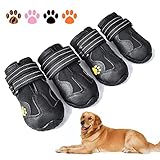
- 【Size】Size 8:(3.3''x2.9'')(L*W) for 75-95 lbs.Great for Large Golden Retriever;German Shepherd,Rottweiler;Old English Sheepdog;Alaska Malamute;Bulldog etc.Please refer to the picture size chart,You can choose the right size for your dog for the most comfortable fit. Please be sure to measure the width of your dog's paws carefully, it is key to choosing the correct size for your dog, weight can only be used as an additional reference
- 【High-quality materials:】 High quality fabrics,wear resistant,to bear or endure dirty, Have cute pet paw embroidery, soft and hand washable, fashionable yet durable.Durable soles,tough anti-slip sole provides stability and traction,Helps dogs with mobility and stability on tile and the sand .
- 【Comfortable:】Soft and breathable to paws,so allows the boots to be used indoors or outdoors, hot and cold in wet and dry conditions.Protection from sharp thorns and hot pavement.Effectively protect dog claws from heat, stones, glass, etc. It protect the weak paw from snow, ice, salt during winter.
- 【Safe and Adjustable:】Easy to put on / off ,the dog shoes are fastened firmly by 2 straps, which are long and adjustable , capable to prevent slipping off and supply a customized tightness for secure closure and have reflective straps,reflective lines enhance visibility all the night ,also make your love dog safe .Please try to tighten the straps after wearing,which can effectively prevent the shoes from falling off the dog's claws.
- 【Friendly customer service:】Our size is based on the inner diameter of the shoe and is measured by hand,Please allow a little size error.You are welcomed to contact us for any questions about the products and services at any time.If you have any questions when using our products or are unsure how to choose the right size for your dog, please feel free to contact us. We will respond within 24 hours and you can purchase with confidence.
What hot pavement can look like
A dog may continue walking despite pad damage because excitement masks pain. Watch for slowing, sudden reluctance to move, limping, repeated paw lifting, licking or chewing, vocal distress, or a change from a normal stride. Redness, unusual discoloration, blisters, peeling or exposed tissue are visible warning signs that require the walk to end.
Plan the route before you leave
Choose cooler timing and shade
Walk during the coolest practical part of the day, and favor tree cover, grass and dirt over long stretches of sun-baked pavement. AAHA and Zoetis Petcare both recommend adjusting the route and timing rather than expecting a dog to tolerate hazardous ground. A lakeside route can still be hot where a paved access road, boardwalk or parking area is fully exposed.
Map the hard sections in advance. Identify grassy shoulders, shaded trail entrances and places where you can turn around. If the only way to reach the lake is across a hot sidewalk, postpone the outing or carry the dog across only when that is safe and practical; do not treat a short connector as harmless simply because the destination is cooler.
Separate surface risk from water access
Lakeshores do not have one set of paw rules. A packed dirt path, loose gravel, concrete launch, sandy beach and rocky edge create different hazards. The available veterinary guidance supports general rough-terrain and heat precautions, not a universal lakeshore hazard list.
Rank #2
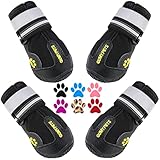
- Please be sure to measure the width of your dog's paws carefully, it is key to choosing the correct size for your dog, weight can only be used as an additional reference; Size 1: 1.8''x2.3''(W*L) for 11-23 lbs; size 2: 1.9''x2.4''(W*L) for 18-27 lbs; size 3: 2.0''x2.5''(W*L) for 23-33 lb; size 4: 2.2''x2.6''(W*L) for 31-40 lbs; size 5: 2.4''x2.8''(W*L) for 40-55 lbs; size 6: 2.6''x3.0''(W*L) for 52-65 lbs; size 7: 2.8''x3.2"(W*L) for 63-75 lbs; size 8: 3.0''x3.3"(W*L) for 74-88 lbs
- SECURE and ADJUSTABLE: Easy to put on / off. These dog shoes expands with a wide split seam opening and two adjustable and reflective straps to ensure a tight fit, also make your dog safe at night
- RUGGED: Tough slip-proof sole of dog boots provides stability and traction, protection from rough terrain
- QUALITY: The dog boots have a rugged sole and high quality fabrics that are then sewn together to ensure they are ready for your adventure
- FASHIONABLE: QUMY dog boots are with cute pet paw embroidery, paws side is the outside, soft and hand washable
Water can change pad condition. PetMD, in a June 12, 2026 article reviewed by veterinarian Angela Beal, DVM, FFCP, notes that water softens paw pads and may increase injury risk. If your dog swims before walking, keep the following trail section conservative, avoid sharp or abrasive ground, and inspect the paws afterward. The guidance does not establish a required waiting period, so use the pad’s condition and your dog’s comfort to decide.
Check the actual surface at paw level
Use the seven-second hand test
Place the back of your hand on the walking surface for seven seconds, as AAHA recommends. If you cannot keep it there comfortably, choose a different route or wait for cooler conditions. This is a screening method, not a guarantee: a surface may pass the test yet still become unsafe during prolonged walking, in direct sun or for a dog with already irritated pads.
Evaluate each section, not just the trailhead
| Surface or section | Typical concern | Safer decision |
|---|---|---|
| Exposed asphalt or dark concrete | Rapid heat buildup and pad burns | Use shade, grass or dirt; walk at a cooler time; turn back if the surface is hot |
| Light concrete or paved sidewalk | Can retain heat even when air feels mild | Perform the seven-second test and limit exposure time |
| Artificial turf, sand or metal surfaces | AAHA identifies these among surfaces that can become dangerously hot | Route around them when hot; provide a cooler alternative |
| Gravel, rough rock or eroded trail | Abrasion, cuts and lodged stones | Increase exposure gradually; consider boots; inspect between toes afterward |
| Grass or shaded dirt | Usually cooler, but may hide sticks, burrs or sharp debris | Scan the path and check paws after the walk |
| Wet shoreline or recently soaked paws | Softened pads may be more vulnerable to tearing | Keep the next section easy and avoid sharp ground |
Look for hazards beyond temperature
Before starting, survey the route for broken glass, metal, fishing hooks, sharp stones, salt or chemical residue. VCA Animal Hospitals advises avoiding hazardous or salt-covered surfaces and checking walking areas for objects that can pierce or tear a pad. On a lakeside trail, debris can be concentrated near access points, picnic areas and boat launches.
Build tolerance to rough trails gradually
Healthy pads become more resilient with regular, controlled use, but “toughened” pads are not invulnerable. Zoetis Petcare recommends increasing exposure to rough surfaces gradually and checking the pads, webbing and spaces between toes after outings.
Rank #3
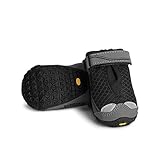
- SOLD IN PAIRS – NOT A SET OF 4. Dogs often have wider front paws than rear paws. That’s why we sell our dog boots in pairs—so you can mix sizes and get the perfect fit on all four paws. A better fit means fewer slips and more miles together.
- FIND THE RIGHT FIT WITH EASE. Not sure which size to choose? Check out our sizing chart image and how-to-fit video to help you measure your dog's paws correctly. A proper fit means more comfort, control, and confidence on every adventure.
- TRAIL-TESTED GRIP FOR EVERY TERRAIN. Built with rugged Vibram Outsoles for non-slip traction. Whether you're crossing hot pavement, slick tile, rocky trails or everything else in between.
- STAY-ON FIT, EVEN DURING ZOOMIES. Adjustable hook-and-loop ankle straps and ergonomic shape help the shoes for dogs stay on. Even for strong pullers and high-energy pups.
- DESIGNED FOR ALL-SEASON PROTECTION. Breathable yet durable, the ripstop upper blocks heat, snow, salt, and moisture—helping paws stay protected from trails to sidewalks.
A practical progression
- Start on familiar, forgiving ground. Use short walks on grass, smooth dirt or a shaded path while the dog is comfortable.
- Add one variable. Introduce a brief section of packed gravel or mildly rough trail, then return to a comfortable surface.
- Increase only one factor at a time. Extend distance, roughness or duration separately rather than making all three harder in one outing.
- Check the paws that day and the next morning. Redness, tenderness, licking or a shortened stride means the previous session was too much.
- Back off after a setback. Return to an easier surface until the paws look and feel normal, and seek veterinary advice for persistent or visible damage.
Do not use a long pavement walk to “condition” pads. Heat and abrasion can accumulate before a dog shows obvious pain, and conditioning does not make a dangerous surface safe.
When dog boots help—and when they do not
Well-fitted dog booties or all-terrain boots can add a physical barrier on rough ground and provide useful protection for some hot or abrasive sections. AAHA’s official recommendation is: “Use paw protection — Consider well-fitted dog booties or paw wax to protect your pet’s paws.” The American Kennel Club (AKC) also discusses all-terrain boots, secure fit and gradual acclimation.
Match the boot to the route
- Fit: The boot should stay on during normal walking without squeezing the toes, cutting into the ankle or sliding enough to rub.
- Sole: Choose traction appropriate to the intended terrain; a smooth sole may slip on wet rock, while an overly stiff design can make natural movement difficult.
- Coverage: The boot should cover the pad and intended lower-paw area without restricting flexion.
- Ventilation and moisture: For warm conditions, avoid designs that trap excessive heat or moisture; remove and inspect them during longer outings.
- Comfort: A dog must be able to walk normally. Repeated stumbling, freezing, chewing at the boot or an altered gait is a reason to stop and reassess.
Introduce boots in stages
- Let your dog sniff the boots and pair them with treats.
- Put one boot on indoors for a few seconds, then remove it before the dog becomes distressed.
- Progress to all four boots for short periods on a clean, level floor.
- Practice brief outdoor walks on a cool, forgiving surface.
- Inspect for rubbing after each session and increase time only when the gait remains normal.
Check the fit again after the dog moves. Straps can loosen, and swelling or moisture can change how a boot sits. Boots are not permission to continue on dangerously hot pavement; change the route or wait when the ground itself is unsafe.
Do these 3 things before closing this tab:
1Clear out junk files and repair common Windows errors2Fix the driver behind crashes, sound loss and screen glitches3Repair Windows errors before they cause bigger problemsPaw wax and balm: an optional, limited tool
Paw wax or balm is a simpler topical option mentioned by AAHA and Zoetis Petcare for protection or conditioning. It may help reduce dryness and provide a modest barrier, but the sources do not establish a formulation, a guaranteed burn-prevention effect or equivalent protection against sharp terrain.
Rank #4

- 【PROMOTES SAFE RECOVERY】 Ideal for indoor and outdoor use, these protective sleeves help shield wounded or sensitive paws and hooves. They prevent pets from licking irritations or scratching furniture, accelerating the healing process.
- 【SECURE FASTENING SYSTEM】 Designed with upgraded, durable fastening straps, our pet boots stay firmly in place without cutting off circulation, giving your dog a worry-free walking experience.
- 【LIGHTWEIGHT & ERGONOMIC】 No more awkward walking! The lightweight materials ensure your pet feels unburdened, allowing natural movement while providing a solid barrier against indoor dirt and outdoor sharp elements.
- 【ALL-SEASON COMFORT】 The flexible, breathable weave fabric conforms perfectly to your pet's leg anatomy, keeping paws cozy in winter chill and refreshingly ventilated during warm summer days.
- 【EASY SPECIFICATIONS】 Package includes a set of protective boots in eye-catching red. Please measure your pet's paws carefully according to our guide before ordering to ensure the perfect, supportive fit.
Apply only a product intended for dogs and follow its label. Do not use balm to justify a long walk over a surface that fails the hand test, and do not assume a visible coating prevents punctures, cuts or burns. Route and timing remain the primary controls.
Independent reader supportYour contribution helps us test, update, and keep practical guides available for everyone.Manage a mixed lakeside walk in real time
Use a surface-by-surface decision rule
At every transition—grass to sidewalk, dirt to gravel, or trail to a concrete launch—pause and reassess. If the new section is hot, sharp, heavily eroded or contaminated, choose the cooler alternative, shorten the walk or turn around. A boot may make a manageable rough section more comfortable, but it cannot remove heat from the ground or guarantee traction.
Keep the first outing conservative after swimming
After a swim, towel the paws and look for softened, pale or wrinkled pads, trapped grit and debris between the toes. Choose grass or smooth dirt for the next segment. Avoid a long rocky loop immediately after the paws have been soaked, because softened tissue may tear more readily.
What’s actually slowing this PC down?
Pick the symptom - the matching free tool is one click away.
Watch behavior continuously
Stop at the first sign of repeated paw licking, chewing, limping, reluctance to move, frequent paw lifting or vocal distress. Move to shade or a cooler surface and examine the paws when the dog is calm. Waiting for a dramatic limp can turn a small irritation into a larger tear.
Best Value

- Trail-Ready Paw Protection: Our specialized hiking balm for dog paws is designed to shield paws from sharp rocks, uneven terrain, thorns, sticks, and other hazards, ensuring their safety and comfort
- Ditch the Generic Paw Balms: Not all paw balms are created equal! Rhino Wax is the only paw balm formulated to provide superior protection against trail-specific hazards. This is a paw balm dogs love
- Moisturizes and Improves Elasticity: Beyond protection, Trail Wax acts like a dog paw moisturizer, improving paw pad elasticity, so your dog can enjoy hiking without paw discomfort or damage
- Lick-Safe and Natural: We understand the importance of safety. Our dog balm for paws is proudly lick-safe, ensuring you and your dog can enjoy hiking without worry
- Easy to Apply: Before hitting the trail, apply Trail Wax directly to your dog's paws using the applicator tube. Distract your dog with a toy or treat for a few minutes to allow wax to absorb
Inspect every paw after the walk
Make a post-walk check part of the routine, especially after pavement, gravel, rocky shoreline or swimming.
- Rinse or wipe away contamination. Remove grit, salt and residue with clean water; dry gently.
- Check the top and bottom of each paw. Look at every pad for cuts, discoloration, redness, blisters, peeling or unusual softness.
- Separate the toes. Inspect the webbing and spaces between toes for small rocks, thorns, burrs, glass or fishing debris.
- Compare sides. A single swollen or discolored paw is easier to spot against the unaffected paws.
- Observe the next few steps. A dog that walks normally immediately after the check can still develop soreness later, so recheck after rest if the outing was demanding.
Do not pull out a deeply embedded object or probe a wound aggressively. Secure the dog, prevent licking if possible and contact a veterinarian for removal and treatment advice.
What to do if a paw is burned or torn
Immediate steps
- Move the dog off the hot, sharp or contaminated surface to shade or a cool, clean area.
- Gently rinse a suspected heat injury with cool water. Do not apply ice directly, because extreme cold can worsen tissue damage.
- Keep the dog from licking or chewing the paw while you assess it.
- Call a veterinarian for guidance, particularly when there is blistering, discoloration, exposed tissue, a deep cut, heavy bleeding or severe pain.
AAHA lists limping or avoiding walking, repeated licking or chewing, pad discoloration, redness, blisters and vocal distress as possible burn signs. VCA advises veterinary attention for discolored pads or exposed tissue and for torn or injured foot pads. A dog that cannot bear weight, has a foreign object lodged in the paw, or shows worsening pain needs prompt professional assessment.
Do not rely on home treatment for serious damage
Do not seal a dirty wound under a tight covering, apply human pain medicine, or continue the hike to “see whether it improves.” A veterinarian can determine whether the pad is burned, lacerated, infected or carrying a foreign body and can prescribe appropriate pain control and wound care.
Quick Recap
Common mistakes that cause preventable paw injuries
- Judging by air temperature alone: Pavement can be far hotter than the forecast suggests.
- Testing only at the trailhead: Sun exposure and surface material can change within minutes.
- Increasing distance and roughness together: Pads need gradual adaptation, not a sudden long hike.
- Putting boots on for the first time on a major outing: Unfamiliar boots can rub, slip or alter the gait.
- Assuming balm is armor: Topical products do not replace route changes on extreme heat or sharp ground.
- Ignoring a post-swim walk: Water-softened pads may need a gentler surface afterward.
- Waiting for visible bleeding: Licking, limping and repeated paw lifting can signal injury before a wound is obvious.
- Continuing because the destination is close: The final exposed sidewalk or launch ramp can be the hottest or roughest part of the route.
A simple pre-walk and post-walk checklist
Before leaving
- Check the forecast, sun exposure and expected surface temperature.
- Plan shaded, grassy or dirt alternatives and a turnaround point.
- Perform the seven-second back-of-hand test on exposed pavement.
- Pack water, a towel, basic cleaning supplies and any already-tested paw protection.
- Confirm that boots fit securely and show no worn edges or damaged straps.
During the walk
- Reassess at every surface change.
- Keep rough-terrain exposure short when building tolerance.
- Watch for licking, chewing, limping, paw lifting or reluctance to continue.
- Leave hot, sharp or contaminated ground immediately.
After the walk
- Rinse or wipe paws and dry them.
- Inspect pads, webbing and between the toes.
- Look again after rest if the dog swam or walked on demanding terrain.
- Contact a veterinarian for burns, discoloration, blisters, exposed tissue, deep tears, embedded objects or persistent pain.
Product prices and availability are accurate as of the date/time indicated and are subject to change. Any price and availability information displayed on Amazon at the time of purchase will apply.




