Quick wins for a faster PC:
Clear out junk files and repair common Windows errorsFree Scan →Scan for outdated or missing drivers - takes under a minuteDriver Scan →Repair Windows errors before they cause bigger problemsFix Now →Call a veterinary hospital now if your dog has taken a significant blow, fall, collision, or other impact to the head. Ask whether to come straight to an emergency service, describe what happened and when, and follow the clinic’s transport instructions. A dog can have dangerous brain or other internal injuries without a cut or swelling, and signs may worsen after an initially normal period. An online checklist cannot diagnose or rule out a head injury.
When a dog’s head injury is an emergency
Any substantial trauma deserves a veterinary call. Treat the situation as an emergency if your dog is unconscious, collapses, has trouble breathing, is bleeding heavily, or develops a seizure. These problems can threaten life within minutes and require professional assessment rather than observation at home.
As an Amazon Associate I earn from qualifying purchases.
Head trauma can also occur without an obvious external wound. Impact may injure the brain, skull, neck, or other body systems. The MSD Veterinary Manual’s emergency guidance notes that trauma patients may have injuries beyond the area that first attracts attention, including internal bleeding, fractures, and neurologic injury.
Do not wait for a dramatic sign before calling. A dog that seems briefly normal can later become lethargic or weak or develop breathing difficulty. VCA’s guidance for falls recommends close observation for several days after a fall, but monitoring is an addition to veterinary advice—not a substitute for an examination after significant trauma.
#1 Best Overall

- AIRLINE APPROVED CARRIER - With airline-approved design, you can take your pet to go to everywhere. This pet carrier provides two connecting loop handles for balanced carrying as a dual seat belt or luggage strap to secure transport
- SAFETY DESIGN - The adjustable shoulder strap help you hands-free carrying and makes it more safe and convenient pet carrier bag for your travel
- DURABLE - This cat carrier is made of durable and lightweight polyester fabric. The four-side mesh will not only give a safe and comfortable travel for your pet, but also easy for you to check on your pet
- PORTABLE & FOLDABLE - This dog carrier is easy to carry and store, which has a padded shoulder strap and handles
- BOTH SIZES AND WEIGHTS - The mediun cat carrier is designed for small and medium pets within 15" x 9" x 9"(smaller than product) and 15 lbs. Please do not choose your carrier only based on weight. Reference your pets' length and height in selecting a carrier size.If carried on board, the maximum dimensions should not exceed 18IN*11IN*11IN.
Call immediately even if you are unsure whether the impact was “hard enough.” The mechanism matters: a fall, vehicle collision, blow, bite, or crush injury can transmit force to the head and spine without leaving a mark. Tell the triage team exactly what you saw instead of trying to grade the injury yourself.
Warning signs to look for after an impact
These signs can indicate a serious problem. You do not need to identify which injury is present before seeking help.
Changed consciousness or responsiveness
- Loss of consciousness, collapse, or inability to wake the dog normally
- Marked drowsiness, weakness, or a dog that is less responsive than usual
- Confusion, disorientation, or an abnormal reaction to people and surroundings
A dog’s level of awareness can change over time. Tell the hospital whether your dog was conscious immediately after the event and whether responsiveness has changed since then. Note whether the dog recognizes familiar people, can focus on you, and responds normally to its name, but do not repeatedly stimulate or handle the dog to test it.
Seizures and abnormal movement
- A seizure or repeated seizure-like episode
- Uncoordinated, abnormal, or unusually weak movement
- Difficulty standing or walking that was not present before the trauma
Keep your hands away from a seizing dog’s mouth and move nearby hazards only if you can do so safely. Once the episode ends, call the veterinary hospital and report its duration and what you observed. If another episode starts, protect the dog from falls and furniture without trying to hold the body down or place anything in its mouth.
Unusual behavior
Sudden behavior changes—such as extreme agitation, unusual passivity, or failure to respond normally—are relevant after a blow or fall. Pain, shock, and injury elsewhere in the body can also change behavior, which is another reason an examination is needed rather than a home diagnosis. A normally friendly dog may growl or snap when frightened or painful; treat that change as a safety warning, not as deliberate misbehavior.
Bleeding or visible trauma
- Bleeding from the nose or ears
- Bleeding into the eyes or other abnormal eye appearance after trauma
- A visible wound, swelling, or deformity of the head or face
- Severe bleeding from any part of the body
Blood around the nose, ears, or eyes after an impact is an urgent warning sign. Do not probe a wound, press on a deformed area, or force the head into a position that increases pain. Even a small-looking facial injury can coexist with deeper injury.
Rank #2

- High Quality Design:Sturdy steel cage structure and wooden support board maintain good spatial stability and shape. Breathable mesh windows on four sides,which can ensure good air circulation and views,make pets have a comfortable and safe travel.It can also be easy for you to check on your pets.There is a front pocket to store pet toys,treats,etc.
- Dimension and Weight:Made of durable tear-resistant fabric.Four easy entrances for pets. Dimensions: 17 inch x 11 inch x 11 inch (L*W*H), suitable for pets up to 16 lbs.Please don't choose your carrier based on weight only,consider your pet's length and height when choosing a carrier.
- Airline Approved & Safty:Can be placed under the seats of most airplanes(Four non-slip feet on the bottom to prevent movement), and comfortably on the seat next to you in a car or bus.It has a adjustable shoulder strap.Can also be fastened to the car seat with a safety belt or shoulder strap to keep your pet safe.
- Easy to Clean :You can clean the stains and dirt on the surface with a soft cloth.Soft mat inside the pet carrier is removable and washable.You can take it out and wash it easily to solve all stains.
- Easy to Collapsible & Lightweight:When not in use,fold it into a flat,space saving and easy to store.Only 2.2lbs,it's easier to carry around.It can also used as a toy of pet house,allowing pets to play in a safe space to relax and rest.
Breathing trouble, collapse, or temperature concerns
Difficulty breathing, collapse, and loss of consciousness require immediate emergency care. Brain injury can interfere with temperature regulation, so an abnormal body temperature can be part of a serious trauma picture. Do not delay transport while trying to correct temperature at home; tell the veterinary team what you noticed. Pale, gray, or blue-looking gums, if present, should also be reported as part of the breathing and circulation picture.
Windows Errors? Fix Them Before They Spread
Repair common Windows errors and clear accumulated junk for a smoother, more stable PC - no reinstall needed.Free scan · no reinstallOutdated Drivers Are Slowing You Down
One free scan finds every outdated or missing driver and matches the right update for your exact hardware.Free scan · exact hardware matchWhat to do in the first minutes
Work through these steps while arranging professional help. The MSD Veterinary Manual emphasizes that restraint must protect both the owner and the animal before first aid begins: “It is vital that the owner adequately restrain the pet before starting any first aid procedures to ensure the safety of both owner and pet.” Read the full first-aid and transport guidance for the handling principles below.
- Protect yourself. A frightened, painful, or disoriented dog may bite, even if normally gentle. Approach slowly and keep your face away from the dog’s mouth. Use restraint only when you can do it without provoking a struggle or compromising breathing. Keep children and other pets away, and ask a helper to open doors and clear a route if possible.
- Call a veterinary hospital. Say that head trauma is suspected. Give the time and mechanism of injury, your dog’s level of consciousness, breathing status, any seizure, and visible bleeding or wounds. Ask where to go and follow the clinic’s instructions. Calling ahead allows the team to prepare and can prevent a delay at arrival. If the first clinic cannot receive emergencies, ask where it directs trauma cases rather than losing time calling multiple facilities.
- Keep the dog quiet and limit movement. Prevent running, jumping, and unnecessary handling. Support the body as a unit and minimize movement of the head, neck, and spine. If a neck or spinal injury is possible, do not overextend the neck. Keep the dog in the position that permits the easiest breathing unless the hospital instructs otherwise.
- Choose transport that avoids forcing a position. A small dog may be placed in a carrier or strong box. If the carrier has a removable top, take the top off and lower the dog in rather than pushing it through a small door. For a larger dog or suspected spinal injury, a blanket and suitable rigid support can help several people move the dog while limiting bending and twisting. Coordinate movements before lifting so nobody pulls a limb or neck unexpectedly.
- Leave promptly. A temporary improvement does not prove that the dog is safe. VCA’s information on brain injury in dogs advises veterinary examination after an accident even when a dog appears to have recovered. Have one person drive while another watches the dog if that can be done safely; do not distract the driver with repeated examinations.
Choosing a safer way to move your dog
The best option depends on size, the dog’s ability to enter without being forced, and whether the method helps keep the head, neck, and spine aligned. Ask the hospital for specific instructions if you are uncertain.
| Situation | Possible support | How to use it | Important limitation |
|---|---|---|---|
| Small dog that can be handled without a struggle | Carrier or strong box | Remove the carrier top when possible; lower the dog in while supporting the body. | Do not force the dog through a narrow opening or allow it to move around unnecessarily. |
| Large dog that can be lifted by more than one person | Blanket used with suitable rigid support | Coordinate the lift and keep the body, neck, and head as stable as practical. | A blanket alone may allow bending; follow veterinary direction about support. |
| Possible neck or spinal injury | Rigid support with coordinated lifting | Limit twisting and keep the neck from being overextended. | Do not improvise a maneuver that increases pain or breathing difficulty. |
| Dog that is frightened, painful, or resisting | The least restrictive safe method advised by the hospital | Prioritize airway and breathing and avoid a prolonged struggle. | Unsafe restraint can injure the dog or the people handling it. |
These items are transport aids, not treatments for brain injury. Do not delay veterinary care to obtain equipment. If no ideal support is available, tell the hospital what you have and ask how to move the dog with the least risk.
When a muzzle is unsafe
A muzzle can reduce bite risk in some circumstances, but it is not automatically appropriate after head trauma. The MSD Veterinary Manual’s emergency instructions caution against muzzling a dog with chest injuries or a short-nosed breed. Do not use one if it could obstruct breathing, worsen a facial injury, or prevent vomiting or other essential responses. Never leave a muzzled dog unattended. If fitting a muzzle would require a fight, ask the veterinary team how to transport the dog safely instead. A loose improvised covering can also slip and interfere with breathing, so do not substitute one without professional direction.
What’s actually slowing this PC down?
Pick the symptom - the matching free tool is one click away.
Why an initially normal dog still needs advice
Some effects of trauma are not obvious immediately. After a fall, a dog may look comfortable and then become weak, lethargic, or short of breath. This delayed change is why VCA recommends close monitoring for several days after a fall. Monitoring should be active: keep the dog quiet, observe responsiveness, movement, breathing, and behavior, and report any deterioration at once.
Rank #3

- Premium Materials And Design: The TOMKAS puppy carrier is made from selected fabric. The fabric is thick enough to ensure softness and reassure furry children.Hardware and snaps are durable.TOMKAS dog carrier has a large opening that can easily put pets in it.You can move the safety belt to change the bag's capacity, and press on the snaps to help close the opening.The sutures are tough, well-made and not prone to cracking. TOMKAS dog bags are great chihuahua and Yorkshire accessories.
- Sufficient Safety: pets can be easily put into TOMKAS small dog carrier sling after a brief acclimation. You just put your dog in it, attach the safety buckle to the leash buckle on the vest or harness. If your pet wants to jump out of the pouch, the safety belt will stop it from this dangerous behavior and keep your puppy safe. TOMKAS small dog sling is very reliable in terms of safety.Remember, never tie the safety buckle to the collar, it could hurt the dog's neck if it jumps out.
- Large-capacity classic pockets to store things: TOMKAS has a big pocket WITHOUT zipper on the front that can help you store your keys, cards, poop bag, wallet, some treats and even a dog leash; other dog slings without zippered pockets, It is easy to cause items to fall out during use. Especially the mobile phone, once it falls out, it will waste a lot of money. It is important to buy a reliable TOMKAS small dog carrier with a zippered pocket.
- Convenient Enough: TOMKAS dog purse is very comfy to carry your Chihuahua,Yorkie or any other small animal anywhere, anytime.Whether you are walking,outings,traveling, etc.,Some dogs are old,blind,injured or after surgery and they can't walk,you can put them in a TOMKAS puppy sling and take them to the vet or for a walk.Especially when fur kids are weak,TOMKAS puppy sling can help them get close to their owners.They most need the care of their owners to help them get through the difficulties.
- Size: high capacity 10 lbs. TOMKAS dog carry bag is best for pet weight: 3-10 lbs.PLEASE NOTE:The shoulder strap is NOT adjustable. This is the entry level dog bag, winning at a good price, but the features are not as perfect as the adjustable style of TOMKAS.There is NO sturdy plastic buckle on the shoulder strap to adjust the length. If multiple family members need to use it, you'd better to buy an adjustable style from TOMKAS , which can be easily used by both adults and children.
Do not use a period of normal eating, walking, or greeting you as proof that no injury exists. A significant impact warrants a veterinary conversation even when the dog appears recovered. If signs worsen while you are waiting or traveling, call the hospital again and explain the change. Ask how often the team wants updates and whether the dog should remain under observation rather than returning home.
During the advised monitoring period, record the time of any change. A simple timeline—sleepiness at 3 p.m., stumbling at 4 p.m., breathing change at 4:15 p.m.—helps clinicians judge progression. Do not wake the dog repeatedly, encourage exercise, or offer unapproved medication to see whether signs improve.
What the veterinary team may check
Emergency clinicians first look for immediately life-threatening problems. The initial priorities are airway, breathing, and circulation, as described in the MSD Veterinary Manual’s trauma assessment guidance. The team may also look for injuries outside the head, including internal bleeding, fractures, and damage to the nervous system.
The Tool Desk
Outbyte Driver Updater FREEFix the driver behind crashes, sound loss and screen glitchesFind Drivers →Outbyte PC Repair FREERepair Windows errors before they cause bigger problemsFix Now →For suspected brain injury, treatment decisions may involve maintaining adequate oxygen delivery, managing blood pressure, and controlling pressure within the skull. These are hospital treatments selected after examination and monitoring; they are not home interventions. The owner’s most useful contribution is a clear account of the event and safe, prompt transport.
Expect the veterinarian to ask when and how the trauma occurred, whether the dog lost consciousness, whether a seizure happened, how breathing has looked, and what changes you have seen since the event. If another person witnessed the accident, ask them to come or remain available by phone so details are not lost. Bring any medication list and mention existing illnesses, but do not postpone departure to gather paperwork.
Information to give the hospital on the phone
- What caused the impact: fall, collision, blow, bite, or another event
- The approximate time and whether the event happened once or repeatedly
- Whether the dog was conscious, collapsed, or seized
- Current breathing and responsiveness
- Bleeding from the nose, ears, eyes, or elsewhere, plus visible wounds or deformity
- Whether the dog can stand or walk normally
- Any change since the first few minutes, including increasing sleepiness, weakness, agitation, or breathing difficulty
- Your dog’s size and whether you have a carrier, blanket, or helpers for transport
Keep the phone on speaker only if doing so does not distract from safe handling. Follow the clinic’s directions rather than attempting procedures you have not been taught. If the dog’s condition changes during the call, say so immediately rather than waiting to finish the history.
Rank #4

- High Quality Design:Sturdy steel cage structure and wooden support board maintain good spatial stability and shape. Breathable mesh windows on four sides,which can ensure good air circulation and views,make pets have a comfortable and safe travel.It can also be easy for you to check on your pets.There is a front pocket to store pet toys,treats,etc.
- Dimension and Weight:Made of durable tear-resistant fabric.Four easy entrances for pets. Dimensions: 17 inch x 11 inch x 11 inch (L*W*H), suitable for pets up to 16 lbs.Please don't choose your carrier based on weight only,consider your pet's length and height when choosing a carrier.
- Airline Approved & Safty:Can be placed under the seats of most airplanes(Four non-slip feet on the bottom to prevent movement), and comfortably on the seat next to you in a car or bus.It has a adjustable shoulder strap.Can also be fastened to the car seat with a safety belt or shoulder strap to keep your pet safe.
- Easy to Clean :You can clean the stains and dirt on the surface with a soft cloth.Soft mat inside the pet carrier is removable and washable.You can take it out and wash it easily to solve all stains.
- Easy to Collapsible & Lightweight:When not in use,fold it into a flat,space saving and easy to store.Only 2.2lbs,it's easier to carry around.It can also used as a toy of pet house,allowing pets to play in a safe space to relax and rest.
Common mistakes that can make trauma worse
- Waiting for an external wound. Serious injury can occur without a visible cut.
- Assuming a normal appearance rules out danger. Signs may be delayed after a fall or impact.
- Letting the dog walk around to “test” it. Unnecessary movement can aggravate injuries, particularly to the neck or spine.
- Overextending the neck during lifting. Support the body and keep movement controlled when head or neck trauma is suspected.
- Forcing a carrier, muzzle, or examination. Struggling can worsen injury and expose people to bites.
- Leaving a muzzled dog alone. A muzzle is unsafe if it interferes with breathing and should never be left on without supervision.
- Delaying the call while searching for supplies. Transport aids can help, but none treats a head injury.
- Giving home medication without veterinary direction. The team needs an accurate picture of the dog and may need to make urgent treatment decisions; do not add an unapproved drug while arranging care.
- Focusing only on the head. Internal bleeding, fractures, chest injury, and spinal injury can accompany a head impact and may be less obvious at first.
What you can and cannot determine at home
At home you can recognize a change in consciousness, breathing, movement, behavior, or bleeding and communicate it quickly. You cannot determine from appearance alone whether the brain, skull, neck, or internal organs are injured, nor can you measure the oxygen delivery, blood pressure, or pressure within the skull that may affect treatment. That boundary matters: first aid is about safety and transport, not confirming or excluding a diagnosis.
Free tools Windows power users keep installed
One-click scans. No signup required.
If your dog has had a significant impact, make the call even if the only current sign is that something about the dog seems different. If there is collapse, breathing trouble, loss of consciousness, a seizure, or severe bleeding, state that immediately so the hospital can triage the case as an emergency.
Questions owners commonly ask
Can a dog have a serious head injury without bleeding?
Yes. A cut, swelling, or blood is not required for brain, skull, neck, or internal injury. A significant impact still warrants a veterinary call, especially if awareness, movement, breathing, or behavior changes.
My dog seemed fine after the fall. Can I wait?
Do not use an initially normal appearance to rule out injury. Deterioration can occur later, so contact a veterinary hospital promptly and follow its instructions for examination and monitoring over the next several days.
Should I make my dog walk to see whether it is injured?
No. Keep the dog quiet and minimize movement. Walking, jumping, or repeated handling can worsen injuries, particularly when the neck or spine may be involved.
Should I put a muzzle on my dog for the trip?
Only when it is safe and the hospital advises it. Do not muzzle a short-nosed dog or one with chest or facial injuries, breathing difficulty, or a need to vomit. Never leave a muzzled dog unattended.
Best Value
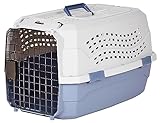
- Hard sided pet carrier with 2 doors for front and top entry; suitable for cat or medium size dog weighing 12 - 20 pounds
- Durable plastic construction with steel wire doors; screws keep the top and bottom sections securely connected
- Spring load latches ensure easy one-handed door opening and closing; top door swings open to the left or right and includes a top carry handle
- Plenty of air ventilation on the sides, top, and back of the carrier
- Note: Be sure to measure the size of the pet when choosing carrier size
What if I do not have a stretcher or rigid board?
Call the hospital and describe the dog’s size and suspected injuries. A carrier or strong box may suit a small dog; a blanket with suitable rigid support and coordinated lifting may help with a larger dog or possible spinal injury. Do not delay care while shopping for equipment.
How long should I watch a dog after a fall?
VCA advises close monitoring for several days after a fall, but monitoring does not replace veterinary assessment after significant trauma. Ask the treating hospital exactly what changes to watch for and when to call back.
Reliable veterinary guidance
- MSD Veterinary Manual: First Aid and Transport of Small Animals
- VCA Animal Hospitals: Brain Injury in Dogs
- VCA Animal Hospitals: First Aid for Dogs—Shock, Rescue Breathing, and CPR
- MSD Veterinary Manual: Evaluation and Initial Treatment of Dog and Cat Emergencies
- MSD Veterinary Manual: What to Do in a Dog or Cat Emergency
- MSD Veterinary Manual: Trauma in Emergency Medicine in Small Animals
- VCA Animal Hospitals: First Aid for Falls in Dogs
Frequently Asked Questions
What are the first signs of a brain injury in a dog?
Changed responsiveness, collapse, seizures, abnormal movement, sudden behavior change, bleeding from the nose or ears, bleeding into the eyes, breathing trouble, or unusual weakness after trauma are warning signs. Call a veterinary hospital rather than trying to diagnose the cause at home.
Can a dog look normal after a head injury?
Yes. Signs can be delayed. Contact a veterinary hospital after significant trauma even if the dog initially seems recovered, and monitor closely for deterioration as the hospital advises.
How should I transport a dog with suspected head or spinal trauma?
Keep movement to a minimum. Use a carrier or strong box for a small dog, removing the top when possible, or use a blanket with suitable rigid support and coordinated lifting for a larger dog or suspected spinal injury. Follow the hospital’s instructions.
Is it safe to muzzle a dog after head trauma?
Only in appropriate circumstances and without interfering with breathing. Do not muzzle a short-nosed dog or one with chest or facial injuries, and never leave a muzzled dog unattended.
How long should I monitor my dog after a fall?
VCA recommends close observation for several days after a fall, but this complements—not replaces—a veterinary examination and instructions after significant trauma.
The Bottom Line
After a significant impact, call a veterinary hospital promptly. Collapse, loss of consciousness, seizures, breathing difficulty, severe bleeding, or worsening awareness are emergencies. Protect yourself, keep your dog quiet, limit head-and-neck movement, choose transport that avoids forcing a position, and do not let an initially normal appearance delay professional assessment.
Quick Recap
Product prices and availability are accurate as of the date/time indicated and are subject to change. Any price and availability information displayed on Amazon at the time of purchase will apply.




