The safest introduction is brief, voluntary and managed by an adult: prepare a child-free retreat, keep the dog under control without forcing contact, reward relaxed behavior, and end the interaction at the first sign of discomfort. A baby or young child must never be left alone with a dog, including a familiar family pet. Young children cannot reliably interpret canine body language, so the adult—not the child or the dog—must manage distance, timing and every interaction.
Why introductions need a safety plan
Dogs and children can form a wonderful relationship, but friendliness is not a permanent guarantee. Any dog can bite, and children are especially vulnerable because they are small, move unpredictably and may not recognize when a dog wants space. The American Academy of Pediatrics (AAP) reports that more than 4.5 million people in the United States are bitten by dogs each year; at least half of the 800,000 people who receive medical attention for dog bites are children. The figure is presented on HealthyChildren.org without a publication year, so it should be treated as a general U.S. estimate rather than a prediction for your household.
As an Amazon Associate I earn from qualifying purchases.
A calm first meeting is only one part of prevention. Safety depends on management as the child begins crawling, grabbing, squealing and running. Even a dog that has always behaved well needs an adult to prevent situations involving food, sleep, pain, fear, confinement or a valued object.
Recommended Free Tools
Before the child meets the dog
Assess the dog honestly
Consider the dog’s history, health and current behavior before arranging contact. Note any guarding of food or toys, sensitivity to touch, fear of children, chasing, startle responses, snapping or previous bites. Pain and illness can lower a dog’s tolerance, so arrange a veterinary examination when behavior has changed or handling has become difficult. Do not assume that age, breed, size or a history of obedience predicts how the dog will respond to a baby.
#1 Best Overall

- Extra-Small 24-inch exercise play pen (single door) for dogs up to 16 inches tall or for other small pets
- 8 connected panels with thumb clips for connecting the ends together; 2 locking slide-bolt door latches; 8 ground anchors for secure placement outdoors; made of durable iron wire with a rustproof finish
- Can be easily configured into multiple stand-alone shapes (round, square, rectangle) for playtime or be used to block off a room
- Sets up in seconds; simply unfold, shape, and connect (no tools needed); folds flat for easy transport and storage
- Note: Do not leave pets unattended outdoors
If aggression has occurred or you suspect it could occur, do not conduct a close introduction while you work out a plan. Keep the dog and child separated and seek an experienced behavior professional promptly.
Build calm routines
When preparation time is available, introduce baby-related sights and sounds gradually. Let the dog investigate equipment at a comfortable distance, pair unusual sounds with food or another pleasant activity, and practice the routines that will change after the baby arrives. Useful behaviors include going to a bed, settling there, coming when called and moving away from a person or object on cue. These exercises can make daily management easier, but they are preparation options—not a guarantee of safe behavior.
Create a retreat the child cannot enter
Give the dog a quiet place where it can rest without being followed. Depending on your layout and the dog’s needs, this might be a bed behind a household barrier, a crate used positively, a separate room or an exercise pen. The dog must be able to leave interaction voluntarily, while the child is physically unable to enter the retreat. Keep water available and do not use the area as punishment.
The Tool Desk
Outbyte Driver Updater FREEScan for outdated or missing drivers - takes under a minuteDriver Scan →Outbyte PC Repair FREERepair Windows errors before they cause bigger problemsFix Now →| Setup | When it may fit | Safety checks |
|---|---|---|
| Bed behind a gate | The dog can relax in a familiar room while remaining part of household life. | The child cannot reach through or climb over the barrier; the dog can move away from traffic. |
| Crate | The dog already views the crate as a comfortable resting place. | Never allow a child to put hands through the door or approach while the dog is inside; do not introduce a crate solely for the arrival of the child. |
| Exercise pen | You need a flexible physical boundary around a bed or resting area. | Choose a size and construction the dog cannot knock over or climb; it is a separation aid, not a replacement for active supervision. |
| Separate room | The dog needs longer, undisturbed breaks or household activity is intense. | Use a secure door or gate and check the dog regularly; isolation should not replace exercise, social contact or behavior care. |
The first meeting with a baby
Use a quiet room, two adults if possible, and enough space to increase distance. One adult handles the baby; the other handles the dog. Remove competing toys and food from the area.
Rank #2
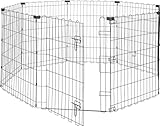
- Small 30-inch exercise play pen (single door) for dogs up to 20 inches tall or for other small pets
- 8 connected panels with thumb clips for connecting the ends together; 2 locking slide-bolt door latches; 8 ground anchors for secure placement outdoors; made of durable iron wire with a rustproof finish
- Can be easily configured into multiple stand-alone shapes (Octagonal, Square, Rectangle) for playtime or be used to block off a room
- Sets up in seconds; simply unfold, shape, and connect (no tools needed); folds flat for easy transport and storage
- Note: Do not leave pets unattended outdoors
- Start with separation. Let the dog notice the baby from a distance while the handler keeps a leash attached. The leash should provide control without pulling the dog toward the baby.
- Check the whole body. Proceed only if the dog appears loose and relaxed rather than frozen, crouched, tense or avoidant. A wagging tail by itself does not establish that the dog welcomes contact.
- Allow a voluntary approach. If the dog chooses to move closer, the handler can permit a short, loose-leash investigation. The dog may sniff the baby’s feet; do not place the baby’s face near the dog or hold the dog in position.
- Reward gentle behavior. Speak calmly and give a food reward for relaxed observation and soft, controlled movement. Keep the interaction brief.
- End before the dog is overwhelmed. Calmly call the dog away, offer another activity or guide it to its retreat, and give it a break. Several short sessions are safer than one prolonged encounter.
If the dog stiffens, avoids the baby, shows fear or cannot disengage, increase distance and finish the meeting. Never force a nervous dog to touch or accept the baby.
Introducing a toddler or mobile child
A toddler changes the risk because reaching, grabbing, shrieking and sudden running can startle a dog. Begin with the child stationary and the dog at a distance. An adult should control the child’s movement and the dog’s access; do not rely on the toddler to follow instructions consistently.
Teach one simple rule at a time
- “Gentle hands”: stroke with an open hand on the shoulder or back when an adult says it is appropriate.
- “Give space”: stop and step away when the dog goes to its bed, crate or gated area.
- “Ask first”: call an adult before touching, feeding or approaching the dog.
- “No face near faces”: avoid hugs, kissing, climbing, sitting on the dog or putting hands around the muzzle.
Demonstrate each rule and physically intervene before the child can break it. A toddler’s successful repetition does not remove the need for supervision.
Windows Errors? Fix Them Before They Spread
Repair common Windows errors and clear accumulated junk for a smoother, more stable PC - no reinstall needed.Free scan · no reinstallCrashes, No Sound, or Screen Glitches?
Random freezes, missing sound and display glitches usually trace back to one bad driver. Find and replace yours safely.Free scan · under a minuteIncrease freedom slowly
Keep the dog and child separated by a gate or distance when you cannot devote your full attention. During planned contact, keep sessions short and end while both are calm. As the child becomes more mobile, reassess the arrangement: a barrier that worked for a crawling baby may not contain a determined toddler, and a dog that could retreat before may become cornered by toys or furniture.
Rank #3

- 🐶【 ANTI-RUST METAL PET PLAYPEN】: The epoxy coating finish protects the pet playpen from rust, corrosion, fading and making it perfect for all weather conditions. The dog fence’s durable design extends the life of the fence, ensuring long-term use with minimal maintenance and doesn't take up much time to clean.
- 🐶【 STURDY AND CUSTOMIZABLE SHAPES】:The dog playpen is constructed from high-strength solid wire and securely fastened to the ground when outdoor. Our 8-Panel pet pen design allows for multiple shape configurations, including square, rectangle and octagon, to suit your space and pet's needs.
- 🐶【CONVENIENCE ENTRY FOR PETS】: The puppy pet playpen comes in sizes of 24in, 30in, and 36in with a doorless design.The larger sizes of 42in and 48in feature step door makes it easy for your pet to walk through and fence doors will not injure them,and equipped with 2 secure latches, this playpen ensures double security, preventing even the most energetic pets from escaping.
- 🐶【EASY TO ASSEMBLE AND STORE】: This dog playpen does not require any tool assembly and can be set up right away in just a few minutes. Simply position the fence upright and secure it with the included metal buckles. When not in use, the dog pen folds flat for convenient storage and transport.
- 🐶【VERSATILE USAGE】: Perfect for various kind of pets such as puppies, rabbits, guinea pigs, ducks, turtle and other small animals, this indoor and outdoor playpen offers a safe play area indoors or outdoors. Pet playpen provides ample space for your pets to exercise, explore, and relax while giving you peace of mind.
Supervision that actually works
Active supervision means watching and listening closely enough to intervene immediately, not merely being in the same house. Keep the child within reach during contact, put away distractions such as phones, and position yourself between the dog and child when necessary. If you need to cook, answer the door, sleep or leave the room, use a secure physical separation first.
Plan predictable breaks for the dog. Exercise, sniffing, training, feeding and undisturbed sleep reduce pressure that might otherwise surface during child interaction. Adults should agree on who is supervising before a child enters the dog’s space; assuming that someone else is watching is a common way gaps occur.
Recognize discomfort before it escalates
Read the dog’s complete posture, movement and context rather than relying on one signal. The American Veterinary Medical Association (AVMA) identifies turning away, stiffening, growling and trying to move out of reach as signs of discomfort. The ASPCA also lists lip licking, yawning, crouching, a tucked tail, flattened ears, unusual stillness and attempts to move away. Some dogs show subtle signs, and a wagging tail can occur with excitement, conflict or anxiety.
| What you may see | What it can mean | Adult response |
|---|---|---|
| Turns head or body away, licks lips, yawns | The dog may be uneasy or asking for distance. | Stop the child’s approach, create space and let the dog leave. |
| Crouches, tucks tail, flattens ears or becomes unusually still | Fear, uncertainty or an inhibited response. | End contact immediately; do not coax, corner or physically hold the dog in place. |
| Stiffens, stares, growls or tries to move out of reach | A clear warning that the interaction is too much. | Move the child away, provide a secure separation and arrange professional assessment. |
| Loose body, easy movement and voluntary disengagement | More comfortable behavior, but not proof that contact is risk-free. | Keep the session brief and continue supervising. |
A growl is valuable warning information. Do not scold, punish or startle the dog for growling. Suppressing warnings can remove the opportunity to intervene before a bite. Separate first, then investigate what happened and obtain qualified help.
Rank #4

- A win-win solution: The FXW Dog Playpen is designed to bring a win-win solution to you and your lovely dog. Different from a narrow enclosure cage or kennel, the FXW dog pen provides a spacious semi-open activity area specifically for your dog. Your dog will have fun in its safe and sturdy kingdom. Meanwhile, you can take a real break and be truly relaxed without worrying about your beloved pet. Fun, Relaxation and Well-being is the orientation of the FXW team.
- Unlock your freedom, savor the moment: The stakes are designed with rounded ball tops to protect the dog's claws from injury. The rods are easily inserted into the ground for greater stability and rigidity, which won't collapse when the dog leans against them. Also, the automatic gravity-actioned locking mechanism will ensure you can open and close the door smoothly and reduces the chance of dogs unlocking by themselves. All of this is designed for absolute safety, so you can really relax.
- Super easy to assemble: It won’t take you more than 5 minutes to assemble these portable dog fences as well as pack them away due to the rod-connected design. Meanwhile, panels can be added or removed freely to give you a fully flexible area and arrange the dog pen in any shape you need.
- Multi-scenario use: The FXW dog playpen features a powder coating that will help protect against rust and extend its life, which makes it ideal for RV camping, traveling, or for use in the yard. When used indoors, we recommend placing it on a dog pad or carpet to prevent the rods from scratching the floor, or please try our new floor protectors or dog pee pad for the same purpose.
Protect food, sleep, toys and personal space
Most preventable incidents happen around situations in which a dog cannot easily move away. Make these boundaries non-negotiable:
- Children do not touch a dog that is eating, chewing a bone, sleeping, ill, injured or caring for puppies.
- Adults, not children, retrieve bowls, high-value chews and disputed toys.
- Never allow chasing, wrestling, tail or ear pulling, climbing, riding, pinning, hugging or grabbing.
- Keep the child’s face away from the dog’s face and mouth.
- Call the dog away rather than sending a child to pull it from a bed, crate or corner.
- Store food, medication and small toys so neither the dog nor child can take them unexpectedly.
Teach the dog that a child approaching predicts an adult-managed, pleasant event at a safe distance—not that the child will take possessions away. If the dog guards an item, use separation and professional guidance rather than testing the dog.
Independent reader supportYour contribution helps us test, update, and keep practical guides available for everyone.When to stop introductions and get help
Separate the dog and child at once if you see a snap, bite, lunge, repeated growling, guarding, hard staring, freezing or an inability to retreat. Keep them apart while arranging help from a qualified professional experienced with aggression. The ASPCA lists a Certified Applied Animal Behaviorist, a board-certified veterinary behaviorist and a Certified Professional Dog Trainer as examples of relevant credentials; experience treating aggression matters more than a generic training label. A veterinarian can also check for pain or medical conditions that may influence behavior.
Do these 3 things before closing this tab:
1Fix the driver behind crashes, sound loss and screen glitches2Repair Windows errors before they cause bigger problems3Scan for outdated or missing drivers - takes under a minuteDo not attempt to “socialize it out” by exposing the child to increasingly intense reactions, and do not punish the dog. Until a professional has assessed the situation, use doors, gates or separate rooms so there is no opportunity for another incident.
Best Value
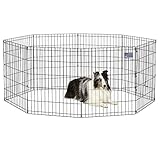
- Spacious Play Area: Includes eight 24 x 30 inch panels that create a 16 square foot enclosed area; suited for small to medium dog breeds
- Easy, Tool-Free Setup: No tools required; sets up in seconds and folds flat for convenient storage and portability
- No Door Design: Seamless panel configuration keeps pets secure; simple setup and takedown make it suited for indoor or outdoor use
- Built to Last: Black e-coat finish provides long-lasting protection against rust and the elements; suited for regular outdoor use
- Includes Assembly Accessories: Comes with four thumb-snaps for quick assembly and eight ground anchors for outdoor stability-no tools required
What to do after a bite
If a bite breaks the child’s skin, contact the child’s pediatrician even when the wound looks minor. HealthyChildren.org advises washing the wound, applying pressure if it is bleeding and covering it while seeking medical advice. Follow the clinician’s instructions about further treatment and report the incident as required in your location. Preserve separation between the dog and child while the dog’s health, vaccination status and behavior are evaluated.
Common mistakes that increase risk
- Assuming familiarity equals safety: A family dog still needs active adult management around a baby or toddler.
- Forcing a greeting: Holding a dog near a baby or preventing retreat can turn uncertainty into panic.
- Reading a wag as approval: Tail movement must be interpreted with posture, facial tension and the situation.
- Ignoring “small” warnings: Lip licking, turning away or freezing are reasons to create distance, not invitations to continue.
- Using punishment for warnings: Scolding a growl can hide the signal without changing the underlying discomfort.
- Relying on equipment alone: A crate, bed, gate or pen creates space but cannot watch the child or interpret the dog’s behavior.
- Letting the child manage the dog: Young children cannot reliably control leashes, toys, food or their own movements.
A repeatable household routine
- Before contact, remove food and high-value objects and confirm that the dog’s retreat is open to the dog and inaccessible to the child.
- Assign one adult to supervise; do not count on another adult to notice a developing interaction.
- Invite calm contact only when the dog chooses it and remains loose and able to move away.
- Interrupt at the first discomfort signal and provide distance or a break.
- After contact, give the dog undisturbed rest and record any behavior change for discussion with a veterinarian or behavior professional.
This routine should become more conservative, not less, as the child gains mobility. The goal is not to make the dog tolerate every touch; it is to prevent the child from overwhelming the dog and to give both a reliable way to disengage.
What the evidence does—and does not—show
ASPCA guidance supports gradual preparation, voluntary approaches, brief rewarded interactions, child-inaccessible retreats and professional help when aggression is present or suspected. AVMA emphasizes recognizing discomfort signals, and its April 9, 2026 child-safety release included this warning from president Dr. Michael Q. Bailey: “Dogs enrich our lives in countless ways, especially for children, but it’s important to remember that any dog can bite, and kids can be particularly vulnerable.”
Quick wins for a faster PC:
Repair Windows errors before they cause bigger problemsFix Now →Fix the driver behind crashes, sound loss and screen glitchesFind Drivers →These sources provide prevention guidance, not a guarantee. They do not establish that one household introduction protocol eliminates bites or produces a measured percentage reduction in risk. Use the principles to manage your particular dog and child, and obtain individualized veterinary or behavior advice when the history or behavior is concerning.
Quick Recap
Product prices and availability are accurate as of the date/time indicated and are subject to change. Any price and availability information displayed on Amazon at the time of purchase will apply.




