
Recommended Free Tools
Some links on this page are affiliate links: if you buy through them we may earn a commission, at no extra cost to you.
Report a suspected mountain lion to the wildlife agency in the state where you saw it. Use that agency’s current online form, email address, regional office, or phone line; there is no single national reporting channel. If the animal is creating an immediate danger to people, move to safety and contact local emergency services instead of waiting for a routine wildlife form.
A useful report includes the date and time, precise location, what the animal looked like, how it behaved, and original photographs, video, or track images when safely available. Do not approach, chase, corner, or delay leaving a dangerous situation to collect evidence.
As an Amazon Associate I earn from qualifying purchases.
Free tools Windows power users keep installed
One-click scans. No signup required.
How to report a mountain lion sighting
Start with the official wildlife agency for the state in which the sighting occurred, not the state where you live. Open that agency’s current mountain-lion or mammal-reporting page and follow the route it lists. Procedures differ by jurisdiction and may include an online form, email, a regional office, or a telephone information line.
Use a routine reporting channel when the animal has left and no one is in immediate danger. Contact local emergency services when a person is being threatened, the animal is behaving aggressively at close range, or officials’ urgent-response instructions direct you to do so. Emergency procedures and agency contacts vary locally, so do not treat any one state’s number as a national contact.
Popular on Amazon
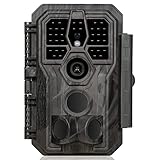
- 64MP Photos & 1296P HD Videos: Equipped with a high-quality optical lens and advanced image sensor, the E5S captures ultra-sharp 64MP photos and smooth 1296P HD videos.
- Low-Power, Eco-Friendly Wildlife Viewing: Simply retrieve the SD card to see what your camera has captured—each visit could bring a new surprise. Non-Cellular and Non-WiFi operation ensures minimal power use, fewer battery changes, and zero disturbances.
- Rugged & Weather-Resistant: Built to withstand harsh outdoor conditions with an IP66 waterproof rating. Features a 1/4"-20 mounting thread for secure placement on trees, posts, or fences. Ideal for use as a durable trail camera.
- Fast 0.1s Trigger Speed with 3 PIR Sensors: Never miss fast-moving deer wildlife. Three PIR sensors enable a lightning-fast 0.1s trigger speed motion activation, perfect for hunting purposes.
- Extended Power Options & Efficient Design: Powered by 8×AA batteries (not included). For continuous outdoor use, the E5S supports the GardePro SP350 Solar Panel (sold separately), ensuring reliable power even in remote areas.
State reporting routes are different
| State example | Routine route described by the agency | Important qualification |
|---|---|---|
| Missouri | Department of Conservation report form and an email contact for its Large Carnivore Response Team | Field investigations are limited to reports involving human safety or substantial physical evidence. |
| Indiana | Department of Natural Resources “Report A Mammal” form | Use the current form supplied by Indiana DNR. |
| Kentucky | Fish and Wildlife email or Information Center telephone line during weekday business hours | The agency asks for detailed time, location, and original image information. |
| Georgia | Department of Natural Resources regional Game Management offices | An after-hours contact is provided; confirm current regional routing on the state page. |
These examples show why a remembered phone number or an old social-media post can send a report to the wrong place. Agency forms and routing can change. Check the state agency’s current page each time you report.
Who do I call to report a mountain lion?
For a non-emergency sighting, call or write the state wildlife agency responsible for the location of the observation. Depending on the state, that may mean an online mammal form, a wildlife email address, a regional game-management office, or an information-center phone line. The agency’s own instructions determine which route is appropriate.
Do these 3 things before closing this tab:
1Repair Windows errors before they cause bigger problems2Scan for outdated or missing drivers - takes under a minute3Clear out junk files and repair common Windows errorsUse the location, not your home state
If you live in one state but see the animal while traveling, report it to the agency in the state where the animal was observed. Include the county, nearest town, park, road, trail, or property name so staff can route the information to the correct district.
Separate routine sightings from urgent incidents
A routine report is appropriate after a brief observation from a safe distance when the animal has moved away. A close encounter, a person being followed or threatened, or an animal remaining in a populated area requires a safety-first response. Move behind a secure barrier if possible and contact local emergency services when there is immediate danger. Reports involving livestock or pets may have a separate depredation process; check the state agency’s instructions rather than assuming the ordinary sighting form is sufficient.
If the mountain lion is still nearby
Do not approach the animal for a better view or photograph. California Department of Fish and Wildlife encounter guidance says, “Never approach a mountain lion. Give them an escape route.” It also says, “DO NOT RUN. Stay calm. Do not turn your back.”
- Get people and pets together. Keep children close. Bring dogs or other pets behind you or into a secure building if you can do so without moving toward the animal.
- Face the animal. Do not turn away or crouch in a way that makes you appear small.
- Leave an escape route. Do not block the animal against a fence, vehicle, building, or other obstacle.
- Make yourself look larger. Raise your arms, open a jacket, or stand on a safe elevated surface if one is immediately available.
- Make noise. Speak firmly, shout, or use another non-contact noise to discourage the animal while backing away slowly.
- Move toward safety without running. Enter a building or vehicle when you can do so without passing close to the animal.
- Call emergency services for immediate danger. Do not wait to complete a wildlife report while someone is at risk.
Only take a photograph or video if you can do so without changing your position or delaying your retreat. A blurry image is never worth an approach.
Quick wins for a faster PC:
Repair Windows errors before they cause bigger problemsFix Now →Scan for outdated or missing drivers - takes under a minuteDriver Scan →Clear out junk files and repair common Windows errorsFree Scan →Also popular on Amazon

- 𝐍𝐎𝐓𝐄: 𝐢𝐭 𝐢𝐬 𝐍𝐎𝐓 𝐜𝐨𝐦𝐩𝐚𝐭𝐢𝐛𝐥𝐞 𝐰𝐢𝐭𝐡 𝐡𝐨𝐦𝐞 𝐖𝐢𝐅𝐢, 𝐝𝐨𝐞𝐬 𝐍𝐎𝐓 𝐬𝐮𝐩𝐩𝐨𝐫𝐭 𝐜𝐞𝐥𝐥𝐮𝐥𝐚𝐫/𝟒𝐆/𝟓𝐆 𝐧𝐞𝐭𝐰𝐨𝐫𝐤𝐬, and 𝐝𝐨𝐞𝐬 𝐍𝐎𝐓 capable of real-time motion alerts or push notifications. The camera creates its own short-range Wi-Fi hotspot (𝐍𝐨𝐧-𝐂𝐞𝐥𝐥𝐮𝐥𝐚𝐫) for setup, and downloading files only. Wi-Fi range is up to 33–50 ft in open areas. The camera records automatically even when your phone is not connected. No subscription or monthly fees
- Upgraded Split Solar Panel Design: This trail camera features a Allows flexible placement design. Its angle can be manually adjusted to efficiently face the sun, regardless of seasonal changes or terrain. This greatly improves charging efficiency and minimizes sunlight blockage, making it suitable for all kinds of outdoor environments (32GB SD card included (pre-installed). No extra charge)
- Non-Stop Solar Power: Equipped with a high-capacity 6000mAh rechargeable power, this trail camera supports three charging modes: solar charging, Type-C charging, and rechargeable power. It allows for long-term continuous use. No more wasting money or climbing. It is the truly energy saving, and long-lasting solution for 24/7 backyard, farm, and deep-woods surveillance
- Easy & Smart App Control : This wifi trail camera pairs instantly via WiFi + Bluetooth with the user friendly “TrailCamGO” app, with a maximum connection range of 55FT (recommended within 10FT). Photos and videos can be send directly to your phone without removing the SD card. (As the wireless trail camera creates its own hotspot to connect with the phone, it does not support home Wi-Fi networks.)
- 4K & 64MP Ultra-Clear Imaging: With a high-resolution sensor and excellent low-light performance, this solar trail camera minimizes image and video blur or noise, enabling quick wildlife recognition and capturing every detail clearly.Ideal for birdwatching, spotting wildlife, and keeping an eye on your garden/home
What information should your report contain?
Write down observations as soon as you are safe. Officials can assess a factual account more effectively than a later reconstruction based on memory.
Date, time, and exact place
- Date and approximate start and end time of the observation.
- State, county, and nearest town or landmark.
- Specific location such as a trail name, road intersection, address, campsite, pasture, or GPS point if available.
- Direction the animal traveled and the habitat or surface where it was seen.
Kentucky Fish and Wildlife specifically asks for time and location details with submitted images. If you are unsure of an exact address, provide the most precise safe description you can and explain how you estimated it.
Description of the animal
- Approximate size compared with a familiar object, dog, or person.
- Body shape, tail length and shape, coat color, and visible markings.
- Whether the animal appeared adult or young, if you can describe that without guessing.
- How long you saw it and whether the view was obstructed, distant, or moving.
Describe what you directly observed. “Long tail visible as it crossed the road” is more useful than presenting an uncertain identification as fact.
Behavior and circumstances
- Whether the animal was walking, running, resting, feeding, vocalizing, or climbing.
- Whether it noticed, approached, followed, or avoided people, pets, or vehicles.
- Any interaction with livestock, pets, or wildlife.
- What happened immediately before and after the sighting.
Note other observers and provide their contact details only when appropriate and with their consent. Do not publish another person’s personal information in an open online post as a substitute for the official report.
How to preserve photographs, video, and tracks
Send original electronic files
Kentucky Fish and Wildlife requests original, unaltered images and the image time and location. Keep the files in their original format and send every image that contains the animal, not only the clearest frame. Do not crop, filter, sharpen, add labels, or otherwise alter the files before submitting them. If you made an edited copy for your own reference, retain and send the untouched original as well.
Keep the device’s original metadata when possible. If a messaging app strips metadata, include the time and location in your written report. State whether the image was taken through a window, at night, from a moving vehicle, or under any other condition that affects how the animal can be seen.
Also popular on Amazon
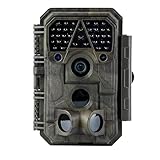
- Crystal-Clear 64MP Photos & 1296p HD Video – Stunning detail day or night, thanks to advanced image tech and a high-performance f/1.6 aperture lens.
- Lightning-Fast 0.1s Trigger Speed – Never miss a moment! Side sensors detect motion instantly, even for fast-moving wildlife, deer.
- Bright 100ft No-Glow Night Vision – Invisible 940nm LEDs and enhanced light capture deliver sharp nighttime footage without spooking animals.
- Smaller Files, Faster Playback – H.264 tech compresses videos (MP4/MOV) for quick downloads and seamless viewing on any device.
- 2.4" Color Display + User-Friendly Controls – Review footage on the spot with an intuitive menu and easy-access buttons.
Photograph tracks with scale
A track photograph is most useful when the entire impression is sharp and a scale reference is beside it. Kentucky asks reporters to provide track length and width and suggests placing a ruler, coin, or dollar bill next to the track. Photograph from directly above when possible, include several prints showing the animal’s stride, and record the exact location before leaving.
Do not step on, pour material into, scrape, or otherwise alter a track. Avoid handling scat, hair, blood, or other biological material unless the wildlife agency tells you how to collect and package it. Missouri accepts photographs, video, and physical evidence for examination and asks that tracks be photographed and covered with a bucket. Follow the agency’s directions rather than improvising a collection method.
What happens after you submit a report?
A report may be evaluated without an in-person visit. Missouri says its field investigations are limited to reports involving human safety or substantial physical evidence. California Department of Fish and Wildlife says few sightings are identified as an imminent public-safety threat and that most are addressed with species information and technical assistance.
Do not assume that submitting a form guarantees an investigation, an official species confirmation, or a personal response. Staff may contact you for clarification, compare the account with other reports, assess photographs or tracks, or close the report after providing information. If the agency needs additional evidence, preserve the original files and respond with the requested details.
Why a sighting may not be confirmed
Distant, brief, nighttime, or obstructed observations are difficult to identify. Missouri reports that most submitted sightings and tracks have proved to be bobcats or large dogs. Kentucky also lists several other animals that are commonly confused with mountain lions. A long tail, body size, movement, and the quality of the image all affect an identification; a confident impression is not the same as physical confirmation.
Missouri’s agency page says that less than 1 percent of the thousands of reports received since 1994 have yielded enough physical evidence to clearly confirm a mountain lion. The page does not state an end date for that aggregate, so the figure is not an annual rate or a current-year probability.
The Tool Desk
Outbyte PC Repair FREERepair Windows errors before they cause bigger problemsFix Now →Outbyte Driver Updater FREEFix the driver behind crashes, sound loss and screen glitchesFind Drivers →Also popular on Amazon

- 【Ultra-clear Photos and Videos】36MP Still Images & 2.7K Videos. Thanks to premium optical lens and an advanced image sensor, and built-in 22Pcs 850nm low glow LEDs, this trail camera provides crystal clear images and amazing smooth 2.7K videos with sound in the daytime, low light or nighttime, combined with noise reduction speaker and 2.0” HD TFT Color Screen, which takes you into the world of wildlife.(This camera does not include an SD card.)
- 【Super Night Vision & Low Glow Infrared LEDs】The trail camera is equipped with powerful low glow infrared LEDs, features upgraded 850nm infrared technology, makes this game camera more stealth, which can show the night behavior of animals without disturbing them, encompasses adaptive illumination technology to avoid overexposure or over-dimmed, which can provide clear night images and videos in total darkness, delivers brilliant night vision up to 75ft.
- 【Fast 0.1s Trigger Time &130°Wide Angle】Once movements are detected, the lightning-fast trigger speed of less than 0.1s with 1 to 3 shots choice guarantees fast and accurate capture of each detected motion exposed to the field, never miss any animals that wander by this camera. 130° detection range to give you an expansive field view, indispensable for hunting, wildlife observation, farm monitoring, home backyard, plant growth observation, property security and surveillance.
- 【Easier Setup Than Ever】This hunting camera features a built-in 2.0-inch color screen and TV remote-style control buttons. No Wi-Fi or app is needed; the intuitive and easy-to-use interface allows for quick setup and instant playback, making it suitable for users of all ages. The included mounting strap and stand allow you to stabilize the camera in various scenes and at any angle. A comprehensive user guide helps you quickly get started using this hunting camera.
- 【IP66 Waterproof】KJK201 is designed to withstand extreme environments, thanks to the tightly integrated design of the camera body and high-quality rubber ring, ensuring that works normally from -22 °F to 158 °F, excellent quality can be used in deserts, rainforests, etc. The efficient PIR design works to reduce false triggers, boasting an impressive 17,000-image battery life! The smaller size makes them easier to conceal from theft/vandalism, and also much easier to carry out into the field.
Choosing the right reporting route
Use these questions before submitting:
- Where did it happen? Select the wildlife agency for that state and, when requested, the correct county or regional office.
- Is anyone in immediate danger? Prioritize emergency services and physical safety over a routine form.
- Was property or livestock involved? Look for a depredation or damage-reporting procedure in addition to a general sighting form.
- What evidence do you have? Submit original photos or video, clear scaled track images, measurements, and the location details requested by that agency.
- Is the report based on a direct observation? Label photographs, tracks, secondhand accounts, and identification guesses separately.
These distinctions prevent an urgent encounter from being buried in a routine queue and help staff send property-damage cases to the people who handle them.
Documenting future sightings safely
If mountain lions or other large wildlife repeatedly pass through private land, a remotely triggered trail camera can document activity without placing a person near the animal. Kentucky Fish and Wildlife describes remote trail cameras as a useful documentation tool and requests original electronic images. A camera records movement; it does not, by itself, verify the species. Place and check equipment without creating an encounter, and follow local rules on cameras, access, and private property.
For a one-time sighting, you do not need to buy equipment before reporting. Submit the information and evidence you already have.
Independent reader supportYour contribution helps us test, update, and keep practical guides available for everyone.Common reporting mistakes to avoid
- Using a generic national number. No single reporting channel applies to every state.
- Waiting for a better photograph. Leave first if the animal is nearby or you feel unsafe.
- Editing the only image. Agencies may need the original file and its metadata.
- Giving only a town name. Add a road, trail, address, landmark, county, or coordinates.
- Reporting an interpretation as a fact. Explain what you saw and identify uncertainty.
- Disturbing tracks or biological evidence. Photograph it in place and ask the agency for handling instructions.
- Expecting a guaranteed site visit. Agencies prioritize safety threats and substantial evidence, and many reports are handled remotely.
Frequently asked questions
Is there a deadline for reporting a mountain lion sighting?
The reviewed state guidance does not establish a universal reporting deadline. Report as soon as practical, especially when the sighting involved a person, pet, livestock, or an animal that may still be in the area. Preserve the original files even if you report later.
Can I report anonymously?
The cited agency pages do not establish one nationwide anonymity policy. A form or office may request contact information so staff can clarify the location or evidence. Read the state agency’s privacy and submission instructions before deciding what personal information to provide.
Should I report a possible mountain lion if I am not certain?
Yes, describe it as a suspected sighting and explain the limits of your view. Agencies expect misidentifications and can compare the account with photographs, tracks, and other reports. Do not alter evidence to make an uncertain identification appear conclusive.
Also popular on Amazon
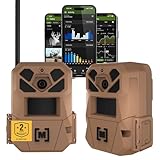
- HARVEST MORE BUCKS THIS SEASON - EDGE 3 delivers real-time deer activity, movement patterns, and location intelligence—so you know when and where mature bucks are moving instead of hunting on hope.
- AI BUCK DETECTION + INSTANT ALERTS - Moultrie AI identifies bucks and immediately delivers high-resolution photos or HD video—reducing false alerts and helping you act fast when it matters most.
- NATIONWIDE 4-CARRIER AUTO-CONNECT - Automatically connects to the strongest of four major U.S. networks. No SIM cards. No manual setup. Reliable photo and video delivery—even in remote hunting properties.
- 40MP PHOTOS + 1080p HD VIDEO - Capture crisp, detailed images and lifelike HD video. Low-glow infrared flash keeps nighttime shots clear without spooking deer.
- 0.5-SECOND TRIGGER + 100FT RANGE - Fast trigger speed and long detection range ensure moving deer are captured cleanly—no blur, no missed opportunities.
What if my dog or livestock was attacked?
Move people and surviving animals to safety, seek veterinary care when needed, and check the state wildlife agency for its livestock, pet-depredation, or damage-reporting route. Include photographs of injuries or sign only when they can be obtained safely and without disturbing the site.
Will wildlife officials come to investigate every report?
No. Missouri limits field investigations to human-safety reports or reports with substantial physical evidence, and California says most sightings receive information or technical assistance rather than an on-site response. The agency will decide whether the evidence and risk justify further action.
Crashes, No Sound, or Screen Glitches?
Random freezes, missing sound and display glitches usually trace back to one bad driver. Find and replace yours safely.Free scan · under a minuteWindows Errors? Fix Them Before They Spread
Repair common Windows errors and clear accumulated junk for a smoother, more stable PC - no reinstall needed.Free scan · no reinstallFrequently Asked Questions
Is there a deadline for reporting a mountain lion sighting?
The reviewed state guidance does not establish a universal deadline. Report as soon as practical and preserve original files.
Can I report anonymously?
Anonymity rules vary by agency; check the state wildlife agency’s submission and privacy instructions.
Should I report a possible mountain lion if I am not certain?
Yes. Label it a suspected sighting, describe what you directly observed, and explain any uncertainty.
What if my dog or livestock was attacked?
Prioritize safety and veterinary care, then use the state agency’s pet, livestock, or depredation reporting route.
Will wildlife officials investigate every report?
No. Agencies prioritize immediate safety concerns and reports supported by substantial physical evidence.





Leave a Reply