
The Tool Desk
Outbyte Driver Updater FREEFix the driver behind crashes, sound loss and screen glitchesFind Drivers →Outbyte PC Repair FREEClear out junk files and repair common Windows errorsFree Scan →Some links on this page are affiliate links: if you buy through them we may earn a commission, at no extra cost to you.
Do not assume an alone puppy has been abandoned. It may be temporarily separated, lost, or in danger. First check for immediate injury or hazards. If the puppy is safe to handle, reduce disturbance and contact a local veterinarian, animal shelter, or rescue for a plan that fits the puppy’s age, condition, and location. There is no dog-specific waiting period or universally validated procedure for returning a separated puppy to its mother, so professional, local guidance is safer than guessing.
Start with safety, not a reunion attempt
A puppy found without an adult dog does not, by appearance alone, prove that its mother has rejected it. Best Friends Animal Society explains that a loose dog may simply be lost and recommends taking steps to help reunite found animals with their families. Read its found-dog guidance at What to Do if You’ve Found a Lost/Stray Dog or Cat.
As an Amazon Associate I earn from qualifying purchases.
Your first decision is whether the puppy needs urgent intervention. Look at the situation without putting yourself, the puppy, or nearby people and animals in additional danger. A puppy in traffic, exposed to severe weather, trapped, bleeding, struggling to breathe, unresponsive, or otherwise visibly injured needs immediate veterinary or emergency animal-welfare help. If you cannot safely reach it, call local animal control, a shelter, rescue, or emergency veterinary service and describe the location and hazards.
If there is no immediate danger, avoid turning the area into a search scene. The editorial guidance from Best Friends emphasizes minimizing disturbance when it is safe to do so. Keep children and pets away, avoid chasing the puppy, and do not make a rushed attempt to carry it toward a suspected mother. A frightened adult dog can run, bite, or move the puppy again; a puppy can also become chilled, injured, or separated farther from the place where it was found.
Popular on Amazon
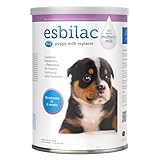
- PUPPY MILK REPLACEMENT — When mom can’t nourish them, Esbilac can. Scientifically the next best to mother’s milk, Esbilac provides all the nutritional elements necessary for puppies, newborn to six weeks old.
- COMPLETE, BALANCED NUTRITION — Our formula is closest to mother's milk in protein, fat, and carbohydrates. We’ve also added vitamins, minerals, and trace nutrients; plus prebiotics and probiotics to support healthy immunity and digestion.
- EASY TO DIGEST — Esbilac is highly palatable and formulated with a special fiber blend for easy digestion and improved gut health.
- EASY-TO-MIX FORMULA — Whisk or shake 1 part powdered Esbilac into 2 parts warm water. Do not mix more Esbilac than can be consumed in 24 hours. Do not use a blender. Must be kept refrigerated after reconstituting.
- ABOUT US — PetAg is a trusted leader in pet wellness, with science-backed formulas in our milk replacers, health supplements, and grooming products helping pet owners to proactively enhance the lives of their pets, for more healthy years together.
Use a local professional as your next step
Contact a nearby veterinarian, shelter, or rescue as soon as practical. The ASPCA’s Finding a Lost Pet guidance recommends contacting a local shelter for advice about a found lost or stray animal. Local rules, shelter capacity, wildlife and animal-control arrangements, and safe handling practices differ, so a local organization can tell you what to do in that jurisdiction.
When you call, be ready to give:
- the exact location and time you found the puppy;
- whether the puppy is exposed to traffic, water, extreme weather, or other hazards;
- what you can observe about alertness, movement, breathing, bleeding, and apparent injury;
- whether an adult dog is visible, has approached, or is behaving aggressively;
- the puppy’s approximate size, coat, and apparent age; and
- what you have already done, including whether the puppy has been moved, warmed, or fed.
Ask the professional to distinguish between three different goals: keeping the puppy safe right now, determining whether it has an owner or family, and assessing whether a mother is nearby. Those goals can require different handling. A shelter or veterinarian can also explain local found-animal procedures and whether the puppy should be brought in, monitored where found, or transferred to a rescue.
What’s actually slowing this PC down?
Pick the symptom - the matching free tool is one click away.
Estimate age because nursing dependence changes the risk
Age matters, but an appearance-based estimate is not a substitute for a veterinary assessment. The ASPCA states that puppies receive complete nutrition from their mother’s milk during the first four weeks. It says weaning generally begins between three and four weeks and is ideally complete by seven to eight weeks. The same guidance notes that puppies learn important behaviors from their mother and littermates. See Dog Nutrition Tips.
| Development information from the ASPCA | Why it matters when a puppy is alone | Safe response |
|---|---|---|
| During the first four weeks, mother’s milk provides complete nutrition. | A very young puppy may depend on nursing and can deteriorate quickly if it cannot feed. | Contact a veterinarian, shelter, or rescue promptly rather than improvising a feeding plan. |
| Weaning generally begins between three and four weeks. | A puppy in this transition may still need maternal milk even though it is beginning to eat other foods. | Ask a veterinarian to assess age, hydration, nutrition, and the need for supervised care. |
| Weaning is ideally complete by seven to eight weeks. | An older puppy may be less dependent on milk, but it can still be lost, injured, or separated from its family. | Follow local found-animal and identification guidance; do not assume age proves abandonment. |
These milestones describe nutrition and development. They do not establish how long to wait, how far a mother may be from the puppy, or a guaranteed method for bringing the pair together. The sources reviewed do not provide a dog-specific reunion timetable.
If the mother is visible or known
Tell the local veterinarian, shelter, or rescue that you have a possible mother-and-puppy situation. Do not force the puppy into contact with an unfamiliar adult dog, corner the adult, or attempt a physical reunion without advice. You may not know whether the adult is the mother, whether she is healthy, or whether she will accept handling or approach.
If the adult dog is calm and the setting is safe, keep the area quiet while you wait for local instructions. Minimize handling of the puppy unless it is in immediate danger or a professional tells you to move it. Keep your own pets and bystanders away. A professional may advise a different plan based on the location, the adult dog’s behavior, and the puppy’s condition; there is no single validated procedure that applies to every separation.
If the adult dog is running toward traffic, acting aggressively, injured, or difficult to contain safely, do not put yourself between dogs. Call animal control, a shelter, rescue, or emergency veterinary service and report the behavior and location. A safe professional response is more important than an improvised reunion.
If no mother is visible
Treat the puppy as a found animal whose family may still be looking for it. Best Friends’ guidance is based on the principle that a loose dog may have a family, not that it is homeless. Follow the local shelter or rescue’s instructions for reporting the find, checking identification, and arranging temporary care. Do not publish a precise location publicly if a professional advises against it, and do not hand the puppy to an unknown person who claims it without following the local organization’s process.
Record the details while they are fresh:
- the location, date, and time;
- the puppy’s physical description and apparent age;
- visible wounds, weakness, or other concerning signs;
- the direction an adult dog or other animals traveled, if known;
- photographs that help professionals identify the puppy; and
- the names and phone numbers of the organizations you contacted and the instructions they gave.
These records help a shelter, rescue, or veterinarian coordinate a safe search and avoid conflicting accounts. They also help establish where and when the puppy was found if an owner or family later comes forward.
When nursing care may be needed
Do not give commercial milk replacer merely because a puppy is alone. The ASPCA says replacer may be necessary for an orphaned puppy, or when the mother is ill or does not produce enough milk, and specifically recommends asking a veterinarian for product and feeding recommendations. A replacer is a conditional nutrition measure; it does not reunite a puppy with its mother and is not automatically appropriate for every found puppy.
Do these 3 things before closing this tab:
1Clear out junk files and repair common Windows errors2Scan for outdated or missing drivers - takes under a minute3Repair Windows errors before they cause bigger problemsTell the veterinarian whether the puppy may have nursed, what it has eaten, and whether the mother is known or has been seen. Ask before choosing a product, preparing a feed, or deciding how often to offer it. The professional can determine whether the puppy needs examination, supervised feeding, fluids, warmth, or transfer to an experienced foster carer.
Special caution for a suspected orphaned newborn
Best Friends’ guidance for Caring for Orphaned Newborn Puppies: Feeding, Socializing, and More says chilled puppies may not be able to nurse effectively. It also warns against feeding a puppy on its back because liquid can enter the airway. Those instructions are for orphaned newborn care, not a universal protocol for an unknown-age puppy.
Also popular on Amazon

- MILK REPLACER WITH PROBIOTICS: Suitable for up to 9 young animal species including puppies, kittens, calves, lambs, goats, foals, piglets, llamas, and crias; providing probiotics and balanced nutrition to support healthy growth and development.
- MADE WITH PROTEIN AND FAT: Contains 24% protein and 24% fat; supporting fast, healthy growth, strong muscle development, and overall vitality for young animals during critical early stages of life.
- ALL MILK FORMULA WITH PROBIOTICS: Made with high-quality all-milk protein; supporting healthy growth, proper development, and overall performance for young animals during critical early stages of life.
- SUPPORTS HEALTHY DIGESTION FOR YOUNG ANIMALS: Powered by Opti-Gut probiotics; promoting gut health, nutrient absorption, and digestive balance to support overall growth, vitality, and wellbeing for young animals.
- EASY TO MIX FORMULA: Designed for quick and convenient preparation; ensuring fast mixing, effortless feeding, and optimal consumption so young animals receive balanced nutrition efficiently for healthy growth and development.
Until a professional advises you:
- do not assume a cold or weak puppy can feed normally;
- do not position a puppy on its back for feeding; and
- do not apply newborn orphan-care instructions indiscriminately to a puppy whose age and medical condition are unknown.
If the puppy appears chilled, weak, or unable to nurse, describe those signs immediately when calling the veterinarian or shelter. Ask what handling and transport method they want you to use. A professional may need to examine the puppy before recommending food or milk replacer.
A practical decision path
- Check immediate danger. If the puppy or people nearby face traffic, attack, entrapment, severe weather, or obvious medical emergency, call the appropriate emergency service or animal-welfare professional. Move the puppy only when it is safe and necessary, or as instructed.
- Reduce disturbance. Keep the area quiet and keep children and pets away. If the puppy is not in immediate danger, avoid chasing, crowding, or repeatedly handling it.
- Contact local help. Call a veterinarian, shelter, or rescue and explain the puppy’s location, condition, apparent age, and whether an adult dog is visible. Follow the organization’s local procedure.
- Share observations, not conclusions. Say “an adult dog was seen nearby” rather than declaring that dog to be the mother. Say “the puppy appears very young” rather than assigning an exact age you cannot verify.
- Follow the instructed plan. The professional may advise monitoring, safe transport, identification procedures, foster care, or veterinary examination. Do not substitute a fixed waiting period or internet tip for that advice.
- Document the handoff. Record who accepted responsibility, where the puppy is going, and any feeding, warming, or injury information you provided.
Common mistakes that can make reunion less safe
Assuming “alone” means “abandoned”
A puppy can be temporarily separated or lost. Treating it as abandoned can lead to an unnecessary removal or an unsafe attempt to locate and capture an adult dog. Start with observation and professional guidance.
Free tools Windows power users keep installed
One-click scans. No signup required.
Inventing a waiting period
The reviewed sources do not establish a reliable dog-specific number of minutes or hours to wait for a mother. A puppy’s age, condition, weather, location, and hazards matter more than an arbitrary timer. Ask a local professional how to proceed.
Trying to force contact
Placing a puppy beside an unfamiliar or distressed dog can expose both animals and people to injury. A visible adult dog may not be the mother, and even a mother may be difficult to approach safely. Let local animal-welfare or veterinary professionals direct the interaction.
Feeding without an assessment
Milk replacer is discussed by the ASPCA for orphaned puppies or situations in which the mother cannot nurse, not as a standard response to every found puppy. Obtain veterinary product and feeding advice first.
Using the wrong newborn technique
For orphaned newborns, Best Friends warns about chilling and feeding on the back. Those specific instructions should not be generalized to an unknown-age puppy. Ask a veterinarian how to handle the individual animal.
Recommended Free Tools
Why reporting the puppy matters even when reunion seems unlikely
Found-animal reporting gives a family a route to search and allows local organizations to coordinate care. Best Friends Animal Society reported in 2026 that its shelter-data analysis found a 36% national return-to-home rate for dogs and 6% for cats. The same article said about 21% of animals admitted as strays were reunited with their families. These figures describe return-to-home and stray reunification outcomes, not mother-puppy reunion outcomes, and they should not be used to predict what will happen in an individual case. The analysis appears in Reuniting lost pets with their families: Room for improvement.
Reporting also protects the puppy if its condition worsens. A veterinarian can assess illness or injury; a shelter or rescue can apply local procedures; and an experienced foster provider may be able to supply care if the mother cannot be located or cannot nurse.
Questions to answer before you leave the scene
- Is the puppy currently safe from traffic, attack, weather, and other immediate hazards?
- Does it show visible injury, unusual weakness, breathing difficulty, or inability to move normally?
- What is its approximate age, and could it still depend heavily on milk?
- Is an adult dog visible, and can anyone confirm that dog is the mother?
- Which local veterinarian, shelter, rescue, or animal-control service has been contacted?
- What exact handling, transport, feeding, or monitoring instructions did that professional give?
If you cannot answer these questions, pause before attempting a reunion and call local help. The safest outcome is not simply getting an adult and puppy in the same place; it is protecting both animals while professionals determine whether they belong together and what care each needs.
Frequently Asked Questions
Is there a standard number of hours to wait for a puppy’s mother?
No dog-specific waiting period is established in the guidance reviewed. Contact a local veterinarian, shelter, or rescue for advice based on the puppy’s condition, age, location, and hazards.
Should I give milk replacer to every puppy found alone?
No. The ASPCA describes milk replacer as potentially necessary for an orphaned puppy or when the mother is ill or unable to produce enough milk, and recommends veterinary advice about the product and feeding plan.
Can I put the puppy beside an adult dog that may be its mother?
Do not force contact or approach an unfamiliar or distressed dog. Ask local animal-welfare or veterinary professionals to direct any attempted reunion.





Leave a Reply