
Some links on this page are affiliate links: if you buy through them we may earn a commission, at no extra cost to you.
Do not assume a small or young-looking dog is safe to grab. First stop, observe its entire body, and leave it an escape route. If the puppy is growling, snapping, lunging, stiffly staring, severely injured, or repeatedly trying to retreat, keep your distance and call local animal control, animal services, a shelter, or a rescue. Only approach and lift when the puppy is calm enough to handle and you can support its chest and hindquarters without cornering it.
Start with a safety decision, not a rescue attempt
A stray puppy may be frightened, painful, sick, protective of food, or separated from its mother and littermates. A wagging tail, crouched body, or small size does not prove that it will tolerate touch. The safest outcome is the one that gets the puppy help without causing a bite, a traffic incident, a fall, or a panicked escape.
As an Amazon Associate I earn from qualifying purchases.
Before taking a step, move yourself away from traffic, aggressive animals, and other immediate hazards if you can do so without driving the puppy into danger. Keep children and your own pets back. Do not block the puppy between you and its only exit. If the animal moves away, allow it to create distance rather than following.
| What you observe | What it may mean | Your safest action |
|---|---|---|
| Loose posture, ordinary breathing, relaxed face, and no attempt to flee | The puppy may be calm enough for a cautious approach, but its behavior can change quickly. | Continue slowly, from an angle, while preserving an escape route. |
| Crouching, lowered head, flattened ears, tucked tail, lip licking, yawning, or moving away | Fear, uncertainty, or anxiety. | Stop advancing. Increase distance and contact animal services, a shelter, or a rescue if the puppy cannot be safely contained without force. |
| Stiff body, hard stare, bared teeth, growling, barking, snapping, or lunging | A clear warning that contact may result in a bite. | Do not corner, chase, grab, or reach toward the puppy. Call for professional assistance. |
| Severe injury, collapse, inability to stand, or possible neck or back injury | An emergency in which pain and fear can make even a previously gentle dog defensive. | Protect yourself, call for help, and do not attempt a hands-on rescue unless professionals direct you and the animal is passive enough to move safely. |
Dogs can show several signals at once. The ASPCA notes that “many dogs can show a mixture of these body postures, indicating that they feel conflicted.” Read the whole dog rather than deciding from one tail movement or one apparently friendly gesture.
Popular on Amazon

- AIRLINE APPROVED CARRIER - With airline-approved design, you can take your pet to go to everywhere. This pet carrier provides two connecting loop handles for balanced carrying as a dual seat belt or luggage strap to secure transport
- SAFETY DESIGN - The adjustable shoulder strap help you hands-free carrying and makes it more safe and convenient pet carrier bag for your travel
- DURABLE - This cat carrier is made of durable and lightweight polyester fabric. The four-side mesh will not only give a safe and comfortable travel for your pet, but also easy for you to check on your pet
- PORTABLE & FOLDABLE - This dog carrier is easy to carry and store, which has a padded shoulder strap and handles
- BOTH SIZES AND WEIGHTS - The mediun cat carrier is designed for small and medium pets within 15" x 9" x 9"(smaller than product) and 15 lbs. Please do not choose your carrier only based on weight. Reference your pets' length and height in selecting a carrier size.If carried on board, the maximum dimensions should not exceed 18IN*11IN*11IN.
How to approach a calm-looking puppy
The AVMA advises: “Approach slowly and calmly when meeting a new dog, and don’t loom over them.” A direct, fast approach can feel threatening, especially to an animal that does not know you.
- Pause at a distance. Watch the puppy for a short period before moving. Note whether it is eating, sleeping, caring for other puppies, guarding an object, or repeatedly trying to leave. Do not disturb a dog that is eating, sleeping, or caring for puppies.
- Turn your body slightly. Move in a gentle arc instead of walking straight at the puppy. Keep your movements predictable and your voice quiet.
- Avoid looming and staring. Bend only as far as you can do safely, and do not lean over the puppy or hold an intense, direct gaze. Keep your hands to yourself while you assess its response.
- Stop when the puppy shows discomfort. If it freezes, retreats, lowers its head, tucks its tail, licks its lips, yawns, stiffens, growls, or otherwise escalates, stop advancing and step back. A strange hand reaching into a dog’s face can frighten it.
- Let the puppy choose proximity. If it remains loose and calm, wait rather than rushing to touch it. Do not turn a few calm seconds into a forced capture.
- Use equipment only after contact is clearly safe. ASPCA general dog-care guidance lists a carrier for smaller dogs and a leash among ordinary supplies. A leash is appropriate only for a cooperative puppy once you can interact safely; neither item replaces animal-control or shelter help when the dog is fearful, aggressive, injured, or difficult to contain.
Never interpret a wagging or raised tail by itself as permission to touch. Excitement, conflict, fear, and friendliness can all produce movements that look deceptively similar. Continue to monitor the face, ears, mouth, muscle tension, and attempts to gain distance.
Free tools Windows power users keep installed
One-click scans. No signup required.
When you should not pick the puppy up
Hands-on help is not always the best help. Do not pick up a puppy that is showing aggression, intense fear, or escalating anxiety. Do not chase it into a corner, reach under a vehicle, trap it against a fence, or seize it after it has warned you away. A frightened animal may bite when it believes escape is impossible.
Do not attempt a physical rescue merely because the puppy is small enough to carry. If it is near traffic or another immediate danger, tell the dispatcher exactly where it is and what hazards surround it. Animal control, animal services, shelters, and rescues may have trained staff and equipment for a frightened or elusive dog. Response options and names differ by locality.
Also popular on Amazon

- High Quality Design:Sturdy steel cage structure and wooden support board maintain good spatial stability and shape. Breathable mesh windows on four sides,which can ensure good air circulation and views,make pets have a comfortable and safe travel.It can also be easy for you to check on your pets.There is a front pocket to store pet toys,treats,etc.
- Dimension and Weight:Made of durable tear-resistant fabric.Four easy entrances for pets. Dimensions: 17 inch x 11 inch x 11 inch (L*W*H), suitable for pets up to 16 lbs.Please don't choose your carrier based on weight only,consider your pet's length and height when choosing a carrier.
- Airline Approved & Safty:Can be placed under the seats of most airplanes(Four non-slip feet on the bottom to prevent movement), and comfortably on the seat next to you in a car or bus.It has a adjustable shoulder strap.Can also be fastened to the car seat with a safety belt or shoulder strap to keep your pet safe.
- Easy to Clean :You can clean the stains and dirt on the surface with a soft cloth.Soft mat inside the pet carrier is removable and washable.You can take it out and wash it easily to solve all stains.
- Easy to Collapsible & Lightweight:When not in use,fold it into a flat,space saving and easy to store.Only 2.2lbs,it's easier to carry around.It can also used as a toy of pet house,allowing pets to play in a safe space to relax and rest.
In New York City, the ASPCA’s public guidance uses 311 as a reporting route; that instruction is specific to New York City, not a universal number. Elsewhere, use the local government animal-services line, an area shelter, or a rescue organization and follow its instructions.
How to pick up a calm, small puppy safely
Only lift after the puppy is calm enough to handle and you have a stable position. Have a secure destination ready first: an escape-proof carrier, crate, or closed room. A puppy that is carried toward an unprepared doorway can bolt the moment your grip changes.
Quick wins for a faster PC:
Repair Windows errors before they cause bigger problemsFix Now →Fix the driver behind crashes, sound loss and screen glitchesFind Drivers →- Position yourself beside the puppy. Avoid reaching down from directly above its head. Keep your movements slow and keep your face away from the puppy’s mouth.
- Support the chest. Slide one hand under the chest, behind the front legs, without yanking the forelegs.
- Support the hindquarters. Use your forearm or your other hand to support the hind legs and rump. The ASPCA’s General Dog Care instruction is: “To carry a puppy or small dog, place one hand under the dog’s chest, with either your forearm or other hand supporting the hind legs and rump.”
- Lift in one controlled motion. Keep the puppy’s body close to your torso so it cannot swing or fall. Maintain support under both the front and rear of the body.
- Move directly to containment. Carry the puppy only as far as needed. Close the carrier or room before loosening your support.
Never lift by the legs, tail, or back of the neck. Do not drag a puppy by a collar, scruff, or limb. If it struggles, twists, bites, or becomes rigid, lower your ambition rather than tightening your grip: step back, create space, and call professionals.
Special precautions for an injured puppy
Injury changes the risk calculation. Pain can trigger a bite, and moving a puppy with a spinal injury can worsen harm. ASPCA emergency guidance for pets recommends calling for help when an injured dog shows aggression. It also describes supporting the neck and back if a passive injured dog must be moved on a makeshift stretcher. That guidance is not permission to handle a threatening dog or a puppy with a possible spinal injury on your own.
Also popular on Amazon

- Premium Materials And Design: Experience ultimate comfort and durability with the TOMKAS puppy carrier. Our high-quality selected fabric is thick, soft, and ensures safety for your furry friend. The bag's large opening and adjustable safety belt makes it easy to use, and tough sutures prevent cracks. It's perfect for chihuahua and Yorkshire accessories.
- Sufficient Safety: Your pet's safety is our top priority. The TOMKAS small dog carrier sling has a secure safety buckle that keeps your dog safe and in place. Our carrier provides reliable safety and comfort that you and your pet will love. Remember to never tie the safety buckle to the collar, as it could hurt your dog's neck if it attempts to jump out.
- Large-Capacity Zippered Pockets: Stay organized with TOMKAS's front zippered pocket that can store all of your essentials, such as your phone, keys, cards, wallet, and dog leash. Our reliable carrier is designed with your convenience in mind. Unlike other dog slings without zippered pockets, our pocket keeps your belongings secure throughout use.
- Convenient Enough: Take your furry friend anywhere you go with the TOMKAS dog purse carrier. It's comfortable and convenient for walking, outings, and traveling. Our carrier is especially useful for dogs that are old, blind, injured, or have undergone surgery. You can keep them close and comfortable in our carrier, providing the care they need to get through any difficulty.
- Size: The TOMKAS dog carry bag is best suited for pets weighing between 3-10 lbs, with a high capacity of 10 lbs. Our adjustable shoulder strap includes a sturdy plastic buckle for easy length adjustments. The TOMKAS dog sling's shoulder strap adjustment buckle is larger and stronger than other similar products, making it easy to use for both adults and children.
- Call emergency veterinary help, animal services, or a shelter and describe the injury, the puppy’s behavior, and your exact location.
- Keep people and other animals away while you wait.
- Do not probe wounds, straighten limbs, give medication, or attempt treatment during a risky capture.
- If professionals direct you to move a passive puppy, follow their instructions, keep the neck and back supported, and use a carrier or firm support that prevents slipping.
Do not give medication unless a veterinarian prescribes it. Human pain medicines and leftover pet medicines can be dangerous, and the correct treatment depends on the puppy’s condition.
Containment and transport after a successful pickup
Once the puppy is in your care, prevent a second escape. Strays may bolt through doors and windows even after appearing quiet. Put the puppy in a secure, escape-proof separate room or a properly closed carrier. Check latches, screens, gates, and gaps before opening anything.
The Tool Desk
Outbyte Driver Updater FREEScan for outdated or missing drivers - takes under a minuteDriver Scan →Outbyte PC Repair FREEClear out junk files and repair common Windows errorsFree Scan →Keep the puppy completely separate from resident animals until a veterinarian has examined it and advised that contact is medically safe. A stray may carry illness or parasites without obvious signs, and its vaccination status is unknown. Use separate bowls, bedding, and cleaning supplies, and wash your hands after handling the puppy or its waste.
Transport the puppy in a secured carrier whenever possible. For a cooperative puppy that is already safely handled, a leash can provide an additional safeguard, but it is not a substitute for a closed carrier during a vehicle trip. Never place an unsecured puppy in a moving car or allow it to ride loose.
Also popular on Amazon

- High Quality Design:Sturdy steel cage structure and wooden support board maintain good spatial stability and shape. Breathable mesh windows on four sides,which can ensure good air circulation and views,make pets have a comfortable and safe travel.It can also be easy for you to check on your pets.There is a front pocket to store pet toys,treats,etc.
- Dimension and Weight:Made of durable tear-resistant fabric.Four easy entrances for pets. Dimensions: 17 inch x 11 inch x 11 inch (L*W*H), suitable for pets up to 16 lbs.Please don't choose your carrier based on weight only,consider your pet's length and height when choosing a carrier.
- Airline Approved & Safty:Can be placed under the seats of most airplanes(Four non-slip feet on the bottom to prevent movement), and comfortably on the seat next to you in a car or bus.It has a adjustable shoulder strap.Can also be fastened to the car seat with a safety belt or shoulder strap to keep your pet safe.
- Easy to Clean :You can clean the stains and dirt on the surface with a soft cloth.Soft mat inside the pet carrier is removable and washable.You can take it out and wash it easily to solve all stains.
- Easy to Collapsible & Lightweight:When not in use,fold it into a flat,space saving and easy to store.Only 2.2lbs,it's easier to carry around.It can also used as a toy of pet house,allowing pets to play in a safe space to relax and rest.
Arrange a veterinary and identification check
Contact a veterinarian or shelter promptly for a medical assessment and a microchip scan. Best Friends Animal Society notes that roaming strays may need disease testing and vaccines; a veterinarian can evaluate illness, injury, dehydration, and other problems that are not obvious from appearance. Tell the clinic that the puppy is a stray and ask what isolation precautions it requires.
A microchip scan is an owner-search step, not proof that the animal has been abandoned. A puppy that looks dirty, thin, or neglected may still have a family. Ask the scanning clinic or shelter how to document the scan and what to do if a chip is found but the contact information is outdated.
Recommended Free Tools
Search for the owner while keeping the puppy safe
Begin an organized search as soon as the puppy is secure and your local rules are clear. Best Friends recommends combining several routes rather than relying on a single post.
- Ask nearby residents, building managers, delivery workers, and businesses whether they recognize the puppy or know where it was found.
- Contact area shelters, animal-control agencies, and veterinary clinics to report the found puppy and check lost-pet records.
- Post a found-pet notice through appropriate local channels, using the location and date found while withholding identifying details that can verify a claimant’s story.
- Keep the puppy available for a microchip scan and provide the scanning organization with your contact information.
- Record when and where you found the puppy, its observable markings, and any agency or clinic you contacted.
Do not transfer the puppy to an unknown person solely because that person responds to a public post. Ask for identifying information and coordinate the handoff through an animal shelter, animal-control agency, or veterinarian when possible.
Also popular on Amazon
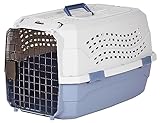
- Hard sided pet carrier with 2 doors for front and top entry; suitable for cat or medium size dog weighing 12 - 20 pounds
- Durable plastic construction with steel wire doors; screws keep the top and bottom sections securely connected
- Spring load latches ensure easy one-handed door opening and closing; top door swings open to the left or right and includes a top carry handle
- Plenty of air ventilation on the sides, top, and back of the carrier
- Note: Be sure to measure the size of the pet when choosing carrier size
Understand local rules before deciding what happens next
Holding periods, reporting requirements, ownership rules, and whether a finder may keep an animal vary by jurisdiction. There is no universal legal timeline that applies to every stray puppy. Ask local animal control or the relevant shelter what you must report, how long the puppy must be listed as lost, and whether you may foster or adopt it after that process.
That agency can also tell you whether the puppy should be brought in, whether an officer can collect it, and which emergency service is available outside normal hours. Follow the local procedure even when the puppy appears unclaimed; doing so protects the animal and helps reunite it with an owner.
Outdated Drivers Are Slowing You Down
One free scan finds every outdated or missing driver and matches the right update for your exact hardware.Free scan · exact hardware matchWindows Errors? Fix Them Before They Spread
Repair common Windows errors and clear accumulated junk for a smoother, more stable PC - no reinstall needed.Free scan · no reinstallCommon mistakes that turn a rescue into a danger
- Rushing because the puppy looks helpless. Small size does not remove bite risk or fear. Pause and assess first.
- Walking straight at the puppy. A direct approach and looming posture can feel threatening. Use a slow, angled approach.
- Reaching into the face. A hand suddenly entering a strange dog’s space can trigger a defensive reaction.
- Reading only the tail. A wagging or raised tail does not guarantee friendliness; assess the whole body.
- Chasing or cornering. Removing the escape route can escalate fear and aggression. Call for trained help instead.
- Grabbing unsafe body parts. Never lift by the legs, tail, or back of the neck. Support the chest and hindquarters.
- Trying to treat an injury during capture. First protect yourself and obtain professional direction.
- Opening the door to resident pets. Unknown health status requires a separate, escape-proof space until veterinary clearance.
- Assuming neglect means abandonment. Begin an owner search and arrange a microchip scan.
- Assuming one city’s procedure applies everywhere. Reporting routes and holding rules are local; confirm them with the relevant agency.
A practical decision path
- Is the puppy in immediate danger? Move yourself to safety and call the local emergency or animal-services route. Do not create a chase.
- Is it showing fear, aggression, or severe injury? Keep your distance, prevent others from approaching, and request professional assistance.
- Is it calm and can you prepare secure containment? Approach slowly without looming or staring, then lift only with chest and hindquarter support.
- Is it contained? Use an escape-proof separate space, isolate it from resident animals, and arrange veterinary assessment and a microchip scan.
- Has an owner been located? Coordinate verification and transfer through local animal authorities, a shelter, or a veterinarian, following jurisdiction-specific requirements.
The central rule is simple: help only to the point that the puppy’s behavior and your surroundings make safe. Backing away and calling trained responders is a responsible rescue decision, not a failure to help.





Leave a Reply