
What’s actually slowing this PC down?
Pick the symptom - the matching free tool is one click away.
Some links on this page are affiliate links: if you buy through them we may earn a commission, at no extra cost to you.
Start socialization in the first three months, using short, rewarding exposures that keep your puppy relaxed. Your puppy does not need to be isolated until every vaccine is complete. With your veterinarian’s advice, you can introduce people, sounds, surfaces, places and carefully selected dogs while avoiding sick animals, feces and heavily contaminated areas. Watch your puppy’s behavior: a loose body, interest, food-taking and easy recovery mean the experience is manageable; freezing, retreating, tucked tails or inability to settle mean you should add distance and lower the intensity.
What puppy socialization actually means
Socialization is a learning process, not a requirement to greet everyone. The goal is to help a puppy discover that ordinary sights, sounds, handling, travel and social encounters are predictable and safe. A puppy can learn by watching a person from across a room, walking over a new surface for a few seconds, hearing traffic from a quiet distance or receiving a treat while a calm dog is nearby. Direct contact is optional.
As an Amazon Associate I earn from qualifying purchases.
Effective exposure is gradual, voluntary and paired with something the puppy values, such as food, play or praise. Forced approaches, crowding, chasing a retreating puppy or holding a frightened puppy in place can teach the opposite lesson. The American Veterinary Society of Animal Behavior (AVSAB) describes the first three months as “the primary and most important” period for puppy socialization, but experiences should continue throughout adolescence and adulthood.
Why the first three months matter
Young puppies are especially receptive to learning about unfamiliar people, animals, environments and handling. Missing this period does not guarantee behavioral problems, and a puppy can learn later, but the early months provide an important foundation. AVSAB therefore states that safe socialization before the vaccine series is finished should be the standard of care rather than waiting for complete vaccination.
Popular on Amazon
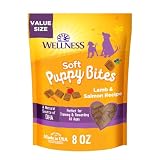
- GRAIN-FREE PUPPY TREATS: These bite-sized, soft puppy training treats are the perfect reward during training sessions or any time you want to thank your dog for good behavior. Puppy bites contain 6 calories per individual treat!
- SUPPORTS BRAIN DEVELOPMENT: Soft dog treats are crafted with salmon, a healthy source of DHA to promote healthy brain development.
- HEALTHY INGREDIENTS: These treats for dogs are made with minimal ingredients focused on quality proteins: made with lamb and salmon, with added vitamins specifically for puppies.
- NO CORN, WHEAT, OR SOY: Treats for dogs do not contain wheat, wheat gluten, corn, soy, or artificial colors.
- MADE IN USA: Our dog treats are quality-assured, made in USA, and crafted from the finest globally-sourced ingredients. Treats are tender, healthy, and bite-sized for small, medium, and large dogs of all lifestages, and activity levels.
That recommendation does not mean unrestricted outings. It means balancing two real risks: inadequate experience can contribute to fear, while contact with contaminated environments can expose a vulnerable puppy to disease. Your veterinarian can account for local parvovirus activity, the puppy’s age, health, vaccine product, living situation and the prevalence of disease in your area.
Make a health-and-safety plan with your veterinarian
Know the vaccine timeline without treating it as one universal date
AVMA guidance describes puppy parvovirus vaccination commonly beginning at 6–8 weeks, with boosters every 2–4 weeks and a dose at or after 16 weeks. Cornell University College of Veterinary Medicine’s April 2024 guidance describes boosters continuing until 16–20 weeks. These are source-specific clinical ranges, not a promise that every puppy follows the same schedule. Follow the schedule your veterinarian sets.
Quick wins for a faster PC:
Repair Windows errors before they cause bigger problemsFix Now →Scan for outdated or missing drivers - takes under a minuteDriver Scan →Clear out junk files and repair common Windows errorsFree Scan →A puppy’s protection is incomplete while the series is in progress. Avoid known infected dogs, their premises and feces. Ask which parks, sidewalks, training facilities and public areas are reasonable locally; disease pressure and cleaning practices differ by community.
Check the requirements before booking a class
AVSAB says puppies can generally begin a well-run class at 7–8 weeks when they have had at least one vaccine at least seven days before the first session, received their first deworming and remain current on vaccinations during the course. The puppy should be free of signs of disease and parasites, and the class should use cleanable surfaces where possible. Confirm the provider’s current rules and obtain your veterinarian’s approval for your individual puppy.
Use hygiene as part of socialization
- Choose programs that request vaccination records or a health examination.
- Look for visible cleaning between sessions and surfaces that can be disinfected.
- Ensure ill puppies are kept out of class and separated promptly if illness appears.
- Do not share water bowls, toys or equipment with unknown dogs unless they are cleaned appropriately.
- Wash your hands after handling unfamiliar dogs before touching your puppy or its food.
A practical exposure ladder
Plan exposures from easiest to harder, changing only one or two variables at a time. End while the puppy is still comfortable rather than waiting for distress.
Also popular on Amazon

- REAL CHICKEN FIRST: Baby BLUE Training Treats are made with delicious real chicken as the first ingredient, plus DHA for cognitive development, making them the ideal reward for your puppy’s best behavior
- MEATY TRAINING TREATS: For puppies that love a meaty treat, Baby BLUE training dog treats are tender, bite-sized morsels that make them perfect for training
- WHOLESOME INGREDIENTS: These dog treats contain NO chicken (or poultry) by-product meals and are free of corn, wheat and soy; Plus, they’re free of artificial preservatives and colors
- HEALTHY DOG TREATS: Blue Buffalo natural dog treats feature the healthy, wholesome ingredients you’ll love feeding as much as they’ll love eating
- Contains One (1) 4-oz bag of Blue Buffalo Baby BLUE Training Treats Natural Puppy Soft Dog Treats, Savory Chicken
- List everyday experiences. Include people with different heights, clothing, voices and mobility aids; household sounds; traffic; elevators; car travel; grooming; veterinary handling; surfaces such as carpet, tile, grass, gravel and a rubber mat; and calm, healthy dogs.
- Start at a comfortable distance. Let the puppy observe a person or hear a sound without being approached. Distance is a training tool, not a failure.
- Pair the experience with value. Offer tiny, soft treats, a favorite toy or a brief game as the new sight or sound appears. Stop the reward when the stimulus disappears if that helps your puppy understand the connection.
- Keep the first repetition brief. A few seconds of relaxed observation can be more useful than a long interaction. Give the puppy a chance to sniff, look away or move behind you.
- Invite, never demand, contact. If the puppy approaches a person, ask the person to keep a loose posture, turn slightly sideways and let the puppy sniff. Pet only if the puppy seeks it and remains relaxed.
- Increase one challenge gradually. Move a little closer, add a few seconds, introduce a slightly busier setting or allow a calm dog to walk parallel to you. Do not raise every difficulty at once.
- Finish with recovery. Walk to a quiet area, offer water and let the puppy settle or sleep. A calm recovery is part of the lesson.
Read your puppy before changing the plan
Behavior tells you whether the current intensity is appropriate. Individual puppies differ, so interpret signals in context and look for patterns rather than one isolated movement.
Do these 3 things before closing this tab:
1Scan for outdated or missing drivers - takes under a minute2Repair Windows errors before they cause bigger problems3Fix the driver behind crashes, sound loss and screen glitches| What you see | What it may mean | What to do |
|---|---|---|
| Loose body, soft eyes, natural movement, interest in food or play | The puppy is coping and may be ready for a tiny increase in difficulty. | Continue briefly, then give a break. Change only one variable at a time. |
| Approaches, sniffs, looks at the stimulus and disengages easily | Curiosity with the ability to regulate arousal. | Reward the observation and allow the puppy to choose whether to approach. |
| Yawning, lip licking, repeated scanning, pacing or taking treats roughly | Early stress or excessive excitement. | Add distance, lower the sound or activity level and offer a quiet pause. |
| Stiff body, tucked tail, turning away, retreating, freezing or refusing food | The situation is too intense or too close. | Stop the interaction, create distance and wait for relaxed behavior before trying an easier version. |
| Barking, lunging, snapping or inability to recover after leaving | Overwhelming fear, frustration or arousal requiring a more conservative plan. | End the session and consult a qualified behavior professional if this repeats. |
AVSAB behavior specialist Megan E. Maxwell, CAAB, warns that repeated exposure to situations that are stressful or overwhelming can increase fear or aggressive responses because the exposure was too intense to have a calming effect. “More” is not the objective; the puppy’s ability to remain comfortable is.
How to socialize a shy puppy
Give the puppy control
For a worried puppy, ask a visitor to sit, turn slightly away and avoid reaching. Place treats on the floor rather than luring the puppy into a hand. Allow the puppy to retreat to a bed, crate or area behind a gate. A retreat route prevents the puppy from feeling trapped and often makes voluntary approach more likely.
Change distance before adding pressure
If a person standing nearby causes the puppy to freeze, move farther away or have the person sit. If the puppy can eat and look around at that distance, feed several treats and end the exercise. Repeat on different days before attempting a closer position. Do not ask a shy puppy to be petted, picked up or passed from person to person.
Use predictable helpers
Recruit calm adults who can follow instructions. They should avoid staring, bending over the puppy, hugging, waving hands near its face or making sudden noises. Children need close adult supervision and should be taught to let the puppy walk away. A puppy that chooses to hide is communicating, not misbehaving.
Also popular on Amazon

- MINI CHEWY PUPPY TREATS: These delicious, grain free soft puppy training treats are made with 2 kinds of fresh meat plus added vitamins specially for puppies and a healthy source of DHA to promote healthy brain development
- HEALTHY INGREDIENTS: These moist and tasty treats are made with whole fruits and veggies including superfoods like blueberries and sweet potatoes for a craveable flavor and a boost of antioxidants
- THOUGHTFULLY MADE: We craft delicious treats with simple, healthy, high quality ingredients chosen for their nutritional benefits; no meat byproducts, artificial colors, or flavors
- FIND THE RIGHT TREATS: From puppy to senior, small dog to large breed, crunchy to chewy, grained to grain free, treating to training, we've got a healthy recipe for every dog's needs and taste
- TRAINING AND REWARDING: These bite sized soft puppy training treats are the perfect rewards during training sessions or any time you want to thank your dog for good behavior
Meeting other dogs safely
Prioritize a few known, healthy, tolerant dogs over many random greetings. Some adult dogs do not enjoy puppy energy, and a polite dog may need space. Ask the other owner about health, vaccination status and temperament. Avoid dogs that are coughing, vomiting, have diarrhea, are unusually lethargic or have recently been exposed to contagious illness.
Use parallel movement first
- Begin with the dogs far enough apart that both can notice each other and still take treats.
- Walk in the same direction with loose leashes, gradually decreasing distance only if both remain relaxed.
- Allow a brief sniff, then call the puppies apart and reward them.
- Repeat short greetings rather than allowing prolonged wrestling.
- End the interaction when either dog becomes stiff, repeatedly hides, pins, chases or cannot disengage.
Supervision means actively watching body language and intervening early. It does not mean allowing dogs to “work it out.” Keep sessions short, provide escape space and separate dogs for rest.
Which settings are appropriate before full vaccination?
No setting is risk-free. Compare the amount of unfamiliar dog contact and contaminated ground with your ability to control distance, duration and hygiene.
| Setting | Potential value | Main risks and controls |
|---|---|---|
| Reputable puppy class | Structured exposure, supervised play and practice around other puppies. | Risk depends on screening, vaccination rules, cleaning and sick-dog isolation. Verify the requirements, vaccine interval, deworming policy and sanitation before enrolling. |
| Private visit with a known healthy dog | Allows carefully matched interaction in a controllable environment. | Confirm the dog is healthy and vaccinated, clean the area and stop if either dog is uncomfortable. |
| Carried or stroller-based observation in public | Provides sights, sounds and smells without placing paws on heavily trafficked ground. | People or dogs may approach suddenly. Keep distance, prevent contact with feces and contaminated surfaces, and leave if the puppy becomes stressed. |
| Dog park | Uncontrolled exposure to many dogs and surfaces. | High uncertainty about vaccination, illness, temperament and fecal contamination. Cornell identifies dog parks as higher-risk for unvaccinated puppies; wait for veterinary clearance. |
| Pet store floor | Many novel sights and sounds. | High dog traffic and unknown health status. Cornell identifies pet stores as higher-risk for unvaccinated puppies. Consider carrying the puppy or choosing a lower-traffic alternative. |
Build confidence through ordinary life
People and handling
Practice one body area at a time: touch an ear, feed a treat; lift a paw, feed a treat; briefly hold a collar, feed a treat. Gradually introduce brushing, nail-tool sounds, a towel, a harness and gentle restraint needed for veterinary care. Keep handling below the puppy’s stress threshold and stop before resistance begins.
Sounds
Start household noises at low intensity: a vacuum in another room, a doorbell recording played quietly, kitchen appliances or traffic heard through a closed window. Pair the sound with food and increase volume or proximity in small steps. If the puppy startles, lower the intensity immediately and allow recovery; do not repeatedly replay a frightening sound at full volume.
Also popular on Amazon

- High Value, Irresistible Flavor: Pups love the taste and aroma, making training sessions more effective and enjoyable
- High-Quality Ingredients: Made in the USA with clean, simple ingredients, starting with chicken - nothing artificial and no fillers
- Low-Calorie: Less than 2 kcal per treat and high in protein, perfect for frequent rewarding without worry
- Perfectly Sized: Small enough for one-bite rewards, which helps prevent overfeeding while keeping training sessions flowing smoothly
- Soft & Chewy: Perfect texture for quick rewarding during training, and great for pups with sensitive teeth like senior dogs
Surfaces and movement
Offer clean, stable surfaces with different textures. Let the puppy investigate a mat, cardboard, tile, grass or gravel at its own pace. Introduce stairs, ramps and elevators only when you can prevent slips and falls. Reward a single step or brief pause; confidence grows from successful repetitions.
Travel and new places
Begin with the parked car, then a short ride secured in a crate or harness. Visit quiet locations where the puppy can observe without touching risky ground. Bring familiar bedding and treats. Keep outings short enough that the puppy can nap afterward rather than arriving home exhausted and irritable.
Use rewards without bribing or flooding
Food is useful because it can change the puppy’s emotional response to a new experience, but it should not be used to pull a frightened puppy toward something it is trying to avoid. If the puppy will not eat, the situation is probably too intense, too close or too stimulating. Increase distance or choose an easier version.
Crashes, No Sound, or Screen Glitches?
Random freezes, missing sound and display glitches usually trace back to one bad driver. Find and replace yours safely.Free scan · under a minuteWindows Errors? Fix Them Before They Spread
Repair common Windows errors and clear accumulated junk for a smoother, more stable PC - no reinstall needed.Free scan · no reinstallDeliver rewards immediately after the puppy notices the person, sound or dog, while the puppy remains able to think. You can also reward looking away, checking in with you, walking past calmly or choosing a retreat. Soft treats make rapid delivery easier; use small pieces and account for them in the daily diet.
Independent reader supportYour contribution helps us test, update, and keep practical guides available for everyone.Common mistakes and how to recover
Waiting until every vaccine is complete
Complete isolation can cost valuable learning opportunities. Replace risky free access with controlled observation, clean private settings, reputable classes that meet veterinary and AVSAB-style precautions, and contact with known healthy dogs.
Also popular on Amazon

- BIG MOTIVATION IN EACH MINI BITE. Each of these 1.5 calorie treats are packed with flavor from pork liver, real bacon, and added botanicals that will keep dogs focused and eager to learn
- TRAIN. ENRICH. TREAT. These low calorie training rewards are great for training sessions, enrichment activities such as puzzle toys and snuffle mats, and every day treating occasions
- GREAT FOR SMALLER DOGS. These bite-sized treats are the perfect size for training and every day treating for smaller dogs. Each 10 oz bag includes approximately 500 treats
- REWARD THE EVERYDAY Pet Botanics healthy training rewards are perfect for training and treating every day in every way. These soft & chewy treats have no artificial flavors, colors or preservatives
- PROUD MEMBER THE CLOUD STAR FAMILY. With Cloud Star products, you can spend less time worrying about what to feed your pet and spend more time Living Life with Your Dog by Your Side
Forcing greetings
Do not carry a struggling puppy toward a stranger, hold it in place for petting or allow a crowd to surround it. Ask people to ignore the puppy and let it approach. If the puppy retreats, increase distance and end the interaction.
Doing too much in one outing
A busy market, car ride, grooming appointment and dog encounter in one day can overwhelm even a confident puppy. Schedule one primary challenge, provide quiet rest and observe the puppy later for delayed stress such as hiding, inability to settle or unusual irritability.
Free tools Windows power users keep installed
One-click scans. No signup required.
Ignoring recovery
A puppy may appear quiet during an event and show stress afterward. Give a calm decompression period and make the next session easier. Repeatedly pushing through signs of distress can strengthen fear rather than confidence.
Assuming every dog is a teacher
Uncontrolled encounters can expose a puppy to illness, bullying or frightening play. Choose stable playmates and interrupt rough or one-sided interactions promptly.
Continue socialization after the early window
The first three months are especially important, not a deadline after which learning stops. Continue supervised, positive experiences as the puppy grows: new routes, visitors, handling practice, calm dogs, different surfaces and short trips. Adolescence can bring renewed caution, so return to easier distances and reinforce calm choices rather than assuming earlier progress is permanent.
Keep a simple log of what the puppy encountered, the distance used, whether it accepted food and how quickly it recovered. This helps you notice patterns and gives your veterinarian or trainer useful information.
When to get professional help
Seek guidance when fear or tension persists, when the puppy cannot recover after mild exposures, or when barking, lunging, snapping or avoidance is increasing. AVSAB recommends support from a board-certified veterinary behaviorist or a certified dog trainer for puppies showing ongoing fear or tension. Ask your veterinarian for an appropriate referral and avoid anyone who advocates punishment, flooding or deliberately provoking fear.
Professional help is also appropriate when health concerns complicate outings, such as recurrent gastrointestinal illness, suspected contagious disease or a vaccination schedule that differs from standard timing. Behavioral and medical plans should be coordinated.
Quick Recap
A weekly checklist for safe, confident progress
- Schedule or confirm veterinary care and the puppy’s individualized vaccine and deworming plan.
- Choose two or three manageable new experiences rather than a crowded list.
- Bring high-value rewards and a way for the puppy to create distance.
- Check that people, dogs and environments are healthy, clean and appropriate for the puppy’s current protection.
- Observe body language before, during and after each exposure.
- Stop while the puppy is relaxed and allow quiet recovery.
- Record what worked and make the next repetition only slightly harder.
- Contact a qualified professional if fear, avoidance or aggressive responses persist.





Leave a Reply