
Start by identifying how the litter leaves the box. If it appears in a trail after your cat walks away, particles are being carried on paws or fur (“tracking”). If it forms a pile beside the box during or immediately after digging, your cat is kicking it out (“scatter”). Both can happen at once. A mat covering the exit route, a box with enough digging room, regular cleaning, and a litter your cat accepts usually reduce the mess, but no single setup prevents every particle from escaping.
Tracking and scatter are different problems
People often use “cat litter tracking” and “litter scatter” interchangeably, yet the useful fix depends on the route the litter takes. Purina’s guidance describes two mechanisms: granules can cling to paws or fur and travel beyond the box, or scratching and digging can propel litter over the rim. Treating those as separate patterns makes troubleshooting much faster.
As an Amazon Associate I earn from qualifying purchases.
Signs of tracking
- A narrow trail leads away from the box, especially along the path your cat normally walks.
- Granules turn up on rugs, furniture, or in rooms the cat visits later.
- You find particles on paw pads or between toes after the cat exits.
Signs of kicked-out scatter
- A small mound collects directly in front of the entrance or along one side of the box.
- You hear vigorous scratching and see litter thrown over the rim.
- Most of the mess appears while the cat is covering an elimination, not hours later.
Observe one or two trips without interrupting your cat. Note which side the cat exits, where the first granules land, and whether the mess is present before the cat walks away. That simple observation tells you whether to prioritize a landing mat, a roomier box, a litter trial, or several changes in sequence.
A quick audit before buying anything
Use this short check to establish a baseline. Make one change at a time when possible, so you can tell what helped and whether your cat still likes the box.
#1 Best Overall
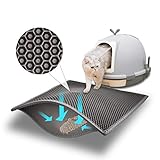
- Anti Tracking EZ Open Edge Litter Mat: Double-layer honeycomb design helps you gather the litter. You just pick up the mat and all the litter falls through and then dump it back in the litter box make it recycling. No more getting litter stuck to my feet on a daily basis! Large holes is large enough to catch and trap litter. Suitable for lots of type of litter, and kitty litter boxes,hooded,self cleaning litter box.
- Waterproof/Urine Proof Mat: Bottom layer is waterproof and also slip-resistant which will not allow any liquid to go through and easy to move. If you have a cat vomit on the mat, you can hose it off, easy to clean and be dry. Protect your hardwood floors and carpets from nasty urine stains.Prevent the cat's urine from getting everywhere.
- Washable Litter Mat: Pieviev litter box mat is an upgrade mat ,it made of soft and washable EVA material. Dirt can be removed super easily. Compared with mesh mats, you may not remove litter thoroughly even with vacuum. Pieviev matscould help you solve this problem perfectly. Save time and strength!!
- Soft On Paws & Easy To Release Litter: Great litter trapping mat, comfortable on tender paws. Our soft EVA material is gentle for sensitive cat paws. Cats even like to step on or have an afternoon snooze on it. Double layers allow litter to be sifted and gather on the bottom. Shaking gently could release litter easily.
- Premium Quality: Considering cats like to scratch, our mat is made of hard material, extremely strong. We are proud that we provide you with a tough and long-lasting cat litter mat product.
- Map the exit route. Place a temporary strip of paper or a washable towel from the doorway to the first turn your cat makes. After a day, inspect where particles collect. The covered area should guide the eventual mat’s size and position.
- Watch a digging session. If the litter leaves in an arc while your cat scratches, measure the rim height and the free floor area inside the box. A cat that cannot turn comfortably may dig against the nearest wall.
- Check paws and fur. Look for granules between toes or in long hair, but do not pull at clumps or force the inspection. Persistent particles on the body point toward tracking rather than a box-wall problem.
- Record the litter. Write down its texture, scent, and how readily your cat enters the box. This makes a later, gradual comparison meaningful.
- Check cleanliness. Remove waste and visibly wet or loose litter, then sweep the floor. A dirty box can change digging and covering behavior as well as leave more loose material available to carry out.
Use a mat to intercept the exit path
A litter mat is the most direct response when particles ride out on paws or land just outside the doorway. Purina recommends placing one under or around the box. The important detail is coverage: position it where the cat actually steps, rather than assuming a small rectangle beside the box will catch every granule.
How to position it
- Center the mat at the box’s main opening.
- Extend it in the direction your cat takes its first several steps. If the cat turns left, cover that turn instead of leaving the mat only under the front edge.
- Keep the mat flat and stable. A sliding or curling edge can make a cat avoid the area or catch a claw.
- Leave enough clear floor for the cat to enter and exit without squeezing past furniture or walls.
- Empty or clean the mat before the collected layer becomes a second source of tracking.
Features worth comparing
| Feature | What to look for | Why it matters |
|---|---|---|
| Exit-route coverage | Enough length and width to cover the first steps and turn | Particles cannot be intercepted if the cat lands beyond the mat |
| Collection surface | Channels, pockets, mesh, or another texture that holds loose granules | Collected litter is less likely to roll straight back onto the floor |
| Stability | A non-skid underside and edges that stay flat | Reduces movement and makes the walkway predictable |
| Cleaning | Easy shaking, vacuuming, rinsing, or emptying | A mat that is difficult to clean will eventually overflow |
| Cat acceptance | A surface your cat walks across willingly | A theoretically effective mat is useless if the cat avoids the box |
Catit describes a dual-texture mat with pockets and mesh intended to catch particles of different sizes. That is a manufacturer description, not independent comparative testing, so treat the construction as a feature to evaluate rather than proof that it outperforms every other mat. Compare observable coverage, stability, cleanability, and your cat’s willingness to use it.
Give the cat room to dig without sacrificing access
Purina lists a larger box as one way to reduce litter pushed outside during digging. More floor area lets a cat turn and scratch without immediately contacting a wall or rim. Size is only useful, however, if the cat can enter comfortably and still feels secure.
The Tool Desk
Outbyte PC Repair FREERepair Windows errors before they cause bigger problemsFix Now →Outbyte Driver Updater FREEScan for outdated or missing drivers - takes under a minuteDriver Scan →Balance room with mobility
- Kittens and cats with joint pain: Cornell advises low-sided boxes for these cats. Do not raise the entrance so high that preventing scatter makes the box difficult or painful to enter.
- Older or stiff cats: Keep the approach unobstructed and the floor around the entrance dry and stable.
- Most cats: Cornell reports that many prefer uncovered boxes and notes that covers can hold odors. A cover or high wall is not a universal anti-scatter solution; it may create odor, access, or acceptance problems.
- Any cat: Choose a box appropriate to the animal’s size and mobility, and keep it in a location the cat can reach without a stressful obstacle.
If the cat is throwing litter over one particular edge, a roomier box may solve the geometry without changing the litter. If the cat avoids a taller or covered design, return to the configuration it uses reliably and intercept the mess outside with a mat.
Rank #2

- DOUBLE-LAYER LITTER CATCHER: With a honeycomb hollow layer and leakproof bottom layer, Powools double-layer kitty litter mat can effectively trap loose litter from the box and cat paws. Moreover, the side-opening design allows you to tip the mat and pour the collected litter into the litter box, easily recycling it and reducing waste.
- PREMIUM EVA MATERIAL: Powools cat mat for litter is made of high-quality EVA material that is ultra-soft, odor-free and resistant to cat scratches. Furthermore, the soft touch is gentle for sensitive cat paws, making the mat ideal for stepping on and resting. Rest assured that your cats will love walking on it without irritation.
- WATERPROOF LITTER MAT: Powools litter mat for litter box features a waterproof bottom layer, preventing urine and other liquids from seeping down to the floor. It helps protect the hardwood floor and carpets from damage and stubborn stains. The anti-slip backing keeps the mat in place without moving while in use.
- WASHABLE & EASY TO CLEAN: Powools cat litter trap mat makes cleaning a breeze, saving time and effort. There is no need to clean the cat litter on the floor frequently every day. Just dump the collected cat litter into the litter box or trash can every 2-3 days. For stubborn stains, you can wipe the mat with a damp cloth or rinse it with a sprinkler.
- MULTIPLE FUNCTIONS: Powools litter catcher mat is large enough to cover the entrance area of most litter boxes. This versatile mat is not only a cat litter mat, but also a feeding mat that can be used under the food and water bowls to catch spills and crumbs. Powools cat mat is a must-have for any cat owner to keep the cat paws and floors clean.
Keep the box and surrounding floor clean
Loose litter already on the floor is easy to spread through the house. Cornell’s care guidance emphasizes keeping boxes clean; Purina also recommends sweeping or vacuuming the surrounding area. Cleaning will not change a cat’s digging style, but it removes the material that would otherwise be carried farther.
A practical routine
- Scoop waste and remove visibly saturated or scattered litter on a schedule your household can maintain.
- At each scoop, check the doorway and the first section of the exit mat for loose granules.
- Vacuum or sweep around the box before particles are tracked into high-traffic rooms.
- Wash the mat and clean the box according to the material’s instructions, allowing surfaces to dry before reuse.
- Inspect the box rim and corners for cracks or rough areas that trap litter and make cleaning incomplete.
Cleanliness is also a behavior issue. A cat that finds the box unpleasant may dig less predictably, rush out, or stop using it. If cleaning does not improve the mess and elimination habits change, investigate the cat’s comfort rather than treating the floor as the only problem.
Consider a different litter only as a controlled trial
Litter choice is individual. Cornell says most cats prefer unscented litter and that many prefer a fine texture. Those are general preferences, not guarantees for every cat, and a lower-tracking formula can still be rejected by an individual animal.
Free tools Windows power users keep installed
One-click scans. No signup required.
What to compare
| Attribute | Questions to ask during the trial |
|---|---|
| Acceptance | Does the cat enter, dig, and cover normally, or hesitate and leave? |
| Texture | Does the cat appear comfortable on the granules? Cornell notes that many cats prefer finer texture. |
| Scent | Is it unscented? Cornell reports that most cats prefer unscented litter. |
| Tracking | After normal use, are fewer particles visible on paws, fur, the mat, and the exit route? |
| Household handling | Is it easy to scoop and clean without leaving loose material around the box? |
Change gradually
- Keep the current box location and access unchanged.
- Introduce the candidate litter gradually rather than replacing the entire box at once; Cornell specifically advises gradual brand changes.
- Watch for reduced use, hesitation, scratching outside the box, or a change in elimination location.
- Continue only if the cat accepts the texture and scent and the observed tracking improves.
- Return to the previously accepted litter if the cat resists; a clean, reliably used box is more important than a theoretical tracking advantage.
Do not infer success from one quiet day. Compare similar cleaning intervals and the same exit path over several normal uses. The relevant result is what happens in your home with your cat, not a general claim printed on a package.
Rank #3
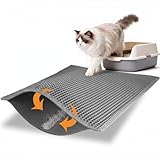
- Anti Tracking EZ Open Edge Litter Mat: Double-layer honeycomb design helps you gather the litter. You just pick up the mat and all the litter falls through and then dump it back in the litter box make it recycling. No more getting litter stuck to my feet on a daily basis! Large holes is large enough to catch and trap litter. Suitable for lots of type of litter, and kitty litter boxes,hooded,self cleaning litter box.
- Waterproof/Urine Proof Mat: Bottom layer is waterproof and also slip-resistant which will not allow any liquid to go through and easy to move. If you have a cat vomit on the mat, you can hose it off, easy to clean and be dry. Protect your hardwood floors and carpets from nasty urine stains.Prevent the cat's urine from getting everywhere.
- Easy Clean Washable Litter Mat: Pieviev litter box mat is made of soft and washable EVA. Dirt can be removed easily.You don't have to sweep up or vacuum the litter everyday.Save time and strength!! Plastic cat mats have to use vacuum to clean cat litter and still cannot be thoroughly cleaned.
- Soft On Paws & Easy To Release Litter: Great litter trapping mat, comfortable on tender paws. Our soft EVA material is gentle for sensitive cat paws. Cats even like to step on or have an afternoon snooze on it. Double layers allow litter to be sifted and gather on the bottom. Shaking gently could release litter easily.
- Premium Quality: Considering cats like to scratch, our mat is made of hard material, strong. We are proud that we provide you with a tough and long-lasting cat litter mat product.
Use a decision sequence instead of changing everything at once
The following order addresses the least disruptive causes first and preserves the cat’s access and preferences.
- Observe. Classify the mess as mainly a trail, a pile at the rim, or both.
- Intercept. Put a stable, cleanable mat across the actual exit route.
- Improve the fit. If digging throws litter out, assess whether a larger box gives the cat room to turn. Keep a low entry for kittens and cats with joint pain.
- Reset cleanliness. Scoop, remove loose litter, and clean the surrounding floor and mat.
- Test litter cautiously. If particles remain on paws, try an unscented or finer-textured option gradually, while tracking acceptance and observed scatter.
- Reassess behavior. If the cat resists the box, stops using it consistently, or changes elimination behavior, stop treating the issue as ordinary housekeeping and seek veterinary guidance.
Common approaches that can backfire
Raising the sides without checking entry
A high-sided or covered box may contain an arc of kicked litter, but it can be hard for kittens, older cats, or cats with joint pain to enter. Cornell also notes that covers can hold odors and that most cats prefer uncovered boxes. Use containment only when the individual cat can access and comfortably accepts it.
Putting a tiny mat beside the box
A mat that covers only the front edge misses particles carried around a corner. Follow the cat’s actual first steps and extend coverage along that route.
PC Slower Than It Used to Be?
A free scan shows the junk files, broken settings and background clutter dragging Windows down - then fixes them in one click.Free scan · Windows 10 & 11Crashes, No Sound, or Screen Glitches?
Random freezes, missing sound and display glitches usually trace back to one bad driver. Find and replace yours safely.Free scan · under a minuteSwitching litter abruptly
An abrupt change can create litter aversion even when the new product appears to track less. Transition gradually and let acceptance decide whether the trial continues.
Rank #4

- Litter mats are made of long-lasting PVC material.
- Waterproof backing effectively keeps liquids from leaking and protects your floors.
- The surface mesh coil design minimizes tracked litter, and the cat litter mats feature litter-trapping grooves in a crisscross pattern of diamonds and a deep border along the edge to collect and contain the litter within the mats.
- Soft step-able surface ensures comfort for sensitive kitty paws.
- Elegant and generous in solid Gray color, more suitable for your home style.
Assuming every granule is a product failure
Some particles are kicked out during normal digging, while others cling to paws or fur. A mat, appropriate box space, and cleaning routine often work together; no source establishes a guaranteed universal fix.
Independent reader supportYour contribution helps us test, update, and keep practical guides available for everyone.When scattering may signal a health or behavior problem
Scattered litter by itself is usually a management issue. A change in elimination behavior is different. Cornell identifies medical problems, litter aversion, and preferences about the box or its location as possible causes of litter-box problems.
Arrange veterinary advice if your cat suddenly avoids the box, eliminates elsewhere, strains, vocalizes, enters and leaves repeatedly without normal output, or shows another persistent change. Do not punish the cat or force it into a new box while you are trying to diagnose the cause. Preserve easy access and note when the change began, what the urine or stool pattern looks like, and any recent changes to litter, box, location, or household routine.
Examples of setups for different mess patterns
A trail extending down the hallway
Keep the accepted litter and box configuration. Place a stable mat from the doorway through the cat’s first turn, then clean the mat and hallway regularly. If particles remain on paws, run a gradual trial of an unscented or finer-textured litter while monitoring acceptance.
Best Value
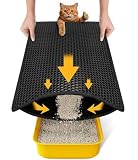
- 【Compact Design】- Save 20% Space with Same Coverage! Perfectly sized at 23.6"x14.6, this cat litter mat fits tight spaces like apartments, small litter boxes, or narrow doorways. Also suitable for kittens and small cats under 6 lbs.
- 【Upgraded 100% Waterproof PC Backing】– Blocks leaks 50% faster,protects floors from sticky liquids. Smooth PVC resists stains, unlike porous EVA. Non-slip texture keeps litter box mat stable, softer top layer for paws.
- 【Fewer Creases, Easier to Get Flat】- Unfolds Instantly Flat with 50% Fewer Creases! Only 1 fold,reducing creases from 3 to 1. Some tips to remove the crease: 1. Put something heavy on the crease for 24 hours 2.Fold the mat in reverse along the crease and flatten it firmly. 3. Use a dryer to hot blow the crease, make it softer and easier to disappear. If still can not succeed, contact us for replacement or refund.
- 【Effortless Cleaning – Wipe & Go!】 Simply tilt the litter mat gently to whisk away any litter into the bin effortlessly or use a vacuum for a quick refresh. For stubborn stains, you can wipe the kitty litter mat with a damp cloth or rinse it with a sprinkler.
- 【Better Litter Control – Saves Time & Money!】 Double layer litter mat effectively traps loose litter from the box and cat paws, keeping your floors clean. The honeycomb holes are large enough to trap various of cat litter, such as clay, tofu and crystal. The leakproof bottom layer helps collect and store litter, making reuse easy and reducing waste.
A pile directly outside one wall
Watch the digging direction. If the cat repeatedly scratches against the same wall, test a larger box that still has an easy entrance. Keep the surrounding floor clear and use a mat at the landing area to catch the remaining loose litter.
Scatter plus sudden box avoidance
Do not escalate containment first. Restore the easiest, familiar access, keep the box clean, and contact a veterinarian because medical problems or aversion may be involved.
What success should look like
Judge the setup by three outcomes: the cat enters and eliminates normally, fewer particles leave along the observed route, and the remaining litter is easy for you to collect. Record the baseline location and amount of mess, make one controlled adjustment, and reassess after ordinary use. A workable solution is the combination your cat accepts and your household can keep clean—not necessarily the tallest box, the thickest mat, or a litter marketed as low-tracking.
Do these 3 things before closing this tab:
1Repair Windows errors before they cause bigger problems2Fix the driver behind crashes, sound loss and screen glitches3Clear out junk files and repair common Windows errorsQuick Recap
Product prices and availability are accurate as of the date/time indicated and are subject to change. Any price and availability information displayed on Amazon at the time of purchase will apply.





Leave a Reply