Arrange a veterinary examination for any new or major vision change, especially if it appeared suddenly. Some causes require urgent treatment, and the right prognosis depends on a diagnosis rather than on how the eyes look at home. Until your dog is assessed, prevent falls and wandering, keep the home layout fixed, and use calm, consistent sound cues.
Many dogs can learn a reliable mental map and continue to enjoy walks, play, food puzzles, and social contact. Support must be individualized to the cause of the loss, pain, age, other disabilities, temperament, and the safety of your home.

As an Amazon Associate I earn from qualifying purchases.
Get a veterinary assessment before treating the loss as permanent
Vision loss has several possible causes, and owners cannot distinguish them reliably by watching a dog bump into furniture. VCA Animal Hospitals lists hesitation on stairs or furniture, anxiety in unfamiliar places, slower walking or play, startling, and reduced eye contact among signs that deserve a veterinary visit. A clinician can examine the eyes and the rest of the dog, determine whether the change is reversible or treatable, and set realistic safety and follow-up plans.
Recommended Free Tools
When a sudden change is an emergency
Acute glaucoma can threaten sight quickly and is an emergency. VCA describes possible signs as eye pain, squinting or rubbing, watery discharge, lethargy or loss of appetite, swelling or redness, a cloudy or bluish cornea, and rapid blindness. Seek immediate veterinary treatment if these signs occur rather than waiting for a routine appointment.
#1 Best Overall
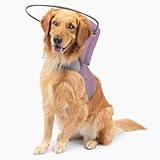
- Proper Fit Guidance: Measure your dog’s chest girth and nose distance before selecting size. Elastic rear strap offers flexible adjustment.
- Navigation Assistance Aid: Designed to help blind dogs detect obstacles earlier during everyday movement.
- Head & Face Protection: Halo structure surrounds the head area to help reduce accidental bumps into walls or furniture.
- Breathable Padded Material: Soft cushioned fabric supports comfort and helps minimize rubbing during movement.
- Secure Vest Construction: Adjustable harness design distributes pressure evenly while keeping the halo securely in place.
VCA’s emergency guidance also treats sudden stumbling or bumping into objects—particularly when the pupils are widely dilated—as possible sudden vision loss associated with glaucoma. Call an emergency veterinary service and follow its instructions immediately.
| What you notice | What to do |
|---|---|
| Sudden blindness, stumbling, or collisions; widely dilated pupils | Immediate veterinary treatment; glaucoma is one possible cause. |
| Red, swollen, cloudy, painful, or frequently rubbed eye; squinting or watery discharge | Immediate veterinary assessment because acute glaucoma or another painful eye disorder is possible. |
| Gradual hesitation, slower activity, or anxiety in new places | Book a veterinary examination promptly; do not wait for complete blindness. |
Do not give eye drops, pain medicines, or supplements unless your veterinarian prescribes them. A painful eye can worsen while a dog appears merely confused, and some human products are unsafe for dogs.
Ask what the diagnosis means for sight and comfort
A major loss is not automatically irreversible. Some disorders have treatment options, while others permanently damage the visual system. Your veterinarian may recommend a veterinary ophthalmologist, particularly when the cause is unclear, the eye is painful, or treatment could preserve remaining sight.
The Tool Desk
Outbyte PC Repair FREEClear out junk files and repair common Windows errorsFree Scan →Outbyte Driver Updater FREEFix the driver behind crashes, sound loss and screen glitchesFind Drivers →SARDS is one specific diagnosis
Sudden acquired retinal degeneration syndrome (SARDS) is different from “blindness” as a general description. VCA explains that SARDS is idiopathic, often develops over days to weeks, and causes permanent blindness. Diagnosis involves a thorough eye examination, possible blood tests to rule out other causes, and electroretinography (ERG), which VCA identifies as the definitive diagnostic test for SARDS.
VCA reports no evidence that supplements or treatments marketed for SARDS restore vision or benefit that condition. That statement applies to SARDS; it should not be used to dismiss treatment for another diagnosis. Ask which test established your dog’s diagnosis, what remains treatable, whether the eyes are painful, and which signs require a recheck.
Questions to take to the appointment
- Did the loss happen suddenly, over days, or gradually?
- Is one eye or both eyes affected, and is there pain or inflammation?
- What tests were performed, and is a veterinary ophthalmology referral appropriate?
- Could medication, surgery, or treatment of another illness preserve or improve function?
- What changes would mean an emergency visit?
- Which activities are safe now, and when should the next examination occur?
Make the first 24 hours safer
Confusion is greatest when the familiar layout suddenly becomes unreliable. Until your dog has a stable routine, supervise movement rather than testing whether the dog can “find the way” alone.
- Restrict hazards. Keep your dog away from stairs, balconies, open windows, ponds, pools, fireplaces, and sharp or protruding objects. Close doors to rooms that contain new risks.
- Create one safe base. Place the bed, water, food, and a resting mat in a quiet area with a clear route. Keep bowls in the same locations.
- Clear pathways. Remove boxes, shoes, toys, and low objects from routes the dog uses. Secure loose cords and floor coverings that can slide.
- Keep the layout fixed. VCA advises avoiding movement of furniture or other large household items while the dog learns the surroundings.
- Use physical barriers where needed. A securely installed pet gate can block unsupervised stair access, but choose and position barriers for your dog’s size, strength, and the particular stairway; no single gate suits every home.
- Supervise transitions. Escort the dog through unfamiliar rooms, doorways, and changes in flooring until the route is predictable.
Build a predictable home map
Keep routes and landmarks consistent
Dogs can combine memory, hearing, smell, and touch to navigate, but they need repetition. Walk the same route between the resting area, bowls, door, and toilet area. Avoid rotating furniture, moving a coffee table, or leaving a chair in a passageway. If a change is unavoidable, guide your dog through it slowly on leash and repeat the route several times.
What’s actually slowing this PC down?
Pick the symptom - the matching free tool is one click away.
Use tactile and scent information carefully
Different floor textures can signal a doorway or the edge of a safe zone, and a familiar mat can identify the bed area. Keep scents mild and consistent; do not use concentrated essential oils around a dog. A bell or other gentle sound on a person can help the dog locate that person, provided the sound does not startle or irritate the dog.
Announce yourself and avoid surprise contact
Speak before touching your dog, especially when the dog is asleep or eating. Use the same short words for “step,” “stop,” “door,” or “outside.” Approach from the front when possible, let the dog sniff your hand, and reward calm responses. Children and visitors should be taught not to rush up, hug, or grab a dog that cannot see them.
Prevent falls, collisions, and getting lost outdoors
Stairs and elevated surfaces
Do not allow unsupervised stair access. Carrying may be appropriate for a small dog only if your veterinarian says it is safe and the dog accepts handling; for a larger dog, use a harness and controlled assistance rather than pulling on the neck. Block access to decks, retaining walls, steep drops, and furniture from which a fall is possible.
Rank #3

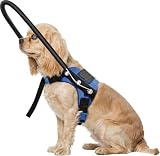
- 【Size Guidelines】Avoid sizing mistakes by measuring your pet's nose length and chest girth. Size XXS is designed for chest girths of (5"-10") XS of (10"-14"). For larger pups, check out M of (20"-24") M with reflective features.
- 【Instant Crash Protection】 Specially engineered for blind and visually impaired dogs, this protective halo acts as an early-warning buffer against walls and daily obstacles, effectively preventing painful head impacts and facial bruising.
- 【No-Slip No-Choke Vest Structure】 Unlike traditional neck collars, our secure dual-buckle vest design wraps comfortably around the torso. It guarantees the protective ring remains steady during active movement while preventing any neck choking.
- 【Premium Comfort】 Crafted from soft, lightweight, and breathable materials to minimize discomfort and ensure hassle-free extended daily wear.
- 【Daily Mobility Support】 Boosts confidence and provides crucial assistance for blind dogs during walking, exploring, and daily activities.
Walks and toilet trips
Use a leash outdoors or a securely fenced area. VCA specifically recommends these controls so a blind dog cannot wander off and become injured. A well-fitted harness can make guidance easier, but introduce it indoors and check that it does not rub or restrict breathing. Keep the same short route at first, avoid busy off-leash areas, and scan for holes, traffic, bicycles, and other animals.
Travel and unfamiliar places
For a car trip, secure the dog in a crate or crash-tested restraint that the dog has already learned to tolerate. Bring the familiar bed or mat, water, and consistent verbal cues. In a new building, walk the dog on leash, map one quiet route, and prevent access to stairs or open doors until the dog is oriented.
Teach navigation with sound and touch
VCA notes that blind animals can be trained to localize and follow sounds such as clicks and whistles. Training should be brief, calm, and repeated in the same context; it is not a substitute for physical supervision.
- Choose one marker. A soft verbal marker or click can mean “that was right.” Use the same sound every time.
- Pair the marker with a reward. In a quiet room, make the sound, immediately offer a small treat, and repeat until your dog turns toward you without startling.
- Add a target. Call from a short distance, reward the dog for orienting toward you, and gradually increase distance only when the response is relaxed and accurate.
- Introduce one obstacle at a time. With a leash and your hand near the harness, guide toward a low, safe object. Stop before contact, use a consistent cue, and reward a detour.
- Practice on familiar routes. Repeat the same path between two rooms, then add one new room. If the dog freezes, pants, or repeatedly collides, reduce distance and complexity.
Let the dog approach at its own pace. Pulling, dragging, or repeatedly startling the dog can create fear and make navigation less reliable. A veterinary behaviorist or qualified positive-reinforcement trainer can help when anxiety, reactivity, or another disability complicates learning.
Decide how another pet and the household should participate
VCA notes that a blind animal may rely on another household animal to lead the way. This is a possibility, not a guarantee and never a replacement for supervision. Observe both animals: the guide animal should remain relaxed, and the blind dog should not follow into stairs, doors, or unsafe spaces.
Free tools Windows power users keep installed
One-click scans. No signup required.
Give each pet separate access to food, water, beds, and escape space. Keep feeding locations fixed so a sighted animal cannot cause the blind dog to search in a dangerous area. Supervise introductions to new pets, visiting children, and boisterous play. A dog that startles easily may need a quiet room where it can rest undisturbed.
Independent reader supportYour contribution helps us test, update, and keep practical guides available for everyone.Support adjustment without assuming a fixed timeline
Adjustment varies with the speed of the loss, pain, age, hearing, mobility, cognitive function, temperament, and the home environment. Some dogs become cautious or clingy at first; others resume familiar activities quickly. Keep daily events predictable, offer rest, and reward exploration rather than forcing interaction.
In its SARDS guidance, VCA says, “Most dogs will adjust to their blindness within a few weeks.” That is an attributed statement about the condition and is not a deadline for every dog with vision loss. VCA also reports that over 75% of owners rated their dog’s quality of life as excellent after adjustment; the surfaced information does not provide the study year or methodology, so treat the figure as VCA’s reported result rather than a universal outcome.
Signs the plan is working
- The dog moves along familiar routes with fewer collisions.
- Eating, sleeping, toileting, and grooming return toward the usual pattern.
- The dog seeks play, treats, sniffing, or social contact voluntarily.
- Startle responses become less frequent or shorter.
Signs to call the veterinarian again
- New eye redness, cloudiness, squinting, rubbing, discharge, or apparent pain.
- Repeated falls, inability to find food or water, or rapid deterioration in mobility.
- Persistent panic, inability to settle, refusal to eat, vomiting, or marked lethargy.
- Sudden changes in behavior that could indicate pain, neurologic disease, or another illness.
Choose support by safety, diagnosis, consistency, and wellbeing
There is no validated score that predicts which adaptation plan will work. Use these practical questions with your veterinarian and household:
| Decision area | Questions to ask | What a workable plan looks like |
|---|---|---|
| Immediate safety | Can the dog reach stairs, traffic, water, or a drop without a person? | Barriers, leash or secure fencing, and supervision remove those routes. |
| Medical fit | Is the cause painful, progressive, treatable, or associated with another disability? | Medication, referral, and rechecks follow the diagnosed condition. |
| Household consistency | Can everyone keep furniture, bowls, routes, and cues in the same places? | One shared routine is written down and followed by all caregivers. |
| Engagement | Does the dog remain relaxed enough to eat, rest, explore, and interact? | Activities are adjusted in difficulty, with rest and positive reinforcement. |
Common mistakes and safer alternatives
- Waiting to see whether it improves: sudden loss can be an emergency. Contact a veterinarian immediately when onset is abrupt or the eye appears painful.
- Rearranging the house to “help”: frequent changes erase the mental map. Clear hazards, then leave major furniture and objects in stable positions.
- Letting the dog test stairs alone: one successful climb does not make the risk safe. Use a barrier and supervision.
- Allowing free roaming outdoors: a blind dog can enter traffic, fall, or become lost. Use a leash or secure fenced area.
- Buying unproven vision supplements: VCA reports no evidence of benefit for SARDS. Ask about the diagnosed condition before spending money on a marketed cure.
- Using loud or inconsistent cues: shouting can increase fear. Choose a few calm, repeatable signals and reward orientation.
- Assuming blindness alone determines quality of life: monitor pain, mobility, appetite, sleep, interest, and social behavior with your veterinarian.
A simple daily routine
- Check the eyes and behavior for new pain, redness, cloudiness, discharge, or sudden deterioration.
- Walk the same safe route to food, water, and the toilet area.
- Provide one short, supervised navigation or scent game suited to the dog’s energy and other disabilities.
- Keep stairs, doors, pools, and outdoor access controlled whenever no responsible person is present.
- Record changes in appetite, sleep, collisions, anxiety, and enjoyment so the veterinarian can adjust the plan.
Major vision loss changes how a dog gathers information, but it does not by itself define whether life remains worthwhile. Prompt diagnosis, controlled access to hazards, a stable physical layout, and patient communication give your dog the best chance to regain confidence while medical care addresses the underlying cause.
Quick Recap
Product prices and availability are accurate as of the date/time indicated and are subject to change. Any price and availability information displayed on Amazon at the time of purchase will apply.




