
Teach calmness around running water with gradual desensitization and counterconditioning: expose your dog to the quietest, most distant version of the trigger it can notice while relaxed, immediately pair that exposure with a favorite reward, and increase only one difficulty at a time. If your dog freezes, trembles, pants, barks, avoids the water, tries to escape, or stops taking a normally valued treat, make the next exposure easier or end the session. Never punish or force a dog to endure a faucet, shower, hose, bath, or swimming.
What the training is—and what it is not
Running water is a bundle of possible triggers rather than one single stimulus. Your dog may react to the sound of a tap, the sight of a moving stream, splashing, reflections, the bathroom itself, a hose, wet paws, the slippery surface of a tub, or handling associated with bathing. Separating those elements lets you practice the easiest one instead of confronting everything at once.
As an Amazon Associate I earn from qualifying purchases.
The evidence-based approach is desensitization (controlled exposure at a level the dog can tolerate) combined with counterconditioning (pairing that mild exposure with something the dog values). Veterinary behavior guidance from VCA Animal Hospitals and the American Veterinary Society of Animal Behavior (AVSAB) supports this general method. The sources do not establish a validated, water-specific schedule or a guaranteed number of sessions, so your dog’s observable comfort—not a calendar—determines the pace.
Do these 3 things before closing this tab:
1Repair Windows errors before they cause bigger problems2Fix the driver behind crashes, sound loss and screen glitches3Clear out junk files and repair common Windows errorsThe goal is not to make a dog love baths or swimming. The practical goal may be a dog that can remain loose-bodied near a running faucet, accept treats while a shower runs in another room, or cooperate with necessary rinsing. A calmer response near one setup does not prove that the dog is comfortable or safe in every water situation.
#1 Best Overall

- BUDDY TRAINING BITES - These bite-sized treats are chock full of meaty flavor from appetizing pork liver as the 1st ingredient, so they are easy to eat and perfect for dogs of all ages.
- ALL THE GOOD STUFF - Our training treats are made in the USA and they are free of corn, soy, artificial flavors and preservatives. With Buddy, you can feel good about serving your best bud the treats they deserve!
- LOW CALORIE - Only 1.5 calories per treat to help make your dog training sessions last longer! The delicious aroma will have your pup coming back for more.
- 501 TREATS PER BAG - Reward your dog's good behavior with 500 treats per bag. Buddy is healthy, tasty & fun!
- EVERYBODY LOVES BUDDY: Buddy is the perfect companion for your best friend! Buddy's delicious flavors are sure bring your pup joy! Buddy has a range of treats - all made with real, simple ingredients that you can pronounce.
Why a dog may react to a faucet, shower, or hose
Water can change several sensory and physical conditions simultaneously. A sudden spray is loud and unpredictable; a bathroom can echo; wet fur changes how the dog feels; a tub may feel unstable; and restraint or previous unpleasant handling can become part of the cue. A dog may also have learned that the sound of water predicts nail trimming, shampoo, ear cleaning, slipping, or another event it dislikes.
Do not assume that a dog who barks at a hose is afraid of every body of water, or that a dog who tolerates a bowl will tolerate a shower. Record the exact context: source, sound, flow, distance, movement, location, surface, handling, and what happened immediately beforehand. Sudden new fear can also accompany pain, illness, hearing or vision changes, or another medical problem; a veterinarian should assess an abrupt behavior change.
Read your dog’s threshold before you begin
A dog is below threshold when it can notice the trigger and still remain physically relaxed, orient back to you, and readily eat or play. That is the learning zone. At or above threshold, the dog may be unable to process new information, so continuing can strengthen the fearful response.
Quick wins for a faster PC:
Repair Windows errors before they cause bigger problemsFix Now →Fix the driver behind crashes, sound loss and screen glitchesFind Drivers →| Signs your dog is coping | Signs the exposure is too intense |
|---|---|
| Loose muscles and a natural posture | Crouching, cowering, freezing, or trying to hide |
| Normal breathing and exploratory movement | Rapid panting, trembling, frantic movement, or escape attempts |
| Readily taking a normally prized treat | Refusing a favored treat or losing interest in play |
| Can look at the water and disengage | Barking, lunging, repeated avoidance, or inability to orient to you |
One sign alone may not tell the whole story, but a cluster means the challenge is too high. Stop the water or increase distance, allow your dog to move away, and wait for recovery. Do not lure a dog closer with food until it feels trapped; food should accompany a comfortable exposure, not conceal that the dog is overwhelmed.
Prepare a safe training setup
Choose a high-value reward
Use a small, soft treat or toy your individual dog genuinely values. Reserve it for this work if that increases its importance. Rewards are optional tools, not anxiety medication, and no treat can compensate for an exposure that is too intense. If your dog will not take the reward, lower the difficulty rather than offering more tempting food at the same distance.
Teach a settle behavior away from water
In a quiet room, reinforce lying on a mat, standing softly beside you, or another simple behavior your dog already performs easily. Build duration gradually and release the dog frequently. This gives you a useful foundation, but do not use a “stay” or “settle” cue to hold a frightened dog next to running water. Frightened animals do not readily learn new skills; first lower the trigger intensity.
Rank #2

- REAL BEEF FIRST: Blue Buffalo Bits dog training treats feature high-quality, real beef as the first ingredient to deliver essential nutrition and the savory beef flavor dogs crave
- EXPERT-LED NUTRITION: Designed to help your pet thrive from the inside out, Blue Buffalo all-natural dog treats are developed by a dedicated team of veterinarians and animal nutritionists for a trusted option in healthy dog snacks
- ENHANCED WITH DHA: These BLUE Bits soft dog treats are enhanced with DHA, an Omega-3 fatty acid that supports healthy cognitive development for puppies and dogs of all ages and sizes
- PERFECT FOR DOG TRAINING: Soft, tender, bite-sized training treats for dogs make repeat rewarding easy during dog training sessions without slowing or interrupting your dog’s focus
- HEALTHY SKIN & COAT: Omega 3 & 6 fatty acids from flaxseed support healthy skin and a shiny coat
Control movement and exits
Set up so your dog can retreat without slipping, tangling, or being cornered. A secure leash and body harness can provide safe control during general exposure exercises, as VCA describes, but the leash should not be used to drag the dog toward water. Keep doors, stairs, electrical equipment, and wet floors in mind. If you must work near a tub or shower, have a dry, stable area available for recovery.
Windows Errors? Fix Them Before They Spread
Repair common Windows errors and clear accumulated junk for a smoother, more stable PC - no reinstall needed.Free scan · no reinstallOutdated Drivers Are Slowing You Down
One free scan finds every outdated or missing driver and matches the right update for your exact hardware.Free scan · exact hardware matchA gradual protocol for running-water fear
The sequence below is an application of general veterinary desensitization and counterconditioning guidance, not a water-specific protocol tested in clinical trials. Keep sessions brief and end while your dog is still successful.
1. Define the easiest trigger component
Write down what your dog reacts to and rank versions from easiest to hardest. For example, a turned-off faucet viewed from a hallway may be easier than a distant running tap; a quiet hose lying on the ground may be easier than water spraying; and a short flow may be easier than a long shower. Start with one component whenever possible—sound, sight, movement, location, proximity, duration, or handling.
2. Start where your dog can notice but stay relaxed
Place your dog at a distance from the water source where it can orient to the trigger without stiffening or retreating. Depending on the dog, the first exposure might be a turned-off tap, a distant recording or real sound at very low volume, a brief low-flow stream, or simply entering the room with no water running. Keep the dog free to move away.
3. Pair the mild trigger with the reward
Present the mild version, then immediately deliver the favored treat or toy. Keep the water event short—possibly only a second or two—then stop and let your dog relax. Repeat only while the dog remains loose and readily engages. The desired association is that the manageable water cue predicts good things without pressure.
4. Watch recovery, not just the instant reaction
After each repetition, observe whether your dog returns to normal breathing and posture, can look away, and chooses to remain nearby. If the dog takes the treat but then freezes, scans for escape, or cannot settle, the exposure is still too difficult. Increase distance, lower the flow or sound, shorten the duration, or end the session.
Rank #3

- GRAIN-FREE PUPPY TREATS: These bite-sized, soft puppy training treats are the perfect reward during training sessions or any time you want to thank your dog for good behavior. Puppy bites contain 6 calories per individual treat!
- SUPPORTS BRAIN DEVELOPMENT: Soft dog treats are crafted with salmon, a healthy source of DHA to promote healthy brain development.
- HEALTHY INGREDIENTS: These treats for dogs are made with minimal ingredients focused on quality proteins: made with lamb and salmon, with added vitamins specifically for puppies.
- NO CORN, WHEAT, OR SOY: Treats for dogs do not contain wheat, wheat gluten, corn, soy, or artificial colors.
- MADE IN USA: Our dog treats are quality-assured, made in USA, and crafted from the finest globally-sourced ingredients. Treats are tender, healthy, and bite-sized for small, medium, and large dogs of all lifestages, and activity levels.
5. Change one variable at a time
Once several easy repetitions are relaxed, make one small adjustment: move slightly closer, run the water a little longer, increase flow or sound, add gentle movement, or practice in a different location. Do not combine a closer distance, louder stream, longer session, and bathing restraint in one jump. A step backward is useful information about the current threshold, not a failure.
6. Generalize to another easy context
When your dog is comfortable with one setup, repeat an equally easy version in a relevant second context—for example, another room, a quiet hose placed outdoors, or water running while the dog remains behind a gate. Generalization should be gradual. Do not leap from a calm faucet exercise to a full bath, high-pressure hose, stream, or swimming.
7. End on a voluntary success
Stop while your dog is still able to eat, investigate, or relax. Offer a break away from the water. Several brief sessions are preferable to one prolonged session that pushes the dog over threshold. There is no evidence-based fixed number of repetitions or sessions for this problem; VCA notes that general desensitization may take a few hours, weeks, or months depending on the individual emotional response.
How to adjust the trigger without guessing
| Trigger dimension | Easier version | Harder version to postpone |
|---|---|---|
| Distance | Dog farther from the faucet, shower, or hose | Moving the dog close or blocking retreat |
| Sound | Quieter flow, shorter activation, or more distance from an echoing room | Sudden full-pressure shower or loud spray |
| Movement | Still, turned-off fixture or a stationary hose | Swinging spray, splashing, or water directed toward the dog |
| Duration | One brief activation followed by a break | Continuous running during a long bath |
| Location | Open, familiar, nonslip area | Confined tub, slippery floor, or unfamiliar setting |
| Handling | No restraint; dog chooses position | Holding, lifting, shampooing, or directing spray onto the body |
These dimensions can be separated because a multi-part trigger is easier to modify when its components are trained individually. VCA specifically describes adjusting distance, sound level, movement, and other elements. Keep the dog’s ability to retreat and accept rewards as the deciding criteria.
What to do during a bath
Bathing is often more difficult than faucet practice because it combines sound, wet surfaces, handling, restraint, and water touching the body. If a bath is medically or hygienically necessary before training is complete, prioritize safety and minimize distress rather than treating the event as a lesson.
- Prepare towels, nonslip footing, shampoo, and rinsing equipment before bringing the dog in.
- Use the quietest practical water flow and avoid spraying the face or suddenly turning on a loud shower.
- Allow the dog to stand or exit when safely possible; never hold it in place to force habituation.
- Use calm, reward-based handling and pause if the dog shows escalating fear.
- Ask your veterinarian or a qualified behavior professional how to manage essential grooming when fear is severe.
Do not punish barking, retreat, trembling, or other fear responses. AVSAB’s 2021 humane training position states: “AVSAB therefore advises that aversive methods should not be used in animal training or for the treatment of behavior disorders.” VCA similarly warns, “Punishment can increase stress and make fear worse.”
Rank #4

- BIG MOTIVATION IN EACH MINI BITE. Each of these 3 calorie treats are packed with flavor from pork liver, real bacon, and added botanicals that will keep dogs focused and eager to learn!
- TRAIN. ENRICH. TREAT. These low calorie training rewards are great for training sessions, enrichment activities such as puzzle toys and snuffle mats, and every day treating occasions.
- GREAT FOR DOGS OF ALL SIZES. These bite-sized treats are the perfect size for training and every day treating for dogs of all sizes. Each 20 oz bag includes approximately 500 treats.
- REWARD THE EVERYDAY Pet Botanics healthy training rewards are perfect for training and treating every day in every way. These soft & chewy treats have no artificial flavors, colors or preservatives.
- PROUD MEMBER THE CLOUD STAR FAMILY. With Cloud Star products, you can spend less time worrying about what to feed your pet and spend more time Living Life with Your Dog by Your Side.
Common mistakes and their fixes
Turning on the shower to “get it over with”
A sudden loud exposure can push a dog over threshold and make later sessions harder. Begin with a quieter, shorter, more distant version instead.
What’s actually slowing this PC down?
Pick the symptom - the matching free tool is one click away.
Forcing contact or carrying the dog into water
Physical compulsion removes the dog’s escape option and can intensify fear. Allow voluntary movement and build tolerance in tiny increments. The American Kennel Club advises against forcing a dog that dislikes water into swimming.
Using food to lure the dog into a trap
If the dog follows a treat into a corner and then discovers running water, it may stop trusting the setup. Deliver rewards where the dog can still retreat, and reduce intensity when eating becomes hesitant.
Increasing several variables together
Moving closer while increasing flow and adding bathing may produce a setback without telling you which change caused it. Alter one dimension, record the response, and repeat an easier step if needed.
Expecting a cue to override fear
A reliable “settle” behavior trained in a quiet room cannot make an overwhelmed dog feel safe. Use the cue only when the dog remains below threshold; distance and trigger control come first.
Recommended Free Tools
Assuming faucet calmness means swimming safety
Comfort near a household water source does not establish swimming ability, confidence in deep water, or safe behavior around pools, rivers, or currents. Treat water fear and swimming safety as separate questions.
Best Value
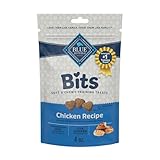
- REAL CHICKEN FIRST: BLUE Bits dog training treats are made with delicious real chicken as the first ingredient making them an ideal reward for your best friend’s best behavior
- SOFT TRAINING TREATS: For dogs that love a soft treat, BLUE Bits are tender, bite-sized morsels that are the perfect size for training; plus, with DHA to help support cognitive development, they’re an ideal puppy treat
- WHOLESOME INGREDIENTS: These dog treats don’t contain any chicken (or poultry) by-product meals and are free from corn, wheat, and soy; plus, they’re free from artificial preservatives like Propylene Glycol and colors like Red Dye 40
- HEALTHY DOG TREATS: Blue Buffalo natural dog treats feature the healthy, wholesome ingredients you’ll love feeding as much as they’ll love eating
- Contains: One (1) 4-oz bag of BLUE Bits Natural Soft-Moist Training Dog Treats, Chicken Recipe
When to pause training and seek professional help
Contact a veterinarian when fear appears suddenly, is accompanied by other behavior or health changes, causes persistent distress, or prevents basic care. Veterinary advice is also appropriate before starting a therapeutic water-exercise program. The American Veterinary Society of Animal Behavior recommends management alongside training and veterinary guidance for serious anxiety or abrupt behavior change.
Ask for a qualified behavior professional when you cannot keep exposures below threshold, when the dog repeatedly escalates despite easier setups, or when bathing is unavoidable and unsafe. A professional can assess medical contributors, design management for necessary grooming, and determine whether additional treatment is appropriate. Do not interpret a lack of quick progress as a reason to increase pressure.
Dr. Kern, quoted by the American Kennel Club about water exercise, advises: “If your veterinarian believes that swimming would benefit your pet, but they are anxious about water, it’s best to seek professional guidance to help teach them.” That guidance concerns hydrotherapy and water activity rather than faucet desensitization, but the safety principle applies: veterinary need does not justify forced exposure.
Free tools Windows power users keep installed
One-click scans. No signup required.
How to judge progress
Track observable behavior rather than trying to assign a score. Note the trigger version, distance, duration, reward accepted, body posture, and recovery after each session. Progress may look like taking a treat sooner, choosing to remain in the room, recovering faster after the tap stops, or tolerating one additional second of low flow. If any change produces cowering, trembling, panting, barking, escape attempts, or refusal of a normally valued reward, return to the last comfortable setup.
VCA’s general guidance says desensitization and counterconditioning can take “a few hours, a few weeks, or even a few months,” depending on the animal’s emotional response. That range is not a forecast for your dog and is not specific to running water. There is no established success rate or fixed session count for this exact problem.
Key safety rules
- Keep every exposure below the dog’s fear threshold.
- Increase only one aspect of intensity at a time.
- Stop or increase distance at the first clear signs of distress.
- Never punish fear or force a dog into a bath, shower, hose spray, or swimming.
- Do not use a leash, harness, gate, or cue to trap a frightened dog beside water.
- Separate calmness around a faucet from swimming ability and water-safety decisions.
- Consult a veterinarian for sudden, severe, persistent, or medically complicated fear.
VCA summarizes the pace principle well: “Never feel obligated to move more quickly than you are comfortable, even if the animal seems comfortable.” In practice, move no faster than your dog’s relaxed behavior supports.
Quick Recap
Product prices and availability are accurate as of the date/time indicated and are subject to change. Any price and availability information displayed on Amazon at the time of purchase will apply.





Leave a Reply