
The Tool Desk
Outbyte PC Repair FREERepair Windows errors before they cause bigger problemsFix Now →Outbyte Driver Updater FREEFix the driver behind crashes, sound loss and screen glitchesFind Drivers →Some links on this page are affiliate links: if you buy through them we may earn a commission, at no extra cost to you.
Teach “gentle” as a set of observable, controllable behaviors—settling, keeping four paws on the floor, responding to cues, and moving away—not as a promise that a dog is safe to leave with an infant. Begin preparation before birth, introduce baby-related sights and sounds gradually, make the first meeting voluntary and calm, and use direct adult supervision or physical separation for every interaction. Breed, friendliness, and a previously uneventful history do not remove that safety requirement.
What “gentle” should look like
A gentle dog around a baby is calm enough to respond to an adult, keeps distance when asked, does not jump or paw at the child, and can relax behind a barrier or in a designated resting place. The goal is reliable management, not a temperament label. A dog may be affectionate and still become frightened, over-excited, protective of food or toys, or stressed by sudden movements and cries.
As an Amazon Associate I earn from qualifying purchases.
What’s actually slowing this PC down?
Pick the symptom - the matching free tool is one click away.
There is no evidence here that Golden Retrievers as a breed can be assumed safe with infants, and no breed is automatically predictable in this situation. Treat your individual dog’s behavior, history, health, and ability to recover from stress as the relevant information. Never test safety by leaving the dog and baby together.
Start preparing before the birth
ASPCA suggests beginning gradual exposure to new sights, sounds, and smells about four months before the baby arrives when that timeline is available. Expected routine changes can be introduced one to two months before birth. These are planning suggestions, not mandatory deadlines or guarantees. If the baby is arriving sooner, start with the highest-priority skills and arrange professional help rather than rushing through difficult exposures.
Popular on Amazon

- Auto-Close Baby Gate: Designed with an intelligent self-closing system, this dog gate automatically swings shut at angle under 90°, providing reliable protection against accidental openings
- Dual-Lock Safety: This baby gate for stairs features a secure dual-lock mechanism, ensuring curious children and pets stay safely contained while allowing adults to open it effortlessly with one hand. Parents can pass through the baby gates for doorways with ease even while carrying groceries or a baby
- Tool-Free Installation: The pressure-mounted dog gate indoor provides a secure hold while protecting your walls or furniture from damage, ideal for renters and hassle-free setups. The dog gates for doorways offer a quick, temporary solution that's both safe and convenient. The attached sticky pads are provided to keep the wall cups in place, so you don't need to drill
- Stroller-Friendly Baby Gate for Stairs: Features an anti-stumble pedal, ensuring a seamless transition between the pet gate and the floor. This design reduces the risk of tripping and allows strollers to roll through the child gate effortlessly, making the pressure mounted baby gate ideal for families with elderly members and young children
- Adjustable Pet Gate Indoor: With an adjustable width from 29 to 40 inches, the baby gate with door fits most standard doorways and stair openings, creating a safety environment for your little ones and furry friends while giving you peace of mind. Please measure the width of the openings you want to place the child gate before installation
| Preparation window | What to practice | How to judge progress |
|---|---|---|
| About four months before birth, if possible | Baby sounds, equipment, scents, handling routines, and core cues in short sessions | The dog can notice the change, take food, and return to a relaxed behavior |
| One to two months before birth | Likely changes to walks, feeding, sleeping, attention, room access, and settling | The revised routine is predictable and the dog still gets exercise, rest, and positive attention |
| Before labor | First-meeting plan, helper, leash, treats, resting area, and barriers | Every adult who may supervise knows when to separate the dog and baby |
Teach the cues that make handling possible
Practice with rewards in quiet settings first, then add realistic distractions gradually. Keep sessions brief and end while the dog is successful.
- Sit and down: useful starting positions for greetings and pauses.
- Stay and wait: help you open doors, carry the baby, or move equipment without the dog rushing forward.
- Settle: teach the dog to relax on a mat or bed for increasing periods.
- Come: provides a reliable recall away from a doorway, toy, or moving adult.
- Leave it and drop it: prevent access to nappies, pacifiers, clothing, and baby objects.
- Polite greeting: reward four paws on the floor instead of jumping.
- Move away or go away: gives the dog a clear, rewarded way to create space when an interaction is uncomfortable.
- Crate relaxation, if a crate suits your dog: make it a voluntary, positive resting option rather than a punishment.
Reward the behavior you want immediately. Do not rely on physical corrections or intimidation; they can increase anxiety and make warning signals less trustworthy.
Do these 3 things before closing this tab:
1Scan for outdated or missing drivers - takes under a minute2Clear out junk files and repair common Windows errors3Fix the driver behind crashes, sound loss and screen glitchesRehearse baby sights, sounds, and smells
Let the dog investigate a stroller, crib, changing supplies, blankets, and other new objects under supervision. If she picks up a baby item, calmly trade it for one of her own toys instead of chasing or scolding. Play recordings of crying or other baby sounds at a very low volume while offering treats, a chew, or another enjoyable activity. Increase volume or duration only while the dog remains relaxed; lower it again if she freezes, hides, pants, paces, vocalizes, or stops taking food.
UC Davis suggests practicing household scenes such as walking beside a stroller and staying near a towel or baby doll. These exercises are rehearsal, not proof of how the dog will respond to a real infant. A doll does not move, smell, cry, or require the same adult attention as a baby.
Also popular on Amazon
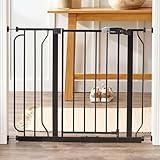
- ✅TESTED & TRUSTED BABY SAFETY GATE FOR OVER 30 YEARS: Parent-trusted safety gate certified by the Baby Safety Alliance.
- ❤️AMERICAN DESIGNED & FAMILY OWNED BABY GATE BRAND: Designed in the USA by parents, for parents. Regalo is a family-owned, US-based brand delivering trusted baby safety gates and child safety products for over 30 years.
- 🔒EXTRA WIDE BABY GATE FOR DOORWAYS & BOTTOM OF STAIRS: Expands to fit openings 29–38.5" wide and stands 30". Ideal for bottom of stairs, hallways, and doorways. FITS OPENINGS: 29–32" no extension, 35.5–38.5" with 6". DOES NOT FIT OPENINGS: 32–35.5".
- EASY SETUP WITH PRESSURE MOUNT DESIGN: ⚠️Install according to manufacturer’s instructions. ⚠️Wall cups must be used to keep the gate securely in place. ⚠️ To prevent falls, never use at the top of stairs.
- 🐾CHILD & PET SAFE | PUERTA DE SEGURIDAD PARA BEBÉS Y MASCOTAS: Walk-through safety gate designed for babies 6–24 months and small to medium pets. Features a secure safety locking system for parent convenience.
Adjust routines gradually
Map the changes likely after birth: walk times, feeding, sleeping locations, access to rooms, and how much uninterrupted attention is available. Shift them in small increments before the baby comes. Keep daily enrichment and rest predictable, and schedule another adult to provide exercise or training when the primary caregiver is occupied.
Give the dog a quiet retreat that the baby cannot enter. A bed, mat, crate, or separate room can work if it is comfortable and always accessible when the dog chooses it. Decide room-access rules in advance. ASPCA describes using a tall gate at the nursery doorway; a gate is a separation tool, not a substitute for supervision.
Plan the first meeting with a newborn
Choose a calm time when the dog has had an opportunity to toilet and settle. Have another responsible adult handle the dog while the primary caregiver handles the baby. Keep a standard leash, high-value treats, and a route to a separate room ready.
- Let the dog greet returning household members first. ASPCA recommends allowing this before bringing the baby into the room so the reunion does not add to the dog’s excitement.
- Offer the baby’s scent before close contact. RSPCA Australia recommends allowing the dog to become familiar with the baby’s scent, for example from a blanket, while the dog remains calm and supervised.
- Bring the baby in with the dog on leash. Keep the leash controlled but loose enough to avoid forcing the dog toward the infant.
- Invite, do not compel, investigation. Let the dog choose whether to look, sniff briefly, or remain at a distance. Reward relaxed interest and calm disengagement.
- End while it is going well. A short investigation is sufficient. Move the dog away for a break before excitement builds.
If the dog is fearful, stressed, or over-excited, calmly increase distance and end the interaction. Do not scold, drag the dog closer, or insist on a sniff. Try again only when a qualified professional has helped you understand the response and a safer plan is in place.
Also popular on Amazon

- [Worry-Free Safety]: Our expandable dog gate is great for doorways and blocking off other indoor spaces to keep your pet safe and secure. This durable puppy gate is made of strong, appealing fieldstone gray plastic with adorable paw print accents.
- [Convenient and Portable]: This gate for dogs is 23" tall, fits a variety of openings 26" - 40" wide. Please measure carefully: it will not work in a wider doorway. It is easy to take down and install - which means you can use it anywhere you need it!
- [Perfect for Modern Homes]: Our portable, adjustable pet gate features rubber bumpers that protect your walls and are positioned higher than other gates to accommodate up to 4" molding. It's an ideal indoor dog gate.
- [Easy and Comfortable to Use]: The sturdy, curved handle allows for a firm grip, which makes mounting and disassembling a breeze!
- [Proud USA-Owned Company]: Our rigorously tested gates & yards bring peace of mind to your family. We stand for the highest safety & quality standards while creating the ideal products for your furry friends. This item is proudly made in the USA!
Read body language instead of guessing
A dog that is silent is not necessarily comfortable. Watch the whole body and the ability to recover after a stimulus. Turning away and lip licking are among the stress signals listed by RSPCA Australia. Other changes that deserve distance include freezing, crouching, tucked tail, repeated yawning, hard staring, hiding, panting unrelated to heat, pacing, whining, growling, snapping, or attempts to flee.
When you see a concern, calmly call the dog away if she can respond, place a barrier between dog and baby, and give her a quiet area. Do not punish a growl; it is information that the dog needs more distance. If the dog cannot disengage or the behavior escalates, stop introductions and seek professional guidance.
Supervision and separation: the non-negotiable rule
You cannot leave a baby or young child alone with a dog. UC Davis School of Veterinary Medicine states: “Never EVER leave ANY dog unattended with a young child without direct supervision of both the dog and the child by a responsible adult. PERIOD.” RSPCA Australia likewise advises that direct supervision is necessary and that, when it is not possible, dogs and children should be physically separated by a secure barrier.
Direct supervision means an awake, responsible adult is actively watching and close enough to intervene—not merely being in the house, holding a phone, cooking, or relying on a camera. If you need to use the bathroom, answer the door, sleep, carry laundry, or focus on another child, separate them first.
Also popular on Amazon

- WORRY FREE SAFETY: Our expandable dog gate is great for doorways and blocking off other indoor spaces to keep your pet safe and secure. This durable puppy gate is made of strong, appealing light gray plastic with adorable paw print accents.
- CONVENIENT AND PORTABLE: This gate for dogs is 23" tall, fits a variety of openings 26" - 40" wide. Please measure carefully: it will not work in a wider doorway. It is easy to take down and install - which means you can use it anywhere you need it!
- PERFECT FOR MODERN HOMES: Our portable, adjustable pet gate features rubber bumpers that protect your walls and are positioned higher than other gates to accommodate up to 4" molding. It's an ideal indoor dog gate.
- EASY AND COMFORTABLE TO USE: The sturdy, curved handle allows for a firm grip, which makes mounting and disassembling a breeze!
- PROUDLY MADE IN THE USA: Our rigorously tested gates, yards & pens bring peace of mind to the entire family. We stand for the highest safety, quality and operational standards while creating the ideal collection of products for your furry friends. This item is proudly made in the USA!
Use physical separation correctly
- Install a secure, tall baby gate for dogs at rooms such as the nursery, and check that the dog cannot push through, climb over, or get a paw caught.
- Use separate rooms with closed doors when a gate is insufficient or when either the dog or baby is highly aroused.
- Keep the dog’s food, chews, bed, and favorite toys outside the baby’s reach.
- Never place a baby on the floor beside a loose dog, even for a photograph.
- Do not treat a barrier as permission to leave the dog and baby unattended; it is the backup when direct supervision is unavailable.
Build calm behavior during everyday life
Reward the dog whenever she notices the baby and then looks back to you, lies on her mat, walks past without jumping, or chooses to move away. Deliver treats where the dog can eat without crowding the infant. Rotate short training sessions with sniffing, chewing, walks, and sleep so the dog is not continually asked to tolerate stimulation.
Protect the dog’s retreat and possessions. Babies eventually grab, crawl, and fall unpredictably; do not wait for an incident to teach boundaries. Keep baby toys and nappies out of reach, and keep dog toys away from the infant. Wash hands after handling dog waste, food, or saliva and before preparing bottles or touching the baby. Follow your veterinarian’s advice for parasite prevention and household hygiene.
Quick wins for a faster PC:
Clear out junk files and repair common Windows errorsFree Scan →Scan for outdated or missing drivers - takes under a minuteDriver Scan →Teach the child when development allows
As the child grows, demonstrate gentle stroking on the dog’s shoulder or back and stop before the dog becomes restless. Do not permit pulling ears or tail, climbing, hugging tightly, riding, poking, prodding, or taking food and toys. RSPCA Australia notes that persistent poking and prodding can create stress even in a tolerant dog. The adult remains responsible for preventing these interactions; a young child cannot reliably read a dog’s signals.
Independent reader supportYour contribution helps us test, update, and keep practical guides available for everyone.What to do when behavior is concerning
Create distance immediately for growling, snapping, biting, lunging, chasing, repeated jumping, frantic pawing, whining, pacing, or other anxiety-related behavior around the baby. Secure the dog away from the child and write down what happened: the setting, distance, trigger, body language, what stopped it, and whether food or a toy was involved.
Also popular on Amazon

- ✅ TESTED & TRUSTED BABY SAFETY GATE FOR OVER 30 YEARS: Parent-trusted baby safety product certified by the Baby Safety Alliance. Designed to support everyday baby proofing and help keep babies and toddlers safe at home.
- ❤️AMERICAN DESIGNED & FAMILY OWNED BABY GATE BRAND: Designed in the USA by parents, for parents. Regalo delivers dependable baby gates and baby safety products trusted by families for over 30 years.
- 🔒EXTRA WIDE BABY GATE FOR DOORWAYS & BOTTOM OF STAIRS: Expands to fit openings 29–38.5" wide and stands 30" tall. Ideal for bottom of stairs, hallways, and wide openings. FITS OPENINGS: 29–32" no extension, 35.5–38.5" with 6". DOES NOT FIT OPENINGS: 32–35.5".
- EASY SETUP WITH PRESSURE MOUNT DESIGN: ⚠️Install according to manufacturer’s instructions. ⚠️Wall cups must be used to keep the gate securely in place. ⚠️ To prevent falls, never use at the top of stairs.
- 🐾 CHILD & PET SAFE | PUERTA DE SEGURIDAD PARA BEBÉS Y MASCOTAS: Walk-through safety gate designed for babies ⚠️6–24 months and small to medium pets. Features a secure safety locking system for parent convenience.
ASPCA advises keeping the dog away from the baby and promptly contacting an animal behavior expert after aggressive behavior or when you think aggression may occur. UC Davis recommends contacting a veterinarian or veterinary behaviorist for anxiety or aggression. A veterinarian can also check for pain or illness that lowers tolerance.
Do not try to “push through” fear or aggression by forcing repeated exposure. Do not punish warning signals, stage a closer encounter to test the dog, or assume that obedience commands alone resolve a bite risk. Until a qualified professional gives you an individualized plan, use physical separation and avoid the trigger.
Choose the right approach for each situation
| Situation | Safer choice | Avoid |
|---|---|---|
| Normal preparation and mild excitement | Voluntary, reward-based practice in small steps; increase difficulty only while the dog remains relaxed | Forcing proximity, flooding the dog with loud sounds, or correcting fear |
| An adult cannot actively watch | Secure barrier or separate rooms before attention shifts elsewhere | Relying on a gate, camera, “friendly” history, or a sleeping dog as supervision |
| Growling, snapping, biting, intense anxiety, or inability to disengage | Immediate separation plus a veterinarian, veterinary behaviorist, or appropriately qualified behavior professional | Home experiments, punishment, or repeated close introductions |
| Need for basic skills before birth | Reward-based classes or one-to-one coaching that fits your dog and household | Promises that a class can guarantee safety around a baby |
A practical household checklist
- Core cues are practiced in more than one room and with realistic distractions.
- The dog has a comfortable retreat and can move away on cue.
- Baby equipment, sounds, and scents have been introduced gradually at tolerable levels.
- Walks, feeding, sleep, attention, and room access have been adjusted before birth where possible.
- A helper, leash, treats, and a separate space are ready for the first meeting.
- Every caregiver understands that direct supervision is required for every dog-baby interaction.
- Barriers are installed and tested, but no one treats them as a replacement for active supervision.
- Baby toys, nappies, dog food, chews, and personal belongings are managed to prevent guarding or swallowing.
- The family knows which veterinarian or qualified behavior professional to contact if concerns arise.
Common questions
How do I introduce my dog to a newborn?
Use a calm setting, a helper, a leash, and treats. Let the dog become familiar with the baby’s scent, then allow a brief, voluntary approach while rewarding relaxed behavior. End the interaction at the first sign of stress or over-excitement and separate the dog and baby whenever direct supervision cannot continue.
Can I leave my baby alone with my dog?
No. A responsible adult must directly supervise every interaction. If that is not possible, use a secure barrier or separate rooms.
What if my dog seems jealous?
Do not diagnose or punish the emotion. Increase distance, protect the baby, reward calm behavior, maintain a predictable routine, and consult a veterinarian or qualified behavior professional if the dog shows anxiety, guarding, aggression, or difficulty disengaging.





Leave a Reply