
Some links on this page are affiliate links: if you buy through them we may earn a commission, at no extra cost to you.
Teach your puppy that their name predicts something good and asks for their attention—not that it automatically means “come.” In a quiet room, say the name once when your puppy is close and looking elsewhere. The instant they glance or turn toward you, mark the moment with “yes” or “good,” then give a small treat, a toy, praise, petting, or a brief game. Repeat in short, easy opportunities, then gradually practise in more rooms, outdoors, and around distractions.
The first goal is orientation: your puppy looks toward you. If you need them to travel to you, wait for that look and give a separate recall cue such as “come.” Keeping those two skills distinct makes both easier to train.
As an Amazon Associate I earn from qualifying purchases.
Do these 3 things before closing this tab:
1Repair Windows errors before they cause bigger problems2Scan for outdated or missing drivers - takes under a minute3Clear out junk files and repair common Windows errorsWhat a name response actually is
A trained name response is an attention behavior. Your puppy hears a particular word, turns their head or eyes toward you, and waits to discover what happens next. A full approach is not required at first; the American Veterinary Society of Animal Behavior (AVSAB) guidance says even a brief glance can be reinforced.
This distinction matters in daily life. Saying a name and seeing a look does not prove reliable recall, especially outside or near exciting distractions. Use the name to obtain orientation, then deliver a separate movement cue when you want the puppy to come. Training the two responses separately prevents the name from becoming an unclear all-purpose command.
Popular on Amazon
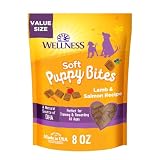
- GRAIN-FREE PUPPY TREATS: These bite-sized, soft puppy training treats are the perfect reward during training sessions or any time you want to thank your dog for good behavior. Puppy bites contain 6 calories per individual treat!
- SUPPORTS BRAIN DEVELOPMENT: Soft dog treats are crafted with salmon, a healthy source of DHA to promote healthy brain development.
- HEALTHY INGREDIENTS: These treats for dogs are made with minimal ingredients focused on quality proteins: made with lamb and salmon, with added vitamins specifically for puppies.
- NO CORN, WHEAT, OR SOY: Treats for dogs do not contain wheat, wheat gluten, corn, soy, or artificial colors.
- MADE IN USA: Our dog treats are quality-assured, made in USA, and crafted from the finest globally-sourced ingredients. Treats are tender, healthy, and bite-sized for small, medium, and large dogs of all lifestages, and activity levels.
Prepare an easy first lesson
Choose one consistent name
Use the same spoken name and roughly the same pronunciation every time. Everyone who handles the puppy should know which word is the training name. Avoid running through nicknames during the foundation stage; several words can make it harder for the puppy to identify the sound that predicts attention and reward. You can introduce affectionate nicknames later after the primary response is dependable, but keep the formal training cue stable.
Pick rewards your puppy values
Food is convenient, but it is not mandatory. Small, soft treats that can be chewed and swallowed quickly are practical for repeated repetitions. Ordinary kibble, a toy, praise, petting, or a few seconds of play can also be reinforcing if your puppy values them in that moment. The best choice is individual: a toy-motivated puppy may work eagerly for a tug game, while another puppy may prefer a piece of food.
When you use treats, count them as part of the puppy’s daily food ration. Keep pieces small so eating does not interrupt the exercise, and ask your veterinarian how training rewards fit your puppy’s age, size, health, and regular diet.
Start where success is likely
Begin in a quiet indoor room with your puppy nearby. Put away competing toys, close doors if household activity is distracting, and choose a time when the puppy is awake but not frantic with excitement or exhausted. The Royal Kennel Club likewise recommends a calm setting and close proximity for initial practice.
Have rewards within reach before you speak. You should be able to mark and reinforce a response immediately rather than searching for food after the puppy has turned away. Keep the first opportunities low-pressure; the exercise is an invitation to orient, not a test the puppy can fail.
Step-by-step: build the name response
- Stand close. Wait until your puppy is within easy range and is not already looking at you. If they are staring at you, pause until their attention shifts so the name can become the sound that produces the turn.
- Say the name once. Use a clear, friendly tone at normal conversational volume. Avoid stretching the word, shouting, or adding several repetitions.
- Watch for the smallest correct movement. A flick of the ears, eye movement, head turn, or glance in your direction counts as an early response. Do not wait for a full approach before acknowledging success.
- Mark immediately. The instant the puppy orients toward you, say a brief marker such as “yes” or “good.” The marker tells the puppy exactly which behavior earned the consequence.
- Deliver the reward. Give the treat, offer the toy, begin a tiny game, or provide praise and petting. Keep the reward close to you so the puppy’s orientation remains directed toward the handler.
- Reset without pressure. Let the puppy look away or move a short distance, then create another easy opportunity. Several tiny repetitions are more useful than one long drill.
- Stop while it is working. End a practice burst after a few successful responses, before the puppy loses interest. You can repeat another burst later in the day.
- Record the setting, not a score obsession. Notice whether the puppy responded in the room, at the current distance, and with the current reward. This helps you decide whether the next repetition should stay the same or become easier.
Timing: why the instant matters
Puppies learn from consequences that follow behavior closely. If you mark several seconds after the glance, the puppy may associate the reward with walking, jumping, sniffing, or another action instead of orienting to their name. Keep the marker short and consistent, then follow it promptly with the chosen reward.
Free tools Windows power users keep installed
One-click scans. No signup required.
Also popular on Amazon

- REAL CHICKEN FIRST: Baby BLUE Training Treats are made with delicious real chicken as the first ingredient, plus DHA for cognitive development, making them the ideal reward for your puppy’s best behavior
- MEATY TRAINING TREATS: For puppies that love a meaty treat, Baby BLUE training dog treats are tender, bite-sized morsels that make them perfect for training
- WHOLESOME INGREDIENTS: These dog treats contain NO chicken (or poultry) by-product meals and are free of corn, wheat and soy; Plus, they’re free of artificial preservatives and colors
- HEALTHY DOG TREATS: Blue Buffalo natural dog treats feature the healthy, wholesome ingredients you’ll love feeding as much as they’ll love eating
- Contains One (1) 4-oz bag of Blue Buffalo Baby BLUE Training Treats Natural Puppy Soft Dog Treats, Savory Chicken
At the beginning, reinforce every correct response. This dense reinforcement helps establish the connection between the sound and turning toward you. Once the response is dependable, you can gradually vary the reward: continue to praise or play every time, while using food on some repetitions rather than all of them. Do not make the name worthless; the puppy should continue to receive worthwhile positive consequences, particularly when the environment is difficult.
Increase difficulty in a planned progression
Change one challenge at a time. You might increase distance, move to a less familiar room, add mild background activity, or practise outside, but changing all of them together can make it impossible to tell why the response deteriorated. If the puppy stops responding, return to the last level that produced easy success and rebuild there.
| Stage | Where and how to practise | What counts as progress | What to do if responses fall off |
|---|---|---|---|
| 1. Quiet room | Puppy nearby, little activity, one name followed by a marker and reward. | Head, eyes, ears, or body orient toward you promptly. | Move closer, use a better reward, or wait for a calmer moment. |
| 2. Several indoor locations | Repeat in another room, hallway, or near ordinary household movement. | The puppy responds even when the background is slightly different. | Return to the quietest room and shorten the distance. |
| 3. Fenced or leashed outdoor area | Practise with secure management and modest distractions. | The puppy can look at you before investigating the surroundings. | Reduce distance, choose a calmer time, and reward more generously. |
| 4. Gradually harder distractions | Add people, sounds, movement, or distance separately and in small increments. | The puppy can orient, then resume the activity after reinforcement. | Lower the distraction or go back to the previous stage; do not repeat the name rapidly. |
AVSAB guidance gives a practical example of waiting until a puppy looks reliably indoors—such as nine out of ten opportunities—before moving outdoors. That is an example benchmark, not a universal pass mark. Individual puppies, environments, and rewards differ; move forward when the current level feels consistently easy rather than chasing a particular number.
Name first, recall second
When you want your puppy to come all the way to you, say the name once and wait for the orienting look. Then give a distinct recall cue, such as “come,” and reinforce movement toward you. Practise recall as its own positive-reinforcement exercise, including generous rewards for arriving, because a puppy can understand the name perfectly and still be learning how to travel through space when called.
Do not use the name as a substitute for recall in situations where you need immediate movement. In an unsecured outdoor area, rely on a fenced space or leash while recall is developing. A name response is useful for getting attention; it is not a guarantee that the puppy will cross a room, leave a scent, or abandon play.
Keep the name safe and valuable
Never make the name predict punishment
A puppy who hears their name and is then scolded can learn that orienting toward the person leads to something unpleasant. Keep reprimands and other interruption procedures separate from the name. If you need to stop an unwanted behavior, use a different cue that you have taught for that purpose, manage the environment, or guide the puppy to an appropriate alternative.
Also popular on Amazon

- MINI CHEWY PUPPY TREATS: These delicious, grain free soft puppy training treats are made with 2 kinds of fresh meat plus added vitamins specially for puppies and a healthy source of DHA to promote healthy brain development
- HEALTHY INGREDIENTS: These moist and tasty treats are made with whole fruits and veggies including superfoods like blueberries and sweet potatoes for a craveable flavor and a boost of antioxidants
- THOUGHTFULLY MADE: We craft delicious treats with simple, healthy, high quality ingredients chosen for their nutritional benefits; no meat byproducts, artificial colors, or flavors
- FIND THE RIGHT TREATS: From puppy to senior, small dog to large breed, crunchy to chewy, grained to grain free, treating to training, we've got a healthy recipe for every dog's needs and taste
- TRAINING AND REWARDING: These bite sized soft puppy training treats are the perfect rewards during training sessions or any time you want to thank your dog for good behavior
Avoid turning the name into background noise
Repeating a name over and over while the puppy ignores it teaches that the sound can be disregarded. Say it once when you have a realistic chance of success. If there is no response, do not escalate into a louder chain of repetitions. Instead, reduce the distraction, move closer, regain attention without using the training name, and reward the next successful response at an easier level.
Protect the name during unpleasant routines
Consider what usually follows the word. If every name response ends a favorite game, predicts a bath, or leads straight to confinement, the puppy may become less enthusiastic about orienting. Continue to pair the name with neutral and enjoyable moments so it remains a reliable signal of positive attention. When an unavoidable routine is necessary, use a separate cue where practical and provide reinforcement afterward.
Choosing and rotating reinforcers
Food, toys, social contact, and play each have useful applications. A tiny soft treat is fast and easy to deliver in a quiet room. A toy can be more motivating outdoors for a puppy who is excited by movement. Praise or petting may be sufficient for a puppy who is already relaxed and socially engaged. Observe what your puppy actually chooses rather than assuming one reward is universally superior; the reviewed guidance does not establish a single best reinforcer.
Use the reward that matches the difficulty. A mild indoor distraction may require only praise, while a busy outdoor setting may call for a highly valued treat or a short game. Keep food portions small and account for them in the daily ration. If your puppy stops eating during a session, the environment may be too difficult, the pieces may be inconveniently large, or the puppy may be tired; make the exercise easier rather than forcing participation.
Design short practice opportunities throughout the day
Name training does not need to be a formal class at a fixed hour. Build brief opportunities into ordinary routines: when your puppy is resting near you, after they finish sniffing in a room, or before a pleasant activity. Wait for the puppy not to be looking at you, say the name once, mark the look, and reward. Then let the puppy return to what they were doing.
Keep sessions low pressure and end after success. Several short bursts distributed through the day allow the puppy to experience the name in varied but manageable contexts without making every utterance a demand. As the response strengthens, practise in additional rooms and then in a secure outdoor area. Introduce only enough difficulty that the puppy can still succeed and be reinforced.
What’s actually slowing this PC down?
Pick the symptom - the matching free tool is one click away.
Also popular on Amazon

- High Value, Irresistible Flavor: Pups love the taste and aroma, making training sessions more effective and enjoyable
- High-Quality Ingredients: Made in the USA with clean, simple ingredients, starting with chicken - nothing artificial and no fillers
- Low-Calorie: Less than 2 kcal per treat and high in protein, perfect for frequent rewarding without worry
- Perfectly Sized: Small enough for one-bite rewards, which helps prevent overfeeding while keeping training sessions flowing smoothly
- Soft & Chewy: Perfect texture for quick rewarding during training, and great for pups with sensitive teeth like senior dogs
Troubleshooting common problems
The puppy does not look at all
Check the basics first: are you close enough, is the room calm, and is the reward worth working for? Wait until the puppy is not already watching you, say the name once in an upbeat voice, and mark even a tiny ear, eye, or head movement. If there is still no response, move closer, remove competing stimulation, or choose an easier moment. Do not repeat the name rapidly.
The puppy responds indoors but not outside
Outdoor locations add smells, movement, sounds, and distance, so the same word is now being asked to compete with more valuable events. Return to a secure fenced or leashed area, stand closer, and reinforce small orientations generously. Add one distraction or a little distance at a time. If the puppy stops responding, go back to the last outdoor level that worked instead of continuing to call.
The puppy looks but does not come
This is often a training-definition issue, not stubbornness. Looking is the name response; coming is a separate behavior. After the look, give your recall cue and train the movement component independently with positive reinforcement. Keep the puppy secured when practicing outdoors until the recall is trustworthy in that setting.
The response has become inconsistent
Review recent repetitions. If the name was used when success was unlikely, repeated many times, or followed by unpleasant events, reduce difficulty and rebuild positive associations. Practise close to the puppy in a quiet space, reward every successful look again, and reserve the name for moments when you can support a response. Gradually increase challenge only after the easier level is reliable.
The Tool Desk
Outbyte PC Repair FREEClear out junk files and repair common Windows errorsFree Scan →Outbyte Driver Updater FREEScan for outdated or missing drivers - takes under a minuteDriver Scan →The puppy is overexcited, tired, or uninterested
Training quality depends on the puppy’s state. A frantic puppy may not process the cue, while an exhausted puppy may not want food or play. Pause, allow a calm reset, and try a shorter opportunity later. Adjust the reward and environment before concluding that the puppy cannot learn the name.
Independent reader supportYour contribution helps us test, update, and keep practical guides available for everyone.Safety, hearing, and professional help
Name practice should not replace physical management. Use a leash or secure fenced area outdoors while recall and distraction skills are developing. Never test a young puppy’s name response by allowing them to run loose near roads, unfamiliar animals, or other hazards.
Also popular on Amazon

- BIG MOTIVATION IN EACH MINI BITE. Each of these 1.5 calorie treats are packed with flavor from pork liver, real bacon, and added botanicals that will keep dogs focused and eager to learn
- TRAIN. ENRICH. TREAT. These low calorie training rewards are great for training sessions, enrichment activities such as puzzle toys and snuffle mats, and every day treating occasions
- GREAT FOR SMALLER DOGS. These bite-sized treats are the perfect size for training and every day treating for smaller dogs. Each 10 oz bag includes approximately 500 treats
- REWARD THE EVERYDAY Pet Botanics healthy training rewards are perfect for training and treating every day in every way. These soft & chewy treats have no artificial flavors, colors or preservatives
- PROUD MEMBER THE CLOUD STAR FAMILY. With Cloud Star products, you can spend less time worrying about what to feed your pet and spend more time Living Life with Your Dog by Your Side
If a puppy persistently fails to orient to ordinary sounds—not only to their name—or if you notice broader behavior or development concerns, arrange a veterinary assessment. The training guidance reviewed here does not provide a diagnostic protocol for hearing or health conditions. A veterinarian can evaluate those possibilities.
For training support, look for a qualified reward-based instructor or a positive-reinforcement puppy class. VCA describes such classes as a useful introduction to training, and the Royal Kennel Club directs owners toward accredited instructors and clubs. Ask what methods are used and choose instruction that keeps the name associated with positive outcomes rather than intimidation or punishment.
Quick wins for a faster PC:
Repair Windows errors before they cause bigger problemsFix Now →Fix the driver behind crashes, sound loss and screen glitchesFind Drivers →A practical session script
Use this sequence as a simple template, adapting the reward and difficulty to your puppy:
- Place several tiny treats or a toy within reach and stand beside your puppy in a quiet room.
- Wait until the puppy looks away.
- Say the name once in a friendly voice.
- At the first glance or turn, say “yes” or “good.”
- Deliver the chosen reward immediately.
- Allow the puppy to reset, then repeat a few times.
- Finish with a successful repetition and return to normal activity.
For a recall exercise, insert the separate cue only after the puppy has oriented: name, look, “come,” movement, reward. If the puppy does not look, make the next repetition easier rather than adding more words.
Maintenance as your puppy grows
Continue to reinforce the response in ordinary life after the first reliable indoor repetitions. Practise in different rooms, on leash outdoors, and around gradually changing distractions. Keep the name useful by pairing it with praise, play, food, or another valued outcome. As food becomes less frequent, maintain social reinforcement and occasional high-value rewards, especially for difficult environments.
Think of reliability as context-specific. A puppy may respond in the kitchen yet need additional practice in a garden, on a sidewalk, or near visitors. Each new context should begin at an easy level, with close distance and manageable distraction, before you ask for more. This approach preserves the meaning of the name and gives your puppy repeated reasons to orient toward you.
Windows Errors? Fix Them Before They Spread
Repair common Windows errors and clear accumulated junk for a smoother, more stable PC - no reinstall needed.Free scan · no reinstallOutdated Drivers Are Slowing You Down
One free scan finds every outdated or missing driver and matches the right update for your exact hardware.Free scan · exact hardware matchQuick Recap
Quick checklist
- Say the name once, not in a rapid string.
- Begin close by in a quiet indoor setting.
- Mark and reward a glance, head turn, or other orientation immediately.
- Use treats, toys, praise, petting, or play according to your puppy’s preference.
- Count food rewards as part of the daily ration.
- Move from rooms to secure outdoor practice, adding distractions gradually.
- Return to an easier level when responses weaken.
- Keep the name out of reprimands and unpleasant predictions.
- Use a separate cue for coming to you.
- Consult a veterinarian about persistent failure to orient to ordinary sounds and seek qualified reward-based help for broader training problems.





Leave a Reply