The Tool Desk
Outbyte PC Repair FREEClear out junk files and repair common Windows errorsFree Scan →Outbyte Driver Updater FREEFix the driver behind crashes, sound loss and screen glitchesFind Drivers →You cannot reliably tell when an elk is about to charge. Elk may attack without warning, so treat every sign of agitation as a reason to move away immediately—not as a countdown or a guarantee that a charge is coming. Give the animal space, avoid getting between it and its herd, keep dogs controlled, and follow the distance and encounter guidance for the park or area you are visiting.
The safest question is not “Will it charge next?” but “Am I close enough to make this elk uncomfortable, and where is my nearest cover?” The behaviors below can help you recognize danger, but the absence of a warning sign never makes an elk safe to approach.
As an Amazon Associate I earn from qualifying purchases.
Warning signs mean you are too close
Parks Canada describes several behaviors that may indicate an elk is agitated or feels threatened. They are prompts to create distance, not a complete checklist for predicting an attack. An elk that shows none of these signs can still react suddenly.
Free tools Windows power users keep installed
One-click scans. No signup required.
A cow during calving season
A cow may be especially protective when a calf is nearby. Jasper National Park lists May 15 through June 30 as its calving season. During that period, take a female elk’s direct stare seriously, particularly if her ears are flattened, the hair on her rump is raised, her lips are curled, or she is grinding her teeth.
#1 Best Overall

- EPA REGISTERED TO PROTECT AGAINST 9 SPECIES: Approved by the EPA to deter Bears, Mountain Lions, Coyotes, Feral Dogs, Moose, Bison, Wild Boars, Possums & Raccoons. Maximum-strength formula with 2.0% Major Capsaicinoids and HPLC lab-tested performance
- PROTECTION FROM A SAFE DISTANCE: Powerful spray deploys a dense 6ft-wide fog with an effective range up to 40 feet (12 m), with 6-7 seconds of total spray time, giving you more time and space to react to a bear attack or deter a charging mountain lion
- FAST, RELIABLE ACCESS IN BEAR COUNTRY: Quiet quick‑draw elastic belt holster for a secure & accessible carry while hiking or camping, the glow‑in‑the‑dark safety clip helps locate the spray at night, the bell helps to warn bears that you’re in the area
- EVERY BATCH VERIFIED FOR PERFORMANCE: Manufactured in the USA and HPLC lab tested to verify strength and consistency in every batch. Features a glow-in-the-dark safety wedge for fast identification in low-light conditions
- FIELD-TESTED & ENVIRONMENTALLY RESPONSIBLE: Federal EPA and Health Canada approved. Features eco-friendly 1234ze propellant and proven bear deterrent performance, delivering trusted protection without long-term environmental impact
Those behaviors can occur when a cow is warning someone away from a calf. They do not tell you how many seconds you have. If you see a calf, assume the cow may be closer than it appears or may be hidden by vegetation. Do not walk between the two animals, try to photograph the calf, or wait for the cow to relax. Charging, kicking, circling, or following are still more direct danger behaviors, and any of them calls for immediate retreat and cover.
A bull during the fall rut
During the rut, a bull may be highly stressed and unpredictable. Jasper lists September 1 through October 15 as its rut period. Yellowstone National Park likewise describes bulls as highly stressed and unpredictable during the September–October rut.
An agitated bull lowering its antlers toward a person, pawing the ground, or thrashing bushes should be treated as dangerous. Lowered antlers change the animal’s posture and can make its intended direction difficult to judge. A lowered-antler charge is an immediate threat: leave the area and get behind a tree, vehicle, or other substantial barrier.
Do these 3 things before closing this tab:
1Repair Windows errors before they cause bigger problems2Fix the driver behind crashes, sound loss and screen glitches3Clear out junk files and repair common Windows errorsNever place yourself between a bull and females in its group. Even if the bull is looking elsewhere, your position can bring you into the animal’s defensive space. Detour around the entire group rather than trying to pass through it.
Other signs of agitation
Banff National Park advises backing off if an elk becomes alert or nervous, grinds its teeth, or sends its ears back. These are proximity cues: the animal is already responding to you, so do not wait for a more dramatic display.
The Canadian Centre for Occupational Health and Safety’s broader workplace wildlife guidance also names pinned ears, raised hair on the neck and shoulders, and bulging eyes as possible signs of agitation in elk and moose. This general guidance is useful for recognizing stress, but it is not an elk-specific field study and does not establish that a charge will always follow.
Look at the whole situation rather than trying to identify one “magic” signal. An elk that is staring, grinding its teeth, and turning its ears back is giving you several reasons to leave. An elk that appears calm may still be dangerous if you are close to a calf, have blocked its route, or have surprised it at short range.
Rank #2

- EPA REGISTERED TO PROTECT AGAINST 9 SPECIES: Approved by the EPA to deter Bears, Mountain Lions, Coyotes, Feral Dogs, Moose, Bison, Wild Boars, Possums & Raccoons. Maximum-strength formula with 2.0% Major Capsaicinoids and HPLC lab-tested performance
- PROTECTION FROM A SAFE DISTANCE: Powerful spray deploys a dense 6ft-wide fog with an effective range up to 40 feet (12 m), with 6-7 seconds of total spray time, giving you more time and space to react to a bear attack or deter a charging mountain lion
- FAST, RELIABLE ACCESS IN BEAR COUNTRY: Quiet quick‑draw elastic belt holster for a secure & accessible carry while hiking or camping, the glow‑in‑the‑dark safety clip helps locate the spray at night, the bell helps to warn bears that you’re in the area
- EVERY BATCH VERIFIED FOR PERFORMANCE: Manufactured in the USA and HPLC lab tested to verify strength and consistency in every batch. Features a glow-in-the-dark safety wedge for fast identification in low-light conditions
- FIELD-TESTED & ENVIRONMENTALLY RESPONSIBLE: Federal EPA and Health Canada approved. Features eco-friendly 1234ze propellant and proven bear deterrent performance, delivering trusted protection without long-term environmental impact
Why signs cannot predict a charge with certainty
Parks Canada warns that elk can attack without warning. Visible behaviors can help you recognize that an elk is uncomfortable or dangerous, but they cannot tell you how much time you have or whether the animal will charge. Do not wait to see whether the animal escalates from staring to pawing, or from nervousness to charging.
The most important interpretation is simple: a warning sign means “increase distance now.” It does not mean “stand still until the next sign appears.” If you need to turn around, cross a road, or abandon a viewpoint to get farther away, do that before the animal becomes more agitated.
Season and herd context explain why an elk may react defensively, but they do not make an encounter safe outside a particular period. A cow may defend a calf in spring; a bull can be unpredictable during the fall rut. Elk can also react to a person who blocks a path, approaches a resting animal, or allows a dog to run toward it. Treat the animal’s space as occupied even when it is not displaying obvious aggression.
How much distance to keep
Published distance recommendations vary by jurisdiction. Follow the rule for the place where you are, and give elk more room rather than treating a minimum as a viewing target. Thirty metres is roughly three bus lengths, but terrain, vegetation, roads, and the presence of calves can make a greater distance appropriate.
| Location | Published minimum distance | What the guidance means |
|---|---|---|
| Jasper National Park, Alberta | 30 metres | Stay at least this far away and back off when the animal becomes agitated. |
| Banff National Park, Alberta | 30 metres | Use distance, binoculars, or a telephoto lens instead of approaching. |
| Yellowstone National Park, United States | 25 yards (23 metres) | Maintain the park’s wildlife distance and seek shelter if an elk approaches. |
| North Carolina | 100 yards | The North Carolina Wildlife Resources Commission uses a substantially larger minimum. |
These are location-specific recommendations, not universal biological thresholds. A legal minimum is not a guarantee of safety, and an animal’s behavior may require you to move farther away. If the local park or wildlife authority provides updated instructions, use those. Rangers may impose access restrictions or give directions for a particular encounter.
Distance is three-dimensional in practice. A slope, dense brush, parked vehicles, or a bend in a trail can reduce the space you think you have. If you cannot clearly see the elk’s body and route, increase the distance and choose a different path. Do not use a road, fence, or crowd as a reason to remain close; move to a safer location and let staff manage the situation when necessary.
What to do when you see an elk
- Stop approaching. Do not walk toward, follow, surround, feed, or try to touch an elk. If it is on your route, detour around it rather than closing the distance. A quick photograph is never a reason to shorten the gap.
- Assess without moving closer. From where you are, note whether the elk is alert or nervous, grinding its teeth, sending its ears back, staring directly, pawing, thrashing vegetation, or lowering its antlers. Check for a calf or for a bull with females. Do not step forward to get a better view.
- Back away and create room. Move away from the animal and its group. Keep your route open and avoid putting yourself between a bull and females or between a cow and a calf. If the elk is already near you, work toward greater distance and a substantial barrier without moving into its path.
- Use a calm, deliberate route. The goal is separation, not a standoff. Follow posted directions for your location and do not attempt to make the elk move by shouting, waving, throwing objects, or advancing. If other visitors are present, alert them from a safe distance so they do not approach.
- Keep dogs controlled. Keep your dog leashed and under control. Parks Canada notes that elk may perceive dogs as predators and may charge or attack them. Do not let a dog run toward, bark at, chase, or circle an elk. Choose a retreat route that keeps the dog with you rather than allowing it to pull toward the animal.
- Choose viewing equipment instead of proximity. Banff recommends binoculars or a telephoto lens for closer viewing without approaching. Use them only from a place that still meets local distance guidance. If you would have to move closer to focus, zoom, or frame the image, leave the equipment aside.
- Tell people who need to know. Once you are safely away, follow local instructions or contact park staff if an animal is blocking a trail, road, or public area. Do not create a crowd around the elk while trying to report it.
What to do if an elk approaches or charges
If an elk approaches, keep increasing the distance and move toward shelter or a solid barrier when one is available. Do not assume that standing still will make the animal stop, and do not wait for another warning display.
Rank #3

- Outdoor adventure self-defense: Having a sense of security in the wild, such as camping, hiking or fishing
- Regarding portability: Small in size, lightweight and easy to carry, it can be placed in the outer pocket of a backpack
- Regarding usage: Pull out the upper buckle and it will spray forward. After use, plug it back into the buckle and it can be carried
- Pepper Spray: Simple and compact, a safety spray that focuses on functionality. The designed system is easy to use, even for women
If it charges, prioritize getting away and behind cover. The exact wording differs among local authorities, so follow the instructions for your location:
- Parks Canada Jasper: Maintain eye contact, move away, and seek protection behind a tree or vehicle.
- Yellowstone National Park: Get away and find shelter in a vehicle or behind a tall, sturdy barrier. If shelter is not nearby, its guidance is to run away.
- Ontario: Run to the nearest obstruction if an elk charges.
These directions share the same priorities: escape the animal’s path and put a substantial obstruction between you and it when possible. A tree, vehicle, or tall sturdy barrier can break the animal’s direct route. Select the nearest realistic cover rather than running toward a distant destination. Do not stop to take a photograph, turn back to collect gear, or wait for the elk to change its behavior.
Maintain eye contact where the local guidance calls for it, but do not confuse eye contact with a challenge or use it as a reason to advance. Keep moving toward safety. If the animal changes direction, change yours to keep a barrier between you and it. Once you are safe, stay behind cover until the elk has moved away, then follow park instructions or contact staff.
If the elk is near a trail, road, or vehicle
An elk beside a trail is not a signal to squeeze past. Turn around, wait at a much greater distance, or choose another route. If several people are gathering, ask them to back away rather than forming a viewing line. A crowd can leave the animal with fewer escape routes.
When a vehicle is available, Yellowstone guidance identifies it as shelter. Move to the vehicle without walking closer to the elk; use another route if necessary. Once inside, remain there until the animal has moved away and local staff say the area is clear. Do not use a vehicle to herd, follow, or corner an elk.
Extra precautions: spray and wildlife viewing
Parks Canada Jasper suggests carrying pepper spray, and Yellowstone says bear spray may work in extreme elk encounters. Treat spray as a secondary precaution, not guaranteed protection and not a substitute for distance, escape, or cover. The cited guidance does not establish that a particular product will stop an elk.
Before carrying or using spray, check the rules for your location and read the product directions. Product names are not interchangeable: a recommendation to carry pepper spray or a statement that bear spray may work does not mean every formulation, size, or use is approved everywhere. Keep the safety authority’s distance and cover advice primary.
Rank #4

- LONG RANGE PROTECTION: This Mace bear deterrent spray protects from a safe distance with a powerful fogger pattern, giving you more time to react to a charging bear with up to 9 seconds of total spray time.
- MAX STRENGTH FORMULA: Made with 20% OC wildlife safe formula for maximum heat and potency, helping deter attacks and giving you time to retreat to safety.
- ALWAYS BE PREPARED: Essential for hiking, camping, and hunting. Its potent formula and long range spray coverage offers reliable protection so you can always be prepared for wildlife encounters.
- EASY TO USE: Designed with a finger loop handle for easy carrying and quick deployment in critical moments. To use, pull off the orange safety wedge and press down on the actuator.
- INCLUDES HOLSTER: Durable, heavy-duty nylon spray holster keeps your bear deterrent canister secure and within reach. Hook-and-loop closure allows for quick and easy access.
For ordinary wildlife viewing, binoculars and a telephoto lens solve the same basic problem in different ways. Binoculars are compact and useful when you already carry them; a telephoto lens can provide more camera reach if you already use a camera system. Neither changes the required distance. The important choice is whether you can observe from a place that meets local guidance. If using your equipment would make you move closer, leave it aside.
Plan for the place and season
Calving and rut dates vary by location. Jasper’s published dates—May 15 to June 30 for calving and September 1 to October 15 for rut—apply to Jasper guidance and should not be treated as exact dates across the elk’s range.
What’s actually slowing this PC down?
Pick the symptom - the matching free tool is one click away.
Yellowstone describes cows as especially protective of calves in spring and bulls as highly stressed and unpredictable during the September–October rut. North Carolina’s distance advice is 100 yards, much farther than the 30-metre rules published by Jasper and Banff. Those differences show why a generic “safe distance” is unreliable. The local park or wildlife authority’s current rule controls.
Before setting out, check the current wildlife-safety page or posted instructions from the authority responsible for the area. Pay attention to minimum distances, seasonal cautions, temporary closures, leash requirements, and directions for what to do during an encounter. If you are already near elk, do not delay backing away while looking up guidance.
Independent reader supportYour contribution helps us test, update, and keep practical guides available for everyone.Common mistakes that increase risk
- Waiting for a charge posture. Elk may attack without warning; the first obvious sign may be the charge itself.
- Treating a distance minimum as a target. A minimum is not an invitation to approach, and terrain or a calf may require more room.
- Passing between animals. Do not put yourself between a bull and females or a cow and calf.
- Following for a better photograph. A telephoto lens or binoculars is safer than closing the gap.
- Letting a dog investigate. Elk may perceive dogs as predators and attack them.
- Assuming a calm elk is harmless. The absence of flattened ears, pawing, or teeth grinding does not guarantee safety.
- Relying on spray alone. Spray is only a secondary precaution and is not established as guaranteed protection.
Official safety language
Parks Canada Jasper summarizes the risk plainly: “Though they might not appear threatening, elk can be aggressive and attack without warning.” Banff gives a practical proximity warning: “If an elk becomes alert or nervous, grinds its teeth or sends its ears back, you’re too close – back off.”
North Carolina Wildlife Resources Commission Mountain Operations Supervisor James Tomberlin made the scale of the risk clear in the Commission’s June 27, 2025 release: “These are big, powerful animals, and getting too close to them jeopardizes those people approaching the animal, the elk and local residents.”
PC Slower Than It Used to Be?
A free scan shows the junk files, broken settings and background clutter dragging Windows down - then fixes them in one click.Free scan · Windows 10 & 11Crashes, No Sound, or Screen Glitches?
Random freezes, missing sound and display glitches usually trace back to one bad driver. Find and replace yours safely.Free scan · under a minuteFrequently Asked Questions
Can you predict exactly when an elk will charge?
No. Parks Canada warns that elk can attack without warning. Staring, flattened or pinned ears, raised hair, curled lips, teeth grinding, pawing, thrashing bushes, or lowered antlers are danger signs, but their absence does not mean a charge cannot happen.
Best Value
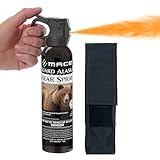
- LONG RANGE PROTECTION: This Mace bear deterrent spray protects from a safe distance with a powerful fogger pattern, giving you more time to react to a charging bear with up to 9 seconds of total spray time.
- MAX STRENGTH FORMULA: Made with 20% OC wildlife safe formula for maximum heat and potency, helping deter attacks and giving you time to retreat to safety.
- ALWAYS BE PREPARED: Essential for hiking, camping, and hunting. Its potent formula and long range spray coverage offers reliable protection so you can always be prepared for wildlife encounters.
- EASY TO USE: Designed with a finger loop handle for easy carrying and quick deployment in critical moments. To use, pull off the orange safety wedge and press down on the actuator.
- INCLUDES HOLSTER: Durable, heavy-duty nylon spray holster keeps your bear deterrent canister secure and within reach. Hook-and-loop closure allows for quick and easy access.
What should I do if an elk stares at me?
Treat the stare as a reason to back away, especially if the elk is a cow with a nearby calf. Increase distance without approaching, avoid blocking the animal’s route, and move toward substantial cover if needed.
How close can I safely get to an elk?
Follow the local rule and give the animal more room than the minimum when conditions require it. Jasper and Banff publish 30 metres, Yellowstone publishes 25 yards (23 metres), and North Carolina advises 100 yards.
What should I do if an elk approaches me?
Keep increasing distance and move toward shelter or a solid barrier. Jasper advises maintaining eye contact, moving away, and using a tree or vehicle; Yellowstone advises a vehicle or tall, sturdy barrier.
Quick wins for a faster PC:
Scan for outdated or missing drivers - takes under a minuteDriver Scan →Clear out junk files and repair common Windows errorsFree Scan →Should I run from an elk?
Follow the authority for your location. Yellowstone says to run away if shelter is not nearby, and Ontario advises running to the nearest obstruction if an elk charges. In every case, prioritize escape and cover.
Are elk more dangerous during a particular season?
Context changes by sex and season. Cows may be especially protective of calves in spring, while bulls can be highly stressed and unpredictable during the September–October rut. Dates vary locally; Jasper lists May 15–June 30 for calving and September 1–October 15 for rut.
Can I walk past an elk if I keep my dog close?
Do not try to pass close by. Keep the dog leashed and under control, then detour and create more distance. Parks Canada notes that elk may perceive dogs as predators and may charge or attack them.
Does bear spray stop an elk charge?
Do not rely on that assumption. Jasper suggests carrying pepper spray, and Yellowstone says bear spray may work in extreme encounters, but the guidance does not guarantee any product. Check local rules and treat spray as secondary to distance, escape, and cover.
Recommended Free Tools
Are binoculars safer than getting closer for a photo?
Yes, when used from a location that still meets the local distance rule. Banff recommends binoculars or a telephoto lens so visitors can view elk without approaching. Equipment never justifies reducing the distance.
The Bottom Line
There is no dependable countdown to an elk charge. If an elk stares, sends its ears back, grinds its teeth, raises its hair, paws, thrashes vegetation, lowers its antlers, or simply becomes alert and nervous, back away immediately. Keep dogs controlled, never move between a bull and females or a cow and calf, follow the local distance rule, and get behind a tree, vehicle, or other sturdy barrier if the animal approaches or charges. Elk can attack without warning, so distance and escape—not waiting for one more sign—are your best protection.
Quick Recap
Product prices and availability are accurate as of the date/time indicated and are subject to change. Any price and availability information displayed on Amazon at the time of purchase will apply.




