
Some links on this page are affiliate links: if you buy through them we may earn a commission, at no extra cost to you.
A puppy found alone is not automatically abandoned. It may be a lost pet, or its mother may be nearby and avoiding people. There is no reliable puppy-specific visual test or universal waiting period that proves a mother will not return.
Protect the puppy from immediate danger first. If it is injured, ill, exposed, or cannot safely remain where you found it, call a local veterinary clinic, animal-control agency, shelter, or rescue and follow its instructions. If the puppy is stable, keep your distance, look for an owner or litter nearby, and report the found puppy through local animal-welfare channels.
As an Amazon Associate I earn from qualifying purchases.
Free tools Windows power users keep installed
One-click scans. No signup required.
Being alone does not establish abandonment
A puppy sitting by itself can fit several explanations: it may have wandered away from a home, become separated from a litter, been deliberately left, or be waiting while its mother is hidden nearby. A single observation cannot distinguish those situations.
Best Friends Animal Society summarizes the central caution this way: “If you find a loose dog outside, do not assume they don’t have a home.” A dog that has been roaming for a week or two can look dirty or thin while still having a family. Coat condition, hunger, mud, fearfulness, or a puppy’s willingness to approach people are clues to investigate, not proof of what happened.
Popular on Amazon
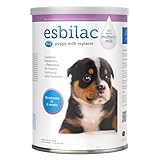
- PUPPY MILK REPLACEMENT — When mom can’t nourish them, Esbilac can. Scientifically the next best to mother’s milk, Esbilac provides all the nutritional elements necessary for puppies, newborn to six weeks old.
- COMPLETE, BALANCED NUTRITION — Our formula is closest to mother's milk in protein, fat, and carbohydrates. We’ve also added vitamins, minerals, and trace nutrients; plus prebiotics and probiotics to support healthy immunity and digestion.
- EASY TO DIGEST — Esbilac is highly palatable and formulated with a special fiber blend for easy digestion and improved gut health.
- EASY-TO-MIX FORMULA — Whisk or shake 1 part powdered Esbilac into 2 parts warm water. Do not mix more Esbilac than can be consumed in 24 hours. Do not use a blender. Must be kept refrigerated after reconstituting.
- ABOUT US — PetAg is a trusted leader in pet wellness, with science-backed formulas in our milk replacers, health supplements, and grooming products helping pet owners to proactively enhance the lives of their pets, for more healthy years together.
The most responsible question is therefore not “Can I diagnose abandonment from appearance?” It is “What action keeps this puppy safe while giving its mother or owner a fair chance to be found?” That means triaging danger, observing without interference when safe, contacting the local organizations that handle found animals, and getting veterinary advice when the puppy may need nursing or medical care.
Check immediate safety before trying to identify the situation
Move from danger only when you can do so safely
Look first for immediate hazards such as traffic, aggressive animals, water, extreme exposure, or a location where people cannot safely approach. Do not put yourself in danger or create a chase that drives the puppy into a roadway. If you cannot safely secure the area, call animal control, a shelter, a rescue group, or a veterinary clinic and describe the location and hazards.
If the puppy is in immediate distress or cannot remain where it is, professional direction takes priority over waiting to see whether a mother appears. The ASPCA advises contacting a local shelter for guidance on found animals. Local agencies may have different rules about collection, transport, stray holds, and after-hours emergencies, so ask what they want you to do before moving the puppy when circumstances permit.
Recognize when the situation is urgent
Call a veterinary or animal-welfare professional promptly if the puppy appears injured or ill, is exposed to an immediate hazard, or cannot safely stay at the discovery site. The available guidance does not provide a puppy-specific medical triage checklist, so do not rely on an internet symptom list to decide that professional care can wait.
When you call, report what you can observe without guessing at a diagnosis:
- Where the puppy is and whether the location is dangerous.
- Whether it is responsive and able to move normally.
- Any visible injury, bleeding, breathing difficulty, severe weakness, or other obvious distress.
- Whether you can see other puppies, an adult dog, a den, a yard, or nearby homes.
- How long you have personally observed the puppy, without treating that period as a medical or abandonment threshold.
A clinic or shelter can tell you whether to bring the puppy in, wait for an officer or responder, or contact another local service. Call ahead before transporting if feasible, especially when the puppy may be seriously ill or when you have other animals at home.
What’s actually slowing this PC down?
Pick the symptom - the matching free tool is one click away.
If there is no immediate danger, observe without crowding the puppy
Use distance as a safety and reunification tool
If the puppy is stable, move far enough away that it is not frightened or focused on you. Watch from a discreet position and keep other people and pets from gathering around it. A mother dog may avoid an area occupied by people, and a frightened puppy may run before you can protect it.
There is no authoritative puppy-specific waiting period that establishes how long a mother should be given to return. The reviewed guidance also does not provide a behavior checklist, body-condition cutoff, or number of hours without a sighting that proves abandonment. Do not announce a definitive diagnosis because you did not see an adult dog during one observation.
Observation is useful for gathering information, not for replacing professional help. Note whether an adult dog appears, whether the puppy is joined by littermates, and whether people nearby recognize it. If the puppy’s condition worsens or the location becomes unsafe, end the observation and call for help.
Ask people who may know the litter or household
Speak with nearby residents, workers, and property managers if doing so is safe. Ask whether they recognize the puppy, know of a mother dog or litter, or have seen a dog searching in the area. A neighbor may identify a household that has lost a puppy or point out a place where an adult dog is being kept.
Recommended Free Tools
Also popular on Amazon

- NUTRITIONAL SUPPLEMENT - Esbilac Healthy Development supports healthy growth and development with high-quality protein for dogs weaning to 6 years.
- SUPPORTS COGNITIVE DEVELOPMENT – With DHA (Omega 3 fatty acids) and Vitamin E, our formula supports visual & cognitive development.
- CONTAINS OMEGA 6 FATTY ACIDS - Our powder contains Omega 6 fatty acids to support a healthy skin and coat.
- GREAT TASTE - Esbilac Healthy Development is formulated with a great taste dogs love. Supports transition to solid foods for weaning puppies.
- ABOUT US − PetAg is a trusted leader in pet wellness, with science-backed formulas in our milk replacers, health supplements, and grooming products helping pet owners to proactively enhance the lives of their pets, for more healthy years together.
Keep questions neutral. Instead of saying that someone abandoned a puppy, ask whether anyone is looking for one and whether a nursing dog has been seen nearby. Avoid posting an accusation on social media; an incorrect claim can discourage the owner or mother’s caretaker from coming forward.
Use developmental stage to decide how quickly to seek feeding advice
Very young puppies may depend on maternal care
A puppy that is not yet eating solid food has different needs from an older, weaned puppy. The ASPCA says puppies generally begin eating puppy food at three to four weeks and are ideally fully weaned by seven to eight weeks. Those ages are developmental guidance, not a way to calculate how long a puppy has been abandoned.
If the puppy appears very young or unable to eat puppy food, contact a veterinarian or experienced rescue promptly. The key question is whether the mother is caring for it and, if not, what safe interim care is required. Do not assume that a puppy found outdoors should immediately be fed simply because it is alone; first seek advice that accounts for its age, condition, and the possibility that its mother is nearby.
Milk replacer is a contingency, not a default
ASPCA guidance says commercial milk replacer may be needed when a mother is ill, cannot produce enough milk, or the puppies are orphaned. Ask a veterinarian which product and feeding method are appropriate. A product label, a kitten-care article, or a social-media recipe is not a substitute for veterinary direction.
PC Slower Than It Used to Be?
A free scan shows the junk files, broken settings and background clutter dragging Windows down - then fixes them in one click.Free scan · Windows 10 & 11Crashes, No Sound, or Screen Glitches?
Random freezes, missing sound and display glitches usually trace back to one bad driver. Find and replace yours safely.Free scan · under a minuteDo not apply kitten-specific waiting instructions to a puppy. The resources reviewed for this situation do not establish a puppy waiting period by borrowing from kitten guidance, and the species’ care plans should not be treated as interchangeable. If you are told to provide temporary care, ask exactly what to feed, how often, how to position the puppy, and what signs require an immediate return call.
Look for a lost-pet explanation while you arrange help
Appearance cannot tell you whether a family exists
Dirty fur, a thin appearance, fear, or a puppy that readily approaches people can occur in a lost dog as well as in a deliberately abandoned one. Best Friends Animal Society specifically warns that a roaming dog can become dirty and thin despite having a home. Treat these observations as reasons to investigate and seek help, not as ownership evidence.
A collar or identification tag can help, but its absence does not prove abandonment. Conversely, a collar does not prove that the puppy is currently safe or that an owner knows where it is. Do not remove identification or alter the puppy’s appearance before a shelter, animal-control officer, or veterinarian advises you.
Report the puppy through local channels
Contact the local shelter and ask how to file a found-puppy report. Depending on your location, the appropriate contact may be an animal-control agency, veterinary hospital, shelter, or rescue group. ASPCA lists these organizations among the contacts used in lost-pet searches. Their procedures, reporting forms, service areas, and legal requirements vary, so use the instructions for your jurisdiction rather than assuming that one national process applies everywhere.
Give each organization consistent information:
- The exact location, date, and approximate time you found the puppy.
- A clear description of size, coat, markings, sex if known, and apparent developmental stage.
- Whether the puppy was alone, whether littermates or an adult dog were seen, and what happened during your observation.
- Photographs that show identifying markings, if taking them does not delay urgent care or frighten the puppy.
- Your current location and a reliable way for the agency to reach you.
Ask whether you should bring the puppy to a shelter, take it to a participating veterinary hospital, keep it temporarily, or leave it for an officer or rescue responder. Ask about local stray-animal reporting and holding requirements before deciding that you can keep the puppy permanently.
How the main possibilities differ—and why none can be confirmed from one clue
| Possible situation | Observations that may fit | What the observation cannot prove | Best next action |
|---|---|---|---|
| Lost puppy | The puppy is alone, people nearby do not recognize it, or it appears dirty or thin after roaming. | Condition and behavior cannot establish that it has no owner. | File a found-pet report with local shelter or animal control and ask about owner-search procedures. |
| Abandoned puppy | No owner is immediately identified and the puppy may be in an unsafe place. | No reviewed source supplies a visual test, body-condition threshold, or waiting period that proves abandonment. | Protect the puppy, contact local professionals, and follow their instructions rather than making a public accusation. |
| Puppy whose mother is nearby | The puppy is very young, a litter or den may be nearby, or an adult dog may appear when people move away. | Not seeing the mother during one observation does not show that she is absent or has rejected the puppy. | Observe discreetly when safe and seek veterinary or rescue advice about age, feeding, and intervention. |
These categories are working possibilities for deciding what to do, not diagnoses. The same puppy may move from one category to another as an owner, mother, or local professional provides new information.
Also popular on Amazon

- MILK REPLACER WITH PROBIOTICS: Suitable for up to 9 young animal species including puppies, kittens, calves, lambs, goats, foals, piglets, llamas, and crias; providing probiotics and balanced nutrition to support healthy growth and development.
- MADE WITH PROTEIN AND FAT: Contains 24% protein and 24% fat; supporting fast, healthy growth, strong muscle development, and overall vitality for young animals during critical early stages of life.
- ALL MILK FORMULA WITH PROBIOTICS: Made with high-quality all-milk protein; supporting healthy growth, proper development, and overall performance for young animals during critical early stages of life.
- SUPPORTS HEALTHY DIGESTION FOR YOUNG ANIMALS: Powered by Opti-Gut probiotics; promoting gut health, nutrient absorption, and digestive balance to support overall growth, vitality, and wellbeing for young animals.
- EASY TO MIX FORMULA: Designed for quick and convenient preparation; ensuring fast mixing, effortless feeding, and optimal consumption so young animals receive balanced nutrition efficiently for healthy growth and development.
A practical decision path from discovery to resolution
- Secure the scene. Identify traffic, aggressive animals, exposure, water, or other immediate hazards. Keep children and pets back.
- Call for urgent help when needed. If the puppy is injured, ill, in danger, or cannot safely remain where found, contact a veterinary clinic, animal control, shelter, or rescue and follow its directions. Call ahead before transport if possible.
- Observe discreetly if the puppy is stable. Keep enough distance that you do not frighten the puppy or discourage a mother from approaching. Do not use a precise waiting time as a test; none is established for puppies in the available guidance.
- Ask nearby people neutral questions. Look for information about a mother dog, litter, household, or missing puppy without accusing anyone of abandonment.
- Report the found puppy. Contact the local shelter and ask whether animal control, a veterinary hospital, or a rescue group also needs a report. Follow local instructions and legal requirements.
- Get age and feeding guidance. If the puppy appears too young to eat puppy food or may need nursing, ask a veterinarian or experienced rescue promptly. Do not improvise with kitten advice.
- Update the professionals. Tell the shelter, officer, veterinarian, or rescue if an adult dog appears, the puppy’s condition changes, or an owner comes forward. Let them coordinate the next step.
Common mistakes that can make the outcome worse
Assuming solitude equals abandonment
A mother may be nearby, and a lost puppy may still have a family. Treating solitude as proof can lead to unnecessary separation or a public accusation. Use the absence of an adult dog as a reason to investigate, not as a verdict.
Giving a fixed “wait and see” deadline
A precise number of minutes or hours sounds reassuring but is not supported by the puppy-specific guidance available here. Weather, hazards, the puppy’s age, and local response options all affect what is safe. Ask a local professional how to proceed in your circumstances.
Do these 3 things before closing this tab:
1Repair Windows errors before they cause bigger problems2Scan for outdated or missing drivers - takes under a minute3Clear out junk files and repair common Windows errorsFollowing kitten instructions
Kitten resources are not evidence for puppy maternal behavior or puppy feeding timelines. If the puppy may be orphaned, obtain product and feeding recommendations from a veterinarian, as ASPCA advises.
Feeding before checking for professional guidance
Very young puppies may need specialized care, but a found puppy may also still be nursing from its mother. Contact a veterinarian or experienced rescue before choosing a milk replacer or feeding routine. If a professional directs temporary feeding, follow the exact instructions and report any deterioration.
Taking the puppy home without reporting it
Keeping a puppy out of immediate danger may be necessary, but it does not erase the owner-search obligation or local reporting rules. Tell the shelter or animal-control agency where the puppy is and ask what the lawful, safest next step is. If you already have pets, ask the receiving professional how to manage separation and introductions while the puppy’s status is being resolved.
What to tell the shelter, veterinarian, or rescue
Clear, chronological information helps professionals choose between observation, collection, veterinary treatment, and an owner search. Write down:
- When and where you found the puppy.
- What dangers were present and whether the puppy was moved.
- What you saw before approaching: an adult dog, littermates, a den, nearby homes, or people searching.
- How the puppy behaved while you watched from a distance.
- Whether it appears able to eat puppy food, without trying to diagnose its age.
- Any food, water, handling, or transport already provided.
- Photographs and the names or contact details of people who may recognize the puppy.
Do not embellish uncertain details. Saying “I did not see a mother during my observation” is more useful than saying “the mother abandoned it.”
When you still cannot tell
Uncertainty is a legitimate outcome. The available sources do not establish a field test for distinguishing a lost, abandoned, or mother-attended puppy. If the puppy is safe and stable, continue working through local shelter, animal-control, veterinary, and rescue channels rather than trying to settle the question from appearance alone. If its condition or surroundings become unsafe, escalate immediately.
The goal is not to assign a label as quickly as possible. It is to prevent harm, preserve the chance of reunification, and obtain age-appropriate care. A local professional can adapt those priorities to your jurisdiction, the puppy’s condition, and any information that emerges about its mother or owner.





Leave a Reply