
Recommended Free Tools
Look for a change from your individual cat’s normal routine. A senior cat in pain may jump less, hesitate on stairs, groom differently, eat in a new way, change litter-box habits, vocalize at night, or become irritable when handled. Cats often hide discomfort, so the absence of a limp or cry does not rule pain out. These signs are clues, not a diagnosis: illness, weakness, sensory decline, urinary disease, dental disease and cognitive changes can look similar. Record what you see and arrange a veterinary assessment for any new or unusual behavior.
Start with your cat’s baseline, not a generic checklist
Every cat has an individual pattern of movement, sleep, appetite, grooming and social behavior. A normally quiet cat may never vocalize when uncomfortable; a talkative cat may become silent. That is why a small departure from a familiar routine can be more informative than one dramatic sign. Senior-care guidance from the American Animal Hospital Association (AAHA) emphasizes that owners see the cat in its usual home environment and are important members of the pain-assessment team.
As an Amazon Associate I earn from qualifying purchases.
Compare your cat with itself over days and weeks. Ask what it used to do easily, what it now avoids, and whether the change is consistent or becoming more frequent. “Just getting old” and “grumpy” are not explanations that should end the conversation. New behavior in an older cat deserves a medical check, even when the cat still eats, purrs or seeks attention.
Free tools Windows power users keep installed
One-click scans. No signup required.
Signs that can point to discomfort
No single behavior proves pain. The useful pattern is a new or worsening change, especially when several areas of daily life are affected.
#1 Best Overall
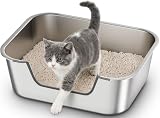
- Thoughtful 3.15in Low Entry Design – Each litter box features a 3.15" low front entry, making it easy for kittens, senior cats, or injured pets to step in and out with confidence. High sides still provide excellent splash protection, combining care and practicality
- High-Sided Anti-Splash Protection – Raised sides and back effectively block litter scatter and urine splash, keeping your floors clean while offering your cats a more comfortable and secure toileting experience
- 6 Sizes for Every Cat Family – Available in four sizes from 15.6"x11.6"x5.9" up to 27.5" × 19.6" × 7.8", ensuring the right fit for small cats, large breeds, or multi-cat households. Choose the size that suits your pets best
- Premium Stainless Steel Construction – Built with durable, odor-resistant stainless steel that outperforms plastic litter boxes. The smooth, non-stick surface resists scratches, prevents residue buildup, and makes cleaning quick and simple
- Easy to Clean & Time-Saving – Smooth stainless steel surface prevents litter and stains from sticking. Just rinse or wipe to keep the box spotless, making cleanup fast and effortless
Movement, jumping and climbing
- Jumping onto a sofa, bed or window perch less often.
- Hesitating before jumping, taking a lower route, or choosing to stay on one level.
- Climbing stairs more slowly, stopping partway, or avoiding them.
- Playing, running or chasing toys for shorter periods.
- Getting up stiffly, changing posture, or spending more time in one sleeping place.
- Having difficulty stepping over a high litter-box edge.
These changes can reflect joint disease, muscle weakness, neurologic disease, vision loss or another medical problem as well as pain. A cat does not need to limp for movement to be abnormal. AAHA notes that cats with degenerative joint disease do not commonly limp or cry out, and osteoarthritis can occur without detectable crepitus (a grating sensation).
Grooming and body care
- Coat becoming greasy, matted or generally less groomed.
- Stopping grooming hard-to-reach areas such as the back or hindquarters.
- Licking, chewing or thinning fur over one particular area.
- Resisting brushing or reacting when you touch a previously tolerated spot.
AAHA’s senior-cat guidance says reduced grooming may accompany illness, bladder pain, degenerative-joint-disease pain or reduced mobility. Excessive attention to one area can also signal skin or internal disease, so it needs examination rather than a home conclusion.
Eating, drinking and chewing
- Eating less, taking longer to finish, dropping food, or preferring softer food.
- Scooping food from the bowl before eating it.
- Approaching food but walking away, or changing the side of the mouth used to chew.
- Changing drinking patterns or posture at the bowl.
AAHA describes scooping food out before eating as an example seen with severe dental disease. Appetite changes can also arise from kidney disease, nausea, endocrine disease, stress or medication effects. Record the pattern and tell the veterinarian rather than assuming it is dental pain.
Litter-box and elimination changes
- Urinating or defecating outside the box.
- Entering the box awkwardly, turning around repeatedly, or avoiding a box with high sides.
- Using a different location, going more often, or producing noticeably different amounts.
- Vocalizing, straining or appearing unsettled during elimination.
AAHA gives urinary inflammation and kidney problems as examples of conditions associated with urinating outside the box. Arthritis or other mobility limits can make access difficult, while bladder, intestinal and metabolic disorders can change elimination independently of pain. A new litter-box pattern in a senior cat merits a veterinary history and examination.
Sleep, social behavior and vocalization
- Resting in a new place, hiding more, or no longer joining a familiar family activity.
- Becoming irritable, defensive or withdrawn when picked up or touched.
- Seeking reassurance, pacing or vocalizing at night.
- Showing less interest in play, grooming by companions or other normal interactions.
Nighttime vocalization and social changes have many possible causes, including sensory decline, cognitive changes, anxiety and systemic illness. Treat them as information for the veterinarian. A cat that is “grumpy” may be protecting a painful area, but behavior alone cannot identify which body system is involved.
Why a cat may be hurting without crying or limping
Hiding vulnerability is normal feline behavior. Chronic discomfort may therefore appear as conserving energy, changing routes around the home or quietly abandoning a favorite activity instead of producing an obvious cry. AAHA’s feline pain education specifically cautions that degenerative joint disease often does not produce limping or vocalization. A cat can continue to purr, eat and accept affection while adapting its behavior around pain.
Do not try to provoke pain by bending joints, pressing the spine or forcing a jump. Such tests can frighten a cat or worsen an injury and cannot replace a clinical examination. Observe voluntary movement in ordinary situations and leave hands-on assessment to a veterinary professional.
The Tool Desk
Outbyte Driver Updater FREEFix the driver behind crashes, sound loss and screen glitchesFind Drivers →Outbyte PC Repair FREERepair Windows errors before they cause bigger problemsFix Now →Rank #2

- HIGH QUALITY MATERIAL - This low entry senior cat litter box is made of high-quality plastic with good durability and long-lasting performance. The sturdy structure ensure that it can be reused without damage.The large size pet low entry open top litter box for senior kitten does not leave any unpleasant odor and it is not easily broken.
- LOW ENTRY CAT LITTER BOX - The cat litter box for kittens adopts a convenient low entrance design, allowing senior cats & kittens, elderly cats or disabled cats with weak and sickly conditions to enter the litter box without struggling to get in and out.The open top helps to reduce odors by providing better ventilation.
- LARGE SPACE - The spacious dimensions of this senior cat litter box are approximately 23.23 x 16.54 x 4.33 inches /59 x 42 x 11cm, providing ample space for pets such as big cats, bunnies, hamsters, etc.Say goodbye to cramped space.
- WIDELY APPLICATION - The low entry open top litter box for senior kitten is suitable for various occasions and purposes; With the generous size of the gigantic litter box, the large cat litter box is ideal for households with multiple cats, elderly cats, kittens, or small pets, this low entry cat litter box can meet all their needs; It is also very convenient for kittens to do behavioral training.
- EASY TO CLEAN - The smooth and non stick surface make it easy to wipe and clean, preventing litter buildup and odors and keeping your home fresh and your cat's space hygienic. The cleaning is quick and simple, which make it an ideal gift for busy pet owners.
What the osteoarthritis figures do—and do not—mean
Several AAHA publications report high rates of feline joint disease, but the figures come from different sources and definitions. They should not be combined into one prevalence estimate or applied identically to every age group.
| Reported figure | Source and qualification | How to interpret it |
|---|---|---|
| More than 60% of cats have osteoarthritis in at least one joint | AAHA 2023 senior-care guideline; a guideline-reported figure based on cited studies | Joint disease is common, and affected cats may lack crepitus or an obvious limp. |
| 40–92% of cats may show clinical signs associated with degenerative joint disease | AAHA/AAFP feline life-stage guideline, 2021; range from published studies referenced by the guideline | The wide range reflects differing studies and measures; it is not interchangeable with the 60% estimate. |
| About 60% of cats aged 6 years and older have degenerative joint disease | AAHA educational article, February 2026; statistic reported by that article | This age-qualified estimate belongs to that article and should not be treated as the same calculation as the guideline figures. |
These numbers explain why a mobility change deserves attention, not why every older cat is painful. The underlying studies and their populations differ, and the figures do not diagnose an individual animal.
Make useful observations at home
A clinic visit is a short sample of a cat’s life. Some cats move more cautiously in an unfamiliar room, while others hide behaviors they routinely show at home. A brief record and short videos can give the veterinarian evidence that is otherwise easy to miss.
Keep a simple change log
- Describe the baseline: note favorite perches, normal play, grooming, meal routine and usual litter-box access.
- Date the change: write when you first noticed it and whether onset was sudden or gradual.
- Count the pattern: record how often it occurs, at what time, and whether the frequency is increasing.
- Name the activity: specify whether jumping, climbing, eating, grooming, sleep, handling or elimination is affected.
- Note context: include flooring, stairs, visitors, a new litter box, food changes or other events that could alter behavior.
- Record good and difficult moments: a cat may move normally at one time and struggle later; both observations matter.
Take short, safe videos
If practical, film voluntary walking, climbing, jumping down, entering the litter box or interacting with a familiar room. Keep the camera at a distance, avoid directing the cat into an activity, and stop if the cat appears stressed. Bring the original clips to the appointment; do not rely on memory or a description such as “seems stiff.”
Use checklists as conversation aids
Pain questionnaires and feline musculoskeletal tools can help organize observations over time. They are not home diagnostic tests. A score cannot identify whether a change comes from arthritis, dental disease, urinary inflammation, kidney disease or another condition, and it should not be used to decide on medication without veterinary advice.
Compare patterns instead of isolated moments
A single missed jump may be chance. A cat that skips the same perch most days, takes longer to rise, and then grooms less has a more meaningful pattern. When reviewing your notes, compare four things: the behavior with the cat’s old baseline, the specific activity affected, how often the change occurs and whether it is trending worse. Also note whether you see it at home, in the carrier or only at the clinic. This context helps a veterinarian distinguish a consistent limitation from a reaction to a particular situation.
Include comfortable periods as well as difficult ones. A cat may climb in the morning but avoid stairs at night, or eat normally from one bowl but struggle with a different height. Such variation does not disprove pain. It may show that footing, fatigue, posture or the location of a resource changes the effort required.
Rank #3

- Foldable Litter Pan:The collapsible litter box features a foldable design that allows you to choose between two modes. Expanded size: 17.7x13.4x5 inches, folded size: 17.7x13.4x1.9 inches. Perfect for training kittens to use the litter box in folded mode.
- Low Entrance Litter Box:The shallow open litter box has a low entrance when folded, making it easy for kittens and older cats to enter freely. It is also easy for us to clean and provides a comfortable living environment for cats.
- Leak-proof Pedal Design:The cat litter box is designed with removable skeletonized pedal on one side, which can reduce cat claws from carrying cat litter, keep the floor clean, and provide a clean and comfortable environment for your home.
- Waterproof Cat Litter Tray:The travel cat litter box is made of pp with smooth edges; the collapsible part is made of TPR material, not easy to deform and can be folded over and over again; the litter scoop is made of plastic. The portable litter box can be quickly set up, cleaned, folded and stored, making it the perfect litter box.
- Open Potty:The open design makes it easy to clean the litter, providing a comfortable for your kitten.
Prepare for a more productive appointment
Bring the change log, videos, a list of current medicines or supplements and the dates of any recent diet, household or litter changes. Be ready to describe what happened first, what has changed since then and which activities your cat can no longer do comfortably. Tell the veterinarian about subtle signs that seem unrelated; reduced grooming and nighttime vocalization, for example, may be important when considered with mobility or appetite changes.
Quick wins for a faster PC:
Repair Windows errors before they cause bigger problemsFix Now →Scan for outdated or missing drivers - takes under a minuteDriver Scan →Clear out junk files and repair common Windows errorsFree Scan →Useful questions include: What conditions could explain this pattern? Which examination or test would answer that question? If an image is normal, what possibilities remain? What change should prompt a faster call? Ask how to monitor progress and when to recheck rather than judging improvement only by whether the cat cries.
What happens at a veterinary assessment
The veterinarian will combine your history with direct observation and a physical examination. Expect questions about onset, appetite, elimination, grooming, sleep, movement, handling and any home video. The clinician may watch posture and gait, palpate the body, examine the mouth, assess neurologic function and look for signs of systemic disease. Depending on the findings, blood or urine testing and imaging may be appropriate.
For an acute problem, AAHA describes combining palpation with structured tools such as the Feline Grimace Scale. Chronic pain assessment relies more heavily on owner observations and condition-specific behavioral tools. These approaches are complementary, not consumer choices; the veterinarian selects and interprets the appropriate method.
Normal or unchanged images do not establish that pain is absent. Imaging is one part of an assessment, while behavior, examination findings and the cat’s history may show a problem that images do not explain. Ask what each test can answer and what the next step will be if results are inconclusive.
What’s actually slowing this PC down?
Pick the symptom - the matching free tool is one click away.
When to arrange an appointment
Arrange a veterinary visit for any new, persistent or worsening behavior in a senior cat, including reduced mobility, grooming changes, appetite changes, altered elimination, nighttime vocalization or sensitivity to touch. Do not wait for a limp or a cry. Bring your change log and videos, and mention changes even if they seem unrelated; several small changes can form a clinically important pattern.
A sudden major change, inability to perform a normal activity, or obvious distress should be communicated to a veterinary service promptly so staff can advise how urgently the cat should be seen. Avoid giving human pain medicines or using leftover prescriptions; a drug and dose that are safe for people or another animal can be dangerous for cats.
Rank #4

- 【Low Entry for Easy Access】 The low entry of this cat litter pan makes it perfect for kittens, senior cats, and cats with limited mobility. Whether you're caring for a playful kitty or an elderly cat, this kitty litter box provides easy access, ensuring your cat can use it comfortably and independently.
- 【Anti-Diffusion Design for Less Litter Mess】 This large cat litter box is equipped with an anti-diffusion design that helps minimize litter scattering. Its thoughtful structure reduces the chances of litter being kicked out of the box, keeping your floors cleaner and ensuring less mess. This feature is perfect for cats that dig or move around a lot while using the litter box.
- 【Large Space for Comfort】 This large litter box provides ample room for your cat to move freely and feel comfortable. Its spacious design ensures a stress-free experience, allowing your pet to use the cat litter box with ease. A perfect choice for cat boxes for indoor cats, this cat box keeps your pet at ease every time.
- 【Easy to Clean Design】 Designed with smooth, seamless surfaces, this plastic litter box is easy to clean, preventing litter buildup and odors. Its washable design ensures maintenance is a breeze, keeping your home fresh and your cat's space hygienic. Cleaning is quick and simple, making it ideal for busy pet owners. This plastic litter box is built to last with minimal upkeep.
- 【Durable and Long-Lasting】 Crafted from high-quality plastic, this large cat litter box is durable and built to withstand regular use. The sturdy construction ensures long-term reliability, providing a safe and comfortable space for your cat for years to come. This extra large cat litter box is a practical, long-lasting solution for indoor cats.
Home changes that improve access while you seek answers
Environmental adjustments can reduce the effort required for ordinary tasks, but they do not treat an underlying disease or prove that pain is present. Introduce changes calmly and keep food, water and toileting locations predictable.
- Access: use a stable ramp or pet stairs to reach a favored resting place, and provide a comfortable bed on an easy-to-reach level.
- Flooring: place secure rugs or yoga mats on slippery routes so the cat has better footing.
- Litter box: choose a low-entry litter box for cats and place it where the cat already spends time; avoid making a frail cat cross stairs or a long hallway.
- Food and water: consider elevated dishes if bending appears difficult, while ensuring the bowls cannot tip.
- Layout: reduce the need for repeated jumping and keep pathways clear.
Observe whether an adaptation changes access or confidence, and tell the veterinarian what you tried. Do not force a cat to use stairs, a ramp or a new box, and do not delay an appointment because an environmental change appears to help.
Common interpretation mistakes
“My cat is old, so this is normal.”
Age increases the likelihood of medical conditions; it does not make a new decline inevitable. A baseline change should be evaluated.
“There is no limp, so there is no pain.”
Feline degenerative joint disease commonly lacks a dramatic limp or cry. Look for altered choices and reduced activity.
“The checklist score proves the diagnosis.”
Scales organize observations. They cannot determine the cause or replace examination and testing.
“A normal scan rules pain out.”
Imaging findings must be interpreted alongside history, behavior and examination. Unchanged images do not establish absence of pain.
Windows Errors? Fix Them Before They Spread
Repair common Windows errors and clear accumulated junk for a smoother, more stable PC - no reinstall needed.Free scan · no reinstallOutdated Drivers Are Slowing You Down
One free scan finds every outdated or missing driver and matches the right update for your exact hardware.Free scan · exact hardware match“I should test the sore spot myself.”
Do not manipulate joints or force movement. Voluntary home videos are safer and more representative.
Best Value

- 【Ideal for All Pets】: Our low entry stainless steel litter box is perfect for senior arthritic cats, sick pets, and kittens, providing easy access compared to traditional 6-inch high options, making it the best low entry litter box for your furry friends.
- 【Durable and Easy to Clean】: Made from high-quality stainless steel, this small metal litter box is designed to withstand wear and tear. Its smooth, non-stick surface resists odors and can be easily cleaned with just water and a cloth.
- 【Safe Design】: Featuring rounded corners and no sharp edges, this metal kitty litter box ensures safe handling for both you and your pets, making it a worry-free choice for your home.
- 【Versatile Size】: With dimensions of 17.72''L x 13.78''W x 2.76''H, our shallow litter box is suitable for various small animals, including rabbits, ferrets, guinea pigs, and hamsters, in addition to being an excellent small litter box for kittens
- 【Perfect for Multiple Uses】: This low entry litter box for kittens and senior cats serves as a shallow kitten litter box, ensuring comfort and convenience for pets of all ages. Upgrade your pet's bathroom experience with this small stainless steel litter box today!
Use the veterinarian-owner partnership
Duncan Lascelles, professor of surgery and pain management at North Carolina State University, told AAHA: “We embrace owners as team members in trying to understand whether their cats are comfortable or uncomfortable.” Your observations are not a substitute for clinical expertise, but they are evidence the clinic may not otherwise see.
Psychologist Lori Kogan, PhD, offers a practical prompt for owners: “If your cat is doing something weird or different,” she said, “I would love to help owners understand that one of the first things they should be asking is: Could this be pain?” Ask that question, document the change, and let a veterinary assessment determine the cause and treatment.
Frequently Asked Questions
Can a senior cat be in pain without limping?
Yes. AAHA notes that cats with degenerative joint disease do not commonly limp or cry out. Avoiding jumps, moving more slowly, grooming less or changing sleeping locations may be subtler clues. Any new pattern should be discussed with a veterinarian.
Is nighttime crying proof that my cat hurts?
No. Nighttime vocalization can accompany pain, but sensory decline, cognitive changes, anxiety and systemic illness can look similar. Record when it happens and what else has changed so the veterinarian can investigate the full pattern.
What should I film for the veterinarian?
Short, voluntary clips of walking, rising, climbing, jumping down, entering the litter box or interacting with a familiar room can help. Keep your distance, do not force an activity and stop if your cat becomes stressed.
Should I use a feline pain checklist at home?
A checklist can organize observations and show trends, but it cannot diagnose the cause or determine medication. Use scores as a discussion aid and bring them, along with videos, to the appointment.
Will a normal X-ray prove my cat is not in pain?
No. Imaging is only one part of assessment. The history, behavior and physical examination may identify a problem that an image does not explain, so unchanged images do not establish that pain is absent.
Do these 3 things before closing this tab:
1Scan for outdated or missing drivers - takes under a minute2Clear out junk files and repair common Windows errors3Fix the driver behind crashes, sound loss and screen glitchesCan a low-sided litter box or ramp replace a veterinary visit?
No. Low-entry boxes, ramps, stairs, secure mats and suitable beds may make daily activities easier, but they do not treat an underlying condition or confirm pain. Make the changes while arranging an assessment.
The Bottom Line
Watch for changes from your senior cat’s own baseline, especially reduced jumping, altered grooming, appetite or litter-box habits, new vocalization and touch sensitivity. Cats may hurt without limping or crying. Keep a dated log, take safe home videos and arrange a veterinary assessment rather than labeling the change as old age.
Quick Recap
Product prices and availability are accurate as of the date/time indicated and are subject to change. Any price and availability information displayed on Amazon at the time of purchase will apply.


Leave a Reply