
What’s actually slowing this PC down?
Pick the symptom - the matching free tool is one click away.
Some links on this page are affiliate links: if you buy through them we may earn a commission, at no extra cost to you.
The safest answer is to judge the whole dog against its normal, relaxed behavior. A dog may tolerate having a costume put on without enjoying it. Continued voluntary engagement, loose body language, easy movement and ordinary behavior are more reassuring than simply standing still. Freezing, repeated attempts to remove the clothing, tense posture or stress signals mean the costume should come off. No veterinary or animal-welfare source has established a validated score that proves a dog is enjoying a costume, so treat comfort as an observation-based decision rather than a single-sign test.
What “likes wearing it” should mean
Dogs cannot tell us whether a costume is pleasant, so the useful question is not whether they endure dressing but whether they remain comfortable and able to behave normally afterward. Compare the dog with its own baseline: how it stands, walks, rests, interacts, eats, plays and responds when it is relaxed and wearing nothing.
As an Amazon Associate I earn from qualifying purchases.
Quick wins for a faster PC:
Repair Windows errors before they cause bigger problemsFix Now →Scan for outdated or missing drivers - takes under a minuteDriver Scan →Clear out junk files and repair common Windows errorsFree Scan →A dog that approaches you, remains socially engaged, moves freely and continues ordinary activities may be comfortable. Those observations still do not prove subjective enjoyment. Conversely, stillness is not proof of contentment. A dog that becomes motionless may be frightened, confused or trying not to make the situation worse.
AAHA, the American Kennel Club, RSPCA Australia, VCA Animal Hospitals and other welfare organizations describe warning signs and practical hazards, but they do not provide a costume-specific enjoyment scale or a percentage of dogs that like dressing up. Their guidance is observational and safety-focused, not a controlled measurement of canine feelings.
Popular on Amazon

- REFINED SOLID COLOR DESIGN: No prints, no slogans, no distractions. Just a clean, timeless solid color that complements your dog’s natural look. Pairs perfectly with any collar and any occasion, from daily walks to formal events.
- IDEAL FOR SPECIAL OCCASIONS: Whether it's for a wedding, Easter Day, engagement, birthday, or just because, this elegant scarf is the perfect way to celebrate your pup in style.
- PERFECT FIT FOR SMALL/MEDIUM DOGS: Specially sized for neck sizes typical of small to medium breeds weighing 6-30lbs. Provides a secure and comfortable fit without being too tight or too loose.
- SMART ADJUSTABLE SNAP BUTTON: No tying, no tangles, no fuss. Our secure snap-button closure makes it easy to put on and take off in seconds. Stays perfectly in place, even during play.
- BUILT FOR COMFORT & SIMPLICITY: Crafted from 100% premium cotton that’s soft, breathable, and gentle on your dog’s skin. The lightweight fabric drapes naturally without adding bulk or irritation.
Start with the dog’s normal baseline
Watch your dog for a few minutes before introducing clothing. Note whether its muscles look loose, its breathing is ordinary, its tail and ears are in their usual positions, and whether it chooses to approach, sniff, play or settle. Breed, age, pain, recent exercise, heat and the surrounding situation can all change body language, so the comparison must be with this individual dog in a similar context.
Once the costume is on, ask whether the dog still resembles that baseline. A dog that was naturally quiet may remain quiet; that alone tells you little. A normally active dog that suddenly stops, hunches or avoids interaction has changed in a way that deserves attention. Look at posture, movement, face, tail, behavior toward people and attempts to escape or remove the garment together.
Outdated Drivers Are Slowing You Down
One free scan finds every outdated or missing driver and matches the right update for your exact hardware.Free scan · exact hardware matchWindows Errors? Fix Them Before They Spread
Repair common Windows errors and clear accumulated junk for a smoother, more stable PC - no reinstall needed.Free scan · no reinstallDo not interpret one gesture in isolation. Lip licking can occur for reasons other than stress, and a wagging tail can accompany arousal rather than comfort. The pattern, timing and change from baseline matter more than any single movement.
A practical, step-by-step comfort check
- Observe without clothing. Establish what relaxed behavior looks like in the room or outdoor area where you intend to use the costume. Check the weather and temperature first; heat can create discomfort independently of the garment.
- Inspect the costume before dressing. Look for openings around the nose and mouth, clear vision and hearing, unrestricted legs and shoulders, and enough room for normal toileting and resting. Check seams, fasteners, strings and decorations for pieces that could snag, be chewed or swallowed.
- Put it on while you can watch continuously. Do not dress a dog and leave the room. Observe the first moments for a sudden change in posture, breathing, facial expression, movement or social behavior.
- Ask the dog to move normally. Let it walk, turn, sit, lie down and rise without forcing a performance. Difficulty taking normal steps, repeated scratching or biting at the garment, or reluctance to move indicates that the outfit is interfering with the dog’s experience.
- Watch voluntary behavior. A more reassuring response is choosing to remain near you, investigate the environment and carry on with familiar activities while staying physically loose. Do not treat compliance with handling as evidence that the dog wants to keep the costume on.
- Recheck during the entire period. A dog may appear settled initially and become uncomfortable as the garment rubs, warms up, snags or restricts movement. Keep the period brief and continue supervision rather than relying on an earlier snapshot.
- Remove it at the first persistent concern. If the dog repeatedly tries to get the costume off, struggles, freezes or shows a cluster of stress behaviors, end the session instead of extending wear for a photograph, parade or party.
Body-language signs to read in context
Signs that may indicate comfort
- The body remains loose rather than hunched or rigid.
- The dog walks, turns, sits, lies down and rises as it normally does.
- It continues ordinary social behavior, exploration, play or rest instead of focusing on escaping the garment.
- It chooses to approach or remain engaged rather than repeatedly avoiding people, objects or the room.
- Its breathing, facial expression, ears and tail remain consistent with its relaxed baseline.
These are reassuring observations, not a diagnosis of enjoyment. A quiet dog can be merely tolerant, and a dog that accepts handling may still prefer not to wear clothing.
Possible discomfort or stress signs
AAHA identifies lip licking and yawning among possible stress displays. VCA lists a broader group that can include a low or tucked tail, ears held back, lip licking, yawning, pacing, shaking, panting, widened eyes and dilated pupils. Other guidance describes tense posture, whining, pawing, scratching or biting at the outfit, and refusal to move.
Interpret those behaviors with the setting and the dog’s normal habits in mind. Panting after exercise or in warm weather has a different possible explanation from sudden panting in a cool room immediately after dressing. A single yawn does not establish that a costume is harmful, but several changes appearing together, or a behavior that persists, should be treated as a reason to stop.
Do these 3 things before closing this tab:
1Scan for outdated or missing drivers - takes under a minute2Clear out junk files and repair common Windows errors3Fix the driver behind crashes, sound loss and screen glitchesWhy freezing is not a green light
Some dogs become very still when clothing is put on. That stillness can look convenient in a photograph, but it does not demonstrate that the dog is relaxed. Freezing, refusing to walk, hunching or staring can reflect fear, confusion or an attempt to avoid movement. Check whether the dog resumes normal movement and interaction on its own; do not interpret immobility as permission to continue.
Likewise, a dog that does not fight while being dressed may simply be tolerating handling. The more meaningful question is what it does afterward when it has a choice: does it move normally, explore and settle, or does it hide, paw at the garment and try to escape?
Fit and function are non-negotiable
Even a dog that appears calm can be unsafe in an unsuitable garment. The costume must not interfere with breathing, vision, hearing, walking, resting, communication or toileting. Do not use head or face coverings that obstruct the nose, mouth or eyes. Clothing should allow normal movement at the neck, shoulders, chest and legs.
Also popular on Amazon
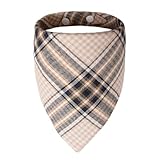
- Timeless Classic Plaid Design: Features a stylish plaid pattern that never goes out of fashion—perfect for giving your puppy or small dog a charming, classic look
- Soft & Breathable Fabric: Made from gentle, lightweight material that’s comfortable on your pet’s skin and suitable for all-day wear in any season
- Adjustable Snap Button Closure: Easy-to-use snap button allows for quick on/off and a secure, adjustable fit, ensuring comfort for puppies, cats, and other small pets
- Durable & Machine Washable: Designed for everyday use—this bandana is easy to clean and maintain. Simply toss it in the wash and it’s ready for the next adventure
- Versatile Pet Accessory: Ideal for walks, birthdays, holidays, or photoshoots—this cute accessory is suitable for puppies, small dogs, and even cats
Too tight and too loose can both cause problems
Cornell University College of Veterinary Medicine clinician Dr. Leni Kaplan explains: “A costume that is too tight will be constricting and uncomfortable and a costume that is too loose may rub and cause skin irritation; in either case, the pet may have difficulty moving around and will not enjoy their experience.” Check for rubbing, pressure points, restricted stride and fabric that catches on furniture or the dog’s feet.
Do not assume that a larger size is automatically kinder. Excess fabric can drag, twist, catch on objects or get under the paws, while a snug-looking garment can press on the neck, chest or shoulders. Recheck the fit after the dog sits, lies down and turns, since a costume that seems acceptable while standing may restrict another position.
Remove detachable and dangling hazards
Buttons, bells, ties, sequins, elastic, hooks and other small parts can snag or become chewable. Examine the costume before every use and remove it if a component loosens. A dog that mouths the garment can swallow material even when the outfit initially seemed secure.
Decorations can also interfere with communication if they cover the ears, tail or facial expressions that people and animals normally read. A design that limits those signals is a reason to choose something simpler or no clothing at all.
Supervise temperature and activity
Costumes add material and can trap heat, especially during exercise, in warm weather or in crowded indoor spaces. Keep wear short, provide a way to move away from activity and monitor the dog rather than assuming a photo session will be brief. Supervision also protects against snagging and prevents the dog from chewing the costume when attention is diverted.
When to stop immediately
Take the costume off promptly when the dog repeatedly paws, scratches, bites or pulls at it; struggles to move; freezes; or develops a persistent cluster of stress signals. Do not hold the dog in place, punish it for resisting or keep dressing it for an event. The purpose of an accessory is optional decoration, never a requirement the dog must endure.
After removal, allow the dog to return to a familiar, comfortable activity and watch whether its ordinary behavior returns. If the garment caused visible rubbing or the dog continues to have difficulty breathing or moving after it is removed, seek veterinary advice rather than putting it back on.
Full costume versus a simple accessory
A less intrusive item may be easier for some dogs, but “smaller” does not automatically mean safe or welcome. Compare the actual design with the dog’s response each time.
| Consideration | Full costume | Simple bandana or festive collar |
|---|---|---|
| Existing tolerance | Best considered only if the dog already remains comfortable with clothing and handling. | May be less intrusive for a dog that is comfortable with collars or similar accessories. |
| Movement and communication | More fabric and fasteners can interfere with walking, resting or normal signals if poorly designed. | Usually covers less of the body, but must still leave breathing, vision, hearing and movement unaffected. |
| Snagging or swallowing risk | More seams, straps and decorations create more opportunities to catch or chew. | Can still snag; supervise and remove if the dog mouths it or it catches on objects. |
| Warmth and weather | Additional material may contribute to overheating or discomfort. | Less material does not eliminate heat, rubbing or weather-related concerns. |
| Supervision | Continuous supervision is essential, especially around detachable parts. | Supervision remains necessary even for a basic bandana or collar. |
| Observed response | Continue only while the dog stays loose, mobile and engaged without persistent stress behavior. | Use only while the dog shows the same signs of comfort; remove it if the response changes. |
AAHA, the AKC and RSPCA Australia all present a simple bandana or festive collar as a possible alternative for a dog that is comfortable with accessories, not as a way to make an unwilling dog enjoy a costume.
Also popular on Amazon

- UNDENIABLY CLASSIC SOLID NAVY: The ultimate neutral. No logos, no prints—just a bold, clean navy blue that pairs with everything. Looks sharp on large breeds and never goes out of style.
- IDEAL FOR SPECIAL OCCASIONS: Whether it's for a holiday, birthday, or just because, this elegant scarf is the perfect way to celebrate your pup in style.
- PERFECT FIT FOR SMALL/MEDIUM DOGS: Specially sized for neck sizes typical of small to medium breeds weighing 6-30lbs. Provides a secure and comfortable fit without being too tight or too loose.
- SMART ADJUSTABLE SNAP BUTTON: No tying, no tangles, no fuss. Our secure snap-button closure makes it easy to put on and take off in seconds. Stays perfectly in place, even during play.
- BUILT FOR COMFORT & SIMPLICITY: Crafted from 100% premium cotton that’s soft, breathable, and gentle on your dog’s skin. The lightweight fabric drapes naturally without adding bulk or irritation.
Consider the event, not just the garment
A costume can be tolerable in a quiet home and overwhelming at a parade, party or crowded street. Noise, unfamiliar people, other animals, bright decorations, traffic, heat and limited escape space can change the dog’s behavior. The German Animal Welfare Federation’s specialist adviser Nina Brakebusch cautions: “Animals are not carnival props – whether for a social media photo, a video, or a street parade. What is fun for some people is pure stress for many dogs and cats. Costumes restrict their freedom of movement and communication and can cause anxiety or even be dangerous.”
Plan around the dog’s ability to move away, rest and communicate normally. Keep the wearing period short, avoid situations where you cannot watch closely, and do not assume that a dog who looked comfortable for a still photograph will remain comfortable during travel, crowds or prolonged activity.
Before leaving home, consider whether you can remove the item immediately and whether the dog has a quiet place to decompress. If the answer is no, a costume adds a preventable complication to an already stimulating event.
If your dog does not like costumes
Remove the clothing rather than trying to persuade the dog to tolerate it. A dog can participate in a holiday, photo or family gathering without wearing anything. If an accessory is appropriate, a plain bandana or festive collar may be considered only when the dog already accepts that type of item and remains comfortable while supervised. It is equally valid to skip accessories altogether.
Do not buy a more elaborate costume to solve a response that is already signaling distress. No purchase is required for the dog to take part in an occasion, and the safest option may cost nothing: leave the dog uncostumed. A bandana or collar is not a treatment for anxiety and cannot guarantee enjoyment.
If you do use an accessory, check it at each outing rather than assuming a previous successful wear guarantees comfort. Changes in weather, health, fit, surroundings and duration can change the response.
What the available guidance can—and cannot—establish
The AAHA page was updated August 21, 2026; RSPCA Australia’s guidance was updated June 5, 2024; Cornell published its Halloween advice October 23, 2018; and the German Animal Welfare Federation issued its parade warning January 22, 2026. The AKC, VCA Animal Hospitals and SPCA New Zealand also provide practical costume-safety guidance. Across these sources, the consistent evidence concerns observable behavior, fit and hazards.
There is no named statistic showing how many dogs enjoy or dislike costumes, and these advisory pages are not controlled studies of canine subjective experience. That limitation is why the most defensible method is individual observation: compare with the dog’s baseline, check function and fit, supervise continuously and stop when the dog’s behavior indicates discomfort.
Questions readers ask
How can I tell if my dog likes wearing a costume?
Look for a loose body, normal movement, ordinary breathing and voluntary engagement compared with the dog’s relaxed, unclothed baseline. These signs suggest comfort but cannot prove subjective enjoyment.
Also popular on Amazon

- Blank Projects for DIY: Choose patterns you like and design blank bandanas with Christmas or Halloween or Thanksgivingor Easter or 4th of July or Valentine's Day or St. Patrick's Day, etc, or HTV Big Brother and Big sister bandanas for pregnancy announcement, they worked perfectly.
- Personalized Design for a Gift: Kids and adults disign the pure bandanas with unique partern. Also can make a great engagement gifts for couples, it can be cool bridal shower gifts. Make a custom tie-dye bandanna or put iron on vinyl on them, make a unique gift for your friends.
- Multi Sizes Available: 21*13.4*13.4 inches for most small or X-small dogs and cats; 25*16*16 inches for medium or large dogs; 30*19*19inch for xlarge dog, please measure your pet's net size and leave room to tie knot.
- 100% Premium Cotton: Made of high-quality cotton skin-friendly material, it's well made, holds up great, and is heavy made materia, durable, easy to clean and maintain, comfortable and safe for your pet. When you get it, you will find it worth having.
- Multi Occasions: Using your colored pencil, fill in the solid bandanas with the pattern you like, or use HTV for DIY, or used to iron some logos on for your dog’s bandana, It can be a very cute scarf to make your dog very sweet, The solid dog bandanas can be applied for daily walking, holiday, birthday, themed party, or photo props, party costume and festive wearing and so on, making your pets charming and stylish.
How do I know if my dog is uncomfortable?
Possible signs include freezing, refusing to move, a tucked or low tail, ears held back, tense posture, panting, pacing, shaking, widened eyes, dilated pupils, lip licking, yawning, whining, pawing, scratching or biting at the outfit. A persistent pattern or several signs together warrants removal.
Does a wagging tail mean the costume is welcome?
No single tail movement settles the question. A wag can accompany arousal, and its meaning depends on the tail’s position, the rest of the posture and the change from the dog’s usual behavior.
Is a dog that stands still enjoying the costume?
Not necessarily. Freezing or repeated stillness can signal distress, confusion or reluctance to move. Test comfort by observing whether the dog voluntarily resumes normal walking and interaction, and remove the garment if stillness persists.
Recommended Free Tools
How long can my dog wear a costume?
No source establishes a universal number of minutes. Keep wear brief, supervise continuously, monitor heat and rubbing, and end the session as soon as the dog shows persistent discomfort or the garment interferes with normal activity.
Is a bandana safer than a full costume?
It may be less intrusive for a dog already comfortable with collars or similar accessories, but it can still snag, rub or be chewed. It must not obstruct breathing, vision, hearing or movement, and it still requires supervision.
Should I keep trying so my dog gets used to it?
Do not extend wear or force the dog when it is struggling, freezing or trying to remove the item. Remove it and let the dog participate without clothing instead of treating distress as a training challenge.
What if my dog seemed fine at first?
Continue checking. Heat, rubbing, fatigue, a loose fastener, crowding or a change in activity can create discomfort later. An initially calm response is not permission to stop supervising.
Free tools Windows power users keep installed
One-click scans. No signup required.
Do I need to buy a costume for my dog to join an event?
No. Clothing is optional, and skipping it is a safe, complete choice. A dog can join a celebration, photograph or gathering without wearing an accessory.
Independent reader supportYour contribution helps us test, update, and keep practical guides available for everyone.A quick decision checklist
- Was the dog relaxed and behaving normally before dressing?
- Can it breathe, see, hear, walk, turn, rest and toilet without obstruction?
- Is the garment neither constricting nor loose enough to rub or catch?
- Are there no dangling or detachable pieces the dog can chew or swallow?
- Does the dog remain loose, mobile and voluntarily engaged?
- Are weather, heat, crowding, noise and duration suitable for close supervision?
- Will you remove the item immediately if persistent stress or removal attempts appear?
If any answer raises doubt, leaving the dog uncostumed is the safer choice.
Also popular on Amazon

- Durable & Sustainable: Premium double-layer fabric. Soft, comfortable, colorfast, wrinkle-resistant and machine-washable. Ideal for long-term wear and easy cleaning.
- Adjustable Fit: The bandana features an adjustable design with a button fastening,Eliminate the hassle of tying knots and keep it securely in place, even during your dog's most active play
- Soft and Comfortable Material: Crafted from high - quality, soft fabric, this bandana ensures maximum comfort for your dog. It won't irritate their skin or fur, even during extended wear, making it perfect for daily use.
- Versatile Use: Not only is it a great accessory for your pet's daily outfit, but it can also be used for various events such as pet parties, costume contests, or family photoshoots.
- Easy Care: This dog bandana is machine - washable, making it incredibly easy to clean. No need to worry about complicated cleaning procedures or fading.
Frequently Asked Questions
How can I tell if my dog likes wearing a costume?
Compare the dog with its relaxed, unclothed baseline. Loose posture, normal movement, ordinary breathing and voluntary engagement are reassuring, but no single sign proves enjoyment.
What are the clearest signs that a costume is uncomfortable?
Freezing, refusing to move, repeated pawing or biting at the outfit, struggling to remove it, tense posture, tucked tail, ears back, panting, pacing, shaking, whining, lip licking or yawning can indicate discomfort, especially in a persistent cluster.
The Tool Desk
Outbyte Driver Updater FREEScan for outdated or missing drivers - takes under a minuteDriver Scan →Outbyte PC Repair FREERepair Windows errors before they cause bigger problemsFix Now →Is freezing a sign that my dog is calm?
No. Freezing or repeated stillness may reflect fear, confusion or reluctance to move. Remove the costume if the dog does not voluntarily return to normal movement and interaction.
Can my dog wear a bandana instead?
A simple bandana or festive collar may be less intrusive for a dog already comfortable with accessories, but it can still snag, rub or be chewed. Supervise it and remove it if the response changes.
Should I force my dog to wear a costume for a photo?
No. Do not hold the dog in place or extend wear when it struggles, freezes or shows persistent stress. A dog can take part without clothing.
How long should a costume stay on?
There is no universal time limit. Keep wear brief, watch continuously, monitor heat and rubbing, and remove the garment at the first persistent concern.
Crashes, No Sound, or Screen Glitches?
Random freezes, missing sound and display glitches usually trace back to one bad driver. Find and replace yours safely.Free scan · under a minutePC Slower Than It Used to Be?
A free scan shows the junk files, broken settings and background clutter dragging Windows down - then fixes them in one click.Free scan · Windows 10 & 11Does a wagging tail prove my dog is comfortable?
No. Tail wagging can accompany arousal as well as comfort. Interpret the tail with posture, ears, breathing, movement and the dog’s usual behavior.
What if my dog becomes uncomfortable after initially seeming fine?
Remove the outfit promptly. Rubbing, heat, snagging, crowding or prolonged activity can change a dog’s response, so reassess throughout the entire period.
The Bottom Line
A costume is acceptable only while your individual dog remains loose, mobile, engaged and able to breathe, see, hear, rest and communicate normally. Persistent stress, freezing, removal attempts or unsafe fit means take it off. When in doubt, celebrate with no clothing.





Leave a Reply