
Johnson and Scott are commonly used type or line labels within the American Bulldog, not separate breeds. Johnson (often called bully type) dogs tend to be bulkier, broader-headed and heavier-boned; Scott (often called standard type) dogs tend to be sleeker, longer-muzzled and more athletic. Those are general build tendencies, not guarantees about an individual dog’s temperament, adult size or daily exercise needs. The right choice depends on the particular dog’s behavior, health, conditioning and background rather than the label alone.
What “Johnson” and “Scott” mean
The American Bulldog developed with substantial variation in structure and working style. In modern conversation, enthusiasts often use “Johnson” and “Scott” to describe two broad lines or phenotypes within the breed. The United Kennel Club (UKC) standard accommodates this variation rather than treating the labels as separate breeds.
As an Amazon Associate I earn from qualifying purchases.
Johnson or bully type
Johnson dogs are generally described as thicker through the body, heavier-boned and broader in the head. They often have a shorter muzzle and a more substantial front end. These traits describe a tendency seen across a line, not a promise that every dog carrying the name will have the same proportions. A dog may be registered or advertised as Johnson while showing a more moderate build.
Scott or standard type
Scott dogs are generally described as sleeker and more athletic, with a longer muzzle and a lighter, more functional outline. The description reflects the type’s traditional emphasis on agility and athletic movement. Individual Scott dogs can still be powerful and heavily muscled, and a dog from a Scott line may inherit features associated with the other type.
#1 Best Overall
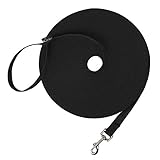
- DIMENSIONS - This dog leash measures 3/4in wide by 30 feet long. Great for hiking, camping, training, hunting, backyard, beach, recall training, outdoor play with tennis balls, and swimming!
- LONG LEASH: This training leash is great for teaching your dog recalls. It has the length needed to allow them to wander and ensure your command to come! is obeyed.
- NYLON TRAINING LEAD - This durable, long, nylon dog training leash will outlast cotton leashes. All stitching is reinforced and the nickel plated clip swivels to resist twisting. Our long dog leash is great for medium and large dogs. You'll love using it as a backyard dog leash, for off leash dog training, and more.
- Allows you to teach your dog recalls and other obedience skills.
- Swivel-style bolt snap resists twisting
Why the labels can be imprecise
Many American Bulldogs have mixed lineage, and some have intermediate features. Breeders, registries and owners may use the same term differently. Treat “Johnson” or “Scott” as a starting description of build, then inspect the actual dog, its parents and its records. A label by itself cannot establish adult height, weight, health or behavior.
Temperament: what the evidence supports
No reviewed authority establishes that Johnson dogs are predictably calmer, more family-friendly or more protective than Scott dogs, or that Scott dogs are reliably easier to train. The type labels describe conformation tendencies; they do not function as temperament tests.
Breed-standard language is not a pet-behavior guarantee
The UKC standard treats viciousness, extreme shyness and cowardice as disqualifying faults in conformation. That rule tells judges what behavior is unacceptable in a show setting. It does not prove that every dog in either type will behave in a particular way at home, around children or with unfamiliar dogs.
Factors that matter when assessing an individual
- Observed behavior: Watch how the dog responds to handling, novelty, people, dogs and frustration. Look for recovery after a startle rather than only a moment of excitement.
- Socialization: Ask what controlled exposure the puppy or adult has had to household sounds, surfaces, visitors and other animals.
- Training history: Find out which cues the dog knows, how rewards and boundaries have been used, and whether there are documented behavior concerns.
- Health and discomfort: Pain, especially from orthopedic problems, can change a dog’s tolerance and activity. Review veterinary records before interpreting behavior.
- Management fit: A strong, athletic dog needs an owner who can provide consistent handling, secure containment and appropriate outlets, regardless of type.
Questions to ask a breeder or rescue
- Can I meet the puppy’s mother and, when possible, the father or other close relatives?
- How does the dog react to visitors, routine handling, confinement and other dogs?
- What socialization and training has already been completed, and what situations remain difficult?
- Are there veterinary records, including hip or elbow evaluations where available?
- What changes in behavior have you noticed as the dog matured?
These answers provide more useful information than assuming a temperament from “Johnson” or “Scott” in an advertisement.
Size and appearance compared
Type descriptions can help you anticipate outline and proportions, but neither type has a separate, universally accepted height-and-weight range. The following figures are breed-level references, not Johnson-versus-Scott measurements.
| Reference | Males | Females | How to interpret it |
|---|---|---|---|
| UKC desirable mature height (2023) | 22–27 inches | 20–25 inches | Weight should be proportional to height; the standard does not assign these figures to one type. |
| American Kennel Club profile | 22–25 inches; 75–100 pounds | 20–23 inches; 60–80 pounds | Breed-level profile ranges; the page’s publication year is not displayed and the figures are not Johnson-versus-Scott ranges. |
How the silhouettes usually differ
- Head and muzzle: Johnson dogs are commonly portrayed with a larger head, broader skull and shorter muzzle. Scott dogs are commonly portrayed with a longer muzzle and a more streamlined head.
- Bone and chest: Johnson dogs tend to look heavier-boned and thicker through the chest and shoulders. Scott dogs tend to show a lighter, more athletic frame.
- Movement: A sound Scott-type dog often presents an efficient, athletic stride. A Johnson-type dog can also move athletically, but its heavier structure may create a different visual impression.
- Intermediate dogs: Crosses and blended pedigrees can combine a broad head with a longer muzzle or a substantial body with an athletic outline.
Do not estimate a puppy’s final weight from a type label alone. Parents’ mature dimensions, the puppy’s growth pattern, nutrition and health all influence the adult result. Ask for actual adult measurements of relatives instead of relying on terms such as “massive” or “standard.”
Reading the numbers responsibly
The UKC figures are desirable mature heights used in a breed standard, not promises about an individual puppy. They also do not say that a taller dog is healthier or that a shorter dog is less athletic. The AKC profile combines height and weight ranges for the breed as a whole. Because the two organizations present the information differently, the ranges should not be blended into a single formula or assigned to Johnson and Scott categories.
What’s actually slowing this PC down?
Pick the symptom - the matching free tool is one click away.
Rank #2

- 【EASY AND CONVENIENT】- No collar or harness needed. With the adjustable loop, extremely simple and easy to put on or off
- 【STRONG & LIGHTWEIGHT】- These Premium Slip Leads for dogs are made of high strength nylon rope, super durable metal ring, and the knots bound with leather cover. 1/2” thick rope provide maximum durability and comfortable grip
- 【Reflective for Night Safety】- The reflective straps on the entire rope leash ensures great visibility and security during night walk or jogging
- 【Great for Training】– The slip leash tightens when your dog pulls and loosens when the behavior is corrected. Great dog training leash to correct the behavior under control. Anti-choke ring is included to prevent choking hazard
- 【Perfect Size】– 1/2” x 6 ft perfect length for Outside walking, jogging, hiking or training. Suit for Large and Medium Dogs
Body condition matters more than reaching a headline number. A veterinarian can assess muscle, fat coverage, gait and growth, particularly while a large puppy is maturing. Ask a breeder or rescue for the actual adult height and weight of parents and close relatives, then use those observations as context rather than treating them as a guarantee.
Exercise needs: shared requirements, not separate quotas
The American Kennel Club describes the American Bulldog as athletic and states: “This breed requires frequent exercise and constant stimulation.” Adults may enjoy jogs, hikes, tug games and training exercises. No reviewed source sets a different daily exercise amount for Johnson and Scott dogs, so a type-specific mileage target would be misleading.
Build an exercise plan around the individual
- Age: Puppies need opportunities to move and explore, but their bodies are still developing.
- Health: Existing hip, elbow or other joint concerns may require lower-impact activities and a veterinary plan.
- Conditioning: A dog that is unfit should build duration gradually rather than beginning with long runs or steep hikes.
- Weather and footing: Heat, humidity, slippery floors and hard repetitive surfaces can increase physical stress.
- Behavioral response: Panting that does not settle, reluctance to continue, limping, repeated stopping or unusual irritability means the session should end and the dog should be assessed.
Safe activities for a healthy adult
Rotate activities so exercise also provides mental work. Brisk walks, appropriately paced hikes, retrieve games, tug with clear release cues and short obedience sessions can all contribute. Scent searches, food puzzles and shaping games add stimulation without requiring constant high-impact running. Keep sessions structured and stop while the dog is still responding well.
Planning a balanced outing
Begin with a few minutes of easy walking and sniffing, then add the more demanding portion once the dog is moving comfortably. Carry water, choose secure footing and leave time for a calm cool-down. A sturdy, properly fitted leash is basic equipment for walks, hikes and training; select its length, clip and handle for the individual dog’s strength and your ability to control it. Check collars or harnesses regularly as a puppy grows or an adult’s body condition changes.
On days when weather or joints limit outdoor work, replace distance with short training sessions, scent searches, food puzzles or controlled tug. These activities still provide the stimulation the AKC describes without forcing repetitive impact. Rest and quiet sleep after an active day are part of conditioning, not signs that the dog is being under-exercised.
Puppy exercise requires special care
AKC guidance recommends non-impact exercise for puppies to reduce possible bone and joint damage. Choose free movement on forgiving surfaces, brief training games and exploration at the puppy’s pace. Avoid forcing a puppy to run beside a bicycle, repeatedly jump, climb excessive stairs or complete long, strenuous hikes. Increase activity as the dog matures, using veterinary advice to account for size, gait and any orthopedic concerns.
Does a heavier Johnson dog need less activity?
Not automatically. A heavier frame may make some high-impact activities less suitable, while an individual Johnson dog can still be energetic and athletic. Conversely, a Scott dog’s leaner outline does not guarantee unlimited stamina. Let gait, recovery, body condition and veterinary guidance determine progression.
Rank #3

- Dimensions - This dog leash measures 3/4in wide by 15 feet long. Great for hiking, camping, training, hunting, backyard, beach, recall training, outdoor play with tennis balls, and swimming!
- Long Leash: This training leash is great for teaching your dog recalls. It has the length needed to allow them to wander and ensure your command to come! is obeyed.
- Nylon Training Lead - This durable, long, nylon dog training leash will outlast cotton leashes. All stitching is reinforced and the nickel plated clip swivels to resist twisting. Our long dog leash is great for medium and large dogs. You'll love using it as a backyard dog leash, for off leash dog training, and more.
- Allows you to teach your dog recalls and other obedience skills.
- Swivel-style bolt snap resists twisting
Training and socialization
Early socialization and puppy training classes are recommended for the breed. The goal is not to force every interaction, but to teach the dog that people, environments and handling predict calm, rewarding experiences. Keep exposures controlled and give the dog distance when it shows stress.
A practical training sequence
- Start with management: Use secure barriers, a properly fitted collar or harness and a leash appropriate for the dog’s strength. Prevent rehearsal of chasing, jumping or door-dashing while skills are developing.
- Teach foundational cues: Practice name response, recall, loose-leash walking, “leave it,” a release cue and settling on a mat.
- Generalize gradually: Move from a quiet room to a yard, then to low-distraction public settings. Add one challenge at a time.
- Reward calm behavior: Reinforce four paws on the floor, checking in with the handler and relaxing around ordinary household activity.
- Plan dog-to-dog contact: Use compatible, supervised playmates rather than assuming that a puppy should greet every dog. Interrupt play before arousal becomes frantic.
- Review progress: Keep notes on triggers, recovery time and successful environments so the routine can be adjusted.
Because adult American Bulldogs are powerful, reliable response to basic cues is a safety skill, not a cosmetic achievement. If behavior includes threatening displays, bites, guarding or inability to disengage, involve a qualified behavior professional and your veterinarian.
Health considerations for both types
The AKC identifies hip and joint problems as concerns for American Bulldogs and says hip and elbow evaluations should be performed. The available evidence does not show that these risks differ consistently between Johnson and Scott lines.
What to request before choosing a dog
- Written veterinary records and vaccination history.
- Results of available hip and elbow evaluations for the parents or the adult dog.
- Information about lameness, exercise intolerance, prior injuries or orthopedic treatment.
- A plan for routine veterinary examinations and future vaccinations as advised by the dog’s veterinarian.
Monitor movement at home
Notice whether the dog rises smoothly, bears weight evenly, keeps pace on ordinary walks and recovers normally after activity. Persistent stiffness, limping, bunny-hopping, reluctance to climb or sudden changes in willingness to exercise warrant veterinary attention. Do not diagnose a joint disorder from appearance alone.
Choosing between two individual dogs
If you are deciding between a Johnson-type and a Scott-type dog, compare the dogs directly rather than choosing the label that sounds more suitable. Use the same checklist for each candidate.
Do these 3 things before closing this tab:
1Fix the driver behind crashes, sound loss and screen glitches2Repair Windows errors before they cause bigger problems3Scan for outdated or missing drivers - takes under a minute| Decision area | What to compare | Why it matters |
|---|---|---|
| Adult build | Actual height, weight, bone, muzzle and movement; parents’ mature sizes | Build affects handling, equipment fit and the kinds of exercise that are comfortable. |
| Energy and recovery | Interest in walking and play, ability to settle, recovery after activity | Helps match the dog to your schedule without assuming a type-based quota. |
| Temperament | Response to people, dogs, handling, novelty and frustration | Observed behavior is more informative than a line label. |
| Health information | Hip and elbow evaluations, veterinary records and orthopedic history | Supports realistic planning for activity and medical care. |
| Background | Socialization, training, previous homes and known triggers | Shows what support the dog may need during transition. |
For families with children
Do not use the Johnson or Scott label as a shortcut for deciding whether a dog is suitable for children. Match the individual dog’s demonstrated behavior and the adults’ ability to supervise, train and provide a secure routine. Children should not climb on, disturb or handle a resting, eating or confined dog, and interactions require active adult supervision.
For active owners
A Scott-type outline may appeal to someone seeking a visibly athletic dog, while a Johnson-type outline may appeal to someone who prefers a heavier build. Neither preference replaces conditioning, health screening or training. Select the dog whose actual energy, movement and recovery fit the activities you can provide consistently.
Rank #4
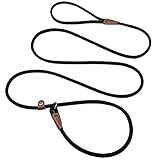
- Control for Behavior: No pull slip lead dog leash, 2 in 1 leash and collar design. Simple and easy use to correct behavior and stop dogs from pulling
- Classic colors: 13+ stylish colors for you choose to make your pets stand out. Bright colors make it easier to accurately see where it is on the pup’s neck and whether it needs to be adjusted. The slip leash make your dog safer and more fashionable
- Fit All: 7 feet long, 1/4 inch slip rope dog leash is a perfect balance between freedom and control, adjustable to fit any dog neck size, suitable for small medium dogs pets outdoor walking, hiking and training
- Sturdy Nylon Slip Lead: Slip knot rope leash is made of high density nylon rope, a sturdy leather connection and strong hardware o-ring. Flexible, lightweight yet durability
- Versatile for Training: This leash is perfect for dog training. Its length allows you to teach your dog commands like "heel" and "stay" effectively. The smooth texture of the nylon won't irritate your dog's neck during training, making the learning process more pleasant for both of you
Common mistakes and how to avoid them
- Assuming type equals personality: Ask for observed behavior and history instead.
- Using breed-level weight as a target: Maintain a healthy body condition with veterinary guidance; do not push a dog toward the top of a published range.
- Starting intense exercise too early: Keep puppy activity non-impact and increase demands gradually.
- Ignoring mixed ancestry: Expect intermediate features and evaluate the dog in front of you.
- Buying equipment before measuring: Fit collars, harnesses and crates to the individual dog, then recheck fit as a puppy grows.
- Skipping decompression: Rest, sleep and quiet time are part of a sustainable routine, especially after stimulating outings.
- Comparing photographs instead of movement: Ask to see the dog walk, turn, rise and settle on different surfaces; a still image can exaggerate head or chest proportions.
- Confusing enthusiasm with fitness: A dog may keep playing despite fatigue or discomfort, so evaluate recovery and gait after activity as well as excitement during it.
A concise decision framework
- Confirm that you want an American Bulldog and can provide frequent exercise, ongoing training and secure management.
- Use Johnson or Scott only as a visual description of likely build, not as a behavior guarantee.
- Compare the individual dogs’ observed temperament, socialization and training records.
- Review veterinary information, with particular attention to hips, elbows and any signs of discomfort.
- Plan age-appropriate, non-impact activity for puppies and a varied routine for healthy adults.
- Reassess the routine as the dog matures; adjust intensity for conditioning, weather, health and veterinary advice.
Frequently asked questions
Are Johnson and Scott American Bulldogs different breeds?
No. The names commonly describe types or lines within the American Bulldog. The UKC standard accommodates variation, and mixed or intermediate dogs are common.
Which type is calmer with children?
Neither label reliably predicts that outcome. Evaluate the individual dog’s behavior, socialization, training and health, and provide active adult supervision around children.
Crashes, No Sound, or Screen Glitches?
Random freezes, missing sound and display glitches usually trace back to one bad driver. Find and replace yours safely.Free scan · under a minuteWindows Errors? Fix Them Before They Spread
Repair common Windows errors and clear accumulated junk for a smoother, more stable PC - no reinstall needed.Free scan · no reinstallWhich type is bigger?
Johnson dogs are generally described as bulkier and heavier-boned, but there is no universally accepted Johnson-only weight range. Use the UKC and AKC breed-level figures as context and check the actual dog and its relatives.
How much exercise does an American Bulldog need?
The AKC says the breed requires frequent exercise and constant stimulation. Adults may enjoy walks, jogs, hikes, tug and training. Exact duration depends on age, health, conditioning, weather and veterinary advice; no separate Johnson or Scott quota is established.
Can a puppy run or hike with me?
AKC guidance recommends non-impact exercise for puppies to reduce possible bone and joint damage. Use brief, self-paced exploration and training instead of forced running, repeated jumping or long strenuous hikes, and increase demands as the dog matures.
Should I choose a Scott type for an active lifestyle?
A Scott-type outline may look more athletic, but appearance does not guarantee stamina or soundness. Choose the individual whose observed energy, movement, recovery and health records fit the activities you can provide.
Free tools Windows power users keep installed
One-click scans. No signup required.
What health records matter most?
Ask for veterinary records, vaccination history and available hip and elbow evaluations. Also ask about lameness, exercise intolerance, prior orthopedic treatment and any changes noticed as the dog matured.
Best Value
- Dimensions - This dog leash measures 3/4in wide by 20 feet long. Great for hiking, camping, training, hunting, backyard, beach, recall training, outdoor play with tennis balls, and swimming!
- Long Leash: This training leash is great for teaching your dog recalls. It has the length needed to allow them to wander and ensure your command to come! is obeyed.
- Nylon Training Lead - This durable, long, nylon dog training leash will outlast cotton leashes. All stitching is reinforced and the nickel plated clip swivels to resist twisting. Our long dog leash is great for medium and large dogs. You'll love using it as a backyard dog leash, for off leash dog training, and more.
- Allows you to teach your dog recalls and other obedience skills.
- Swivel-style bolt snap resists twisting
Bottom line
Johnson and Scott American Bulldogs are variations within one breed. Johnson dogs are usually portrayed as bulkier and heavier-boned, while Scott dogs are usually portrayed as sleeker and more athletic; mixed and intermediate dogs are common. Neither label reliably predicts temperament or supplies a separate exercise prescription. Choose and manage the individual dog using observed behavior, actual build, health records, socialization and a carefully progressed activity plan.
Frequently Asked Questions
Are Johnson and Scott American Bulldogs separate breeds?
No. They are commonly used type or line labels within the American Bulldog, and many dogs have mixed or intermediate features.
Which type is better for a family?
Neither type has a proven temperament advantage. Assess the individual dog’s behavior, socialization, training, health and your ability to supervise and manage it.
Quick wins for a faster PC:
Fix the driver behind crashes, sound loss and screen glitchesFind Drivers →Clear out junk files and repair common Windows errorsFree Scan →Scan for outdated or missing drivers - takes under a minuteDriver Scan →Which type is larger?
Johnson dogs tend to look bulkier and heavier-boned, but there is no universally accepted Johnson-only size range. Compare actual adult measurements and relatives.
How much exercise does an American Bulldog need?
The AKC describes the breed as requiring frequent exercise and constant stimulation. Build an age-, health- and conditioning-appropriate routine rather than using a type-specific quota.
Is running safe for an American Bulldog puppy?
AKC guidance recommends non-impact exercise for puppies. Avoid forced running, repeated jumping and long strenuous hikes until the dog matures, following veterinary advice.
What should I check before buying or adopting one?
Observe responses to people, dogs, handling and novelty; review socialization and training history; and request veterinary records, including available hip and elbow evaluations.
The Tool Desk
Outbyte PC Repair FREERepair Windows errors before they cause bigger problemsFix Now →Outbyte Driver Updater FREEScan for outdated or missing drivers - takes under a minuteDriver Scan →The Bottom Line
Johnson and Scott are American Bulldog types, not separate breeds. Johnson dogs generally look heavier and broader, while Scott dogs generally look sleeker and more athletic. Temperament and exercise needs must be judged dog by dog, using observed behavior, health information, conditioning and training rather than a label.
Quick Recap
Product prices and availability are accurate as of the date/time indicated and are subject to change. Any price and availability information displayed on Amazon at the time of purchase will apply.





Leave a Reply