Megamonodontium mccluskyi was a relatively large trapdoor spider that lived in Australia about 11–16 million years ago. It did not stalk dinosaurs: non-avian dinosaurs had disappeared tens of millions of years before this Miocene spider existed. The fossil is notable for its size and rarity, and for being the first known fossil of its spider family.
What was the fossil spider?
The spider is Megamonodontium mccluskyi, a brush-footed trapdoor spider in the family Barychelidae. Researchers formally described it in 2023 from a fossil collected at McGraths Flat in New South Wales, Australia. The specimen was collected in June 2020 and is held in the Australian Museum’s palaeontology collection.
As an Amazon Associate I earn from qualifying purchases.
The original study describes it as the first fossil barychelid known worldwide and the second fossil mygalomorph spider recorded from Australia. Mygalomorphs are a group that includes trapdoor spiders and tarantulas.
Did it live alongside dinosaurs?
No. The fossil is dated to approximately 11–16 million years ago, during the Miocene. Non-avian dinosaurs became extinct around 66 million years ago, so this spider lived tens of millions of years later. The dinosaur suggestion in the headline is unsupported.
#1 Best Overall

- Realistic Fossil Replica: Museum-quality cast of an Early Eocene bat skeleton from the Lower Green River Formation, Lincoln County, Wyoming
- Historic Specimen: Represents one of the earliest known mammals, offering a glimpse into life approximately 50 million years ago
- Great Gift for Fossil Lovers: Appropriate for fossil collectors, educators, and anyone fascinated by prehistoric life and natural history
How large was it?
The original study calls M. mccluskyi the second-largest fossil spider known and estimates it was about five times the size of living spiders in the genus Monodontium. That comparison is specifically to Monodontium, not to all living spiders.
The Australian Museum describes it as the largest fossil spider found in Australia. That regional record is distinct from the study’s worldwide ranking: the slightly larger fossil Mongolarachne jurassica has a reported body length of 24.6 mm, as cited in the study. No direct body-length measurement or full leg span for M. mccluskyi is established in the published source.
Rank #2

- TAKE HOME THE KING OF THE DINOSAURS: The legendary Tyrannosaurus Rex is one of the most popular dinosaurs in the world. With terrifying jaws and an immense size, this large carnivore has a collectible appeal to any dinosaur enthusiast!
- BRINGING THE PAST TO LIFE: The Smithsonian's specimen, USNM 555000 T-Rex skull, better known as, The Nation's T-Rex, is one of the largest and most complete T-Rex specimens ever discovered. Now you can take home a piece of this prehistoric treasure!
- MADE WITH CRETACEOUS QUALITY: Durably constructed with a heavyweight polystone resin. It is designed to last a lifetime and features hand-painted detailing. 1:10 replica this impressive skull replica leaves a big impact in a small desk-sized space.
- PERFECT FOR ANY DINO-ENTHUSIAST: Secured to a base and plaque, the skull will sit prominently on your shelf, desk, or table while also displaying information about the skull. This offers a unique visual display for any dinosaur collector!
- OFFICIAL SMITHSONIAN COLLECTIBLE: Full authorized and licensed by the Smithsonian Museum, this T-Rex replica skull is ideal for anyone fascinated by the Tyrannosaurus Rex. Take home your very own T-Rex skull, or gift one to the dino-lover in your home!
Why is this fossil important?
A rare record of its spider family
Brush-footed trapdoor spiders are not commonly preserved as fossils. The Australian Museum notes that around 300 species in this group are alive today, while this specimen is the first known fossil of Barychelidae. As Dr Robert Raven, the supervising author and a Queensland Museum arachnologist, put it: “Not only is it the largest fossilised spider to be found in Australia but it is the first fossil of the family Barychelidae that has been found worldwide.”
Fine details survived
Imaging helped researchers examine small structures that can reveal a fossil spider’s identity. Dr Michael Frese of the University of Canberra said: “Scanning electron microscopy allowed us to study minute details of the claws and setae on the spider’s pedipalps, legs and the main body.” Setae are hair-like structures; the Museum reports that the scans revealed details of claws and setae.
Rank #3
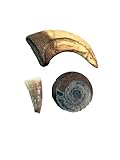
- Three-Item Fossil Set – Includes one Velociraptor claw replica, one Mosasaur tooth (B-grade), and one genuine small ammonite fossil
- Educational and Collectible – A great hands-on way to explore prehistoric life and paleontology
- Genuine Fossils Included – Both the Mosasaur tooth and ammonite are real fossil specimens
- Realistic Replica Claw – Velociraptor claw cast features high quality texture and curvature
- Ready for Display or Teaching – Great for collectors, educators, or science-themed gifts
What does it tell us about ancient Australia?
The study interprets the fossil and its relatives as evidence that this spider lineage occupied moist rainforest habitat in Australia. It discusses the lineage’s later replacement by other spiders in the context of continental aridification. This is a reconstruction based on fossil and ecological evidence, not a direct record of this individual’s behavior or proof that drying alone caused the lineage to disappear.
Independent reader supportYour contribution helps us test, update, and keep practical guides available for everyone.When was it found and described?
The specimen was collected in June 2020. McCurry, Frese and Raven’s paper was published online on 15 September 2023 and later appeared in the journal’s volume 200, issue 4, dated April 2024. The Australian Museum announced the find in 2023. Its fossil record is available online for researchers.
Quick Recap
Best Value

- Real Spider Encased in Synthetic Amber: This unique resin block features a real spider preserved in synthetic amber, designed to mimic the natural fossilization process for a stunning and authentic look.
- Tree Stump Design: The resin is crafted with a realistic tree stump design on all four sides,3.94 x 2.76 Inch resin adding a natural and artistic touch to this fascinating specimen
- Educational and Decorative: Perfect for science classrooms, biology enthusiasts, or oddities collectors, this piece offers both educational value and aesthetic appeal, making it a great conversation starter.
- Durable and Detailed Preservation: Encased in sturdy resin, the spider is protected from damage and discoloration, ensuring its intricate details remain visible for years to come.
- Unique Gift Idea: A perfect gift for nature lovers, biology students, or collectors of curiosities, this spider specimen combines science, art, and craftsmanship in one captivating piece.
Rank #4

- Dimensions: 12.6"Wx4"Dx8.5"H 1.3 lbs.
- This dinosaur skeleton fossil model is highly detailed from polyresin and is on a base.It is suitable for an interesting home decoration.
- It is with amazing detail, realistic, educational, and fun, this statue is suitable for a range of interests, including collectors, teachers, and kids. Can be given to them as an interesting gift for dino lover.
- Material:Resin,durable,you can keep it for a long time.
- It is suitable for an interesting home decoration.
Product prices and availability are accurate as of the date/time indicated and are subject to change. Any price and availability information displayed on Amazon at the time of purchase will apply.




