
Some links on this page are affiliate links: if you buy through them we may earn a commission, at no extra cost to you.
The key difference between a pet dog and a street or free-roaming dog is dependable responsibility, not biology. A person who takes ownership accepts responsibility for that dog’s welfare for life or until another owner is found. A free-roaming dog may be owned, supported by neighbours, helped by an animal-welfare group, or left without consistent care. The label “street dog” describes where and how a dog lives; it does not prove that the dog has no caregiver, poor temperament, or a particular health status.
Both kinds of dogs need food, water, shelter, protection from preventable disease, safety, and humane treatment. The practical difference is how reliably those needs are met, who notices when something goes wrong, and which services can respond. The comparison below separates household care from community and public responsibilities without assuming that every owned dog or every free-roaming dog has the same routine.
As an Amazon Associate I earn from qualifying purchases.
Do these 3 things before closing this tab:
1Fix the driver behind crashes, sound loss and screen glitches2Clear out junk files and repair common Windows errors3Scan for outdated or missing drivers - takes under a minutePet dog vs. street dog daily needs: the short answer
An owned pet dog should have a named person responsible for daily care, preventive health, identification, reproduction decisions, behavioural needs, and reasonable control of roaming. A street or free-roaming dog may receive some of these things, but access can depend on several people, local services, the environment, and chance. Some free-roaming dogs are healthy and well supported; some owned dogs are neglected. The reliable distinction is accountability and continuity of care.
| Care dimension | Owned pet dog | Street or free-roaming dog |
|---|---|---|
| Responsibility | An owner accepts responsibility for welfare and behavioural needs throughout the dog’s life or until another owner is found. | Responsibility may be shared by caregivers, welfare groups, veterinarians, and local authorities. The dog may still belong to someone. |
| Food, water, shelter | The owner plans consistent access to suitable food, fresh water, and shelter. | Access can depend on environmental resources and community action. Availability may change by location and day. |
| Health care | The owner arranges vaccination, parasite control, examinations, and treatment with veterinary advice. | Community or public programs may provide assessment, rabies vaccination, treatment, sterilization, or adoption evaluation, depending on local arrangements. |
| Reproduction and identification | The owner prevents unwanted litters and identifies the dog, preferably permanently, while following registration laws. | Population management requires coordinated programs rather than one person’s feeding decision. |
| Movement and safety | The owner takes reasonable steps to prevent uncontrolled roaming that could endanger the dog, people, wildlife, or property. | Traffic, disease, injury, conflict, and changing resources can create hazards, but the risk is not identical for every dog. |
This framework reflects guidance from the World Organisation for Animal Health (WOAH), together with India-specific government rules and advisories described below. It is not a substitute for a veterinary examination or local legal advice.
Popular on Amazon

- Silent & Secure Identification - No More Jingling Noise: Say goodbye to noisy, jingling tags that wake you up at night. Unlike traditional hanging tags that can get caught or fall off, our laser-etched stainless steel nameplate is fixed securely flat on the collar. This silent design provides peace of mind, ensuring your dog's ID stays permanently attached while keeping your home quiet and your pet distraction-free
- Maximum Visibility for Night Safety - Premium Reflective Nylon: Keep your furry friend visible and safe during late-night or early-morning walks. Constructed with high durability nylon and highly reflective stitching, this collar reflects ambient light to alert passing vehicles and pedestrians. It offers the perfect balance of heavy duty strength for pullers and essential safety visibility for outdoor adventures
- Anti Chafe Comfort - Soft Neoprene Padded Lining: Designed for all-day wear without irritation. The collar features a luxurious, breathable Neoprene padding that creates a soft cushion between the rugged nylon and your dog's neck. This design protects sensitive skin and prevents fur damage, allowing your pet to run, play, and sleep in absolute comfort
- Clear & Fade-Resistant Customization - Identifying Your Lost Pet: Ensure your lost dog can always find their way home. We use advanced laser engraving technology to etch your customized text deep into the stainless steel plate, making it clear, readable, and fade-resistant over years of use. With space for up to 4 lines of text, you can include your dog’s name, phone number, and address—crucial info that speaks for them when they can't
- Perfect Fit for Every Breed - Adjustable & Measured Sizing: A tailored fit for every stage, from growing puppies to large breeds. Available in 5 adjustable sizes (XS to XL), suitable for boys and girls of all breeds. Please measure your dog's neck circumference before ordering to ensure the most comfortable fit. The high-quality buckle ensures the collar stays on securely, whether playing in the park or resting at home
What an owned pet dog needs every day
Reliable food and clean water
An owner should make food and water predictable rather than leaving the dog to search for them. The appropriate amount and formulation vary with age, size, health, activity, pregnancy, and veterinary advice. Fresh drinking water should be available and containers kept clean. A water bowl and dog food are basic-care categories, not replacements for professional nutritional or medical guidance.
Consistency also means planning for absences, travel, illness, heat, and household changes. A dog that is fed irregularly, has no dependable water source, or is routinely left outside without weather protection does not have reliable daily care even if food is provided sometimes.
Suitable shelter and a humane environment
Housing should protect the dog from weather and allow rest, movement, and normal behaviour. The appropriate arrangement differs for a small indoor companion, a working dog, and a dog with medical needs. Owners should check the dog’s environment each day for hazards such as unsecured gates, toxic substances, sharp objects, unsafe heat, and inaccessible water.
Preventive veterinary care
Owners should protect dogs as far as possible from infectious disease through vaccination and parasite control, and arrange veterinary care when a dog is ill or injured. The schedule depends on the dog’s age, health, exposure, and local disease risks; a veterinarian should set the plan. Prevention is more than a single injection: it includes monitoring appetite, drinking, breathing, mobility, skin, stool, behaviour, and any change from the dog’s normal condition.
Prompt professional assessment matters when signs are severe, sudden, or worsening. Owners should not use leftover medicines, human drugs, or improvised procedures without veterinary direction.
Behaviour, exercise, and social needs
WOAH’s owner-responsibility guidance includes behavioural needs as part of welfare. A daily routine therefore includes opportunities for species-appropriate movement, rest, exploration, and positive interaction. The right amount depends on the individual dog. Age, breed type, physical condition, fear, pain, and previous experience can change what is safe and enjoyable.
PC Slower Than It Used to Be?
A free scan shows the junk files, broken settings and background clutter dragging Windows down - then fixes them in one click.Free scan · Windows 10 & 11Outdated Drivers Are Slowing You Down
One free scan finds every outdated or missing driver and matches the right update for your exact hardware.Free scan · exact hardware matchAlso popular on Amazon
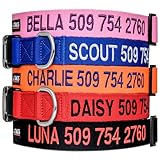
- Personalization that WOWs: Give your four legged companion the VIP treatment they deserve with our exclusive custom dog collar. With endless possibilities for personalization, you can create a one-of-a-kind collar that reflects their unique personality
- Peace of Mind: Don't let your furry friend's identity go unnoticed. Our custom embroidered dog collar is a surefire way to keep them safe and stylish. No more fumbling with noisy tags or worrying about them going missing. It's time to upgrade to a collar that screams "I am loved and protected"
- Click Customize Now: With a variety of vibrant collar colors and thread options, get ready to steal the spotlight and become the envy of dog owners everywhere
- Unmatched Comfort: Our adjustable, user-friendly dog collar fits all breeds of all sizes. Available in 4 sizes: X-Small (3/8 in. x 8-12 in. length); Small (5/8 in. x 11-16 in. length); Medium (3/4 in. x 14-20 in. length); and Large (1 in. x 18-26 in. length)
- Lifetime Durability: Crafted from premium-grade nylon ensuring durability and longevity. No more worries about fraying or wear and tear as our collar is designed to withstand even the most active adventures
Training should make ordinary handling and safe movement easier without intimidation. A dog that is fearful, reactive, or repeatedly trying to escape may need a veterinarian’s assessment and qualified behaviour support. Punishment can increase fear and bite risk; management and reward-based teaching are safer starting points.
Identification and reproduction decisions
Owners should identify a dog, preferably permanently, and register it where local law requires. A collar with an identification tag can help a finder contact the household, but collars can be lost; permanent identification is more secure when available through local veterinary services. Keep contact details current after moving or changing telephone numbers.
Owners also need a plan for reproduction. Preventing unwanted litters is an owner responsibility and should be discussed with a veterinarian, who can explain timing, health considerations, and alternatives. Allowing a dog to roam to find a mate transfers the consequences to the dog, neighbours, and local animal services.
Controlled movement and safety
Reasonable control of roaming protects the dog and the community. Use secure fencing and appropriate supervision; use a leash or other humane control where local rules or the setting require it. Controlled movement does not mean restricting all activity. It means preventing avoidable exposure to traffic, fights, toxins, infectious disease, and situations in which the dog could injure someone or become lost.
Free tools Windows power users keep installed
One-click scans. No signup required.
What does a street dog need every day?
First, establish what “street dog” means
WOAH notes that an observer may not be able to tell whether a free-roaming dog belongs to someone. A dog wearing no collar may still have a household, while a collared dog may be lost or abandoned. “Street dog” should therefore be treated as a description of a free-roaming situation, not proof of ownership status.
Before intervening, observe from a safe distance. Look for a collar, ear mark, familiar feeding place, signs of a nearby caregiver, and whether the dog can walk normally. Do not approach a frightened, injured, sleeping, eating, nursing, or defensive dog simply to determine its status.
Also popular on Amazon

- SAFETY,GREAT IDENTIFICATION FOR YOUR DOG - Say goodbye to the annoyance of a jingling metal tag! Our strong nylon dog collar features a sewn-in rubber tag that can be customized with your dog’s name and phone number for long-lasting identification. No need to worry about it falling off or being chewed by your dog.
- COMFORT: The collar is made of high-quality nylon material and lined with soft neoprene padding to protect the dog’s neck from irritation during activity.
- UNIQUENESS: The collar is available in multiple colors and can be customized with different fonts and colors to make your dog stand out from the rest. Click “Customize now” to see a preview!
- DURABILITY: The collar is made of high-quality materials and is strong and durable for long-lasting use.
- CONVENIENCE: The collar features a side-release buckle for easy one-handed quick release. It is also available in multiple sizes: XSmall (3/4" wide by 8"-12" adjustable length); Small (3/4" wide by 10"-16" adjustable length); Medium (1" wide by 14"-20" adjustable length); and Large (1" inch wide by 16"-24" adjustable length). This dog collar fits many kinds of dogs, like Poodles, Pugs, Dachshunds, Terriers, Beagles, Pitbulls, Labradors, Bulldogs and so on.
Food, water, and shelter may be intermittent
Free-roaming dogs may obtain food from households, businesses, rubbish, hunting, or designated community feeding. Water may come from natural sources, containers, leaks, or public spaces. Shelter can be a porch, vacant structure, vehicle, vegetation, or an area provided by people. These resources can disappear because of weather, construction, conflict, or changes in human behaviour.
WOAH’s carrying-capacity framework identifies food, water, shelter, and human attitudes as factors influencing free-roaming dog populations. That means a feeding decision affects more than one animal: location, sanitation, neighbours, wildlife, traffic, and the availability of sterilization and vaccination services also matter.
Health care depends on local systems
A free-roaming dog may have received vaccination, parasite treatment, sterilization, or an examination, or may have received none of these. Community and public programs can provide veterinary health care, including rabies vaccination, assessment, treatment, adoption evaluation, and sterilization. Coverage and eligibility vary by place, so do not assume that an unfamiliar dog is vaccinated or that a visible ear mark means every health need has been addressed.
Rabies concerns require particular caution. Do not attempt to catch or medicate a dog suspected of rabies, and do not handle saliva, wounds, or an animal behaving abnormally. Contact local veterinary, municipal, or animal-welfare services for instructions. If a person has been bitten or scratched, seek urgent medical advice and report the exposure according to local public-health procedures.
Safety risks are real but not uniform
Street exposure can involve traffic, extreme weather, fights, infectious disease, poisoning, traps, and deliberate harm. It can also provide social contact, familiar territory, and support from caregivers. Avoid statements that every free-roaming dog is dangerous, diseased, starving, or aggressive. Evaluate the individual dog and the local setting.
Do not chase a dog into traffic, corner it, pull it by the tail, or place your hands near an injured animal’s mouth. Children should not approach unfamiliar dogs without close adult supervision. A local service can advise on humane capture, transport, quarantine, treatment, and return or adoption.
What’s actually slowing this PC down?
Pick the symptom - the matching free tool is one click away.
Also popular on Amazon

- Silent & Secure Identification - No More Jingling Noise: Say goodbye to noisy, jingling tags that wake you up at night. Unlike traditional hanging tags that can get caught or fall off, our laser-etched stainless steel nameplate is fixed securely flat on the collar. This silent design provides peace of mind, ensuring your dog's ID stays permanently attached while keeping your home quiet and your pet distraction-free
- Maximum Visibility for Night Safety - Premium Reflective Nylon: Keep your furry friend visible and safe during late-night or early-morning walks. Constructed with high durability nylon and highly reflective stitching, this collar reflects ambient light to alert passing vehicles and pedestrians. It offers the perfect balance of heavy duty strength for pullers and essential safety visibility for outdoor adventures
- Anti Chafe Comfort - Soft Neoprene Padded Lining: Designed for all-day wear without irritation. The collar features a luxurious, breathable Neoprene padding that creates a soft cushion between the rugged nylon and your dog's neck. This design protects sensitive skin and prevents fur damage, allowing your pet to run, play, and sleep in absolute comfort
- Clear & Fade-Resistant Customization - Identifying Your Lost Pet: Ensure your lost dog can always find their way home. We use advanced laser engraving technology to etch your customized text deep into the stainless steel plate, making it clear, readable, and fade-resistant over years of use. With space for up to 4 lines of text, you can include your dog’s name, phone number, and address—crucial info that speaks for them when they can't
- Perfect Fit for Every Breed - Adjustable & Measured Sizing: A tailored fit for every stage, from growing puppies to large breeds. Available in 5 adjustable sizes (XS to XL), suitable for boys and girls of all breeds. Please measure your dog's neck circumference before ordering to ensure the most comfortable fit. The high-quality buckle ensures the collar stays on securely, whether playing in the park or resting at home
How are pet dogs and street dogs cared for differently?
The owner carries the whole-care duty
For an owned dog, one person or household can coordinate feeding, housing, veterinary appointments, identification, training, and safe movement. That coordination makes it possible to notice small changes early and maintain records. If the owner cannot continue, responsibility should be transferred deliberately to another suitable caregiver or recognized organization rather than abandoned through release.
Free-roaming care is a network, not a single task
For a street or community dog, care may be distributed among feeders, neighbours, veterinarians, welfare groups, and government agencies. Each may address only one need. A person who supplies water can help immediate welfare but cannot assume that the dog has vaccination, treatment, sterilization, identification, or a safe long-term plan.
Good coordination includes sharing the dog’s location, description, sex, visible injuries, behaviour, and known caregiver with the responsible local service. Keep information factual and avoid publishing a precise location if doing so could expose the dog to harm or trigger conflict.
Daily routine is usually more predictable at home
A household can set regular times for meals, water checks, rest, exercise, training, and medication. A free-roaming dog may follow a territory-based routine that changes with people, weather, food availability, traffic, and other dogs. Lack of a visible routine does not prove neglect, but it does make gaps in care harder to detect.
Recommended Free Tools
What to do when you want to help a street dog
1. Observe and assess without creating a chase
- Stay far enough away that the dog can move freely.
- Note the location, time, body condition, gait, breathing, visible wounds, and behaviour.
- Look for a collar, ear mark, or nearby caregiver without trying to remove equipment or restrain the dog.
- Keep children and household pets away until the dog’s status is known.
2. Provide immediate help only when it is safe
In a safe location, a clean container of water can address an immediate need. If people in the area already feed the dog, coordinate rather than creating multiple competing feeding points. Keep food and containers away from traffic, entrances, schools, and places where they could cause conflict or unsanitary conditions. Feeding does not replace veterinary care or a population program.
3. Contact the appropriate service
For illness or injury, contact a local veterinary clinic, municipal animal service, or recognized animal-welfare organization and ask what information, transport, and handling they need. Describe the dog accurately. Do not promise treatment, adoption, or return before the responsible service confirms what is possible.
Also popular on Amazon

- 【Multicolor & Safety】One set contains 12 collars of different colors, enough to meet your needs, so that you can easily identify your puppy, and looks cute on both boy and girl puppies. Buckle will quick release automatically under pressure if your puppy get stuck up in something. It has just enough resistance in the break away part, not breakaway easily.
- 【Comfy & Durable】Silky soft nylon doesn't irritate your furry friends. It allows your pets to playing freely and comfortable. Our puppy collars are all made of high-quality materials, strong and durable. Colorfast dye means this collar won't fade, so it can keeps the obvious recognition function all the time. And can be machine washed and repeatedly used for a long time.
- 【Fully Adjustble & Easy】Our puppy collars are available in 2 sizes, -S-(adjustable from 6.8-10.2 inch, 2/5 inch width), -M-(adjustable from 9.0-12.0 inch, 2/5 inch width), Measure your puppy before buying(with string or tape measure), Each size is adjustable and easy to operate to meet your growing puppies
- 【12 Colors Bone shaped ID Tags】These aluminum dog tags have 12 colors that match the collars. It will be a cool idea to choose different colors according to your puppy's personality. And we have provided some label stickers that you can paste the puppy's information on the ID tag to prevent the puppy from losing when you take your puppy out, Of course, it is better if you have other carving methods.
- 【6 Record Keeping Charts】1*whelping details, 2*weight chart-daily, 1*weight chart-weekly, 1*bottle & tube feedings, 1*new owner information. This is a complete record keeping system for breeders of puppies, a great way to keep permanent records of each puppy. This makes tracking your litter much easier and a perfect way to show prospective owners.
4. Do not perform procedures yourself
Do not attempt surgery, wound closure, injections, sterilization, forced bathing, or removal of embedded objects. Even apparently friendly dogs can bite when in pain. Professional responders can select humane equipment, arrange observation, and meet legal or public-health requirements.
5. Consider adoption as a separate commitment
Taking a free-roaming dog home turns a community concern into an ownership obligation. Before doing so, plan for secure housing, food, water, veterinary examination, vaccination and parasite advice, identification, behaviour support, and safe separation from resident animals. Ask local services about quarantine, registration, and any required health checks. Adoption should be a deliberate decision, not an impulsive rescue followed by another abandonment.
Population management: why feeding alone is not enough
WOAH’s context-dependent approach
WOAH’s 2024 Terrestrial Animal Health Code describes Catch, Neuter, Vaccinate and Return (CNVR) as one possible component of dog-population-management programs. It states: “This is not a stand-alone solution to DPM and must be used in combination with other measures addressing other sources of free-roaming dogs.” The chapter explains that identified unowned dogs may receive health care, including rabies vaccination, adoption evaluation, and sterilization, then be returned near the capture site when adoption is not feasible.
WOAH also warns that the method is not suitable in every context and may conflict with local law or fail to address roaming-related problems. Programs should therefore be designed for local conditions and involve communities, rather than copied as a universal formula. Other measures can include responsible ownership, identification, prevention of abandonment, access to veterinary services, education, and responses to public-safety concerns.
India-specific example: Animal Birth Control Rules, 2023
India’s legal and administrative arrangements illustrate why geography matters. A 2025 Government of India answer describes local bodies managing street-dog populations through sterilization and anti-rabies vaccination, with treatment and observation for specified sick or aggressive dogs. These requirements apply in India and should not be presented as worldwide rules. Anyone acting there should verify current local implementation and municipal instructions.
A 2022 Government of India release also lists Animal Welfare Board of India advisories on feeding spots, anti-rabies and animal-birth-control programs, adoption of community animals, and care of community dogs. The existence of these advisories shows that feeding and coordinated health and population programs are connected subjects, not interchangeable actions.
Common mistakes and safer alternatives
| Mistake | Why it can fail | Safer alternative |
|---|---|---|
| Assuming a free-roaming dog has no owner | You may separate a cared-for dog from its household or misdirect resources. | Observe for identification and ask local caregivers or services before deciding. |
| Leaving food beside a road | It can draw dogs into traffic, create conflict, and leave waste. | Use a clean, low-conflict location and coordinate feeding responsibly. |
| Trying to catch an injured dog alone | Pain and fear can trigger a bite or a dangerous chase. | Call a veterinary, municipal, or welfare service for handling advice. |
| Assuming sterilization solves every problem | CNVR is not a stand-alone solution and may not address abandonment, disease, or unsafe roaming. | Support a locally designed program combining health, ownership, and population measures. |
| Taking a dog home without a plan | Quarantine, disease, behaviour, housing, and legal needs may be overlooked. | Arrange professional assessment and prepare for the full ownership commitment. |
A practical decision guide
If you already own the dog
- Confirm that food, fresh water, shelter, and safe daily activity are available.
- Ask a veterinarian about vaccination, parasite control, examinations, and reproductive options.
- Use permanent identification where available, add a current identification tag, and follow registration rules.
- Secure gates and supervise or control roaming.
- Arrange a responsible transfer if you can no longer provide care.
If you regularly support a community dog
- Coordinate with other caregivers so food and water are predictable and hygienic.
- Record which dogs have been assessed, vaccinated, sterilized, treated, or adopted, using the local program’s system.
- Report injuries, suspected rabies, aggression, or repeated traffic danger to the appropriate service.
- Ask how local law governs feeding sites, capture, return, adoption, and public-health response.
If you find a dog in immediate danger
- Protect people and the dog from traffic without putting yourself in the path of vehicles.
- Call the relevant local service and provide the exact location and observable condition.
- Keep pets and children away until trained responders advise otherwise.
- Seek medical care immediately for any bite or scratch and follow public-health reporting instructions.
The welfare-centered bottom line
Pet dogs and street dogs have the same basic welfare interests, but they do not have the same dependable route to meeting them. Ownership creates a clear, continuous duty to provide care and control. Free-roaming dogs may rely on a patchwork of caregivers and public programs, and their status cannot be inferred from appearance alone.
The most responsible response is therefore specific to the dog and the local system: provide safe immediate help when appropriate, involve veterinary or municipal services for illness and population work, and treat adoption as a lifelong commitment. Food, water, shelter, prevention, identification, humane handling, and coordinated community action all matter; no single purchase or isolated intervention can replace that network.





Leave a Reply