
Do these 3 things before closing this tab:
1Fix the driver behind crashes, sound loss and screen glitches2Repair Windows errors before they cause bigger problems3Scan for outdated or missing drivers - takes under a minuteSome links on this page are affiliate links: if you buy through them we may earn a commission, at no extra cost to you.
A pet microchip is a permanent identification device, not a GPS tracker. A compatible scanner reads the chip’s unique number; a registry uses that number to connect a found pet with the owner’s contact details. In the United States, implantation typically costs $25–$50, according to the American Animal Hospital Association (AAHA), and the fee often includes initial registry enrollment.
Microchipping works best as a system: have a veterinarian implant and scan the chip, register it immediately, keep every contact detail current, and use a collar tag as a visible backup. The sections below explain the procedure, safety, scanner compatibility, registration, lost-pet recovery, adoption transfers, and international travel considerations.
As an Amazon Associate I earn from qualifying purchases.
Free tools Windows power users keep installed
One-click scans. No signup required.
What a pet microchip is and how it works
A microchip is a tiny electronic identification device sealed in a glass cylinder. AAHA describes it as about the size of a grain of rice. A veterinarian usually implants it under the skin between the shoulder blades.
The chip contains an identification number, not your name, telephone number, address, or medical records. Those details are stored separately by a microchip registry. When a compatible scanner reads the number, a shelter, veterinary practice, or animal-control officer can use a registry lookup to find the recovery service associated with that number.
Popular on Amazon

- 【Support Multipe Microchip Formats】Universal microchip scanner supports EMID / ISO11784 / ISO11785 / FDX-B(15 digit microchips). Please note, the microchip reader CAN NOT read Avid chips, and the 9-digit ID can not be recognized. Only the 15-digit international standard protocol can be recognized. Please check the format of the microchip before purchasing.
- 【Easy To Operate & Fast Scan】Our pet microchip scanner is easy to operate, one button to read. Our microchip scanner adopt advanced RFID technology, responsive and fast scanning, it can better improve the efficiency of work. Please note, if no label is scanned, the device will automatically turn off after 180 seconds, or you can press and hold the button for 3 seconds to turn off the device.
- 【 Large Data Storage】Our pet microchip scanner can save 128 animal chips. It can be transferred to a computer or mobile phone via a USB cable connection. Our pet chip scanner also features a data-erase function, refer to the user manual for instructions.
- 【Rechargeable Battery】Our pet chip scanner supports USB charging, eliminating the need for frequent battery replacements, it can last for more than one year after being fully charged.
- 【Easy To Carry】Our scanners are lightweight and compact, making them easy to carry and ideal for both indoor and outdoor use. The package includes one scanner, a USB cable, and a user manual.
The chip has no battery or internal power source. As the American Veterinary Medical Association (AVMA) explains, radio waves from a compatible scanner activate the chip, which returns its unique number to the scanner’s display. A typical identifier has nine, 10, or 15 digits.
What the chip can and cannot do
- It can provide permanent identification if a lost pet is found and scanned.
- It cannot show a pet’s real-time location, create a map, send an alert, or replace a GPS collar.
- It does not carry owner contact information; the registry record does.
- It does not replace a collar and current identification tag. AAHA’s guidance is that “Microchips should not replace ID tags but rather complement them.”
For the official explanation, see AAHA’s pet microchipping FAQ and the AVMA microchipping FAQ.
Outdated Drivers Are Slowing You Down
One free scan finds every outdated or missing driver and matches the right update for your exact hardware.Free scan · exact hardware matchWindows Errors? Fix Them Before They Spread
Repair common Windows errors and clear accumulated junk for a smoother, more stable PC - no reinstall needed.Free scan · no reinstallHow much does microchipping cost?
In the United States, AAHA reports a typical implantation cost of $25–$50, based on its FAQ updated May 19, 2026. This is a general range, not a guaranteed quote. Prices vary by geographic location and veterinary provider. The fee often includes the implantation and initial registration in a recovery database, but inclusions differ, so ask what is covered before the appointment.
| Cost item | What the available guidance establishes | What to confirm locally |
|---|---|---|
| Implantation | $25–$50 is the typical U.S. range reported by AAHA. | Whether the exam, injection, and aftercare are included. |
| Initial registration | Often included with implantation. | Which registry receives the record and whether enrollment is complete before you leave. |
| Later registry services | Fees are not uniform across registries. | Whether updates, transfers, or recovery services have charges. |
| Lower-cost events | Shelters and veterinary hospitals may offer reduced-cost microchipping events. | Whether the event includes registration and how you receive the chip number. |
Because registry participation and fees can change, retain the invoice or enrollment confirmation and the chip number itself. If the provider does not register the chip for you, complete registration promptly rather than assuming implantation alone is enough.
What happens during implantation?
- Ask about the chip and registry. Before insertion, ask the veterinary provider which chip type will be used, which registry is included, and how you will receive the number.
- The veterinarian scans the chip. A pre-implant scan helps confirm that the pet does not already have a chip, which is particularly important for adopted or rescued animals.
- The chip is inserted under the skin. The veterinarian uses a sterile applicator to place the glass-encased device, usually between the shoulder blades.
- The number is recorded. Keep the printed or electronic record with adoption, vaccination, and insurance documents.
- Registration is completed. Confirm that your name and all contact details are attached to the correct number before considering the process finished.
Ask the veterinarian about normal post-procedure care for your individual pet. The general AAHA guidance is that complications are rare and infection risk is minimal.
Also popular on Amazon
- UNIVERSAL MICROCHIP COMPATIBILITY: Reads all ISO microchips plus 9-, 10-, and 15-digit chips from any brand. Ideal for scanning horses, livestock, pets, and other animals in clinics, shelters, barns, or field settings.
- BLUETOOTH CONNECTIVITY FOR FAST, ACCURATE DATA TRANSFER: Easily sends scanned chip numbers to Bluetooth-enabled devices within a 25-foot range for quick syncing to computers, tablets, or shelter management software. Reduces manual data entry errors and speeds up check-in and intake processes—perfect for busy clinics or multi-pet facilities.
- BACKLIT LCD SCREEN WITH 15-MINUTE DISPLAY HOLD: Features a bright blue backlit LCD screen with bold white text displaying the full chip number on one line for easy reading—day or night. The 15-minute display hold gives ample time to record the scan without rushing, ideal for high-volume or field settings.
- RECHARGEABLE BATTERY WITH AUTO POWER-SAVE MODE: Includes a rechargeable 9V battery and charging unit for long-lasting performance. The auto shut-off function conserves power between uses—great for mobile vets, rescue teams, or animal control officers who need dependable scanning during long sessions.
- LIGHTWEIGHT, DURABLE DESIGN WITH PROTECTIVE CASE: This 7-inch handheld microchip scanner is compact, ergonomic, and easy to carry. Includes a protective carrying case to guard the reader during storage and transport. Built for dependable use in clinics, shelters, barns, or field settings.
Is microchipping safe?
AAHA describes serious complications as rare, infection risk as minimal, and migration from the original implantation site as uncommon. A chip can sometimes be felt under the skin, especially in a small or short-haired pet. AAHA says that this is usually normal and does not cause discomfort.
Recommended Free Tools
These are general observations, not a diagnosis. Contact your veterinarian if the implantation site becomes increasingly red, swollen, painful, warm, or produces discharge, or if your pet seems unwell. Do not attempt to move or remove a chip yourself.
A routine veterinary scan can confirm that the chip is still detectable and help verify its location. Annual scanning during a veterinary visit is a practical check, particularly because scanners and implantation sites are not infallible.
Can a microchip track a pet’s location?
No. “Microchips are identification devices, not GPS trackers,” AAHA states. The chip remains dormant until a compatible scanner’s radio waves activate it. It then returns only its identification number.
If your pet escapes, location information comes from people finding the animal, visible tags, shelter notifications, GPS equipment, or other recovery efforts—not from the implanted chip. A collar tag with a current telephone number can produce a faster contact than a registry search, while the microchip provides a permanent backup if the collar is lost.
Also popular on Amazon

- Stores lost pets chip numbers
- Alerts the user that a pet is missing
- Rechargeable by plugging into a pc
- Reads most microchips in pets, dogs, cats
Will every scanner read every microchip?
No. Frequency and scanner compatibility matter. AVMA says chips commonly used in the United States operate at 134.2 kHz, 125 kHz, or, less commonly, 128 kHz. ISO-compliant chips use 134.2 kHz and 15-digit identifiers.
| Chip or scanner characteristic | Practical meaning |
|---|---|
| 134.2 kHz, 15-digit ISO chip | The international standard described by AAHA and AVMA; often relevant for cross-border travel. |
| 125 kHz chip | An older or alternative frequency still encountered in the United States. |
| 128 kHz chip | Less commonly used frequency noted by AVMA. |
| Universal scanner | Designed to detect the common frequencies; useful in veterinary, shelter, and animal-control settings. |
| Limited or older scanner | May read only selected frequencies and fail to detect another chip type. |
AAHA cautions that scanners are not 100% effective for all chips. A failed first scan does not prove that a pet has no chip. The operator may need to use a universal scanner, scan slowly over the entire body, or try again with a different device. Routine scanning by a veterinary professional can confirm detectability.
How to register a pet’s microchip
Registration is the step that turns an otherwise anonymous number into usable recovery information. The chip itself does not store your contact details.
- Obtain the exact number. Copy all digits from the veterinarian’s record or have the pet scanned. Check for transcription errors.
- Identify the registry. Use the registry named on your paperwork. If it is unknown, ask a veterinarian to scan the pet and use the AAHA Microchip Registry Lookup or the AAHA Universal Pet Microchip Lookup Tool FAQs to identify participating registries.
- Submit current contact information. Provide your name, mobile number, email address, physical address, and an alternate contact if the registry permits it.
- Confirm enrollment. Save the confirmation email, account details, registry name, and chip number in more than one safe place.
- Test the record. Contact the registry through its published channel to make sure the record can be updated and that your preferred phone number is correct.
The United States has no single centralized pet microchip database. Multiple registries maintain separate records. AAHA’s lookup tool can point you toward participating registries, but it does not reveal an owner’s personal contact details and cannot change the registration. Only the relevant registry can update its record.
When should you update the registration?
Update it whenever your phone number, email address, home address, or emergency contact changes. Add a second reachable person if you travel often or leave your pet with a caregiver. Check the record after moving, changing carriers, adopting a pet, or transferring ownership.
Also popular on Amazon

- Universal Compatibility & Fast Reading: Treamvp rechargeable micro chip reader works at 134.2KHz/125KHz, supports EMID, FDX-B (ISO 11784/11785) microchips; reads in <100ms with 0.5s interval, stable for glass tags and animal ear tags
- OLED Display & Clear Indication: The Pet Microchip Scanner Built-in 0.91-inch high-brightness OLED screen and buzzer; clearly shows data content and status even in strong outdoor/indoor light
- 128 Record Storage & Rechargeable: Save up to 128 tag information; easy data transfer to computer via USB cable for pet/livestock management and traceability. 800mAh rechargeable battery,charging and data uploading, a universal cable
- Portable & Durable Design: Compact size 6.89 x 3.46 x 1.38 inches, lightweight 0.24 lbs/3.99 oz; Easy to carry and ergonomic handle design for comfortable long-time holding and easy to carry; durable for various environments (indoor/outdoor, farms, vet clinics)
- Wide Temperature Range & Stable Performance: Operates from -10°C to 50°C, stores from -30°C to 70°C; reliable for farms, vet clinics, home and outdoor use
What adopters should do with a previously chipped pet
Ask the shelter, rescue, breeder, or previous owner for the chip number and registry information. Have a veterinarian scan the animal to verify that the number on the paperwork is the number under the skin. Then contact the registry and replace the former owner’s details with yours.
If the previous owner cannot be reached or the registry will not immediately transfer the record, keep written adoption or ownership documents and ask the registry what proof it requires. Do not assume that a chip automatically changes ownership when the pet changes hands.
What to do if your microchipped pet is lost
- Call the registry immediately. Report the pet as lost and verify every telephone number, email address, and address on the record.
- Contact local shelters, animal-control agencies, and veterinary hospitals. Give them the chip number, a recent photograph, distinguishing marks, and your current contact information.
- Use visible identification. Notify the number on the collar tag if someone finds the pet, and replace a missing or damaged tag.
- Check the registry record yourself. If a finder or shelter reports a scan, use the registry associated with the number to coordinate recovery.
- Keep records current during the search. If you change phone numbers or stay temporarily elsewhere, update the registry and tell local shelters.
A finder who scans a pet can use the number and a registry lookup to reach the appropriate recovery service. The process fails most often when no registration exists or the owner’s details are outdated.
The Tool Desk
Outbyte Driver Updater FREEFix the driver behind crashes, sound loss and screen glitchesFind Drivers →Outbyte PC Repair FREERepair Windows errors before they cause bigger problemsFix Now →Microchips and international travel
AAHA and AVMA describe the 15-digit ISO 134.2 kHz microchip as the international standard, but requirements differ by destination. Some countries require a particular chip type, and travel rules can include timing requirements tied to identification and vaccinations.
Before booking travel, check the current rules with the destination country’s official authority and your veterinarian. Ask the veterinarian to scan the chip and confirm that the number matches the travel documents. Do not rely on a general statement that one chip type is accepted everywhere.
Also popular on Amazon

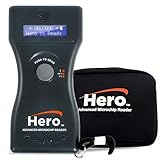
- COMPACT, POCKET-SIZE READER: Lightweight and palm-sized, PocketHero fits easily in your hand or pocket, so you can carry it anywhere for quick, on-the-go scanning in clinics, shelters, grooming shops, rescues, or events.
- READS ISO 15-DIGIT MICROCHIPS FROM ANY BRAND OR COUNTRY – Engineered for broad compatibility, this reader supports all ISO-compliant 15-digit pet microchips regardless of brand or region, helping you confirm animal identity quickly and accurately.
- BRIGHT DISPLAY SHOWS FULL CHIP NUMBER ON ONE LINE: Features a clear, user-friendly viewing window that displays the entire chip number on a single line and is easy to read any time of day, helping reduce errors and speed up scanning during intake, recovery, or checkups.
- USB RECHARGEABLE FOR EASY POWER MANAGEMENT – Includes a USB charging cable, allowing you to recharge the internal battery from any standard USB port without replacing batteries. Always be ready to scan when needed.
- COMPACT, POCKET-SIZE READER + READY-TO-GO KIT: Lightweight and palm-sized, PocketHero fits easily in your hand or pocket for quick scanning anywhere, clinics, shelters, grooming shops, rescues, or events. Each reader also comes with a test chip fob to confirm it’s working properly and a protective microfiber carrying pouch to keep the scanner safe during storage and travel.
Why a collar tag and annual scan still matter
Microchipping is permanent identification, but recovery depends on a successful scan and a usable registry record. A collar tag can let a neighbor call you without visiting a shelter or veterinary clinic. A yearly scan can confirm that the chip remains detectable and help the veterinarian locate it if it has shifted slightly.
For shelters, veterinary practices, and animal-control agencies, a universal multi-frequency scanner is more useful than a scanner limited to one frequency. Ordinary pet owners generally do not need to purchase a scanner; arranging a professional scan is the practical option.
What the reunion statistics do—and do not—show
AAHA cites a historical study by Lord and colleagues published in the Journal of the American Veterinary Medical Association on July 15, 2009. In that study, 1.8% of cats without microchips were reunited with their owners, compared with 38.5% of microchipped cats.
This is historical evidence, not a current prediction or a guarantee for an individual pet. In the cited material, incorrect or missing owner information was the main reason microchipped animals were not returned. The statistic therefore reinforces the practical point: implantation without accurate registration leaves a major gap in the recovery process.
Common problems and the right response
| Problem | Likely issue | Best next step |
|---|---|---|
| A scanner finds no chip | The pet may not be chipped, the scanner may not support that frequency, or the scan may be incomplete. | Have a veterinarian or shelter rescan with a universal device and sweep the full body. |
| The chip is found but no owner is reached | The number may be unregistered or the contact details may be obsolete. | Use the AAHA lookup to identify participating registries, then contact the relevant registry and update the record. |
| The number on paperwork differs from the scan | A transcription or administrative error may exist. | Use the number physically scanned by the veterinarian and ask the registry to correct the record. |
| You can feel the chip | Small or short-haired pets may have a palpable chip; migration is uncommon. | Ask your veterinarian to examine and scan it rather than trying to manipulate it. |
| You are preparing for overseas travel | The destination may require ISO identification or another specific standard. | Confirm the destination’s current official requirements with your veterinarian and the relevant authority. |
Pet microchip checklist
- Have a veterinarian scan before implanting, especially for an adopted pet.
- Record the complete chip number and registry name.
- Confirm whether the implantation fee includes initial enrollment.
- Register the chip immediately if the provider has not done so.
- Keep phone, email, address, and emergency-contact details current.
- Use a collar tag with a reachable telephone number.
- Ask for an annual scan at a veterinary visit.
- For travel, verify the chip type and destination rules in advance.
A microchip is most reliable when treated as one part of a layered identification plan: permanent identification, a functioning registry record, visible tags, and periodic professional checks.





Leave a Reply